There is no single scientifically complete answer to ‘what is the rarest gemstone?’ Rarity changes when the question moves from mineral occurrence to transparent facetable material, from any size to a jewellery-usable size, or from treated stones to untreated examples with a narrow colour. Some minerals exist in tiny quantities but have almost no organised market; others are better known, more liquid and capable of setting auction records. A responsible answer therefore defines the unit being compared and separates geological scarcity from commercial value.
Direct answer
Define rarity before ranking it: known deposits, annual production, facetable yield, untreated availability, size and documented quality. Confirm identity and treatment through an independent laboratory. Do not use one auction result as proof that every specimen of the same mineral is valuable.
The evidence-first decision matrix
| Decision factor | Evidence to collect | Why it changes the answer | Control |
|---|---|---|---|
| Geological occurrence | identify documented localities and deposit limits | a mineral can be rare in nature but unsuitable for jewellery | use mineralogical and geological sources |
| Facetable yield | measure clean material after cutting loss | rough abundance can hide tiny gem-quality output | compare finished stones of usable size |
| Treatment | verify heating, filling, diffusion or irradiation | treatment changes the relevant scarcity class | require laboratory disclosure |
| Size distribution | compare rarity at one, five and ten carats | large clean stones may be exponentially scarcer | state the size threshold |
| Market depth | review repeated transactions and specialist demand | a single record may be an outlier | separate rarity from liquidity |
| Wearability | consider hardness, cleavage and stability | a rare mineral may be unsuitable for daily jewellery | match the setting to material risk |
This matrix is the article-specific value object for most rare gemstone. It makes the reader’s trade-offs visible and prevents one price, one specification or one prestige cue from becoming the entire recommendation.
Current evidence baseline
Evidence 1. GIA’s Gem Encyclopedia describes gem species, sources, treatments and care considerations. Source.
Evidence 2. The Smithsonian National Gem Collection documents notable gemstones and mineral specimens for public research and education. Source.
Evidence 3. GIA provides reference information on gem species, treatments and laboratory identification. Source.
Evidence 4. The USGS National Minerals Information Center publishes mineral data and commodity context, while many collector gems remain too small for conventional production statistics. Source.
For most rare gemstone, these sources support only the claims attached to them. They do not prove permanent availability or universal authenticity for this specific decision. Its product specifications, prices, policies and service terms must be reconfirmed for the exact market and date.
How each factor changes the result
Geological occurrence
Collect evidence that identify documented localities and deposit limits. For most rare gemstone, this factor changes the answer because a mineral can be rare in nature but unsuitable for jewellery. The minimum geological occurrence control for this shortlist is to use mineralogical and geological sources. Record the exact most rare gemstone object, market, date and assumption. If geological occurrence evidence is missing, keep that field unknown instead of awarding a favourable conclusion. Compare geological occurrence across every shortlisted most rare gemstone option; otherwise a persuasive photograph or famous name can silently change the standard halfway through the decision.
Facetable yield
Collect evidence that measure clean material after cutting loss. For most rare gemstone, this factor changes the answer because rough abundance can hide tiny gem-quality output. The minimum facetable yield control for this shortlist is to compare finished stones of usable size. Record the exact most rare gemstone object, market, date and assumption. If facetable yield evidence is missing, keep that field unknown instead of awarding a favourable conclusion. Compare facetable yield across every shortlisted most rare gemstone option; otherwise a persuasive photograph or famous name can silently change the standard halfway through the decision.
Treatment
Collect evidence that verify heating, filling, diffusion or irradiation. For most rare gemstone, this factor changes the answer because treatment changes the relevant scarcity class. The minimum treatment control for this shortlist is to require laboratory disclosure. Record the exact most rare gemstone object, market, date and assumption. If treatment evidence is missing, keep that field unknown instead of awarding a favourable conclusion. Compare treatment across every shortlisted most rare gemstone option; otherwise a persuasive photograph or famous name can silently change the standard halfway through the decision.
Size distribution
Collect evidence that compare rarity at one, five and ten carats. For most rare gemstone, this factor changes the answer because large clean stones may be exponentially scarcer. The minimum size distribution control for this shortlist is to state the size threshold. Record the exact most rare gemstone object, market, date and assumption. If size distribution evidence is missing, keep that field unknown instead of awarding a favourable conclusion. Compare size distribution across every shortlisted most rare gemstone option; otherwise a persuasive photograph or famous name can silently change the standard halfway through the decision.
Market depth
Collect evidence that review repeated transactions and specialist demand. For most rare gemstone, this factor changes the answer because a single record may be an outlier. The minimum market depth control for this shortlist is to separate rarity from liquidity. Record the exact most rare gemstone object, market, date and assumption. If market depth evidence is missing, keep that field unknown instead of awarding a favourable conclusion. Compare market depth across every shortlisted most rare gemstone option; otherwise a persuasive photograph or famous name can silently change the standard halfway through the decision.
Wearability
Collect evidence that consider hardness, cleavage and stability. For most rare gemstone, this factor changes the answer because a rare mineral may be unsuitable for daily jewellery. The minimum wearability control for this shortlist is to match the setting to material risk. Record the exact most rare gemstone object, market, date and assumption. If wearability evidence is missing, keep that field unknown instead of awarding a favourable conclusion. Compare wearability across every shortlisted most rare gemstone option; otherwise a persuasive photograph or famous name can silently change the standard halfway through the decision.
Worked comparison
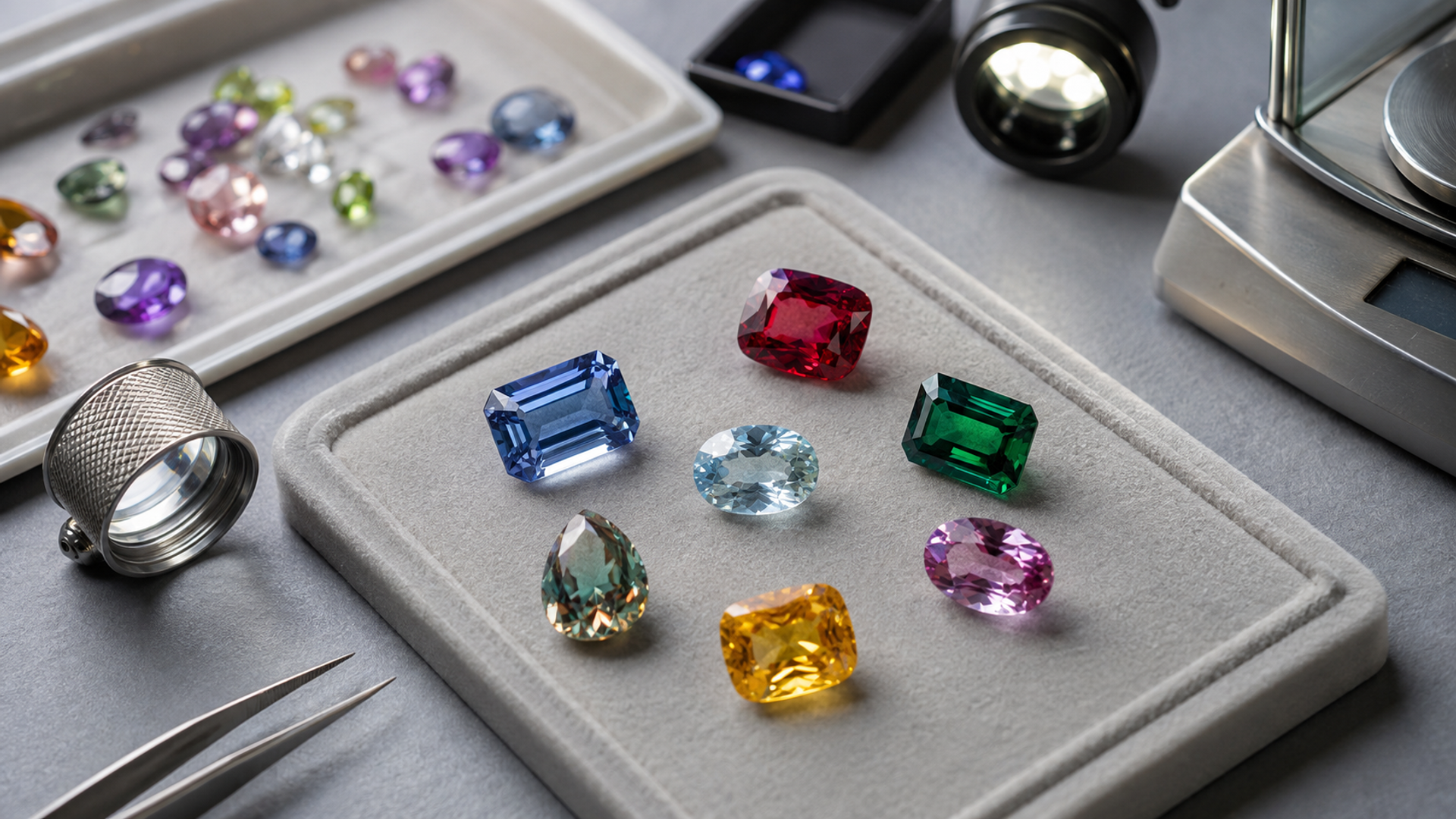
Compare red beryl, benitoite, alexandrite and paraíba tourmaline under four definitions: mineral occurrence, transparent facetable supply, availability above two carats and depth of repeat transactions. Add treatment, origin confidence and wearability. The ranking changes by definition, demonstrating why a single ‘rarest’ winner is usually marketing shorthand.
For most rare gemstone, run a second comparison with the most optimistic assumption removed, then a third with the largest downside cost added. A most rare gemstone recommendation that survives all three scenarios is more useful than one built from a single ideal case. If its ranking changes, state the decisive assumption plainly.
Mineral rarity is not jewellery rarity
A species can be known from only a few localities yet produce opaque or microscopic crystals. Jewellery buyers need transparent material with sufficient colour, stability and size to survive cutting and setting. Ask how much gem-quality rough exists, what proportion becomes finished stones and whether new production is continuing. Without those boundaries, geological rarity sounds more decisive than it is.
For most rare gemstone, apply this point to the exact reference, seller and market rather than to the category in general. Keep mineral rarity is not jewellery rarity photographs, written representations and the date of observation so that a later service, return or resale decision can reconstruct what was known.
Size changes the answer
Some gems are obtainable below one carat but exceptionally scarce at several carats with strong colour and clarity. Compare dimensions as well as weight because density and cutting style change face-up appearance. A deep stone may carry weight that the wearer cannot see. Record the exact threshold used in any rarity claim and avoid extrapolating from small specimens.
For most rare gemstone, apply this point to the exact reference, seller and market rather than to the category in general. Keep size changes the answer photographs, written representations and the date of observation so that a later service, return or resale decision can reconstruct what was known.
Treatment creates separate populations
Heating, filling, irradiation and diffusion may improve appearance or stability, depending on the material. A treated stone can still be beautiful and valuable when disclosed, but it should not be counted with untreated supply. Read the laboratory wording carefully and verify that the report corresponds to the stone. Seller descriptions should not broaden a narrow report opinion.
For most rare gemstone, apply this point to the exact reference, seller and market rather than to the category in general. Keep treatment creates separate populations photographs, written representations and the date of observation so that a later service, return or resale decision can reconstruct what was known.
Auction records measure competition, not universal value
A record price reflects one stone, one sale, buyer competition, provenance and timing. It does not price every lower-quality stone of the same species. Look for repeated comparable sales and specialist dealer depth. When transaction evidence is sparse, valuation uncertainty is part of the purchase rather than a reason to assume unlimited upside.
For most rare gemstone, apply this point to the exact reference, seller and market rather than to the category in general. Keep auction records measure competition, not universal value photographs, written representations and the date of observation so that a later service, return or resale decision can reconstruct what was known.
Wearability can reverse a collector ranking
Hardness, toughness, cleavage, light sensitivity and reaction to heat or chemicals determine whether a gem can be worn safely. A very rare crystal may be better kept as a specimen. If the goal is jewellery, compare setting protection, repair feasibility and insurance. The most valuable choice for the owner may be less rare but more usable.
For most rare gemstone, apply this point to the exact reference, seller and market rather than to the category in general. Keep wearability can reverse a collector ranking photographs, written representations and the date of observation so that a later service, return or resale decision can reconstruct what was known.
Buyer’s evidence checklist
[ ] Define the rarity class
[ ] Verify natural identity
[ ] Record treatment
[ ] Set a size threshold
[ ] Compare face-up dimensions
[ ] Check repeated market evidence
[ ] Assess wearability
[ ] Insure using a current appraisal
Unchecked most rare gemstone fields remain unknown. Do not convert them into favourable assumptions simply to finish this purchase or produce a confident ranking.
Sources and method
gia.edu — GIA’s Gem Encyclopedia describes gem species, sources, treatments and care considerations.
naturalhistory.si.edu — The Smithsonian National Gem Collection documents notable gemstones and mineral specimens for public research and education.
gia.edu — GIA provides reference information on gem species, treatments and laboratory identification.
usgs.gov — The USGS National Minerals Information Center publishes mineral data and commodity context, while many collector gems remain too small for conventional production statistics.
The external pages above were checked specifically for most rare gemstone. Its ranking pages informed a separate SERP benchmark, but their wording, paragraph order and distinctive framing were not copied. This article adds a query-specific matrix, worked comparison and downside controls.
Continue with adjacent research
These internal links add adjacent ownership context to most rare gemstone. They do not replace the specialist inspection, laboratory evidence, official specification or seller terms required by this particular decision.
Final judgement
Define rarity before ranking it: known deposits, annual production, facetable yield, untreated availability, size and documented quality. Confirm identity and treatment through an independent laboratory. Do not use one auction result as proof that every specimen of the same mineral is valuable.
For most rare gemstone, the useful standard is not certainty created by confident language. It is a decision whose evidence, downside and next verification step remain visible to the reader.