

| Evaluation area | What to examine | Why it matters |
|---|---|---|
| Context separation | Whether work, personal and private activities can be separated | Reduces accidental overlap between different parts of life |
| Hardware foundation | Whether the device includes dedicated security components | Shows how protection is built into the device architecture |
| Data boundaries | What information is stored, processed or shared | Helps clarify the relationship between convenience and exposure |
| Daily usability | How easily the owner can maintain the intended configuration | A boundary that is difficult to use may not last |
| Maintenance | Updates, application compatibility and support arrangements | Privacy depends on ongoing care, not only initial setup |
Digital discretion in the AI era means using advanced technology without surrendering more personal context, attention or control than necessary.
For executives, founders, investors, public figures and internationally mobile professionals, privacy is no longer limited to protecting a password or securing a device after it is lost. The more important question is becoming how technology handles the information surrounding everyday decisions: conversations, travel plans, work documents, contacts, preferences and private routines.
The most discreet technology is not necessarily the device with the most visible features. It is the technology that gives its owner clearer boundaries between professional, personal and private life.
This guide explains why digital discretion is becoming important, how AI changes the privacy conversation, and what buyers should examine before choosing privacy-conscious personal technology. It also considers Metavertu Max as one example of a device designed around separation and controlled access.
What Is Digital Discretion?
Digital discretion is the practice of using technology in a way that limits unnecessary exposure of personal information, behaviour and context.
It is broader than traditional device security. Security asks whether a device can resist particular threats. Digital discretion also asks:
- What information does the device need to process?
- Which applications can access personal context?
- Are work and private activities kept separate?
- Can the owner understand where information is stored or shared?
- Does the technology respect the difference between convenience and intrusion?
A discreet digital lifestyle does not require avoiding technology. It requires choosing technology with clearer boundaries.
This distinction matters because modern devices are no longer simple communication tools. They are calendars, payment instruments, document repositories, cameras, travel assistants, identity devices and AI interfaces. Each role creates another layer of context that may be stored, analysed or transmitted.
Why Digital Discretion Matters More in the AI Era
AI systems make technology more useful by learning from context. The same context that enables a helpful answer can also reveal how a person works, travels, communicates and makes decisions.
An AI assistant may become more effective when it understands:
- A person’s calendar and recurring appointments
- Frequently contacted people
- Preferred routes and travel patterns
- Work documents and meeting notes
- Shopping preferences and browsing behaviour
- Personal writing style and communication habits
The benefit is convenience. The risk is concentration.
When more personal context is gathered into one system, the consequences of poor access control, unclear permissions or accidental disclosure become more significant. Digital discretion therefore becomes a question of design, not simply user behaviour.
A privacy-conscious device should make it easier to understand which information belongs to which part of life. It should also make boundaries visible enough for the owner to maintain them.
How We Evaluate Discreet Personal Technology
The phrase “private technology” can refer to many different things. A phone may include encryption, a separate operating environment or a dedicated security component, but those features do not automatically answer every privacy concern.
A more useful evaluation should consider five areas.
This framework avoids treating one feature as proof of complete privacy. It also recognises that the best choice depends on the owner’s workflow.
A device used for sensitive work documents has different requirements from a device used mainly for family communication or travel.
Digital Discretion Is About Separation, Not Disappearance
Privacy-conscious technology is sometimes described as if the ideal device should disappear from the digital world entirely. For most people, that is neither practical nor necessary.
The more realistic objective is controlled separation.
A professional may need to access business documents while travelling, communicate with family members across several time zones and use AI tools for routine tasks. The question is not whether technology should be used, but whether each activity has an appropriate boundary.
Three forms of separation are especially relevant:
Work and personal separation
Business conversations, client information and private messages should not be treated as one undifferentiated stream. Clear separation can reduce the risk of sending information to the wrong account, application or contact.
Personal and private separation
Some information may be more sensitive than ordinary personal data. Travel plans, family communications, financial documents or private correspondence may require a different level of attention.
Local and external processing
When using AI or cloud-based tools, users should understand which tasks rely on external services and which information may leave the device. A convenient interface should not remove the need for informed judgement.
Why Material Design Still Matters
Digital discretion is not only a software discussion. The physical design of a device affects how it is handled, recognised and integrated into daily life.
For a device carried through meetings, airports, hotels and private residences, material choices can influence ownership in several ways:
- A considered form can reduce the visual noise associated with mass-market electronics.
- Durable materials can support long-term use rather than frequent replacement.
- A distinctive object can feel more like a personal instrument than a disposable screen.
- Tactile design can encourage deliberate use instead of constant, reflexive checking.
This does not mean that materials establish privacy by themselves. Stainless steel, ceramic or sapphire cannot replace responsible software, account protection or careful application choices.
Their relevance is more subtle. Technology intended for discreet use should feel considered in both its physical and digital behaviour.
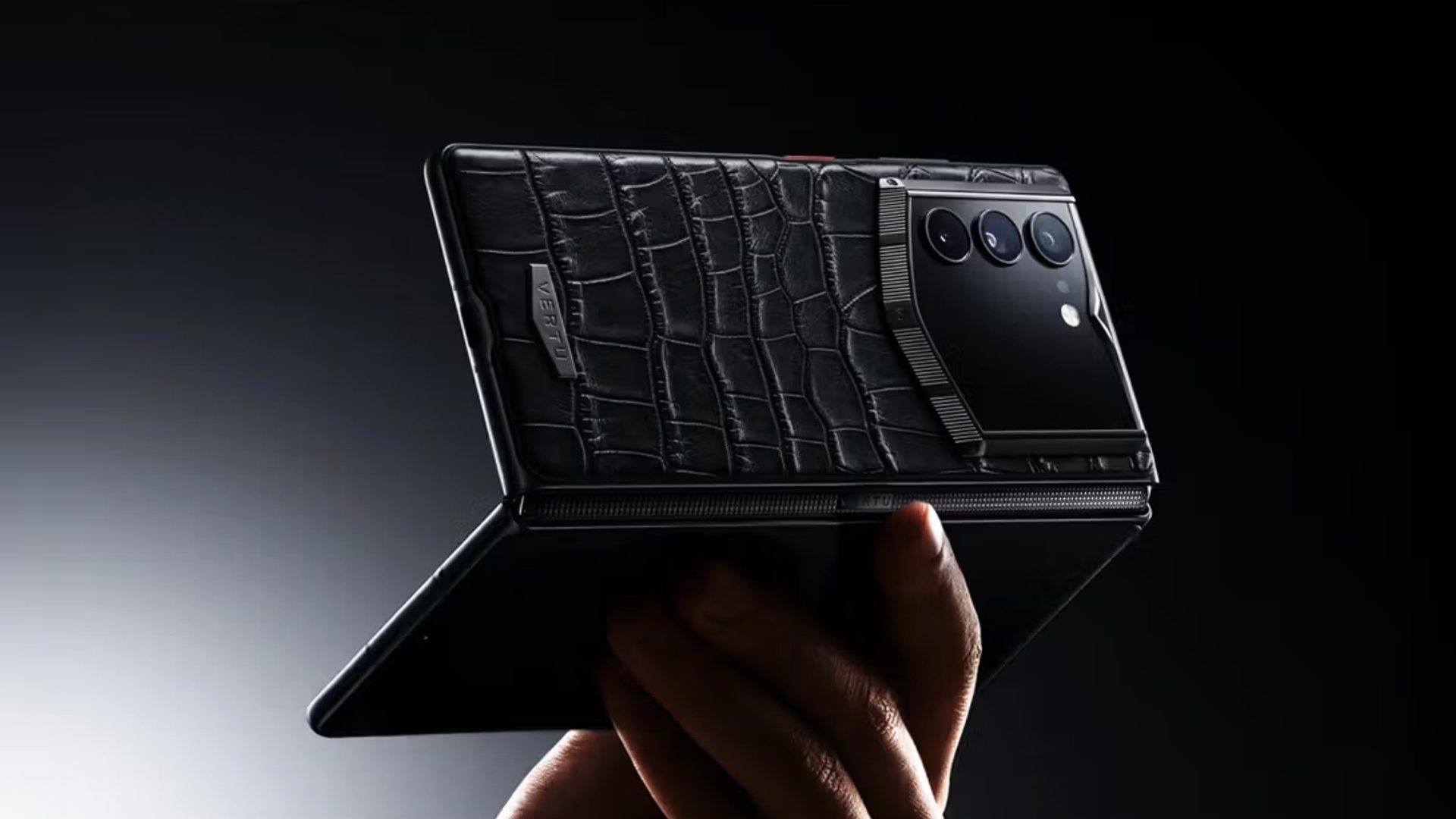
Metavertu Max as a Case Study in Digital Discretion
Metavertu Max is relevant to this discussion because its product architecture is designed around separating different digital environments.
According to VERTU’s product knowledge base, Metavertu Max features a Triple-System architecture intended to distinguish work, personal and private use. It also includes a dedicated security chip, end-to-end encrypted communication capabilities, 10TB distributed storage and Web3 Dual-AI functionality.
These features make Metavertu Max an example of how a smartphone can approach digital discretion through system-level separation rather than relying only on application settings.
The product also combines this architecture with 316L stainless steel, high-density ceramic and a sapphire lens cover. The materials support VERTU’s broader view that advanced personal technology should combine technical capability with a more considered ownership experience.
Explore the official product information for Metavertu Max.
What the case study does—and does not—establish
Metavertu Max should not be treated as proof that every type of attack can be prevented, or that every application installed on the device automatically follows the same privacy principles.
A dedicated security component does not determine the policy of every third-party service. Similarly, separating environments on a device does not guarantee that a user’s accounts, backups or recipients’ devices are equally protected.
Before purchase, a buyer should confirm:
- How the three environments work in daily use
- Which information can move between environments
- How notifications behave when switching contexts
- Whether essential applications are supported
- What current update and support arrangements apply
- Which configurations and markets are available
The value of the device depends on whether its architecture matches the owner’s actual workflow.
What to Look for in Privacy-Conscious Technology
A discreet device should be assessed through practical questions rather than promotional language.
1. Can the device reflect the way you actually live?
If work and personal activities regularly overlap, a device should provide a realistic way to manage that overlap. A theoretical separation that makes everyday communication difficult may not be sustainable.
2. Are the boundaries understandable?
The owner should be able to explain where documents, messages, accounts and AI interactions take place. If the system is impossible to understand, it becomes difficult to manage responsibly.
3. Does the device support essential applications?
Privacy features are only useful if the owner can still access banking, travel, communication and work tools reliably. Application compatibility should be checked before moving important accounts.
4. Is the software maintained?
A device’s privacy posture changes over time. Buyers should verify current update arrangements, patch availability and support expectations for their intended ownership period.
5. What happens when the device is lost?
Consider account recovery, backups, authentication methods and the information stored elsewhere. A device-level feature cannot automatically remove copies held by cloud services, recipients or other devices.
Does Digital Discretion Mean Avoiding AI?
No. Digital discretion does not require rejecting AI. It requires using AI with a clearer understanding of context and access.
Before sharing sensitive information with an AI feature, consider:
- Is the task suitable for an external service?
- Does the feature require the complete document or only selected information?
- Can the task be completed without including names, account details or confidential material?
- Where is the result stored?
- Can the user control or delete the relevant information?
- Is the AI function running locally, through a private system or through a third-party service?
The most discreet approach is often selective use. AI can remain valuable without becoming the default destination for every personal or professional decision.
For high-sensitivity work, organisations may also need formal policies covering approved tools, data classification, account permissions and employee training. A personal device cannot replace those controls.
Common Mistakes When Choosing Discreet Technology
Assuming one feature solves the whole privacy problem
Encryption, a security chip or separate system can be meaningful, but none of them answers every question about accounts, applications, cloud storage and human behaviour.
Treating “private” as an absolute claim
Privacy is contextual. A device may be well suited to separating work and personal life while still requiring careful application and account management.
Ignoring support and maintenance
A carefully designed device still needs updates and compatible software. Buyers should confirm current support information before making a long-term decision.
Focusing only on visible status
Discreet technology is not necessarily the most conspicuous technology. Its value may be found in how quietly it fits into a complex life.
Forgetting the surrounding ecosystem
A secure handset does not automatically secure a weak email account, an exposed cloud backup or a poorly protected messaging account. The complete system matters.
Frequently Asked Questions About Digital Discretion
What does digital discretion mean in the AI era?
Digital discretion means using connected and AI-enabled technology while limiting unnecessary exposure of personal context. It includes clear boundaries between work, personal and private information, as well as informed choices about applications, cloud services and AI processing.
Why is digital discretion important for executives and public figures?
Executives and public figures often manage sensitive work information, complex travel schedules and high volumes of communication. Digital discretion helps them reduce accidental overlap between professional and personal activities and maintain clearer control over information flows.
Is digital discretion the same as phone security?
No. Phone security focuses on protection against specific threats. Digital discretion is broader: it also considers data access, context separation, application permissions, AI processing, account recovery and the practical habits required to maintain privacy.
How does Metavertu Max support digital discretion?
VERTU describes Metavertu Max as having a Triple-System architecture for separating work, personal and private environments. The product also includes a dedicated security chip, end-to-end encrypted communications, 10TB distributed storage and Web3 Dual-AI functionality. Configuration, availability and support details should be verified before purchase.
Can any smartphone guarantee complete privacy?
No smartphone can guarantee complete privacy in every situation. Device architecture is only one layer. Applications, account settings, cloud services, updates, backups and user behaviour all influence the practical privacy of a digital environment.
Conclusion: The Value of Quiet Control
The rise of AI is making personal technology more capable—and more closely connected to the context of its owner.
That is why digital discretion is becoming an important design principle. It asks technology to remain useful without demanding unlimited access to personal life. It values separation over accumulation, clarity over opacity and control over unnecessary exposure.
For some users, the right decision may be a mainstream device with a well-documented support policy. For others, a system designed around distinct work, personal and private environments may better reflect the way they live.
Metavertu Max belongs to the second conversation. Its relevance is not that it removes every privacy risk, but that it treats separation as part of the device architecture.
In the AI era, the most meaningful technology may not be the loudest or most visible. It may be the technology that gives its owner more control over what remains personal, what becomes professional and what should never be shared at all.
![Top 10 Luxury Watches for an Orient Express Journey [2026]](https://cdn.sanity.io/images/e0gp1l2g/production/8b5e5b21db42a1c5f040e828bd041857353a8eb2-2560x1382.webp?w=180&h=180&q=78&auto=format&fit=crop)

![Top 10 Luxury Watches for an Orient Express Journey [2026]](https://cdn.sanity.io/images/e0gp1l2g/production/8b5e5b21db42a1c5f040e828bd041857353a8eb2-2560x1382.webp?w=800&h=450&q=82&auto=format&fit=crop)
![Top 10 Luxury Watches for a Private Island Escape [Updated]](https://cdn.sanity.io/images/e0gp1l2g/production/627abbaf57f9f8012c53d1934a58e74f9ec11066-500x300.jpg?w=800&h=450&q=82&auto=format&fit=crop)
![Top 10 Luxury Watches for a Geneva Watch Week [New]](https://cdn.sanity.io/images/e0gp1l2g/production/00dfa030a876edbe6ea7b146f6b1d8197c7656b0-3840x1860.webp?w=800&h=450&q=82&auto=format&fit=crop)