

| Evaluation point | Why it matters |
|---|---|
| Design integrity | The timepiece should retain its identity when the display is inactive. |
| Material relevance | Materials should contribute to tactility, durability and character. |
| Sporting relevance | Functions should correspond to genuine sporting use cases. |
| Functional restraint | Information should remain useful without becoming distracting. |
| Ownership experience | Support, service and long-term relevance matter beyond launch day. |
Digital horology in elite sports brings traditional watch design into conversation with connected technology. It combines the visual discipline of horology with digital information, sports-related functions and modern performance needs.
The result elevates smart wearables for sports far beyond disposable tech accessories. It is a new kind of performance timepiece judged by precision, materials, design and ownership experience.
From the collector-car lawns of Pebble Beach to the performance culture of Monaco, the watch is becoming more than an instrument for measuring time. It is becoming part of the language of sport, engineering and personal identity.
In brief: Digital horology in elite sports combines connected timekeeping with the design, materials and precision associated with traditional horology. It considers not only what a timepiece can do, but also how it performs, looks and fits into the owner’s sporting and social life.
What Is Digital Horology?
Digital horology is the design and development of digitally enabled timepieces through the principles of traditional watch culture.
A conventional connected watch is usually assessed through its functions:
- activity tracking;
- notifications;
- connectivity;
- battery life;
- software compatibility;
- and display technology.
Digital horology introduces a wider set of considerations. It asks how the object looks, feels and performs as a timepiece.
This includes:
- the shape and proportion of the case;
- the relevance of the materials;
- the relationship between the display and the physical design;
- the quality of information presented;
- the way the watch performs during movement;
- and how naturally it fits into the owner’s wider life.
In elite sports, this distinction becomes particularly important. Athletes, collectors and performance-minded individuals often move between training, travel, competition, business and formal occasions.
A digital timepiece must therefore be capable without becoming visually disruptive.
Why Elite Sports Are Changing the Role of the Watch
Elite sports have always depended on precision, but precision is only one part of the experience.
The objects surrounding a serious athlete can also communicate discipline, engineering and personal preference. In golf and tennis, the wrist is directly involved in movement and rhythm. In motorsport, timing and mechanical performance are part of the culture. In yachting, technology exists alongside navigation, travel and a highly designed environment.
A modern performance timepiece may need to support:
- quick access to relevant information;
- repeated movement;
- changing surroundings;
- travel across time zones;
- sports-related routines;
- and social occasions beyond the sporting venue.
The question is therefore no longer simply how many functions a watch contains.
The more meaningful question is:
How naturally does the technology belong to the wearer’s life?
That question sits at the centre of digital horology in elite sports.
Pebble Beach and the Value of Technical Elegance
Pebble Beach offers a useful way to understand why connected timepieces are increasingly judged by more than their specifications.
The official Pebble Beach Concours d’Elegance history describes an event where automobiles are assessed through elegance, technical merit, history, originality and the accuracy of preservation or restoration.
It is not a contest of speed alone. The automobile is considered as a complete expression of design and engineering.
That philosophy applies equally well to digital timekeeping.
A connected timepiece may contain advanced sensors, processors and software, but technology alone does not create lasting desirability. The case must have a coherent form. Materials must feel intentional. The display must belong to the object rather than appear to have been added afterwards.
The same standards used to assess a significant automobile can be applied to a performance timepiece:
- Is the design distinctive?
- Is the engineering relevant to its purpose?
- Are the materials appropriate?
- Does the object have a consistent identity?
- Does it remain convincing when the screen is inactive?
Digital horology begins when a connected watch is evaluated as a designed object, not merely as a collection of specifications.
Monaco and the Culture of Performance
Monaco represents another side of the same movement.
Its sporting, automotive and yachting culture brings together speed, engineering, travel, design and highly personal forms of luxury. The Monaco Yacht Show official overview presents the event as a meeting point for superyachts, designers, technology and bespoke experiences.
In such settings, technology is expected to support the experience without dominating it.
This principle is increasingly relevant to the watch. A timepiece should be able to provide useful information during an active day while remaining appropriate beside tailored clothing, fine materials and traditional objects.
The object should be capable on the move, but composed at rest.
This is where horological design becomes important. A performance timepiece must express technical ability without looking like a piece of laboratory equipment.
From Information Display to Designed Experience
The screen has changed the relationship between the wearer and the watch.
A mechanical dial communicates through hands, markers, apertures and complications. A digital display can change according to context. It may show time, activity, reminders or other information through different visual modes.
This flexibility creates both an opportunity and a challenge.
When the display is treated as a neutral screen, the object can feel like a small computer attached to the wrist. When the interface is designed as part of the timepiece, it can become an extension of the case, materials and visual identity.
The most considered digital displays do not simply show more information. They create a hierarchy of information.
The wearer should be able to understand what matters without being overwhelmed by constant activity. Digital timekeeping becomes more refined when it knows when to be informative and when to remain quiet.
The New Materials of Digital Horology
Traditional horology has long used materials for more than appearance. Metals, crystal, leather and finishing techniques affect durability, tactility and the way a watch develops over time.
Digital horology extends that material conversation through:
- ceramic cases;
- carbon structures;
- sapphire protection;
- sculptural case profiles;
- layered digital displays;
- and interchangeable exterior elements.
The purpose is not to imitate mechanical watchmaking literally. It is to translate its principles into a digital environment.
A tonneau case, for example, can give a connected timepiece a more distinctive silhouette than a generic round form. Sapphire can create a visual and material connection with traditional watch design. Ceramic and carbon can introduce different relationships between surface, structure and daily wear.
These choices help establish a vocabulary for digital timekeeping that is informed by horology without being limited to the past.
A VERTU Interpretation of Digital Horology
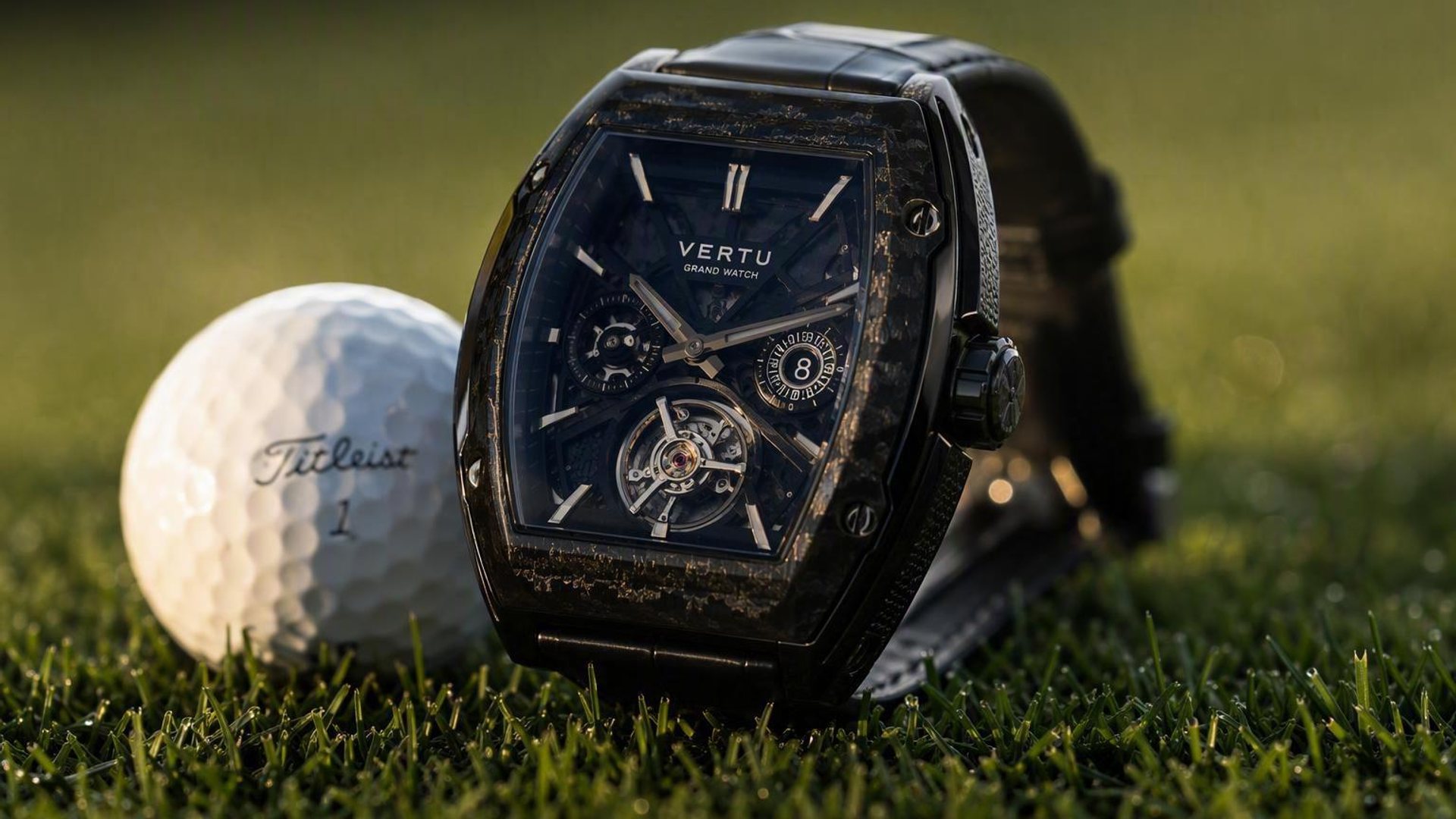
VERTU Grand Watch offers one interpretation of digital horology in a connected timepiece.
According to the VERTU product knowledge base, Grand Watch uses a tonneau-shaped exterior with microcrystalline black ceramic, filament coloured carbon and a sapphire mirror. These elements create a clear relationship with established horological design while maintaining a contemporary identity.
The form matters because the watch communicates its character before the display is activated. Its presence does not depend entirely on software or animated graphics.
The digital dial continues this approach through a layered visual construction that gives the display a more dimensional character. The screen is treated as part of the watch’s design language rather than as a separate technical component.
Grand Watch also includes Golf and Tennis modes. These functions connect the product to sports-related use, particularly activities where rhythm, movement and technique matter. They should be understood as product features rather than medical advice or a guarantee of sporting performance.
For readers interested in this interpretation of digital horology: VERTU Grand Watch
What Should Define a Performance Timepiece?
As digital horology develops, choosing a performance timepiece will require more than comparing technical specifications.
Design Integrity
Does the watch retain its identity when the display is inactive?
A strong timepiece should not rely entirely on animated graphics or a bright screen. The case, silhouette and surface treatment should work as a complete object.
Material Relevance
Materials should contribute to tactility, durability and character. They should not be included only as visual symbols of price.
Functional Restraint
Useful technology should remain accessible without becoming distracting. More functions do not necessarily create a more refined experience.
Sporting Relevance
Sports features should correspond to genuine use cases. Golf and Tennis modes, for example, belong to a different context from general activity tracking.
Compatibility and Support
Connected products depend on software, services and regional availability. Buyers should verify supported devices, software requirements, warranty terms and current availability before purchase.
Ownership Experience
A performance timepiece is judged over time. Service, personalisation, support and visual longevity can matter as much as the initial specification.
Digital Horology and Mechanical Watchmaking
Digital timepieces will not eliminate mechanical watches.
Mechanical horology offers a relationship with movement, craftsmanship, autonomy and long-term servicing. Digital horology offers responsiveness, information, adaptability and connection to a wider technological environment.
They answer different expectations.
A collector may choose a mechanical watch for its movement and history, then select a digital timepiece for travel, sport or daily information. The two categories can coexist because they represent different forms of timekeeping.
The important shift is that digital objects are now being judged through a more demanding standard. Function is no longer enough. The wearer may also ask whether the device has presence, coherence and a lasting visual identity.
The Future of Digital Timekeeping in Elite Sports
The future of digital horology will not be defined simply by adding more functions to the wrist.
It will be defined by integration.
The most convincing performance timepieces will combine clear digital information with physical presence. They will support the wearer on a golf course, during a tennis session, at a race weekend, on a yacht or in a formal setting without losing their identity.
Pebble Beach demonstrates how technical merit gains meaning when joined to elegance, originality and history. Monaco shows how performance, technology and design can exist within a wider lifestyle ecosystem.
Together, they point towards a different understanding of the connected watch.
Digital horology is not an attempt to replace traditional watch culture. It is a new chapter in that culture—one where materials, performance, information and identity occupy the same space on the wrist.
Frequently Asked Questions
What is digital horology in elite sports?
Digital horology in elite sports is the development of connected timepieces that combine digital functions with traditional horological principles such as case design, materials, visual identity and ownership experience. In sports contexts, it also considers movement, performance-related information and the ability to transition between active and formal environments.
How is digital horology different from a connected watch?
A connected watch is usually judged by functions, compatibility and battery performance. Digital horology adds design, material quality, proportions, finishing and ownership experience. It considers how completely technology is integrated into a considered timepiece rather than focusing only on what the device can do.
Why is digital horology relevant to elite sports?
Elite sports combine precision, movement, equipment and personal identity. A digital timepiece can support sports-related use while remaining appropriate for travel, social occasions and daily life. This makes design and integration as important as functionality.
How does VERTU Grand Watch fit into digital horology?
VERTU Grand Watch interprets digital horology through a tonneau-shaped exterior, microcrystalline black ceramic, filament coloured carbon and a sapphire mirror. Its Golf and Tennis modes connect the watch to sports-related use while retaining a strong focus on material presence and design.
Can a digital timepiece replace a mechanical watch?
Not in every sense. A digital timepiece can provide connected functions and sports-related information that a mechanical watch cannot. A mechanical watch offers a different experience based on movement, craftsmanship and independence from software. Many owners may choose between them according to occasion.
Conclusion
From Pebble Beach to Monaco, the language of elite performance is moving beyond speed and function. It now includes materials, design, technology and the way an object fits into a complete life.
Digital horology represents this shift. It brings connected information to the wrist while borrowing the discipline of traditional watch design.
The most successful digital timepieces will not be defined by feature volume alone. They will be recognised by the quality of their integration: how naturally performance, technology, materials and identity exist within the same object.
![Top 10 Luxury Watches for an Orient Express Journey [2026]](https://cdn.sanity.io/images/e0gp1l2g/production/8b5e5b21db42a1c5f040e828bd041857353a8eb2-2560x1382.webp?w=180&h=180&q=78&auto=format&fit=crop)
![Top 10 Luxury Watches for an Orient Express Journey [2026]](https://cdn.sanity.io/images/e0gp1l2g/production/8b5e5b21db42a1c5f040e828bd041857353a8eb2-2560x1382.webp?w=800&h=450&q=82&auto=format&fit=crop)
![Top 10 Luxury Watches for a Private Island Escape [Updated]](https://cdn.sanity.io/images/e0gp1l2g/production/627abbaf57f9f8012c53d1934a58e74f9ec11066-500x300.jpg?w=800&h=450&q=82&auto=format&fit=crop)
![Top 10 Luxury Watches for a Geneva Watch Week [New]](https://cdn.sanity.io/images/e0gp1l2g/production/00dfa030a876edbe6ea7b146f6b1d8197c7656b0-3840x1860.webp?w=800&h=450&q=82&auto=format&fit=crop)