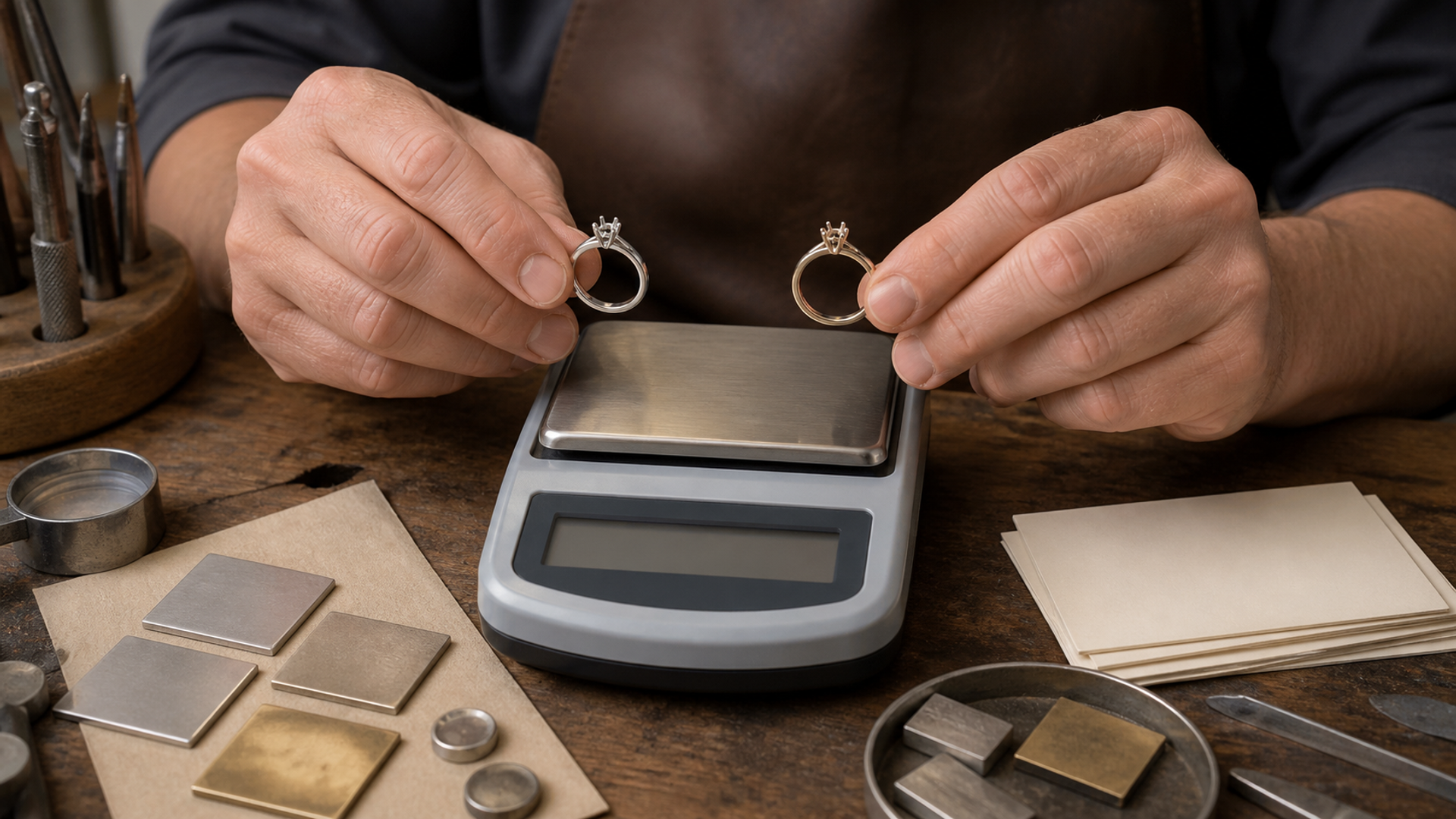
Platinum and white gold can look similar in a jewellery case while ageing differently on the hand. Platinum is naturally white and typically used in a high-purity alloy; white gold is a gold alloy whose colour and properties depend on its formulation and is commonly finished with rhodium for a bright white surface. Neither metal is universally better. The setting design, wearer's skin, ring weight, finish preference and jeweller's skill decide the result.
The familiar claim that one metal never scratches or that the other always needs annual replating is too absolute. Both acquire wear. Platinum commonly develops a patina as metal is displaced; white-gold appearance depends on alloy and surface treatment. Maintenance frequency varies with use and desired finish. A sound comparison uses the exact alloy and ring, then prices decades of care rather than one showroom quote.
Direct answer: platinum vs white gold engagement ring
Choose platinum for natural white colour, substantial weight and a patina-friendly ownership experience when the design and budget support it. Choose white gold for lighter wear, broad design availability and a lower initial setting cost when the wearer accepts alloy-specific sensitivity and possible rhodium maintenance. Ask the jeweller to name the alloy, mark, finish and service plan.
| Decision factor | Evidence to collect | Why it changes the answer | Control before purchase |
|---|---|---|---|
| Alloy and mark | platinum and gold fineness are represented through specific quality descriptions | the generic metal name hides composition | put the exact fineness and alloy family on the invoice |
| Weight | platinum is denser and a similar design often feels heavier | comfort and perceived substance can point in opposite directions | try the finished width and thickness, not a thin sample |
| Surface ageing | platinum patina and rhodium-plated white gold change differently | maintenance preference affects long-term satisfaction | compare worn examples and choose a target finish |
| Setting design | prongs, pavé and shank geometry drive durability | metal choice cannot rescue a fragile design | ask who sets and services the exact construction |
| Skin response | white-gold alloying elements vary while platinum jewellery is often high purity | sensitivity is specific to the wearer and alloy | identify prior reactions and request the alloy composition |
| Lifetime cost | resizing, polishing and replating depend on design and workshop | initial price is an incomplete comparison | obtain itemised care estimates for a twenty-year scenario |
For platinum vs white gold engagement ring, this matrix is the article-specific value object. It prevents a single price, feature or viral claim from silently becoming a recommendation.
Current evidence baseline
Evidence 1. The codified US Jewelry Guides set out how marketers should represent gold, platinum and other jewellery characteristics. Source.
Evidence 2. The FTC's final 2018 revisions explain that the Jewelry Guides cover precious-metal alloys and surface treatments. Source.
Evidence 3. The Responsible Jewellery Council standard adds a supply-chain and due-diligence lens that can matter alongside wear and maintenance. Source.
Evidence 4. GIA's quality-assurance benchmarks emphasise alloy identification and appropriate workmanship when altering platinum jewellery. Source.
For platinum vs white gold engagement ring, these sources support only the claims stated above. They do not establish private transaction prices, permanent availability, universal authenticity or future appreciation.
How the decision factors change the result
Alloy and mark. The relevant evidence is that platinum and gold fineness are represented through specific quality descriptions. That matters because the generic metal name hides composition. For this decision, put the exact fineness and alloy family on the invoice. Record the dated result, exact model or route, and the assumption that would cause the conclusion to change.
Weight. The relevant evidence is that platinum is denser and a similar design often feels heavier. That matters because comfort and perceived substance can point in opposite directions. For this decision, try the finished width and thickness, not a thin sample. Record the dated result, exact model or route, and the assumption that would cause the conclusion to change.
Surface ageing. The relevant evidence is that platinum patina and rhodium-plated white gold change differently. That matters because maintenance preference affects long-term satisfaction. For this decision, compare worn examples and choose a target finish. Record the dated result, exact model or route, and the assumption that would cause the conclusion to change.
Setting design. The relevant evidence is that prongs, pavé and shank geometry drive durability. That matters because metal choice cannot rescue a fragile design. For this decision, ask who sets and services the exact construction. Record the dated result, exact model or route, and the assumption that would cause the conclusion to change.
Skin response. The relevant evidence is that white-gold alloying elements vary while platinum jewellery is often high purity. That matters because sensitivity is specific to the wearer and alloy. For this decision, identify prior reactions and request the alloy composition. Record the dated result, exact model or route, and the assumption that would cause the conclusion to change.
Lifetime cost. The relevant evidence is that resizing, polishing and replating depend on design and workshop. That matters because initial price is an incomplete comparison. For this decision, obtain itemised care estimates for a twenty-year scenario. Record the dated result, exact model or route, and the assumption that would cause the conclusion to change.
Worked ownership scenario
Request two like-for-like quotations with the same stones, dimensions, setting style and workmanship. Add resizing, inspection, polishing and any likely rhodium service over twenty years, using the jeweller's current prices only as dated assumptions. Include a design-change case, such as future wedding-band fit or one resizing. The exercise should expose which cost comes from metal and which comes from labour, stone setting and geometry. Do not extrapolate commodity prices directly into a retail ring estimate.
All white gold is not the same
White gold is created by alloying gold with other metals, and formulations differ in colour, hardness, workability and potential sensitivity. Rhodium can provide the familiar bright white surface, but wear may reveal a warmer underlying tone. Ask whether the ring is 14K or 18K, which alloy family is used and whether it is plated. Two white-gold rings from different workshops can therefore age and feel different even when the headline description matches.
Platinum patina is a design choice
Fine scratches and displaced metal can create a soft grey patina that some owners value as evidence of wear. Others prefer a high polish and will request refinishing. Examine a worn platinum sample rather than judging only a new ring under retail lighting. Frequent aggressive polishing is not a neutral act, so discuss how the workshop restores the surface and protects edges, engraving and pavé. The desired future appearance should be agreed before purchase.
The setting deserves equal attention
A secure engagement ring depends on prong dimensions, stone seat, gallery, shank and quality of assembly. Very delicate designs can require more frequent inspection regardless of metal. Ask how the ring suits the wearer's work, sport and daily habits, and whether the wedding band will rub against prongs or pavé. Obtain an inspection schedule and understand which damage is maintenance, accidental wear or a manufacturing issue.
Comfort is measurable
Platinum's density may feel reassuring in a narrow ring and tiring in a wide one. White gold may reduce weight but cannot compensate for a sharp gallery or poor sizing. Try the intended width and profile through a normal day if possible. Finger size changes with temperature and time, so measure more than once. Consider top-heaviness from the centre stone and whether the ring rotates. Fit is an ownership factor, not a final adjustment after every aesthetic decision.
Choose the jeweller with the metal
Platinum and gold require appropriate tools, alloys and repair methods. Ask who will resize and refinish the ring, whether work stays in-house, how stones are checked and what is documented. Keep the original alloy, size and stone map with the invoice. A strong service relationship can matter more than a small difference in initial price because the ring is expected to outlast trends and may eventually need work by someone who did not make it.
Evidence checklist for platinum vs white gold engagement ring
[ ] Name the exact fineness and alloy
[ ] Confirm rhodium plating
[ ] Try realistic width and weight
[ ] Inspect setting geometry
[ ] Discuss skin sensitivity
[ ] View worn finishes
[ ] Price long-term care
[ ] Keep a stone and service record
In a platinum vs white gold engagement ring decision, an unchecked item remains unknown. It should not be converted into a favourable assumption merely to complete the purchase.
Reader-visible sources and method
The external pages above were checked for this platinum vs white gold engagement ring publication. Price, availability, service, tax, regulation and platform terms must be reconfirmed for the buyer's market and date. Ranking pages informed the separate SERP benchmark, but their prose was not copied and they do not control the claims in this article.
Continue with adjacent VERTU editorial research
These internal links provide adjacent premium-lifestyle and decision context for platinum vs white gold engagement ring; they do not replace the specialist or official evidence needed for a specific transaction.
Final judgement
Choose platinum for natural white colour, substantial weight and a patina-friendly ownership experience when the design and budget support it. Choose white gold for lighter wear, broad design availability and a lower initial setting cost when the wearer accepts alloy-specific sensitivity and possible rhodium maintenance. Ask the jeweller to name the alloy, mark, finish and service plan.
The useful standard for platinum vs white gold engagement ring is not certainty created by confident language. It is a decision whose evidence, downside and next review point are visible to the reader.