Louis Vuitton bag authentication is often presented as a list of secret tells: count stitches, decode a date stamp or inspect one letter. That approach is unsafe because production changes, repaired components and increasingly capable counterfeits can all satisfy a simple rule. Louis Vuitton itself guarantees authenticity through its exclusive distribution network, not through a public do-it-yourself checklist for secondary-market purchases.
A buyer outside that network needs a layered process. Establish the seller and transaction first, identify the exact model and era, inspect the whole object's construction, and use an accountable professional opinion where the value justifies it. A date code, chip claim, receipt or packaging item is one piece of evidence, not a verdict. The goal is to make a bad transaction difficult, not to feel certain after spotting one reassuring detail.
Direct answer: Louis Vuitton bag authentication
No single date code, stitch count, heat stamp or accessory proves a Louis Vuitton bag authentic. Confirm the model and period, seller history, construction consistency and provenance together; obtain a professional review with clear scope; and preserve a return right until the inspection is complete.
| Decision factor | Evidence to collect | Why it changes the answer | Control before purchase |
|---|---|---|---|
| Seller | Louis Vuitton guarantees purchases through its official network | secondary channels transfer more verification burden to the buyer | verify legal identity, history and written authenticity obligations |
| Model identity | materials and construction differ by model and production period | a correct feature from another bag can mislead | compare with the exact official reference and era |
| Provenance | receipts, repair records and ownership history can be checked together | one document can be genuine yet unrelated to the bag | reconcile names, dates, model, country and physical item |
| Construction | canvas, leather, hardware, stitching and stamps form a system | counterfeits often mix convincing and inconsistent details | inspect the whole bag under neutral light and magnification |
| Professional opinion | authentication services vary in method and accountability | a generic certificate can create false confidence | choose a specialist, record reviewed images and understand liability |
| Transaction protection | return and payment rights determine whether new evidence can be acted on | a correct suspicion is useless after an irreversible payment | complete inspection within a written return window |
For Louis Vuitton bag authentication, this matrix is the article-specific value object. It prevents a single price, feature or viral claim from silently becoming a recommendation.
Current evidence baseline
Evidence 1. Louis Vuitton states that authenticity is guaranteed through purchases made in its exclusive official distribution network. Source.
Evidence 2. Louis Vuitton's brand-protection material describes counterfeiting as an intellectual-property and consumer-protection issue, not merely a quality difference. Source.
Evidence 3. US Customs and Border Protection advises consumers that counterfeit goods can implicate safety, economic and legal concerns. Source.
Evidence 4. A current secondary-market guide demonstrates why modern authentication discussions consider several markers and the claimed production era together. Source.
For Louis Vuitton bag authentication, these sources support only the claims stated above. They do not establish private transaction prices, permanent availability, universal authenticity or future appreciation.
How the decision factors change the result
Seller. The relevant evidence is that louis Vuitton guarantees purchases through its official network. That matters because secondary channels transfer more verification burden to the buyer. For this decision, verify legal identity, history and written authenticity obligations. Record the dated result, exact model or route, and the assumption that would cause the conclusion to change.
Model identity. The relevant evidence is that materials and construction differ by model and production period. That matters because a correct feature from another bag can mislead. For this decision, compare with the exact official reference and era. Record the dated result, exact model or route, and the assumption that would cause the conclusion to change.
Provenance. The relevant evidence is that receipts, repair records and ownership history can be checked together. That matters because one document can be genuine yet unrelated to the bag. For this decision, reconcile names, dates, model, country and physical item. Record the dated result, exact model or route, and the assumption that would cause the conclusion to change.
Construction. The relevant evidence is that canvas, leather, hardware, stitching and stamps form a system. That matters because counterfeits often mix convincing and inconsistent details. For this decision, inspect the whole bag under neutral light and magnification. Record the dated result, exact model or route, and the assumption that would cause the conclusion to change.
Professional opinion. The relevant evidence is that authentication services vary in method and accountability. That matters because a generic certificate can create false confidence. For this decision, choose a specialist, record reviewed images and understand liability. Record the dated result, exact model or route, and the assumption that would cause the conclusion to change.
Transaction protection. The relevant evidence is that return and payment rights determine whether new evidence can be acted on. That matters because a correct suspicion is useless after an irreversible payment. For this decision, complete inspection within a written return window. Record the dated result, exact model or route, and the assumption that would cause the conclusion to change.
Worked ownership scenario
Compare three acquisition routes for the same model: official retail where available, a specialist reseller and peer-to-peer. Add price, tax, insured delivery, professional authentication and the cost of an unusable return. Assign the peer-to-peer case a loss scenario equal to the purchase price when identity and recourse are weak. This is not a probability claim; it is a capital-at-risk comparison. A lower price is rational only when the evidence and transaction structure keep the downside acceptable.
Begin with the exact bag
Record the model name, size, material, colour, hardware finish and seller's claimed period. Compare dimensions, pocket layout, handle attachment and official imagery from the same configuration. Do not use a general Neverfull or Speedy checklist for every version. Limited editions, regional releases and repairs can alter details, so unexplained variation should trigger more research rather than an automatic verdict. Save the seller's full listing before it changes or disappears.
Date codes and chips need context
Older date-code formats are widely discussed online, while newer products may be described as using embedded identification technology. Neither fact gives a consumer a universal public decoder that proves authenticity. A plausible code can be copied, and absence can result from period, location, wear or a false claim. Treat manufacturing identifiers as consistency checks against the model and era. Do not publish or share a supposed chip-reading technique that the brand has not authorised.
Inspect construction as a system
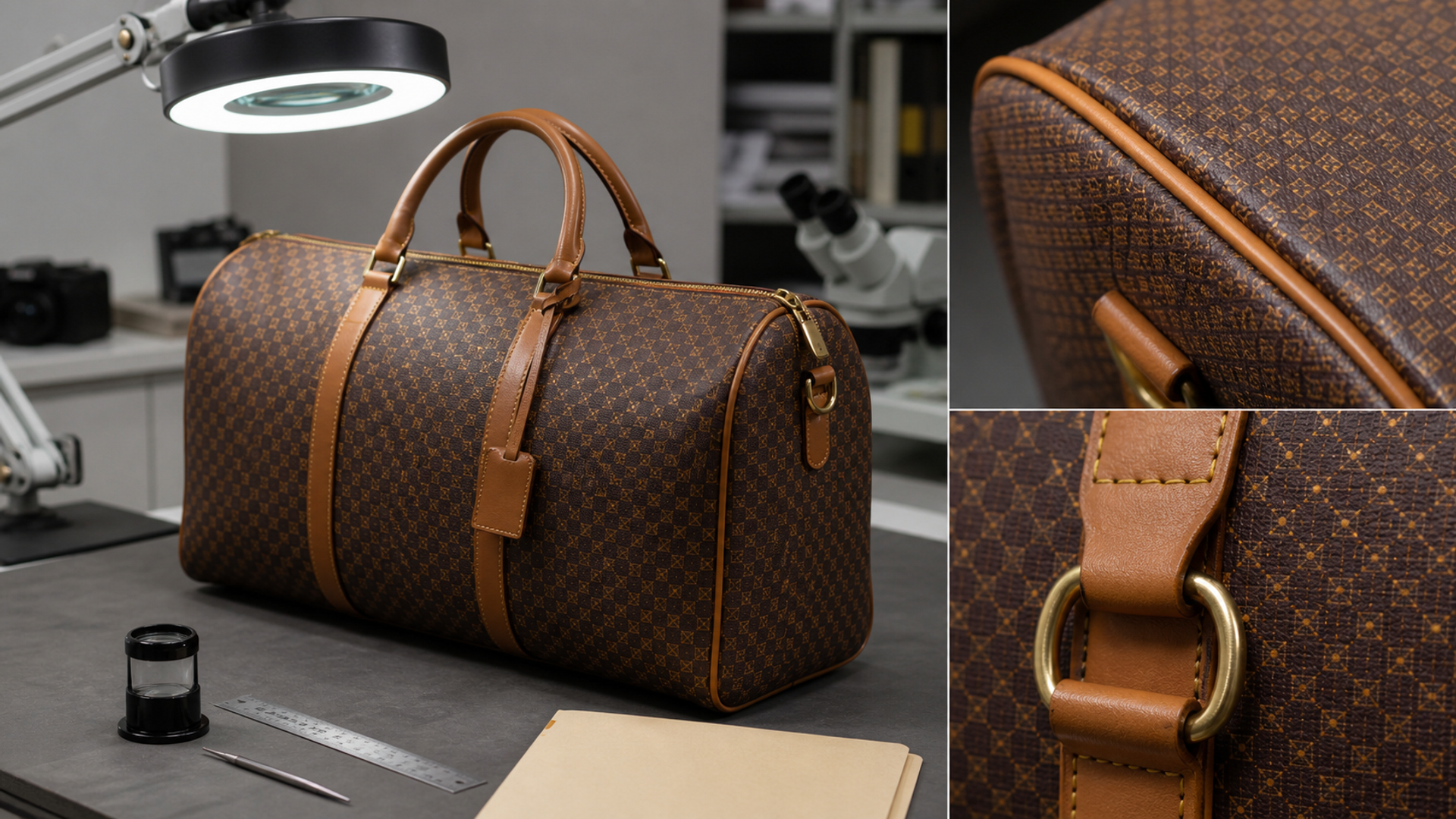
Look at canvas or leather behaviour, edge paint, seam placement, stitch consistency, hardware finish, zipper action, lining, interior stamps and overall symmetry. The objective is not to find one dramatic flaw. It is to identify whether the details tell one coherent production story. Use neutral light and sharp photographs of every side, corners, handles, interior and marks. Packaging is easy to separate from an item and should never outweigh the bag itself.
Evaluate the authenticator
Ask whether the service specialises in Louis Vuitton, which images or physical access it requires, how it handles inconclusive cases and what responsibility accompanies its opinion. A physical examination can reveal information that photographs cannot. Keep the submitted image set and report together. If two qualified opinions conflict, pause the transaction rather than shopping for the answer you prefer. The cost of caution is small relative to a high-value, irreversible mistake.
Preserve recourse until diligence ends
Use a payment method and marketplace process that allow the documented inspection. Read whether removing tags, opening packaging or using an outside authenticator affects returns. Film the unboxing when condition or item substitution is a concern and retain insured-shipping records. Contact the seller in writing as soon as a material inconsistency appears. The safest authentication workflow is designed around action: evidence must arrive while the buyer still has a practical remedy.
Evidence checklist for Louis Vuitton bag authentication
[ ] Save the original listing
[ ] Identify exact model and era
[ ] Verify seller identity
[ ] Reconcile provenance documents
[ ] Inspect the entire construction
[ ] Use an accountable specialist
[ ] Retain reversible payment
[ ] Finish review before return expiry
In a Louis Vuitton bag authentication decision, an unchecked item remains unknown. It should not be converted into a favourable assumption merely to complete the purchase.
Reader-visible sources and method
The external pages above were checked for this Louis Vuitton bag authentication publication. Price, availability, service, tax, regulation and platform terms must be reconfirmed for the buyer's market and date. Ranking pages informed the separate SERP benchmark, but their prose was not copied and they do not control the claims in this article.
Continue with adjacent VERTU editorial research
These internal links provide adjacent premium-lifestyle and decision context for Louis Vuitton bag authentication; they do not replace the specialist or official evidence needed for a specific transaction.
Final judgement
No single date code, stitch count, heat stamp or accessory proves a Louis Vuitton bag authentic. Confirm the model and period, seller history, construction consistency and provenance together; obtain a professional review with clear scope; and preserve a return right until the inspection is complete.
The useful standard for Louis Vuitton bag authentication is not certainty created by confident language. It is a decision whose evidence, downside and next review point are visible to the reader.