Key Takeaways
Acoustics Over Specifications: Sound quality is determined by hand-tuned interaction among gongs, hammers, and case resonance. A specification sheet cannot convey timbre, pitch drop, or tempo.
Dual-Train Architecture: A repeater uses an independent striking train with its own mainspring barrel, winding rack, and governor. The strike draws zero energy from the timekeeping escapement.
The 11:59 Stress Test: Setting the watch to 11:59 triggers the maximum striking load: 11 low hours, 3 double-strike quarters, and 14 high minutes (42 total blows), testing regulation, rack alignment, and tempo stability.
Strict Mechanical Safety: Never adjust the crown or change the time while the repeater sequence is striking. Doing so risks snapping the delicate feeler arms resting on the snails.
The Modern Collector's Continuum: UHNW collectors increasingly pair traditional mechanical repeaters with screenless, jewelry-grade intelligent wearables like the VERTU Cor Chain and VERTU Cor Ring, preserving classic horological aesthetics while accessing modern wellness intelligence.
A minute repeater is the one watch you cannot buy from a specification sheet. Two pieces can share an identical caliber, case diameter, and retail price, yet sound nothing alike: one strikes with pure, bell-like clarity across a room; the other arrives muffled, hollow, or rushed.
This acoustic individuality is why Patek Philippe mandates that every single minute repeater be personally auditioned and approved by the brand’s leadership in a dedicated sound booth before leaving the manufacture—a rare unbroken ritual in modern luxury.
The financial stakes of misunderstanding this complication are absolute. Contemporary catalog references command from roughly US$285,000 to over CHF 1,000,000, while vintage and grand complication variations easily scale higher at international auctions. Routine maintenance is equally specialized: factory base fees start in four figures, with total restoration timelines frequently measured in months.
Yet for the modern connoisseur, a minute repeater does not exist in isolation. It represents an overarching philosophy: the rejection of disposable, mass-produced digital noise in favor of acoustic purity, micro-mechanical precision, and heirloom materials. It is this exact design doctrine that connects traditional Swiss grand complications with VERTU’s approach to luxury hardware—from bespoke acoustic chambers to the intelligent, screenless craftsmanship of the VERTU Cor Chain.
Whether you are evaluating a modern masterpiece from Geneva or building an integrated suite of horological and digital artifacts, this guide delivers an objective framework: how striking trains function, how metallurgy dictates timbre, how to conduct an 11:59 audition, and how haute horlogerie converges with VERTU’s luxury ecosystem.
What Is a Minute Repeater and How Does It Work?
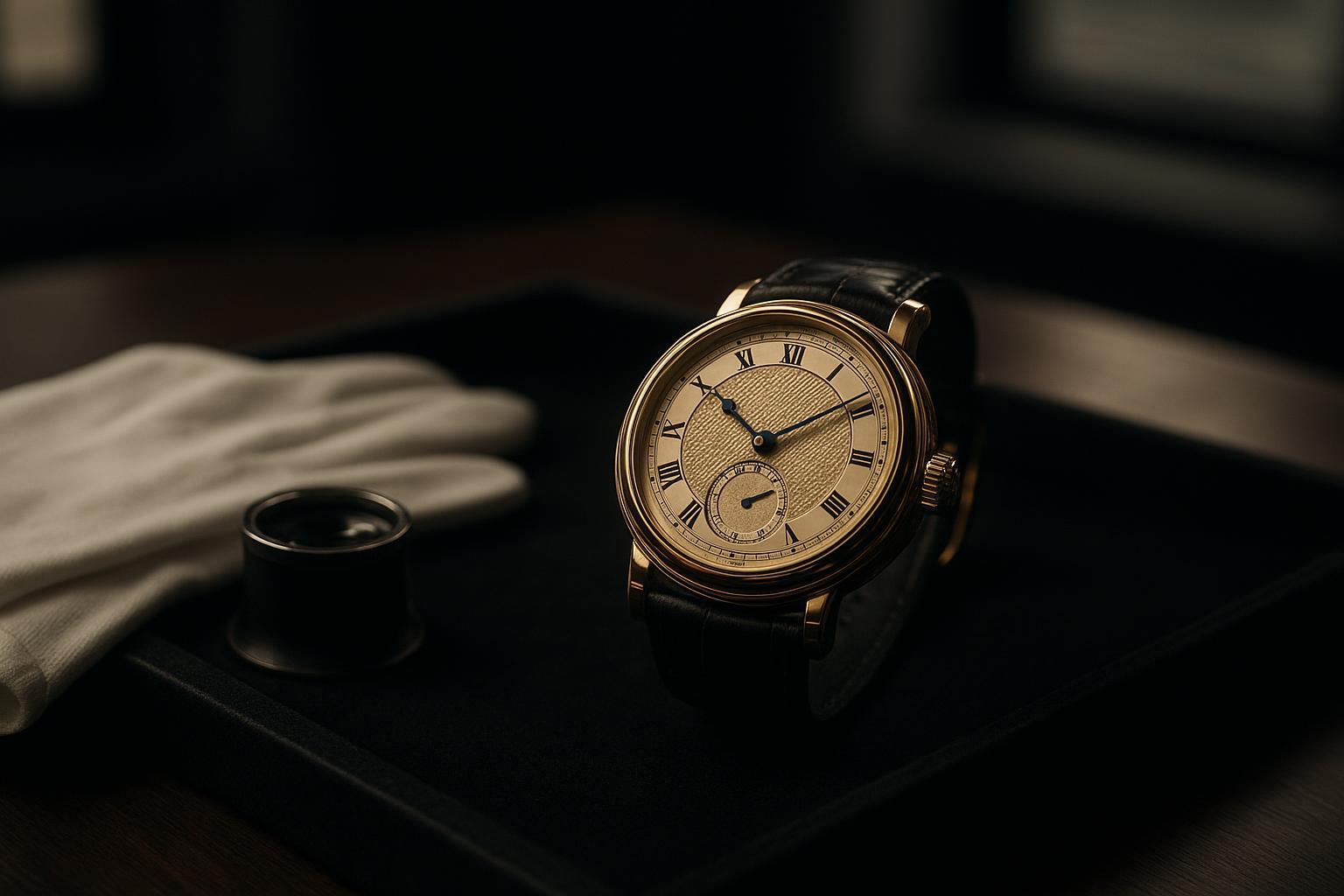
A minute repeater is a mechanical complication that audibly chimes the exact time on demand down to the minute. Activated by a case-side slide or pusher, an independent striking train reads the mechanical position of the timekeeping hands via feelers, snails, and racks, translating physical coordinates into distinct acoustic frequencies.
The striking sequence unfolds in four precise mechanical phases:
Activation: Depressing the exterior case slide or button fully winds the dedicated striking mainspring barrel.
Sensing: Spring-loaded mechanical feeler arms drop onto the stepped profiles of the hour, quarter, and minute snails.
Translation: The racks step down to their designated depths, mechanically releasing the striking train gear teeth.
Acoustic Strike: Dual steel hammers strike tuned circular gongs in strict sequence:
The Hours strike first on a low-pitched gong (one strike per hour, from 1 to 12).
The Quarter-Hours strike next as a high-low combination on both gongs (one double-strike for 15 minutes, two for 30, three for 45).
The Minutes strike last on the high-pitched gong (one to fourteen strikes indicating minutes elapsed past the quarter).
The Rack-and-Snail Geometry
This mechanical translation relies on three stepped cams mounted directly to the movement arbors:
The Hour Snail: Twelve distinct radial steps that dictate the travel of the hour rack.
The Quarter Snail: Four steps that regulate the quarter-strike gear teeth.
The Minute Snail (Star-Wheel): A complex disc featuring four lobes with fourteen individual teeth each, calculating the remaining minutes.
The Regulator: Anchor Recoil vs. Silent Centrifugal
Between hammer strikes, the striking train requires a governing mechanism to maintain an even, musical tempo:
Traditional Recoil Regulators (Pallet/Anchor): Common in vintage and classic pocket watches, this system produces a faint, rhythmic mechanical buzz or whirring undertone behind the chime.
Modern Centrifugal Governors (Silent Regulators): Favored by modern manufactures such as Patek Philippe, Audemars Piguet, and Breguet, these use weighted arms that expand against friction walls as they spin, maintaining pace with near-total mechanical silence.
Acoustic Engineering: From Chiming Gongs to VERTU Acoustic Chambers
The acoustic engineering required to tune a minute repeater shares deep technical parallels with VERTU’s proprietary approach to sound design:
The Physics of Resonance: In a minute repeater, sound is generated by hardened steel hammers striking wire gongs, which transfer vibrational energy through the gong block into the case walls. In VERTU luxury hardware, acoustic engineers utilize custom-tuned micro-cavities, dual-frequency acoustic ports, and rigid titanium alloy bodies to deliver rich, symphonic audio fidelity—famously highlighted by VERTU’s iconic orchestrations recorded by the London Symphony Orchestra.
Material Density: In both worlds, metallurgy governs sound. Heavy metals like platinum deaden acoustic waves, whereas grade-5 titanium and tempered alloys—central to both avant-garde repeaters and the VERTU Cor Chain smart module—provide unmatched acoustic conductivity, structural stiffness, and low mass.
Complexity, Architecture, and Maintenance Realities
A standard time-only mechanical movement requires roughly 130 to 180 components. A chronograph adds roughly 100 parts. A minute repeater movement typically demands 300 to 500 hand-finished parts, operating in clearances measured in hundredths of a millimeter, while grande sonneries exceed 600 to 800 components.
Because the striking train operates as an autonomous mechanism mounted atop or integrated within the base caliber, it requires its own mainspring. This spring is wound purely by the physical stroke of the exterior slide or button.
Consequently, the striking sequence takes no power from the going train. A stopped watch with zero power reserve will still chime the exact static position of the hands when the slide is pulled.
The Human Bottleneck
The rarity of minute repeaters is driven by assembly labor, not raw machining. At manufactures like Blancpain in Le Brassus, only a handful of senior watchmakers possess the acoustic and mechanical training to assemble and regulate repeaters.
A standard routine overhaul requires several weeks of dedicated bench time for tear-down, ultrasonic cleaning, individual pivot inspection, lubrication, and acoustic re-tuning. If a historic repeater has suffered impact damage or improper third-party intervention, restoration can easily stretch past six months.
Buyer Assessment Matrix
Match your wearing environment and acoustic priorities against these four collector profiles:
Buyer Profile | Recommended Metal | Ideal Gong Architecture | Water Resistance | Maintenance & Lifestyle Pairing |
Occasional Dress Wear | 18K Rose or Yellow Gold | Classic Gongs | Dust/Moisture Resistant | Warm harmonic resonance; routine service every 5–8 years; paired with the understated VERTU Cor Ring in solid gold finish for subtle evening wellness tracking. |
Active Lifestyle Rotation | Stainless Steel or Titanium | Cathedral or Surface-Bonded | 30 m to 50 m (Sealed) | Maximum sound propagation; paired with the VERTU Cor Chain in Hainan Huanghuali ($980) to ground high-tech daily performance in organic heritage. |
Acoustic Connoisseur | 18K Honey Gold or Sapphire | Cathedral Gongs (Double Coil) | Splash Resistant | Extended decay time and rich lower frequencies; heavy case metals avoided to prevent sound dampening; paired with VERTU bespoke concierge services. |
Heritage / High-Value Asset | Factory original reference specification | Factory original configuration | As delivered | Original dial, unpolished case edges, and unbroken archive documentation supersede all acoustic preferences. |
The Five Pillars of Minute Repeater Evaluation
When inspecting a minute repeater in a private salon or preview room, look beyond surface finishing and evaluate these five core criteria:
1. Sound Quality: Cadence, Timbre, and Decay
Cadence (Tempo): Strikes must land with metronomic regularity. The space between the low hours, the double quarters, and the high minutes should be natural and unbroken. A strike that starts briskly and slows noticeably as the minute rack winds down indicates a failing mainspring, hardened lubricants, or improper governor friction.
Timbre: The note should sound clear, crisp, and pure. A muddy, vibrating, or buzzing sound often points to hammer bounce, where the hammer fails to retract instantly and buzzes against the vibrating gong wire.
Target Duration: For traditional quarter-and-minute systems, a full 11:59 sequence should complete within 16 to 18 seconds. Exceeding 20 seconds signals sluggish regulation.
2. Case Metallurgy as an Acoustic Soundboard
The watch case acts as an acoustic resonance chamber. The density and internal crystalline structure of the metal dictate how vibrational energy transfers into the air:
Titanium and Stainless Steel: Low density and high hardness yield the loudest, clearest acoustic transmission.
Rose and Yellow Gold (18K): The historical benchmark. Gold offers a warm, harmonically balanced acoustic profile favored by purists.
Platinum (PT950): Platinum is exceptionally dense. Unless the movement utilizes specialized acoustic membranes or hollow resonance cavities, platinum absorbs and deadens high-frequency acoustic waves, producing a quieter, deeper strike.
3. Gong Geometry: Classic vs. Cathedral
Classic Gongs: Steel wires that wrap around the circumference of the movement in roughly a single loop. They produce a sharp, clean, rapid decay—ideal for technical, highly legible time auditing.
Cathedral Gongs: These gongs wrap nearly two full turns around the caliber, approaching twice the length of standard gongs. The additional wire mass delivers a profound, resonant baritone tone with prolonged acoustic sustain.
4. Safety Architecture: The Golden Rule
The minute repeater’s most vulnerable moment is during the chiming sequence.
Critical Operational Warning: Never attempt to adjust the time, pull the crown, or engage a secondary pusher while the striking train is running.
During the chime, delicate feeler beaks rest firmly against the stepped brass snails. Forcing the hands forward or backward with the crown strips the teeth, bends the feelers, and shears the snail arbors—requiring an immediate, costly rebuild. High-end modern calibers feature mechanical isolators that lock the crown while the chiming sequence completes; vintage and simpler architectures lack this fail-safe.
5. Service Logistics and Cost Structure
When buying a minute repeater, you are purchasing an ongoing relationship with a manufacture's grand-complication department:
Centralized Workspaces: Top-tier houses (including Patek Philippe) require repeaters to be returned to their central Swiss manufactures. Regional boutiques merely serve as logistics intake points.
The Financial Floor: While a base evaluation fee might be quoted around CHF 1,000 to CHF 2,500, a comprehensive mechanical overhaul on an ultra-complex repeater generally runs from CHF 5,000 to well over CHF 15,000, excluding custom-fabricated vintage components.
High-Horology Meets Tech-Wenwan: The VERTU Cor Chain Ecosystem
The individual who invests in a six-figure minute repeater does not wear a generic plastic fitness band on the opposite wrist. Doing so clashes violently with the mechanical integrity and aesthetic dignity of haute horlogerie.
To solve this lifestyle dilemma, VERTU developed Tech-Wenwan—exemplified by the VERTU Cor Chain and VERTU Cor Ring:
1. Screenless Harmony with High Horology
The VERTU Cor Chain reimagines the traditional Chinese scholar's bead bracelet as a luxury intelligent wearable. It contains no aggressive OLED touchscreen to compete with the dial of your minute repeater. Instead, it features a sculptured titanium alloy smart module, silver-tone crafted details, and cold enamel accents that sit naturally alongside precious metal timepieces.
2. Sacred Organic Materials: Hainan Huanghuali
Just as historic repeaters were encased in imperial timbers, the premier edition of the VERTU Cor Chain is hand-carved from Hainan Huanghuali (Dalbergia odorifera)—the legendary "Emperor’s Wood" known for its golden-amber luminescence, crystalline chatoyancy, and hypnotic ghost-face grain.
Available in 10-bead and 12-bead configurations ($980), it allows collectors to engage in tactile bead rolling, developing a personalized, mirror-like patina through daily touch.
Alternative editions in Small-Leaf Red Sandalwood provide versatile aesthetic pairings for formal business or casual meditation.
3. Pulse-Inspired AI Wellness Insights
While your mechanical minute repeater measures time via balance wheel oscillations, the VERTU Cor Chain interprets your physiological rhythms. Inspired by Eastern pulse culture, the Cor Chain’s smart module and companion app provide sophisticated, non-clinical wellness references:
Heart rate and heart rate variability (HRV) trends
Blood oxygen metrics and temperature fluctuations
Sleep architecture and recovery cycles
Energy, stress, and lifestyle fatigue patterns
(Note: The Cor Chain provides lifestyle reference only and is not a medical device.)
The 11:59 Audition Protocol: A Step-by-Step Field Test
Execute this testing protocol in a quiet room without background conversation or air conditioning noise:
Stop the Base Caliber (Optional): If the watch has hacking seconds, pull the crown to halt the escapement. This isolates the acoustic sound of the strike from the ticking balance wheel.
Position the Hands to Exactly 11:59: Ensure the minute hand is sitting directly on the 59th minute track marker, just shy of the hour index.
Rest the Watch Off-Wrist: Place the timepiece flat on a padded leather loupe pad or cradle it loosely by the strap. Do not hold the case tightly in your palm or rest it against your forearm; skin and muscle act as acoustic baffles that absorb low-frequency vibrations.
Depress the Slide Fully in One Deliberate Stroke: Move the slide smoothly to its stop point and release cleanly. Do not stutter, release halfway, or force the lever beyond its natural detent.
Time and Count the Striking Sequence:
Count the Hours: Listen for 11 distinct low notes.
Count the Quarters: Listen for 3 distinct high-low alternate pairs.
Count the Minutes: Listen for 14 crisp high notes.
Verification: The total strike count must equal exactly 42 strikes.
Evaluate the Acoustic Envelope:
Verification A: Did the 14th minute arrive at the same tempo as the first hour?
Verification B: Was there an awkward dead silence between the end of the quarters and the start of the minutes?
Verification C: Did the total elapsed chiming time clock between 16 and 18 seconds?
Advance to 12:00 and Retest: Advance the hands forward one minute. Trigger the slide again. You must hear exactly 12 low strikes, followed by immediate silence. If you hear a ghost quarter-strike or lingering minute strike, the racks are misaligned.
Critical Red Flags and Deal-Breakers
Walk away from a potential purchase if any of the following conditions appear:
The Seller Refuses an In-Person Audition: Never buy a minute repeater based on a compressed smartphone video or audio file. Microphones compress dynamic range, equalize volume, and mask background governor chatter.
Acoustic Desynchronization: If the watch hands display 10:14 but the mechanism strikes 10 hours and two quarters (10:30), the feeler beaks and snail alignment have slipped. This is a complex repair, not an external adjustment.
Uncertified Independent Service History: If a modern repeater has been opened or serviced by an unauthorized third party, original tolerances, gong heat-treatments, and hammer clearances may be compromised.
Sonnerie Confusion: Be certain of the complication you are buying. Entry-level acoustic watches under US$10,000 (such as the Christopher Ward C1 Bel Canto) are remarkable feats of engineering, but they are sonneries au passage—striking a single chime automatically on the hour—not on-demand minute repeaters reading hours, quarters, and minutes.
Market Pricing and Real-World Value Tiers
Tier 1: Entry-Level True Repeaters (High Five-Figure to $250,000): Comprises pre-owned neo-vintage references (such as 1990s minute repeaters from Blancpain, Daniel Roth, or Gerald Genta) and innovative contemporary titanium pieces from specialist independents.
Tier 2: Core Manufacture Benchmark ($300,000 to $650,000): Traditional high-horology references from Patek Philippe, Audemars Piguet, and Vacheron Constantin. Features grand feu enamel dials, hand-tuned classic or cathedral gongs, and precious metal cases.
Tier 3: Pinnacle and Openworked Complications ($700,000 to $1,200,000+): Skeletonized chiming masterpieces (such as the Patek Philippe Ref. 5303R or A. Lange & Söhne Zeitwerk Minute Repeater) combining jumping-numeral mechanics, decimal strike architecture, or multi-axis tourbillons.
Frequently Asked Questions
What is the difference between a minute repeater and a sonnerie?
A minute repeater strikes the time only on demand when a user activates a slide or pusher. A sonnerie chimes automatically in passing (au passage) as the hands cross the hours and quarter-hours, similar to a public clock tower. A Grande Sonnerie strikes both the hour and the quarter-hour at every quarter past the hour, while a Petite Sonnerie strikes only the quarter-hours at the quarters and the hour at the top of the hour.
Can you adjust the time while a minute repeater is chiming?
No. Never adjust the time while the repeater is striking. Doing so forces the hands while the mechanical feeler arms are resting inside the teeth of the hour, quarter, and minute snails. This can snap the balance pivots, break feeler beaks, and cause severe structural damage to the striking train.
How does the philosophy of a minute repeater align with the VERTU Cor Chain?
Both creations celebrate mechanical integrity, precious materials, and tactile luxury while rejecting the sterile uniformity of mass consumer electronics. Just as a minute repeater uses hand-tuned gongs and precious metals to tell time through sound, the VERTU Cor Chain utilizes hand-finished Hainan Huanghuali beads and an aerospace-grade titanium module to deliver AI wellness insights, preserving the dignity and aesthetics of high horology on the wearer’s wrist.
How much do minute repeater watches cost to maintain?
Routine maintenance generally starts around CHF 1,000 to CHF 2,500 for initial intake, testing, and basic movement disassembly. Complete overhauls, gasket restorations, and acoustic tuning typically scale from CHF 5,000 to over CHF 15,000, with exact quotes provided only after technical evaluation in Switzerland.
Can I wear a minute repeater watch daily?
Mechanically, yes, because the striking train uses an independent mainspring and does not deplete the timekeeping power reserve. However, practical daily wear depends on case water resistance. Most classical repeaters have long case-side slide slits that offer minimal resistance against water and dust. Unless the watch is explicitly built with modern waterproof pushers and gaskets (30m to 50m rating), it should be reserved for controlled environments.
Conclusion: The Integrated Connoisseur
The minute repeater stands apart from every other horological complication because its mastery cannot be quantified by numerical tolerances alone. Chronometric precision belongs to science; acoustic tuning belongs to art.
When approaching a minute repeater, let physical verification precede financial negotiation. Execute the 11:59 audition protocol, verify that the case metallurgy and gong geometry deliver the acoustic decay you seek, confirm that the safety architecture remains intact, and ensure you have direct access to an authorized restoration channel.
In the modern collector's life, this commitment to enduring craftsmanship finds its natural extension in the VERTU Cor Chain and the broader VERTU ecosystem. By uniting centuries-old sacred woods like Hainan Huanghuali with titanium-cased AI intelligence, VERTU ensures that your daily technology honors the same uncompromising standards of material beauty, acoustic pedigree, and artisanal soul as the grand complication ticking upon your wrist.