

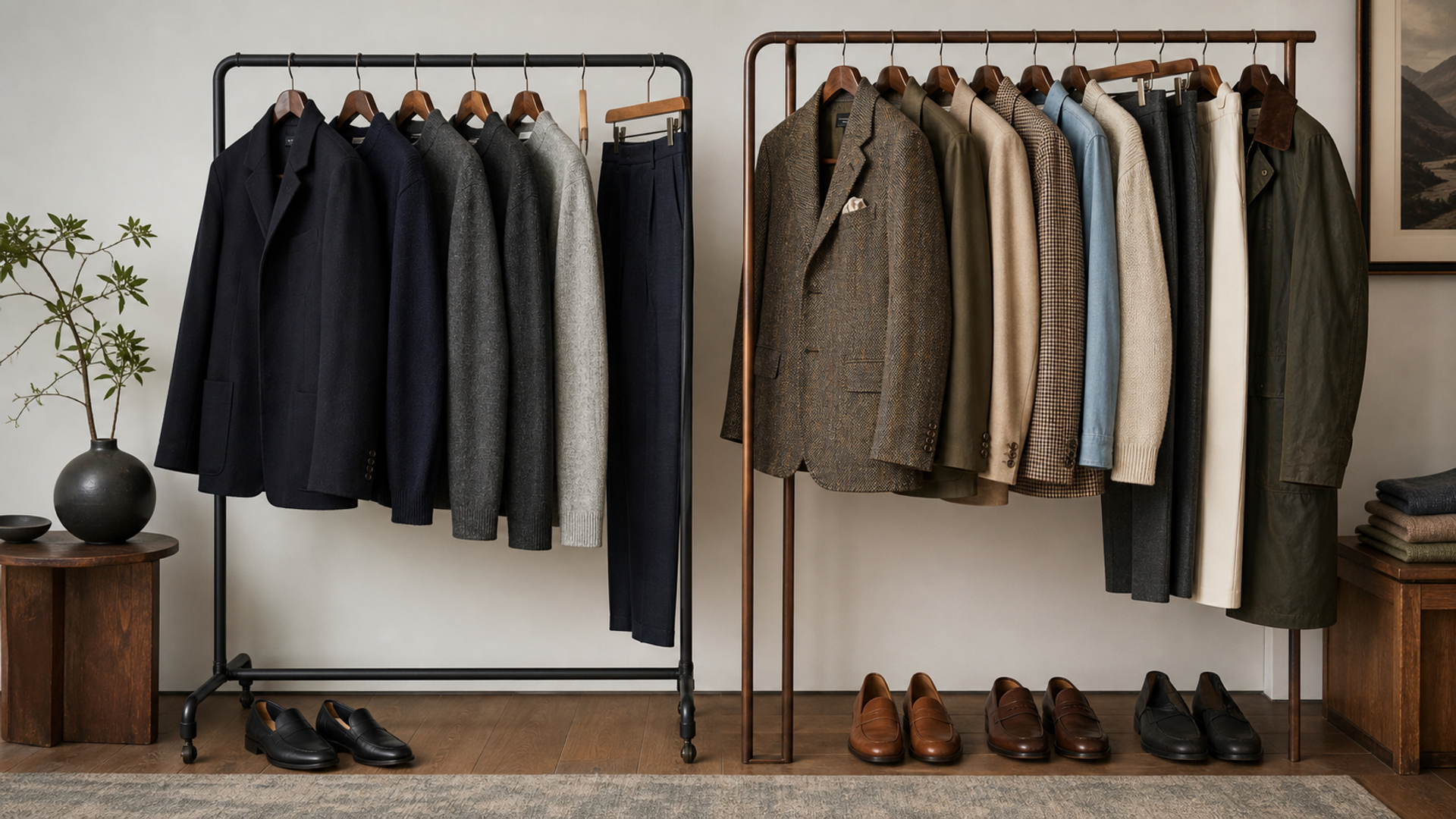
The costly mistake in this category is not simply choosing the less famous option. It is paying for a story that does not survive contact with the exact product, the owner's habits and the local service or buying conditions. This guide compares Quiet luxury capsule, Old money-inspired wardrobe and the disciplined alternative—Personal classic style—using current official material, a live VERTU content-inventory check and a decision framework designed for real ownership.
The aim is not to manufacture one universal winner. It is to identify which facts should change the choice, which claims need reference-level confirmation and when waiting is more intelligent than buying. Prices, availability, specifications, policies and service conditions can change by market and date, so verify the exact item and terms before committing.
The short answer
Quiet luxury is a modern low-logo approach built around cut, material and restraint; old money style is a broader heritage-coded vocabulary of tailoring, knitwear, loafers and country or collegiate references. The durable choice is to borrow only what fits your climate, body and life, then judge quality through fabric, construction, alteration and care rather than labels.
That answer is deliberately conditional. A high-value decision should remain sensible after the novelty wears off, after the first repair or service question, and after the product has to perform in an ordinary week. If the recommendation collapses when one marketing assumption is removed, the evidence is not yet strong enough.
Comparison at a glance
| Decision factor | Quiet luxury capsule | Old money-inspired wardrobe | Personal classic style |
|---|---|---|---|
| Visual language | Modern restraint and low visible branding | Heritage, collegiate and country references | Use only elements that suit the wearer |
| Silhouette | Clean, relaxed precision | Structured classics and traditional proportions | Tailor for actual posture |
| Colour | Tonal neutrals and controlled contrast | Navy, cream, camel, olive and seasonal checks | Build around existing wardrobe |
| Material | Texture and drape carry the interest | Traditional wool, cotton, leather and knitwear | Verify fibre, weight and care |
| Risk | Becoming an expensive beige uniform | Becoming costume or class cosplay | Prioritise function and authenticity |
| Value | Low-logo pieces can repeat easily | Classics can last when fit is right | Cost per wear depends on care and use |
Read the table as a sequence of verification prompts, not a scorecard. Some factors are non-negotiable and others are preferences. Weight each row according to actual use, then compare the exact references and local terms on the same day.
What current official material confirms
Material and care evidence is more useful than trend labels. Woolmark explains that wool garments often resist odour and creasing, need less washing and require fibre-appropriate storage and drying. Zegna publishes traceability commitments for Oasi cashmere and linen. Those facts help assess longevity, but no certification proves that an expensive garment fits well or deserves its retail price.
The primary sources used here are visible to readers:
Official pages are the best starting point for specifications, benefit wording and care guidance, but their scope matters. A family page may cover several references; a network benefit can depend on the issuer; and a material standard cannot prove personal fit. Save the exact page and date behind any fact that changes the purchase.
How to interpret the decision matrix
Visual language. For Quiet luxury capsule, the practical case is: Modern restraint and low visible branding. For Old money-inspired wardrobe, it is: Heritage, collegiate and country references. The control is to use only elements that suit the wearer. That last step matters because a headline specification or familiar name does not prove the result for the exact reference, market, owner or pattern of use. Record the evidence before letting price, scarcity or presentation decide the comparison.
Silhouette. For Quiet luxury capsule, the practical case is: Clean, relaxed precision. For Old money-inspired wardrobe, it is: Structured classics and traditional proportions. The control is to tailor for actual posture. That last step matters because a headline specification or familiar name does not prove the result for the exact reference, market, owner or pattern of use. Record the evidence before letting price, scarcity or presentation decide the comparison.
Colour. For Quiet luxury capsule, the practical case is: Tonal neutrals and controlled contrast. For Old money-inspired wardrobe, it is: Navy, cream, camel, olive and seasonal checks. The control is to build around existing wardrobe. That last step matters because a headline specification or familiar name does not prove the result for the exact reference, market, owner or pattern of use. Record the evidence before letting price, scarcity or presentation decide the comparison.
Material. For Quiet luxury capsule, the practical case is: Texture and drape carry the interest. For Old money-inspired wardrobe, it is: Traditional wool, cotton, leather and knitwear. The control is to verify fibre, weight and care. That last step matters because a headline specification or familiar name does not prove the result for the exact reference, market, owner or pattern of use. Record the evidence before letting price, scarcity or presentation decide the comparison.
Risk. For Quiet luxury capsule, the practical case is: Becoming an expensive beige uniform. For Old money-inspired wardrobe, it is: Becoming costume or class cosplay. The control is to prioritise function and authenticity. That last step matters because a headline specification or familiar name does not prove the result for the exact reference, market, owner or pattern of use. Record the evidence before letting price, scarcity or presentation decide the comparison.
Value. For Quiet luxury capsule, the practical case is: Low-logo pieces can repeat easily. For Old money-inspired wardrobe, it is: Classics can last when fit is right. The control is to cost per wear depends on care and use. That last step matters because a headline specification or familiar name does not prove the result for the exact reference, market, owner or pattern of use. Record the evidence before letting price, scarcity or presentation decide the comparison.
The matrix also exposes false precision. A single numerical advantage rarely determines long-term satisfaction. The strongest choice combines minimum acceptable performance, low ownership friction and a design or service proposition the owner continues to value after the launch story disappears.
The terms are not synonyms
Quiet luxury describes a contemporary preference for subtle branding, precise cut and tactile material. Old money style references a stylised heritage wardrobe that may include tailoring, rugby shirts, loafers, field coats and club or country cues. One can be minimal while the other is patterned and traditional. Treat both as visual tools, not claims about wealth or background.
Begin with silhouette
A well-proportioned jacket, trouser rise and knit length communicate more than a logo. Quiet luxury often uses relaxed but controlled volume; heritage dressing may use stronger shoulders, pleats and traditional outerwear. Photograph the outfit in motion and from the side. If the silhouette needs constant adjustment, it will not become a dependable uniform.
Fabric must match climate and frequency
Heavy cashmere and flannel are impractical in humid markets, while very light cloth may not hold the intended shape. Read fibre content, feel the recovery after crushing and inspect seams under light. Traceability and certification can add evidence, but the garment still has to survive the user's commute, office temperature and cleaning options.
Use colour to create repeatability
Build around two dark neutrals, one light neutral and a controlled accent. Quiet luxury often relies on tonal dressing; old money-inspired wardrobes may add navy blazers, cream trousers, olive outerwear or restrained checks. The test is whether each new item works with at least three existing pieces. A perfect isolated look is less valuable than a flexible system.
Visible branding is only one signal
Removing logos does not automatically produce quality. Examine buttonholes, lining, pattern matching, hem allowance, knit density and hardware. Conversely, a small heritage mark does not make an outfit vulgar. Decide the level of recognition comfortable for work and travel, then spend on construction and fit before paying for invisibility as a status cue.
Tailoring creates more value than trend chasing
Budget for sleeve, trouser and waist adjustments at the time of purchase. A moderately priced jacket shaped to the wearer can look more composed than an expensive unaltered one. Ask what seam allowance remains and whether the construction permits future adjustment. Shoes and trousers should be tested together because break and proportion interact.
Care determines cost per wear
Woolmark recommends following the care label, airing garments, resting wool, folding knits and drying away from direct heat. Build storage, brushing and repair into the wardrobe plan. If local cleaning is unreliable or the garment demands treatment the owner will not perform, its theoretical longevity is irrelevant. Keep spare buttons and record specialist repairs.
Build a capsule, then add character
Start with trousers, knitwear, one jacket, outerwear and shoes that solve the working week. Wear the capsule for a month before adding a statement coat, watch, scarf or patterned piece. This reveals actual gaps and prevents ten beige items from competing for the same role. Personal history and repeated use make style convincing; imitation shopping lists do not.
Match the choice to the owner
Warm-climate executive
Use breathable wool, linen and unlined tailoring rather than copying heavy European layers. Turn that recommendation into a testable buying rule: identify the feature that changes the outcome, confirm it on the exact product or service, and set a walk-away condition before the sales conversation. This keeps the decision attached to use rather than status.
Creative professional
Keep the low-logo base but add one colour, texture or unusual proportion. Turn that recommendation into a testable buying rule: identify the feature that changes the outcome, confirm it on the exact product or service, and set a walk-away condition before the sales conversation. This keeps the decision attached to use rather than status.
Traditional office
Use heritage tailoring selectively and avoid costume-level accessories. Turn that recommendation into a testable buying rule: identify the feature that changes the outcome, confirm it on the exact product or service, and set a walk-away condition before the sales conversation. This keeps the decision attached to use rather than status.
Frequent traveller
Prioritise crease recovery, easy coordination and repairable shoes over delicate statement pieces. Turn that recommendation into a testable buying rule: identify the feature that changes the outcome, confirm it on the exact product or service, and set a walk-away condition before the sales conversation. This keeps the decision attached to use rather than status.
These scenarios are intentionally different because one category can serve several jobs. The same buyer may also reach a different conclusion after a move, a change in travel pattern or a shift from occasional to daily use. Re-run the decision when the use case changes rather than defending an old purchase thesis.
The ownership-cost test
Start with the total amount required to acquire and put the choice into use. Add taxes, sizing or alterations, insurance, accessories, service, repair access and any cost created by the buying channel. Then estimate realistic years and occasions of use. A high price can still be rational when use is frequent and the product remains serviceable; a lower price can be poor value when fit, maintenance or duplicated benefits prevent use.
Avoid treating resale as a guaranteed rebate. Secondary-market outcomes depend on reference, condition, documentation, timing, fees and the spread between asking and completed prices. Use a conservative exit value or zero in the first calculation. If the decision only works with an optimistic resale assumption, the budget is carrying more risk than the product page reveals.
Time is another ownership cost. Waiting lists, claims, repairs, international shipping, repeated benefit enrolment and hard-to-source parts can outweigh a modest price difference. Record who will solve the problem, where the item can be serviced and what evidence is required before purchase. Premium should reduce meaningful friction, not merely rename it.
Pre-purchase verification checklist
Define climate, dress code and weekly use before shopping.
Choose a four-colour palette from clothes already owned.
Test fabric recovery, opacity and care requirements.
Budget alterations before comparing brands.
Require every new piece to make three outfits.
Check knit, seam, lining, button and hardware construction.
Create a care and storage routine with repair contacts.
Review cost per wear after 90 days before expanding the capsule.
Do the checklist with the exact reference, issuer, model, size or material in front of you. Save screenshots or documents for the facts that control the choice. If a salesperson cannot identify the source of an important claim, treat it as unverified until the relevant brand, issuer, certifier or service provider confirms it.
A practical scoring worksheet
Give each option a score from one to five for fit, verified performance, ownership support, daily usability and personal design preference. Multiply only the two factors that genuinely control the decision; leave the rest unweighted. Then subtract one point for every unresolved dependency such as unclear availability, missing policy wording, unknown service access or a specification that belongs to a different reference.
Next, write a one-sentence reason to buy and a one-sentence reason to walk away. The buy reason must describe an outcome, not prestige. The walk-away reason must be observable before payment. This simple discipline prevents an attractive object or benefit from becoming its own justification and makes comparison across retailers or markets more consistent.
Finally, wait long enough for urgency to cool. Recheck the evidence, the full cost and the alternative that already meets the minimum need. Scarcity can be real, but scarcity is not proof of fit. The better luxury purchase is the one that remains coherent without pressure.
Related VERTU guides
These internal guides provide adjacent decision frameworks, not substitute evidence for the current comparison. Use them to understand the wider ownership context, then return to the official source for the exact product, market, policy or service being considered.
Verdict
Quiet luxury is a modern low-logo approach built around cut, material and restraint; old money style is a broader heritage-coded vocabulary of tailoring, knitwear, loafers and country or collegiate references. The durable choice is to borrow only what fits your climate, body and life, then judge quality through fabric, construction, alteration and care rather than labels.
Choose the verified outcome rather than the loudest category signal. Confirm the exact reference and local terms, price the ownership friction, and be willing to wait when the evidence does not yet support a confident purchase.
![Top 10 Luxury Smartwatches for Business Travel [2026]](https://cdn.sanity.io/images/e0gp1l2g/production/8b5e5b21db42a1c5f040e828bd041857353a8eb2-2560x1382.webp?w=800&h=450&q=82&auto=format&fit=crop)