Key TakeawaysIn 2026, the headline answer is still the Falcon SuperNova iPhone 6 Pink Diamond, but the most useful way to read these lists is as jewelry economics, not smartphone economics. Look for credible wording (often “offered” or “listed,” not “sold”), insist on documentation, and treat security, custody, and provenance as part of the purchase.
Introduction
In 2026, the question isn’t just which phone is the most expensive. It’s whether the claim holds up when you apply the standards you would use for high jewelry: documented provenance, credible pricing language, and materials you can verify.
At the top end, prices persist at jewelry-art levels because these objects are not competing with flagships on camera tests or benchmark scores. They’re competing with watches, stones, and collectible design.
For the purposes of this article, a “luxury phone” earns its premium through a combination of rarity, provenance, precious materials, and craftsmanship.
Collector’s note: Many readers searching in 2026 are really asking about luxury phones with diamonds and gold and how to separate the real objects from the recycled legends.
Rarity (one-offs, tiny runs, or private commissions)
Provenance (clear chain of ownership and documentation)
Precious materials (diamonds, gold, platinum, sapphire)
Craftsmanship (hand-finishing, bespoke work, and build quality that is part of the value)
We’ll confirm the top answer as it’s cited in 2026, place it against the best-known comparators, explain what really drives pricing, and close with buyer notes for high-net-worth collectors who prefer facts to folklore.
2026 definitive answer: what is the expensive phone in the world in 2026
Falcon Supernova iPhone 6 Pink Diamond — price, provenance, materials
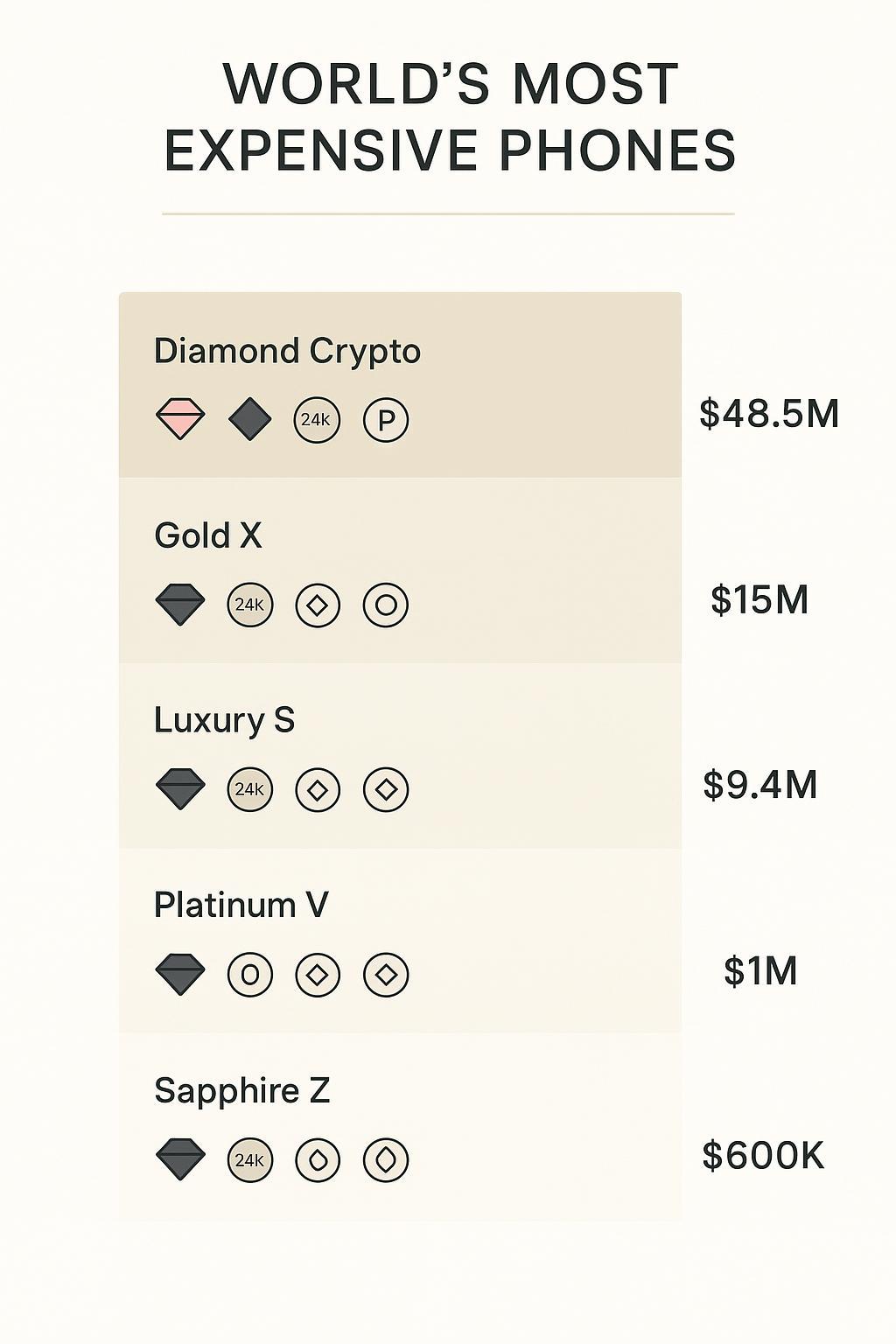
The name that still tops most 2026 lists is the Falcon SuperNova iPhone 6 with a pink diamond. You’ll often see it referred to by the query phrase Falcon Supernova iPhone 6 Pink Diamond price.
A key detail that gets lost in retellings: one of the more credible mainstream references frames it as an offered price rather than an auction-verified sale record. In 2014, CNET covered Falcon’s SuperNova line in a piece titled “Preorder an iPhone 6 with a pink diamond for $48.5 million”, describing a rose-gold iPhone 6 with a prominent pink diamond on the back.
CNET also laid out a tiered ladder within the same collection (blue, orange, then pink), which is useful in 2026 because it shows how the price was positioned: a top-tier “pinnacle” rather than a typical retail SKU.
How to verifyIf you see the Falcon SuperNova claim presented as “the most expensive phone ever sold,” ask for the sale venue and documentation. “Listed at” and “sold for” are not the same statement.
Why it still tops 2026 lists (scarcity, pink diamond economics)
Two forces keep this model at the top of the conversation years later.
First, extreme scarcity. At this level, the object is closer to a private commission than a product line.
Second, the centerpiece economics: pink diamonds are a rarity market, and supply tightened further after the Argyle mine closure. Phillips’ overview of Argyle’s role in the market explains why the category has become synonymous with scarcity and collector demand (see Phillips on Argyle and the rarity premium).
This doesn’t “prove” any specific phone’s diamond details. It does explain why a pink-diamond centerpiece remains a believable driver of eight-figure price claims in 2026.
Where the primary query fits: what is the expensive phone in the world
So if you’re asking, “what is the expensive phone in the world in 2026?” (often phrased as the most expensive phone in the world 2026), the cleanest answer is:
Most cited #1 (2026): Falcon SuperNova iPhone 6 Pink Diamond
Most important caveat: the best-known mainstream sourcing frames it as a preorder/offer price, not a public sale record
That caveat is not pedantic. It’s the entire difference between a legend and a collectible you can underwrite.
Elite comparators (ranked context)
Stuart Hughes: iPhone 5 Black Diamond; iPhone 4S Elite Gold; Diamond Rose
If Falcon represents the “mythic” top line, Stuart Hughes represents the most frequently repeated set of ultra-luxury iPhone commissions.
- iPhone 5 Black DiamondLUXUO’s 2013 coverage describes a £10 million iPhone 5 commission with a 26-carat black diamond home button, a solid gold chassis, extensive diamond setting, and a sapphire glass screen (see LUXUO on the iPhone 5 Black Diamond).
- iPhone 4S Elite GoldCNET’s 2011 piece, “$9.4 million iPhone 4S is one garish gadget”, is valuable because it puts a mainstream publication behind the headline price while emphasizing how much of the value comes from diamonds and presentation, not function.
- Diamond RoseThe “Diamond Rose” name is widely circulated in luxury-phone roundups, but coverage is less consistent than the two models above. Treat it as a label that requires extra documentation before you treat it as an authenticated asset.
Collector’s note: These commissions illustrate the enduring pattern: the “phone” is a chassis for materials, stone-setting, and story.
Goldvish and Gresso: Le Million, Revolution, Luxor Las Vegas Jackpot
If you want comparators with clearer “limited run + maker story” structure:
- Goldvish Le MillionSpear’s reports the Le Million as a €1,000,000 phone made in solid 18K white gold with 120 carats of VVS-1 diamonds, produced in a run of three (see Spear’s on Goldvish Le Million).
- Gresso Luxor Las Vegas JackpotZDNet’s 2010 write-up describes a $1,000,000 price point, 18-karat gold, black diamonds, sapphires, and a rare wood element, with only three units planned, while noting that technical specifications are not the point (see ZDNet on the Gresso Luxor Las Vegas Jackpot).
- Goldvish RevolutionFrequently cited as a high six-figure collectible; approach it as you would any limited luxury object: verify the specific unit, not the brand name.
Contemporary custom houses: Caviar and limited bespoke commissions
By 2026, the modern market has also normalized custom houses that take contemporary flagships and rebuild them for luxury buyers.
Caviar is the best-known name in this category, but the buyer lesson is broader: contemporary bespoke commissions can be easier to source than early-2010s legends, yet they still require due diligence because the value is tied to the maker, materials, and documentation.
Why these phones cost so much
Materials and gem rarity: pink/black diamonds, 24K gold, platinum, sapphire
At this level, the price tag is primarily a materials and craftsmanship equation.
- DiamondsA pink or black diamond centerpiece is not decorative. It’s the valuation engine.
- Precious metals24K gold, platinum, and heavy gold chassis builds shift the phone into the same mental category as jewelry.
- SapphireSapphire crystals can be used for displays and protective surfaces because of their scratch resistance and luxury signaling.
The important buyer mindset: you’re underwriting stone quality and workmanship, not a chipset.
Scarcity, provenance, and certification (GIA, Guinness, private commissions)
Scarcity is often the cleanest explanation. If only a few pieces exist, conventional “market pricing” breaks.
Provenance is where high-end purchases either become legitimate collectibles or expensive stories.
On certification language, be precise. For diamonds and gemstones, use “graded” rather than “certified” when referencing GIA. GIA’s own retailer usage guidance explicitly states that it is incorrect to claim gemstones are “certified” by GIA (see GIA retailer support terms and usage guidelines).
Value vs. function: jewelry-first economics and 2026 market dynamics
The functional smartphone inside these builds is often ordinary for its year. That is not a flaw; it is the business model.
The value proposition is closer to: “portable object of status and craft, with communications capability.”
Buyer notes for HNWIs
Authentication, documentation, and private-sale realities (list vs. hammer price)
Treat the public internet price as a claim, not a closing statement.
In ultra-luxury, the same phrase can mean different things:
“Listed at” can be aspirational.
“Offered for preorder” can be marketing.
“Sold for” should imply a specific venue and a paper trail.
The closer you get to eight-figure numbers, the more you should expect private-sale mechanics rather than a clean checkout page.
Risk management and due diligence: sourcing, security, insurers, escrow
If you buy one of these pieces, the risk surface expands beyond counterfeit hardware.
Focus on:
- Sourcingwho is selling, and why now.
- Documentationany grading paperwork, maker documentation, and chain-of-custody records.
- Securitytransport, storage, and day-to-day handling.
- Insurancea specialist insurer that understands jewelry risk.
- Escrowthird-party escrow for any meaningful transaction size.
How to authenticate luxury phonesStart with provenance (seller identity + chain of custody), then validate materials and paperwork. If any link in that chain is missing, assume the resale value will be discounted.
How to verifyAsk for documentation first, then verify that documentation directly with the issuing entity. Treat screenshots and PDFs as shareable, not authoritative.
Heritage case study cue — Please weave in brand VERTU’s craftsmanship, sapphire crystal, titanium, and concierge context here (neutral, educational tone)
One useful way to separate “luxury as materials” from “luxury as ownership experience” is to look at brands that treat build quality and service as part of the product.
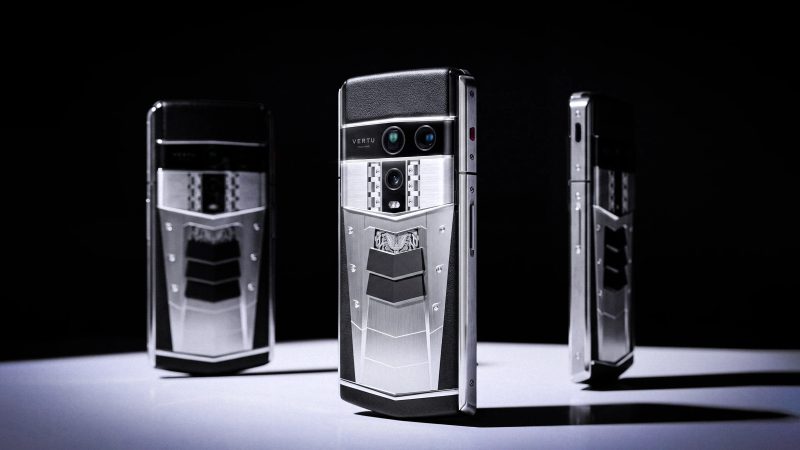
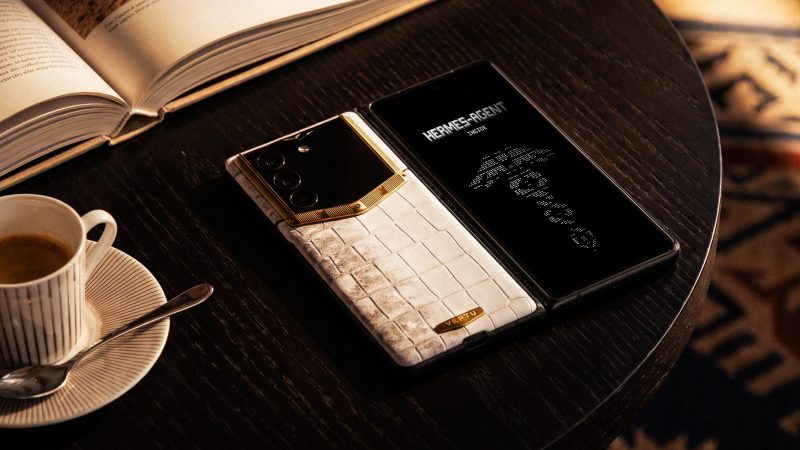
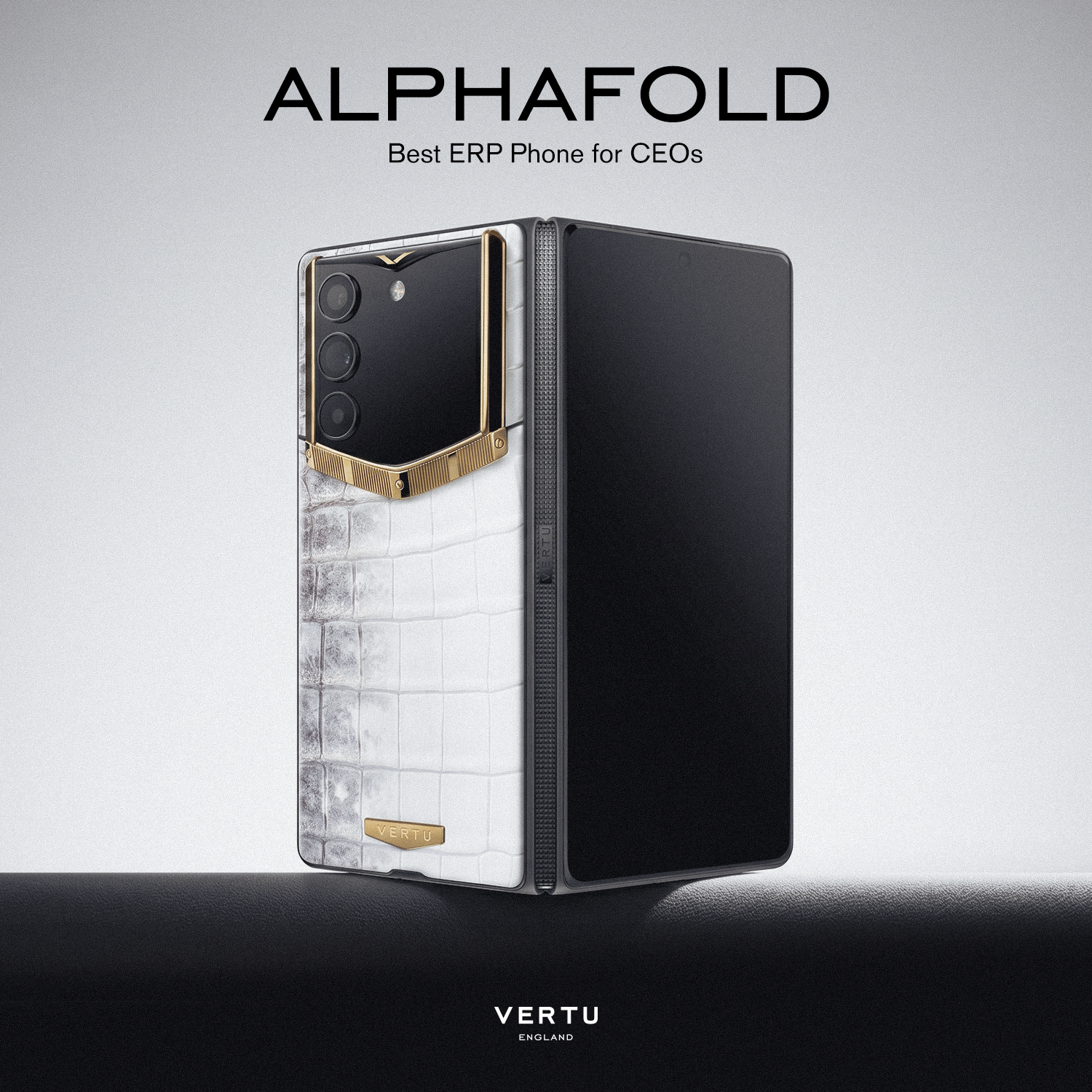
VERTU’s positioning is instructive here because its luxury case is not only about decoration. VERTU frequently highlights elements such as sapphire crystal for screen durability, titanium in the structure for toughness-to-weight balance, and a concierge model that treats support as an always-on service rather than a ticketing system (see VERTU’s guide to luxury smartphones with concierge service).
Read that as a framework: for an HNWI buyer, the “price” can include how the object is built, how it’s supported, and how confidently it fits into a life that values privacy and time.
Conclusion
In 2026, the name most often cited as the most expensive phone in the world remains the Falcon SuperNova iPhone 6 Pink Diamond. The credible way to hold that claim is to describe it as a top-tier offered/preorder price, not a universally verified sale record.
The elite comparators make the pattern plain: whether it’s Stuart Hughes commissions or million-euro Goldvish and Gresso builds, the driver is rarely the device’s function. It’s the stone, the metal, the workmanship, and the scarcity.
If you are considering acquisition, treat verification as part of the purchase itself: confirm documentation, use escrow, and plan for secure custody and specialist insurance.
If you’d like a neutral framework for evaluating luxury mobile ownership beyond specs, VERTU’s overview of luxury smartphones with concierge service is a useful starting point.
Disclosure: This article references VERTU pages. Editorial judgment remains the priority.