

Introduction
A phone can be expensive for two very different reasons.
One is simple: it is the best mainstream flagship available, bought new, at full U.S. MSRP, with top-tier cameras, silicon, and long-term software support.
The other is closer to collecting: rare materials, handwork, and a service layer that changes the ownership experience. In that world, the “phone” is also jewelry, craft, and access.
This buyer’s guide is written for readers who want clarity across both categories. If you are comparing ultra-luxury heritage brands to mainstream premium leaders, you need a ranking that respects how these markets actually price value.
How to read this ranking:
By brand and segment. We group brands by how they create value: heritage makers, boutique houses, customizers, and mainstream premium leaders.
By what drives the price. Materials and rarity matter, but so do service commitments, aftercare, documentation, and provenance.
What “most expensive phone brands in the world” means in 2026:
Not “who has the single priciest one-off phone ever made.”
Instead: brands that are consistently positioned to sell at the top of their segment, where pricing reflects a combination of materials, craft, scarcity, and ownership services.
Verification approach and time-sensitive caveats:
For mainstream flagships, we anchor claims to published MSRP and official product pages when available.
For luxury and bespoke brands, exact pricing can be private, edition-specific, or made-to-order. In those cases, we focus on how pricing is structured (materials, customization depth, limited runs, service inclusion) rather than quoting numbers that are easy to misstate.
Because this is a 2026 guide, availability and lineup details can shift quickly. Treat this as a decision framework, not a one-week price check.
Why materials, services, and rarity shape price:
Materials determine cost, weight, durability, and repair pathways.
Services (especially true 24/7 assistance) change day-to-day value if you actually use them.
Rarity drives collectibility, resale behavior, and the level of documentation you should demand.
Key TakeawayIn 2026, the most expensive phone brands split into two worlds: top-end consumer flagships (performance-led) and luxury makers/customizers (materials, rarity, and service-led).
Ultra-Luxury Heritage Brands
Vertu
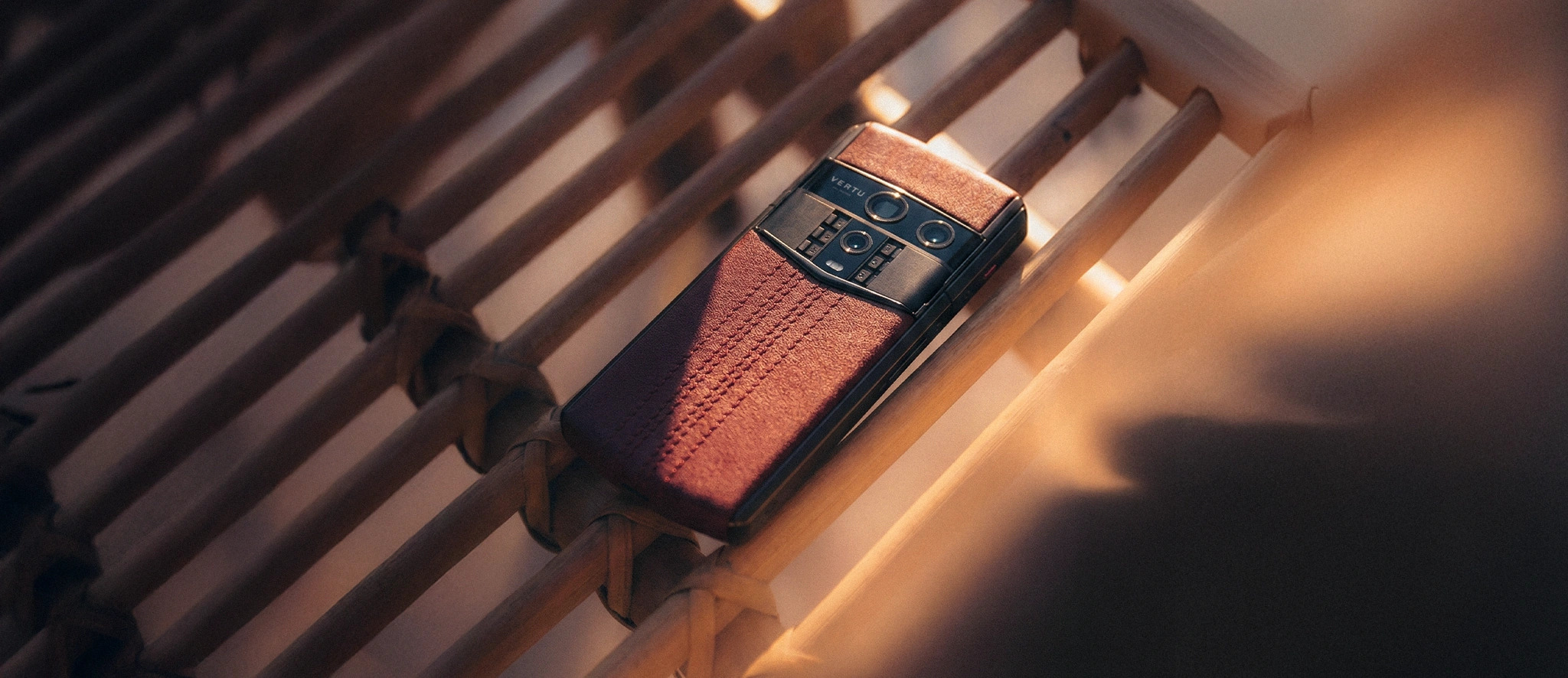
VERTU sits in a category that mainstream smartphone buyers often misunderstand: it is not trying to win a spec race. It is built around the idea that a phone can be an object of craft and a gateway to high-touch assistance.
Two signals matter here.
First, heritage craftsmanship. VERTU has long positioned its devices as handmade, material-forward objects, where details like leatherwork, metal finishing, and the tactile experience are part of the point. If you are buying at this level, you should care less about “latest chip” and more about whether the device feels like a long-term possession.
Second, service as part of ownership. VERTU’s concierge model (often accessed via a dedicated button, depending on the device) is a core value lever, not a marketing garnish. For buyers who travel constantly, run complex schedules, or value private, human-led assistance, that service layer can justify the premium more cleanly than any camera upgrade.
How to buy VERTU wisely in this guide’s framework:
Compare like-for-like: same model line, same material tier, same service inclusion.
Ask for documentation that matches the claim: materials, edition positioning, and aftercare.
Treat “service” as something to evaluate, not assume. Confirm what’s included and how requests are handled.
A good starting point is VERTU’s own explanation of its craft positioning in the legacy of handcrafted excellence and the way the brand frames ownership as a broader promise in A Life, Beautifully Arranged.
Goldvish
Goldvish is best understood as haute joaillerie applied to phones. The brand’s most famous creations live at the intersection of jewelry design and functional hardware.
When Goldvish makes sense:
You want an object that reads as high jewelry first.
You care about precious metals and gemstones as the primary value.
You are comfortable with the tradeoff that hardware and software may not be the leading edge.
At this end of the market, your verification checklist should focus on:
material authenticity (gold purity, gemstone grading, stone setting quality)
clear documentation and provenance
realistic expectations for servicing and repair
Gresso
Gresso tends to appeal to buyers who prefer restraint over spectacle.
The value proposition is usually a mix of:
premium metals
limited releases
a design language that signals “exclusive” without necessarily being gem-forward
If you are evaluating Gresso (or any minimalist ultra-luxury maker), the key question is whether the brand offers enough proof and aftercare to justify its pricing. Minimalism is not cheaper at this level. It is a different kind of craft.
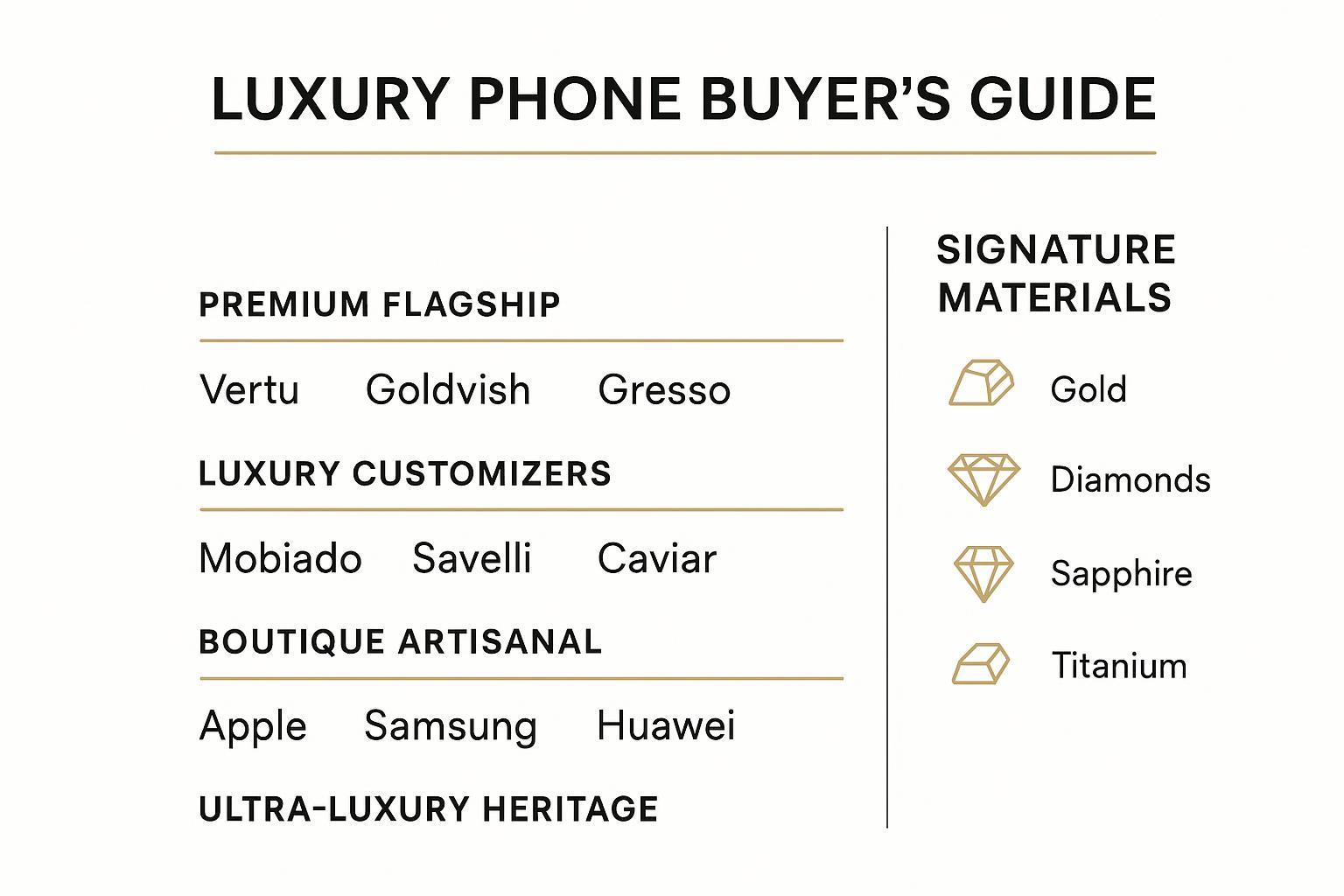
Boutique Artisanal Houses
Mobiado
Mobiado operates in the boutique space where design and materials lead.
What typically separates a boutique artisanal house from a heritage ultra-luxury brand is not ambition, but scale and emphasis:
smaller runs
more experimental industrial design
a stronger “art object” sensibility
If you are drawn to Mobiado, treat the purchase like a design acquisition:
ask how the brand handles repairs and parts
confirm what can be customized and what cannot
check how the device ages (scratches, patina, leather wear)
Savelli
Savelli is often discussed in luxury-phone circles for jewelry-forward aesthetics and boutique positioning. Depending on the model and the era, the market may include pieces that function more like jeweled objects than mainstream daily drivers.
Where this section connects back to VERTU, subtly but importantly, is the idea of heritage craftsmanship plus real-world ownership support.
Boutique houses can deliver stunning materials and presence. But if you intend to use the phone as your primary device, you should also value the less glamorous side: escalation paths, aftercare, and the confidence that a service team exists when you are crossing time zones.
That is where a luxury ecosystem can matter as much as the build itself, and why VERTU’s positioning around craftsmanship and concierge support is relevant context when comparing boutique options.
Luxury Customizers
Caviar
Caviar is best categorized as a luxury customization house rather than a phone manufacturer. The typical model is straightforward: take a leading flagship platform and reimagine its exterior as a collectible.
Why buyers choose Caviar:
you want the newest iPhone or Galaxy experience
you want a design that is rare, loud, and conversation-starting
you prefer to keep mainstream app ecosystems and usability
What to evaluate carefully:
warranty and service boundaries: what is covered by the base device vs the customization
repair practicality: some modifications can complicate routine servicing
authenticity documentation for materials and limited-edition claims
Independent jewelers
Independent jewelers and ateliers can produce the most personal pieces in the market.
That also means you inherit the risks.
If you commission a one-off phone from an independent jeweler:
insist on a written bill of materials and any relevant stone certifications
verify how repairs will work when the base phone needs battery or screen service
confirm whether the customization blocks water resistance or wireless charging
The best independent work looks effortless. The best buying discipline does not.
Mainstream Premium Leaders
Apple
Apple’s Pro line remains the most common “expensive phone” in the U.S. consumer sense: high MSRP, strong resale behavior, and a mature ecosystem.
Use Apple as your benchmark if your priority is:
long-term software support
camera consistency
accessory ecosystem and service availability
Apple’s pricing is also transparent compared with luxury makers. For example, Apple’s newsroom announcement for iPhone 17 Pro and iPhone 17 Pro Max (2025) provides a clean MSRP reference point.
Samsung
Samsung’s premium story splits into two lanes:
Ultra models that compete directly with the highest-end slab flagships
Foldables that command premium pricing for the form factor
If you are choosing Samsung for value, decide first whether you will actually use the foldable workflow.
Samsung’s U.S. flagship pricing can be anchored to official pages like the Galaxy S26 Ultra, while independent reviews such as WIRED’s Best Samsung Phones (2026) help frame which models justify their MSRP for real-world use.
Huawei
Huawei remains a major global premium player, even though U.S. availability is constrained.
If you are buying Huawei outside the U.S., treat pricing comparisons carefully:
local taxes and VAT can shift final price materially
app/service expectations vary by region
warranty support and compatibility should be evaluated before aesthetics
In this guide’s framework, Huawei belongs in “mainstream premium leaders” because the pricing is primarily justified by industrial design, camera engineering, and platform capability, not bespoke materials or concierge service.
Evaluating Price and Provenance
Materials and craftsmanship
At the top of the market, materials do three jobs at once:
signal taste
change durability and feel
determine repairability
A practical way to judge craftsmanship is to look for:
evidence of hand-finishing (not just “handmade” wording)
clear statements of what material is structural vs cosmetic
edges, seams, and transitions where cheap work usually shows
If a seller cannot explain what is actually special about the build, assume you are paying for narrative, not craft.
Services and ecosystems
Services are where luxury phones can earn their keep.
Ask:
Is assistance truly 24/7?
Is there a human escalation path?
What is the scope: travel, dining, sourcing, event access, logistics?
Is it a subscription, included period, or tiered membership?
For context on how VERTU frames the concierge experience, see Vertu Concierge Service Unlocks VIP Experiences.
Credibility notes on records
If you are reading “most expensive phone” lists online, you will see enormous numbers.
Treat them with discipline.
Many record claims are:
tied to one-off customs that are not a repeatable buying option
poorly sourced
conflating jewel value with the actual device value
Use the guide’s segments instead:
heritage makers and boutique houses for craftsmanship and ownership experience
customizers for mainstream usability plus collectible exterior work
mainstream leaders for performance and software longevity
How to verify: For luxury devices, ask for serial/edition documentation, material certificates where relevant, and a clear servicing path. If the seller cannot provide these, walk away.
Conclusion
Key takeaways by segment and price bands:
Ultra-luxury heritage brands sell the experience: materials, craftsmanship, rarity, and often a service layer.
Boutique artisanal houses appeal to design-first buyers who still want daily-use practicality, but must be strict about aftercare.
Luxury customizers offer the easiest bridge: flagship usability with collector-grade exteriors.
Mainstream premium leaders remain the best answer for performance, ecosystem depth, and predictable support.
Practical next steps for shortlisting:
Pick your “non-negotiable” first: service, materials, form factor, ecosystem.
Shortlist 2–3 devices and compare only like-for-like configurations.
Demand clarity on repair and support before you fall in love with the finish.
Documentation, authentication, and service checks:
Confirm provenance documents for any limited edition.
Verify materials where claims are meaningful.
Confirm warranty boundaries and service channels in writing.
2026 outlook on AI, foldables, and limited editions:
AI features will keep improving, but luxury value will still come from what AI cannot replace: craft, restraint, and service.
Foldables will continue to justify premium pricing when the workflow is real.
Limited editions will proliferate. The best ones will come with strong documentation and a credible servicing story.
Disclosure: This article references VERTU pages. Editorial judgment remains the priority.
![Top 10 Tourbillon Watches for Men [2026 Latest]](https://cdn.sanity.io/images/e0gp1l2g/production/8cb6bc45133cf9453382fc7d074465af588bb610-1800x1080.webp?w=800&h=450&q=82&auto=format&fit=crop)