Can a white gold watch turn yellow? A watch made from genuine white-gold alloy can look warmer or faintly yellow over time if a bright rhodium surface wears and reveals the underlying alloy. That is a possibility, not a diagnosis from a photograph. A watch described as “white gold” might instead refer to a colourway, a plated component or a different construction. Confirm the exact case and bracelet materials before deciding that yellowing is normal wear or ordering a refinishing service.
Why white gold can have a warmer tone
Pure gold is yellow. White gold is an alloy: gold is combined with other metals to create a paler material. The World Gold Council explains that white gold is commonly given a rhodium finish for a harder, brighter surface. Different alloy recipes can have different underlying tones. A bright white appearance at purchase therefore may reflect both the alloy and the finish above it.
The Gemological Institute of America notes that rhodium plating can wear over time and that a jeweller can advise on replating a suitable piece. Its explanation concerns jewellery generally; a watch has additional parts, seals and finishes that make service more specialised. Do not assume that a procedure offered for a ring can be applied to an assembled watch without taking it apart.
White gold itself does not “turn into” yellow gold. What changes is the visible surface or the way its colour is perceived. A naturally warmer white-gold alloy may show through where rhodium has thinned. The effect can be gradual and uneven because the clasp, case edges and bracelet links see different contact. A single yellowish patch might also be residue or a reflection, so the next step is inspection rather than a home treatment.
Is the watch actually made of white gold?
Read the model's current technical description, receipt and any hallmark or quality mark. Ask the seller which specific parts are solid white gold, plated, steel, ceramic or another material. The case, bezel, bracelet and clasp may not share the same construction. A product title alone cannot establish precious-metal content. Nor can a pale photograph: silver-tone steel and rhodium-finished gold may look similar under studio light.
GIA's white-gold comparison explains that an alloy's exact composition affects its apparent warmth and that rhodium can create a brighter white appearance. Ask whether rhodium was applied to the part that seems to have changed. If there is no confirmed rhodium finish, replating may be the wrong response. If the component is plated base metal, a different repair route may be needed.
For a watch, documentation matters more than a home chemical test. Acid tests, abrasive polishing or scraping can mark the case, remove a coating and damage water-resistance components. A watchmaker or qualified jeweller can inspect the finish without requiring you to experiment. Keep the original paperwork and take clear photographs of the changed area under neutral light before you seek service.
Separate wear from dirt and lighting
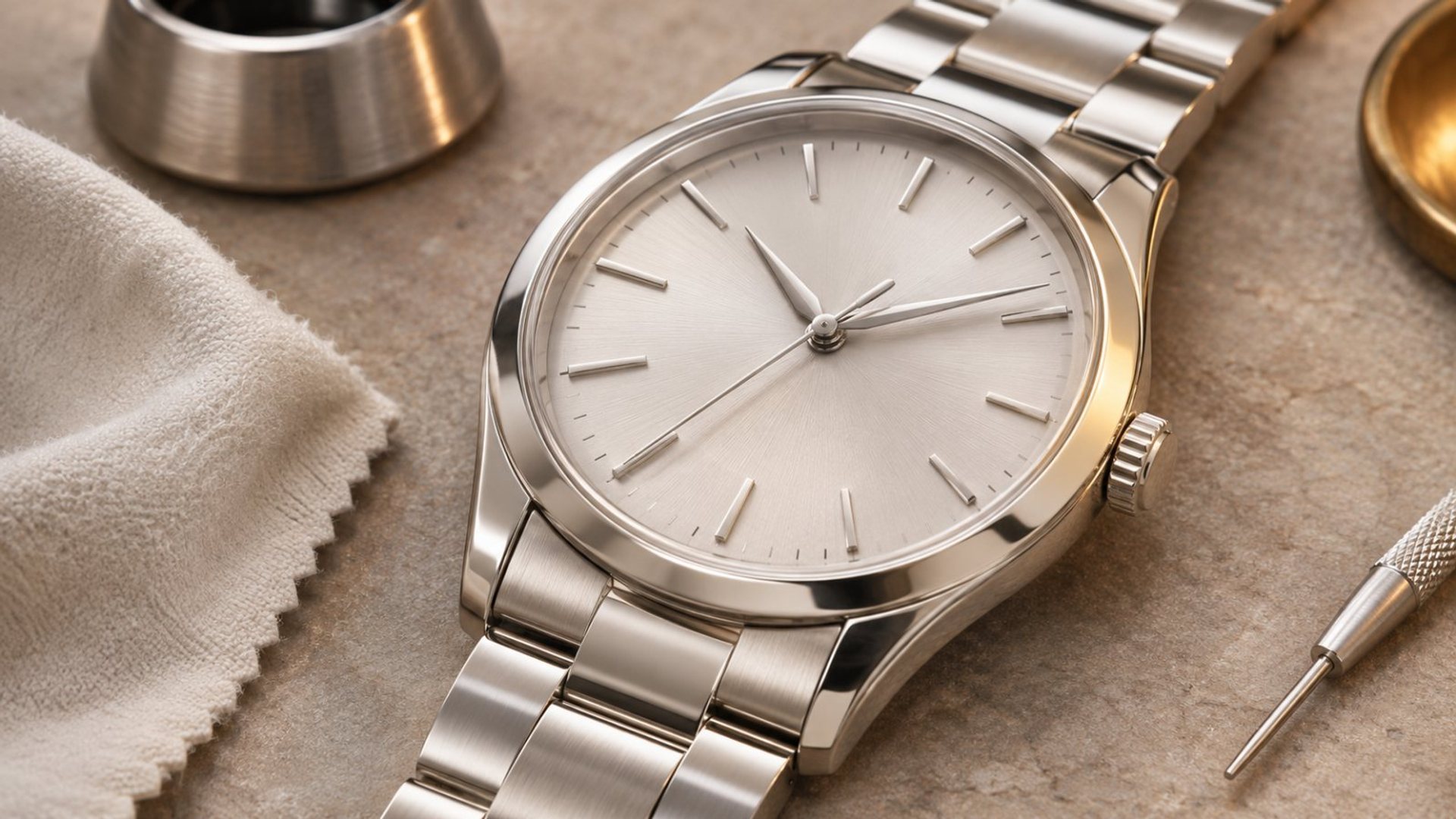
Look at the watch in indirect daylight against a plain background. Compare several surfaces: the back of the clasp, the outer bracelet links and areas sheltered from contact. If the colour changes with the lighting angle, you may be seeing a warm reflection. If a dull film wipes away using the manufacturer's approved care method, the issue may be surface residue. If one high-contact edge remains warmer after safe cleaning, finish wear becomes more plausible.
Do not use toothpaste, metal polish or an ultrasonic cleaner on an assembled watch unless the maker explicitly approves it. These methods can abrade plating, affect decorative inserts or expose seals and electronics to risk. A soft cloth and the product's own care instructions are the conservative first step. If the watch is set with stones or has a composite case, a generic gold-cleaning instruction may be especially inappropriate.
Notice the pattern of colour change. A uniform warm tone across a documented white-gold alloy may be its inherent colour under a different light. Localised changes around edges or a clasp may suggest surface wear. Dark spots, peeling, roughness or a sudden change after chemical exposure call for professional inspection. None of these observations proves a specific alloy or plating without a material record.
What refinishing may involve
If an authorised service provider confirms worn rhodium on a suitable component, refinishing may include preparation and replating. The work must account for adjacent surfaces and the watch's construction. A case may need disassembly; a bracelet may require separate handling; gemstones and coatings may impose limits. Ask what the provider will remove, protect, polish and test before agreeing to the work.
Polishing itself removes material, so it is not a casual answer to every mark. A collector may prefer to retain an original finish rather than erase wear through repeated refinishing. Ask whether the proposed process changes sharp case edges, brushed surfaces, hallmarks or water-resistance assurances. Request a written estimate and a description of the expected final appearance. The best result is one that respects both material and ownership preferences.
There is no universal replating schedule. Wear depends on finish thickness, use, contact and care. Some owners prefer a bright white appearance and request service when the tone becomes noticeable. Others accept the warmer alloy showing through. The decision should follow a verified material description and a professional view of the actual watch, not a fixed number of months from an unrelated ring guide.
A VERTU Fusion Watch naming caution
VERTU currently lists a Fusion Watch White Gold Smartwatch. In the product material reviewed for this article, the public listing does not establish that its case is solid white-gold alloy or that it has a rhodium coating. The VERTU product knowledge base identifies the Fusion Watch collection but does not fill in those construction details. It would therefore be inaccurate to apply the general rhodium explanation to this specific model as a confirmed fact.
For that product, ask VERTU support for the exact case, bezel and bracelet material specifications and the authorised finish-care process before using a jeweller's replating service. A name can describe a visual finish rather than precious-metal composition. If the watch appears discoloured, provide its model, serial or order details and a photograph of the affected area. Let the maker identify the correct service path.
The broader Fusion Watch collection includes several colour and material presentations. Do not transfer a material claim from one variant to another. A case labelled black gold, white gold or diamond in a catalogue still needs a component-level specification before an owner can decide how to clean or repair it.
Questions to ask before service
Ask five questions: What is the base material of the affected component? Is it plated, and with what? Does the proposed service require the watch to be opened? Will the finish and water-resistance be tested afterward? How will the work affect the warranty and original appearance? Request answers for your exact watch variant. A competent service provider should be able to explain the scope and limits before work begins.
Keep a record of the watch's present condition and any service paperwork. If the warm tone returns later, that history will help distinguish ordinary finish wear from a recurring defect or a different material issue. It also helps a future owner understand what has been done to the watch. Avoid promises of permanent whiteness: exposed surfaces continue to experience contact during wear.
Frequently asked questions
Does white gold itself become yellow gold?
No. The alloy does not transform into yellow gold. A warmer underlying tone can become visible when a bright surface finish wears, or a different lighting condition can change its appearance.
Can a jeweller replate any watch?
No. The component material, coatings, seals, stones and electronic parts must be assessed. Ask an authorised watch service provider before applying a jewellery-plating process to an assembled watch.
Does “White Gold” in a model name prove solid gold?
No. Verify the materials of each component in the exact variant's documentation. A name or photograph alone does not establish precious-metal content.
Can I polish away yellowing at home?
Avoid abrasive polishing unless the manufacturer instructs it. It can remove a coating or alter the case finish. Start with approved gentle cleaning and seek a material-specific diagnosis if the colour remains.
Conclusion
Some genuine white-gold watches can appear warmer as rhodium wears, but the answer for any particular watch begins with its construction. Confirm the material and finish, examine the change in neutral light and use an appropriate watch service provider. A carefully verified diagnosis protects the watch from an unnecessary or damaging treatment.