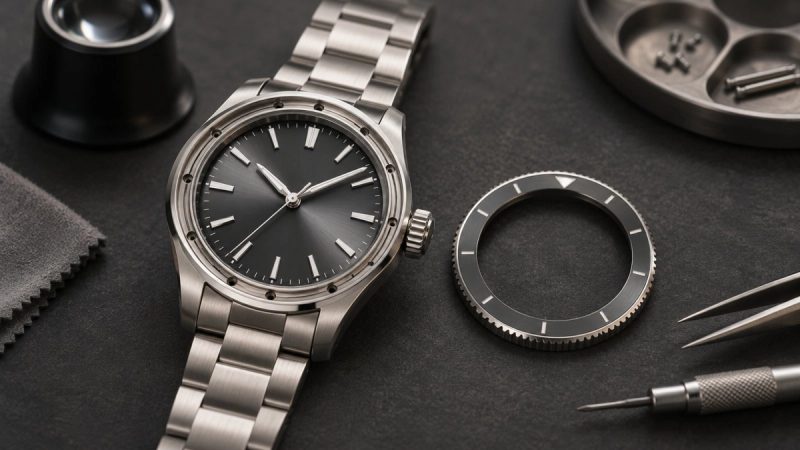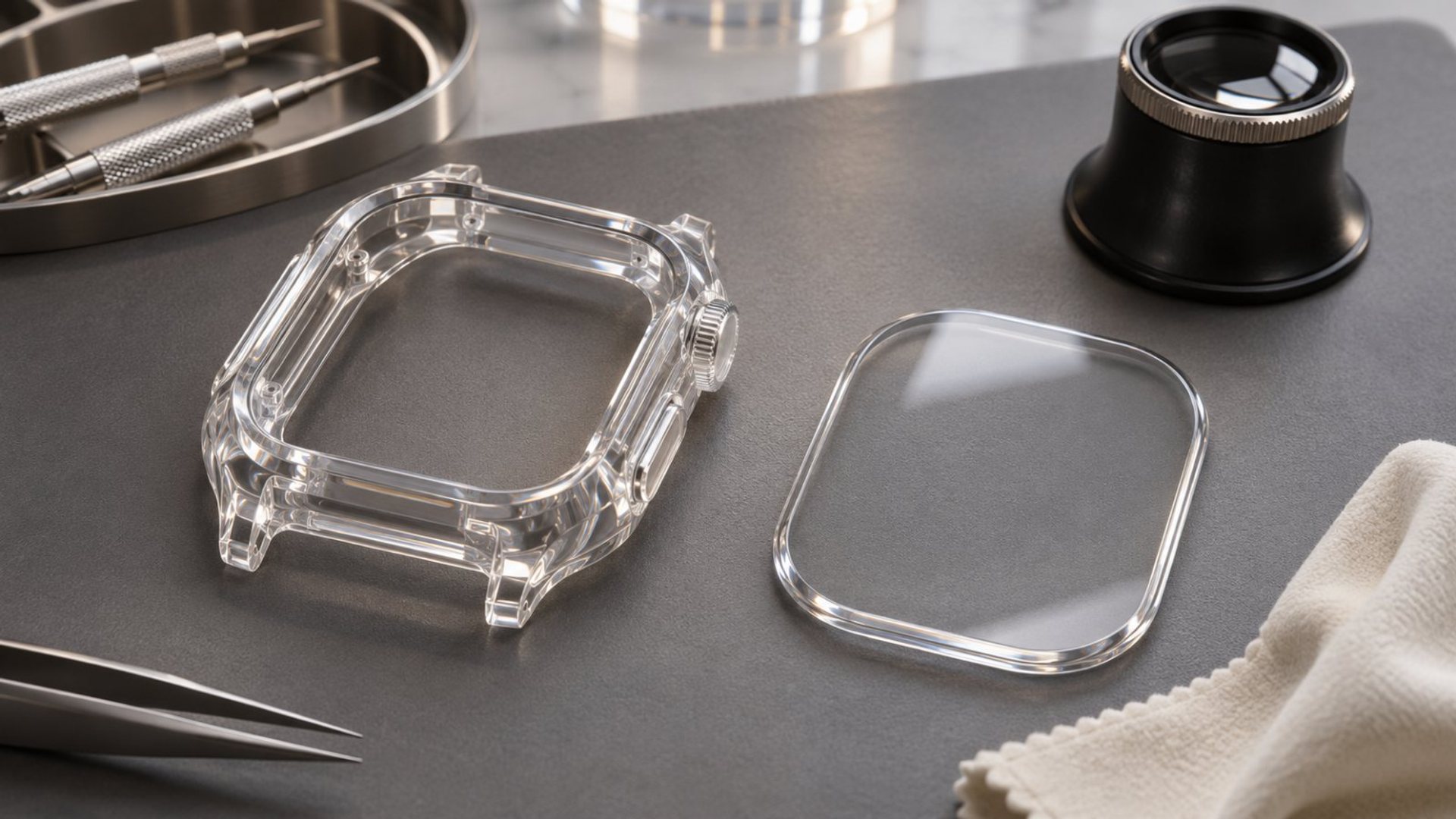
Crystal-cased watch repair starts by identifying exactly what is damaged. “Crystal” may refer to the transparent case, the front lens over the display, or a material description used for another component. A scratch on the outer case, a cracked lens and a damaged display require different assessments. Ask the manufacturer or authorised service provider for the part, repair method, cost and post-repair testing before anyone polishes, opens or glues the watch.
Start by naming the component
Look at the watch from the front and sides under gentle light. Is the mark on the front surface through which you read the time, on the raised case edge, on the case back, or beneath the outer surface? Does it catch a fingernail? Does the display still respond? Record what you can see without pressing a crack or testing the watch in water. Clear photographs from several angles are more useful to a service team than the single phrase “the crystal is broken”.
Watchmakers often use “crystal” for the protective front lens. A brand may also describe a transparent case as crystal. Those meanings should not be collapsed. The current VERTU Agent Watch product page, for example, describes a hand-polished crystal case and separately names a Corning glass lens. A mark on one should not automatically be treated as damage to the other. The product's exact variant and service documentation should determine the next step.
A visibly cracked front lens can expose the display and internal parts to dust or moisture. A damaged transparent case may affect its appearance or structural integrity. A dark patch below the lens may be a display issue even if the surface feels smooth. Stop using a device that is overheating, swollen, leaking or showing electrical damage, and contact the maker. Do not try to diagnose an internal fault by opening it yourself.
Which component would the repair actually replace?
The first question for a service provider is whether the damaged part can be replaced separately. Some watch components are assembled as modules; the maker may replace a complete lens and display unit or a larger case assembly. A local repair shop may offer a cosmetic polish, while authorised service may recommend a new part. Neither path should be assumed until the provider has inspected the exact model and explained what the work entails.
Request a written estimate that identifies the component, labour, shipping and any diagnostic charge. Ask whether the part is original and currently available, how the replacement will match the watch's finish and what happens to removed parts. If the watch has stones, a shaped case or a distinctive finish, ask whether these details will be preserved. A low initial quote that excludes the necessary sealing or testing may not be the complete cost.
Confirm warranty and insurance implications before authorising work. Accidental damage may be treated differently from a manufacturing fault, and terms vary by brand, market and purchase channel. Apple's watch service page illustrates why a personalised inspection and estimate matter: options can vary with parts and location. It is an example of service practice, not a statement of VERTU's policy.
Do not polish an unknown surface
Home polishing advice for an ordinary acrylic lens may be unsuitable for glass, a coating, a shaped transparent case or a screen with touch layers. Abrasive compounds remove material and can change an edge or surface finish. Adhesive can leave residue, trap dirt or interfere with later disassembly. A “scratch remover” may turn a small mark into a large cloudy area. Ask the maker what the component actually is before applying any product.
Even a professional polish has limits. A deep chip may require so much material removal that the original profile cannot be retained. A coating may be damaged before the underlying surface changes. A crack is not a cosmetic blemish to buff out. If a jewelled or sculptural case is involved, the work may require tools and parts specific to that design. A careful service team should explain why it recommends repair, replacement or no intervention.
If the mark is only visible under strong light and does not affect use, document it and consider whether service is worthwhile now. For a collectible watch, preserving original surfaces can matter to the owner. For a connected watch used daily, a cracked front lens that threatens moisture protection may justify prompt assessment. The answer depends on damage, construction and personal priorities rather than a universal rule about scratch size.
Ask about seals and water resistance
Opening a watch can disturb gaskets and seals. Ask whether they will be inspected or replaced and whether the completed device will undergo the relevant water-resistance test. Seiko describes water-resistance testing as part of its complete service process for its watches. That example shows the kind of question to ask; it does not guarantee another manufacturer's service includes the same test.
A published protection rating for a new watch does not mean a damaged or opened watch retains that rating. Ask for the test method and result in writing if water use matters to you. Also ask whether the case-back seal, charging contacts, buttons and microphones were checked after assembly. If the provider cannot test the watch to its intended specification, adjust how you use it and consider an authorised alternative.
Do not deliberately immerse a repaired watch to “test” it yourself. Home immersion can create a new failure without identifying which seal is at fault. Let the service team perform controlled testing appropriate to the model. If water entered before repair, tell them; moisture exposure can create internal problems beyond the visible crack.
Protect your data before a connected-watch service
A smartwatch can contain notifications, account links and personal settings. Ask the maker whether a backup, unpairing or reset is required and whether the service will erase data. Follow its official preparation steps, not a generic reset sequence, so that you retain the information you need and release the watch safely to the provider. Apple's service-preparation guide is an example of why data preparation belongs on the repair checklist.
Record the model, serial number and visible damage, and keep proof of purchase. Remove any accessory that the service centre does not request, but keep specialised parts with the watch if required. Agree on return shipping, insurance and who bears the risk of a lost or damaged parcel. These administrative details become important when the watch has a distinctive case or is difficult to replace quickly.
Questions for a VERTU Agent Watch owner
The VERTU product knowledge base identifies Agent Watch with a hand-polished crystal case, a Corning glass lens and a fluoroelastomer strap. It does not give permission to polish the case at home or specify a replacement-part catalogue for every market. If an Agent Watch is damaged, contact VERTU with the exact variant and photographs and ask whether the affected piece is the lens, case or display. Do not infer a repair method from the word “crystal” in the product name.
Ask whether the proposed work will preserve the tonneau case's finish, what parts are available, whether the device must be opened, and what tests follow. If the watch's connected functions are important, request a check of display, charging, buttons and pairing after repair. The Agent Watch collection shows current variants; use the precise variant name when requesting a quote. Availability and terms should be confirmed with support at the time of service.
A transparent case makes surface changes more visible, but it also makes accurate identification essential. A scuff on a strap, a mark on the glass and a chip in the case should not receive the same estimate. Ask for a diagnosis before agreeing to a broad “crystal repair” line item.
Frequently asked questions
Can a cracked watch crystal be polished?
No ordinary polish repairs a crack. Ask a qualified service provider whether the affected lens or case component must be replaced and whether other parts were damaged.
Does a new lens restore water resistance?
Not automatically. Seals, assembly and testing matter. Ask for the maker's relevant post-repair checks and the documented result.
Can any jeweller repair a crystal-cased smartwatch?
Do not assume so. A connected watch combines case materials, display, electronics and seals. Seek the maker's service guidance and assess any proposed independent repair against parts and testing needs.
Should I reset the watch before service?
Follow the manufacturer's instructions after backing up or recording what you need. Ask whether the provider will erase data and how to remove account locks without disclosing passwords.
Conclusion
A good repair begins with the right noun: case, lens, display or strap. Once the damaged component is clear, seek an estimate that covers parts, finish, sealing and function checks. That sequence protects the watch and helps you compare service choices on the work they will actually perform.