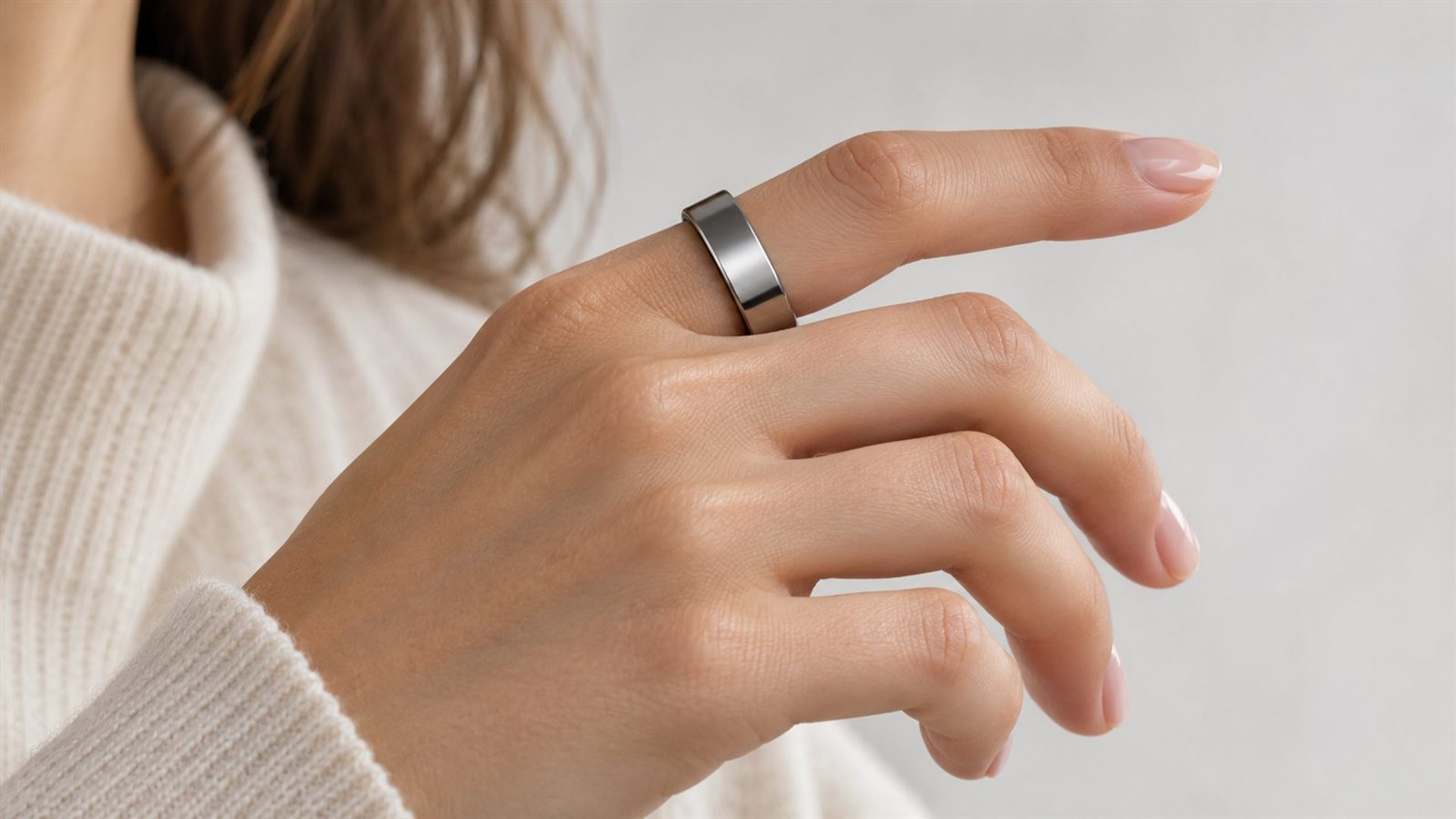
Wondering which finger a smart ring should go on? Start with the manufacturer's guidance, then choose a finger where the ring stays comfortably in place and its sensors maintain consistent skin contact. Index, middle and ring fingers are common options for some brands, but no single finger is proven to give the most reliable readings for every ring and every wearer.
The practical test is fit across a normal day and night, not how the ring feels for one minute in a shop. This guide explains finger choice and signal consistency. If your finger changes size substantially over the day, use a separate sizing assessment rather than treating a finger switch as a substitute for the right ring size.
Why does finger choice affect a smart ring?
A smart ring may use optical sensors against the skin to estimate pulse-related signals. Movement, gaps, rotation and changing contact can interrupt that signal. The exact sensor position and supported finger choices differ by product. A statement about one brand's optical design should not be copied to another as if every ring uses the same hardware or processing.
Oura says its ring can be worn on any finger of either hand but recommends the index, middle or ring finger for signal quality. It also says the fit should be snug yet comfortable, without a gap when the hand forms a fist. That is Oura's product guidance, not an official ranking for all smart rings.
Samsung's Galaxy Ring instructions put the emphasis on a comfortable fit and a specific orientation indicator facing the palm. The example demonstrates why a ring's position can matter as much as the finger chosen. Use the orientation rule for the model you own rather than borrowing another brand's marker position.
Should you choose the index, middle or ring finger?
Try each finger allowed by your maker's instructions. The index finger often offers a stable placement for some designs, but it can be more exposed to daily contact with handles, tools and other objects. The middle finger may feel more balanced for some wearers yet sit close to neighbouring rings. The ring finger may be comfortable and familiar, though a wide knuckle or existing jewellery can affect fit. These are practical considerations, not evidence of a universal sensor hierarchy.
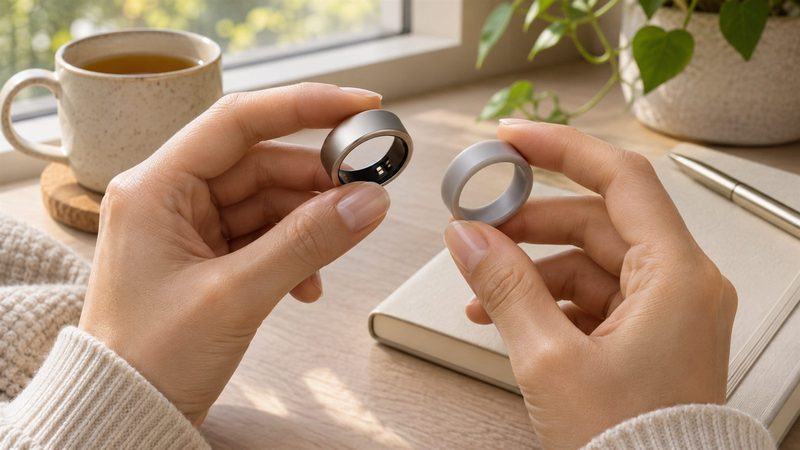
Look for a finger where the ring passes over the knuckle without force, sits securely at the base, and does not rotate freely during ordinary movement. Try opening a bag, typing and sleeping in the sizing sample. The finger with the least irritation and most consistent contact is a stronger candidate than one chosen solely because an online list calls it “most accurate.”
Dominant-hand preference matters too. If the ring repeatedly strikes objects during your work, a finger on the other hand may be more comfortable and may reduce movement. There is no need to force that choice if the maker recommends a different placement or if it produces a poor fit.
How can you test sensor contact before buying?
Use the official sizing kit where available. Wear a sample for a full day, including the activities and sleep period that matter to you. Oura recommends at least 24 hours with its sizing ring before confirming a size; Samsung advises choosing a finger where the Galaxy Ring fits comfortably. The sizing kit for one brand should not be assumed to match another brand's dimensions.
Check the fit at several points: morning, after a walk, during work and before bed. Fingers can feel different with temperature, activity and time of day. A ring that spins when hands are cool may lose consistent contact; one that is difficult to remove in the evening may be too tight. If the ring causes pain, marked pressure or discolouration, remove it and seek the maker's sizing advice.
Look at the inner sensor area while the ring is on. The relevant contact surfaces should meet the skin according to the manufacturer instructions. Do not push the ring so tightly that comfort is sacrificed. More pressure does not automatically produce better data, and it may make continuous wear impractical.
What if readings have gaps or seem inconsistent?
First check fit, orientation and whether the ring was actually worn through the period in question. A loose ring can shift; a ring placed backwards may put sensors away from their intended position. Check whether the app and device are updated and whether the ring has enough charge. Follow the manufacturer troubleshooting flow for the model.
Cold hands, vigorous movement and changing skin contact may also affect optical readings. Oura's guidance on heart-rate graph gaps identifies finger selection, snug fit, sensor position and cold fingers as possible contributors for its device. That does not quantify an error rate for other brands or prove that changing finger alone will solve every gap.
Compare patterns over several ordinary days rather than treating a single missing point as a diagnosis. Smart rings intended for general wellness estimate trends; they are not a replacement for a clinical measurement. If a health concern is involved, discuss it with an appropriately qualified professional rather than relying on a ring to confirm or exclude a condition.
Can you switch fingers during the day?
Only within the maker's supported use and size guidance. Moving a ring between two fingers with similar circumference may preserve comfort, but a looser second finger can compromise sensor contact. If you change fingers, record the change when interpreting trends and check whether the app expects a particular finger or orientation. Consistency helps you understand whether a change in data reflects your routine or simply a change in wear.
A different finger may help if one becomes temporarily uncomfortable, but it should not mask persistent swelling or a size mismatch. Avoid forcing a ring over a knuckle or leaving it on when it is difficult to remove. Seek manufacturer advice about size exchange or adjustment when the fit is persistently wrong.
What does VERTU specify for COR RING?
VERTU COR RING is a jewellery-led wearable for general-wellness insights. Its product knowledge base says to use the official sizing guide or kit and choose a secure, comfortable fit that keeps sensors in consistent contact with the skin. It does not establish that an index, middle or ring finger is uniquely best for this model. Follow the current COR RING fitting instructions for the exact edition rather than transferring Oura or Samsung's finger preference.
Use the VERTU ring collection to identify the edition, then obtain its sizing and care guidance. If the collection page does not resolve the fitting question, contact VERTU support before selecting a size. COR RING's interpreted metrics are estimates for personal insight and are not intended to diagnose, treat, cure or prevent disease.
The decision is simple in principle: a permitted finger, steady contact, comfort over time and repeatable wear. If two fingers meet those conditions, choose the one that interferes least with daily activity. The choice is about reliable use of your particular ring, not a universal ranking of anatomy.
Frequently asked questions
Is the index finger always the most accurate?
No. Some brands recommend it, but fit and manufacturer instructions determine whether it works for your ring. A loose index-finger fit can be less useful than a secure fit on another supported finger.
Can I wear a smart ring on my dominant hand?
Often yes, if the maker permits it and the ring remains comfortable and secure. Consider how frequently that hand strikes objects and whether the ring rotates during normal work.
Should a smart ring feel tight to improve readings?
No. It should be secure without restricting comfort or circulation. Use the official sizing kit and remove it if it causes pain or excessive pressure.
Does changing fingers reset my data?
Not necessarily, but a different fit or sensor position can affect the readings. Check your app's instructions and note the change when comparing trends.