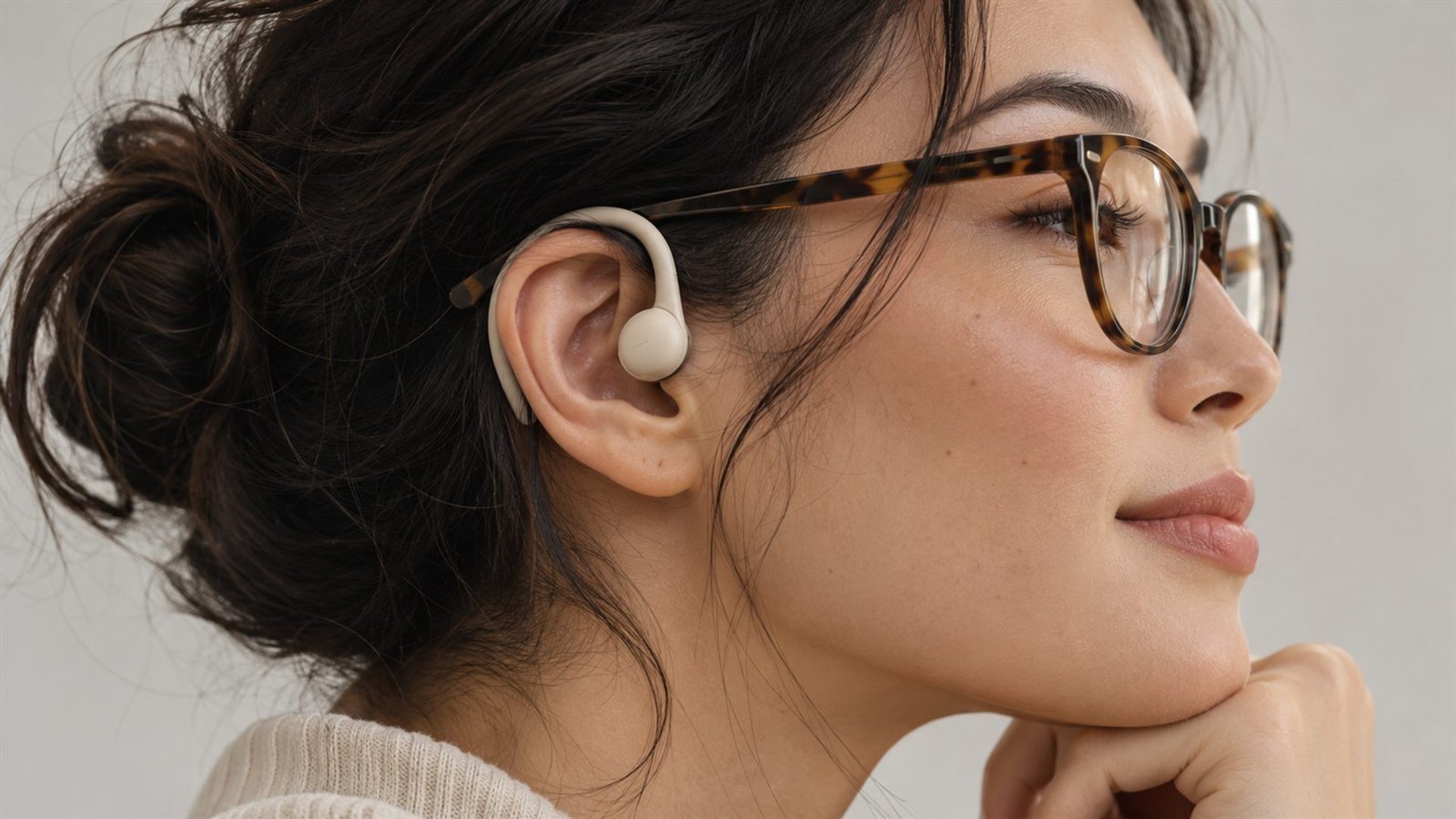
Open-ear earbuds with glasses can be comfortable, but the answer depends on the shape and position of both pieces. Ear-hook designs may compete with thick or sharply curved glasses temples behind the ear. Clip-style earbuds often occupy a different part of the ear. Test the exact combination for pressure, stability and sound before assuming that “open ear” guarantees compatibility.
The aim is to locate the actual contact point. A pair of thin metal frames can feel different from acetate sunglasses, and a hook that works in a quiet room may shift when a scarf or helmet is added. This guide offers a short fit test rather than a universal yes-or-no claim.
Why can glasses and ear hooks conflict?
Many glasses rest on the bridge of the nose and run over the top of the ear. Some open-ear earbuds route a flexible arm around that same region. If both components press on one small area, the wearer may feel a pressure point or find that one item lifts the other out of position. The effect depends on the ear's shape, the angle of the frame temple and the earbud's geometry.
Open-ear is a listening category, not one fixed shape. A hook may pass behind the ear, while a clip-style design attaches nearer the ear's outer edge. Bose says its Ultra Open Earbuds are designed to sit in a region that typically avoids glasses. Shokz says its OpenFit ear hook is designed for use with glasses and headwear. Both statements concern those specific products and do not prove that every frame will feel equally good.
Also distinguish physical fit from audio. A bud can remain attached yet move its speaker away from the position intended by the maker. If you find yourself raising the volume to compensate after putting on glasses, revisit the fit before concluding the earbud is simply too quiet.
Which frame features are most likely to cause pressure?
Look first at the temple, the arm of the glasses that runs towards the ear. A wide or thick temple occupies more space than a narrow metal one. A sharp downward bend can meet an ear hook at one point. A temple that sits low behind the ear may press against the hook's return curve. These are plausible fit mechanisms, not tested incompatibility rankings of frame brands.
Sports frames and wraparound sunglasses add another variable. They may hug the head closely and leave less room for an over-ear component. Adjustable nose pads, on the other hand, can alter where the temple rests, but a change that improves earbud clearance must still leave the lenses correctly positioned for vision. Do not compromise prescription fit merely to accommodate audio.
Check both sides. Ears and glasses arms are not always perfectly symmetrical, and a difference that looks minor can become noticeable after an hour. If one side presses while the other does not, inspect the frame alignment before assuming the earbud is defective. An optician can advise on appropriate frame adjustment.
How can you test the combination in five minutes?
Begin with the glasses adjusted as you normally wear them. Put on one earbud according to its maker's instructions, then add the second. Notice whether the frame lifts, slides forwards or presses the earbud into the skin. Repeat in the reverse order—earbuds first, then glasses—because the order can change where the two pieces settle.
Walk, turn your head, look down and speak for a minute. Check whether either item shifts. Play a familiar voice recording at a moderate volume and compare left and right. Then remove and replace the glasses: a workable fit should not require a delicate ritual every time you enter a room.
Wear the combination longer before buying if a return policy or shop trial permits it. Pressure that is negligible at first can become distracting during a commute or meeting. Try the sunglasses or safety glasses you actually use, not just your everyday prescription pair. If a hat, scarf or helmet is part of the routine, add it to the test without assuming a successful two-item fit predicts a successful three-item fit.
What adjustments are reasonable?
First reseat each item according to its instructions. A small change in the earbud's permitted position may clear a glasses temple. Bose's product guidance notes that its open earbuds can be adjusted slightly on the ear for comfort. That does not authorise bending another brand's hook beyond its intended flexibility or altering a rigid part.
If the glasses are crooked or slide, ask an optician whether the frame can be adjusted safely. Do not heat or bend prescription frames at home. If a strong pressure point remains, stop using that pairing rather than forcing the earbud under the temple. Persistent discomfort is useful evidence that the geometry is wrong for your combination.
Choose the order that works in normal use and repeat the movement test. If the earbud has a companion app or fit instruction, follow it. A comfortable position should keep the device stable and its speaker oriented as intended; it should not depend on excessive volume or constant readjustment.
When is a clip-style design worth considering?
If the conflict is specifically behind the ear, a design that clips onto a different part of the outer ear may leave more room for the glasses temple. This is an option to trial, not a guarantee. Clip pressure, earring placement, ear anatomy and the position of the speaker can create their own compromises. Try the exact model and frames together.
Compare the intended activities as well as immediate comfort. An earbud worn during a desk session may not need the same stability as one worn while walking quickly. Check how easy it is to operate the controls with glasses on and whether removing the glasses dislodges the earbud. A form factor that avoids one contact point may introduce another.
How should a VERTU CRUSH buyer assess fit?
VERTU lists its CRUSH Series OWS AI Earbuds as an open-ear product. The available product information does not establish a measured clearance for every glasses frame or a universal compatibility claim. Treat the listing as confirmation of the product category, then test the exact CRUSH edition with your own eyewear.
The VERTU earbuds collection helps identify available models. Check the current product instructions for how a chosen earbud should rest on the ear and what adjustments are permitted. If no hands-on trial is possible, ask support about the return terms and compare photographs of the earbud path with the position of your frame temple. A photograph cannot replace an actual fit test, but it can reveal an obvious overlap.
Make the decision on three observations: no persistent pressure, secure placement during ordinary movement, and clear audio at a reasonable volume. If one fails, another shape may be more suitable than repeated adjustment of the same combination.
Frequently asked questions
Can I wear open-ear earbuds with thick glasses?
Possibly, but thick temples are more likely to share space with an over-ear hook. Test the exact frames and earbuds for pressure and stability. A clip-style design may be worth trying if the conflict is behind the ear.
Should the glasses go on first?
Try both orders and follow the earbud maker's fitting instructions. The better sequence is the one that leaves both items correctly positioned and comfortable when you move.
Why does the sound change when I put on glasses?
The frame may shift the earbud or its speaker. Reseat both items, check the maker's allowed position and avoid compensating with excessive volume. If it continues, the combination may be a poor fit.
Will an optician adjust my glasses to fit earbuds?
An optician can assess whether a frame adjustment is appropriate, but vision and secure eyewear fit come first. Do not bend or heat the frame yourself simply to create earbud clearance.