Smart ring finger swelling can make a ring feel different in the morning and evening. Do not choose a new size from one tight hour. Test the maker's matching sizing sample across a full day and night, then assess whether the ring remains comfortable, removable and in steady contact with the skin. Repeated pinching, difficult removal or a loose fit at ordinary times calls for a fresh sizing assessment.
There is no universal millimetre difference that means every wearer should resize. Finger shape, knuckle width, ring construction and the maker's size increments all matter. This guide concerns fit decisions for a wearable, not the diagnosis of a medical cause of swelling.
Why does a ring fit change during the day?
Fingers do not remain one size at every hour. Temperature, activity and routine can change how a ring feels, particularly when its band is relatively wide and designed to stay in close contact with skin. Oura notes in its product-safety guidance that finger size can fluctuate with temperature, food and drink, exercise and altitude. That is a reason to test fit over time, not a basis for predicting the amount of change for a particular person.
A cool morning may make the ring rotate more easily; after a walk or a warm evening it may feel firmer. Travel can add unfamiliar temperature, activity and altitude changes. A time-zone shift can also alter when you sleep, eat and move, but it does not provide a simple numerical rule for ring size. Observe your own daily pattern before making a permanent choice.
Distinguish a ring that is secure from one that is tight. A smart ring needs consistent contact for its sensors, but pressure or difficulty removing it is not an acceptable trade-off for a reading. Equally, choosing a large size only to avoid occasional tightness can leave the ring spinning for much of the day.
How long should you test a sizing sample?
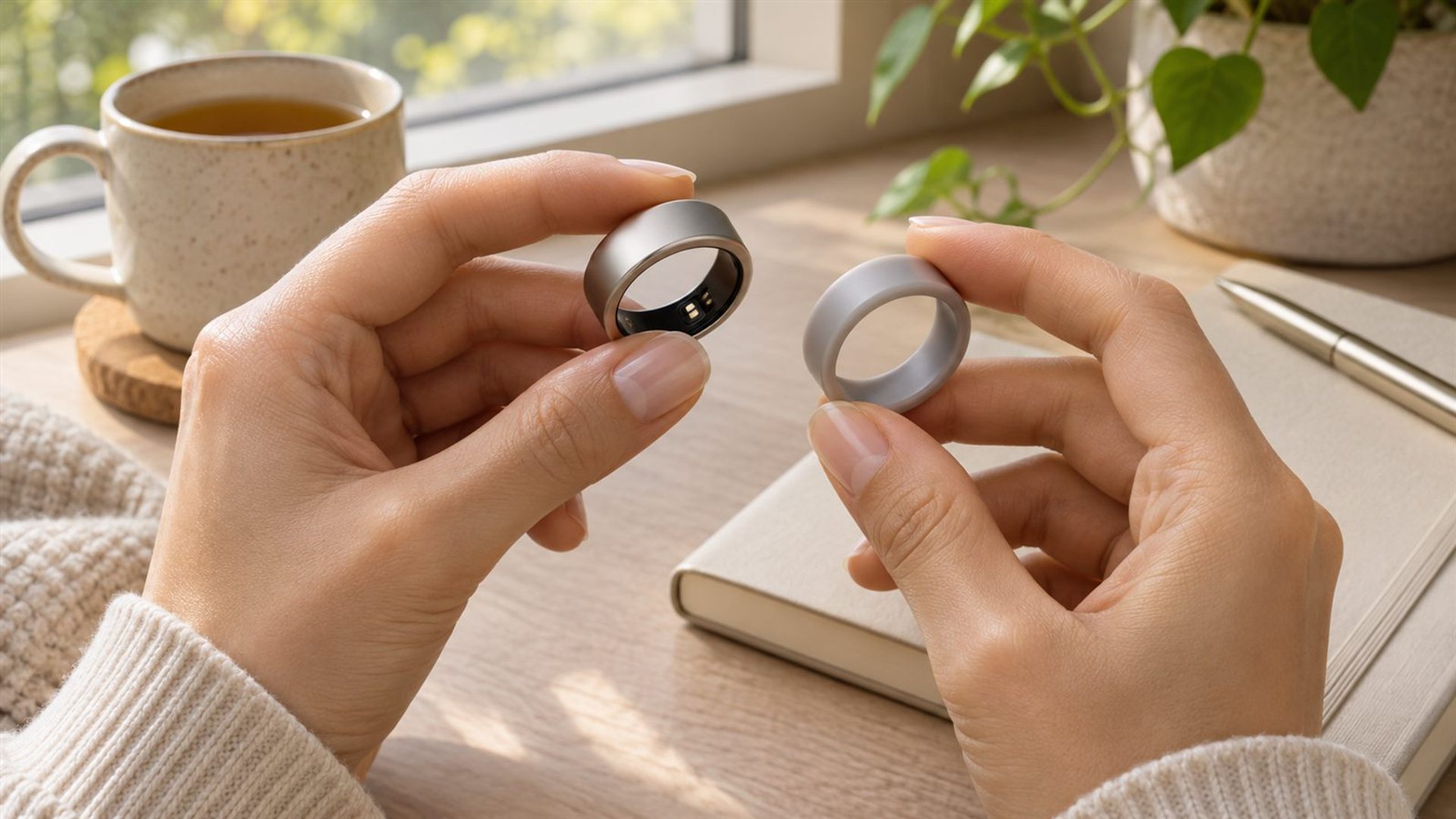
Use the official kit or a matching sample for the exact model. Wear it through normal work, handwashing where permitted, exercise and a sleep period. Oura recommends at least 24 hours with its sample because finger size changes day and night. Samsung gives a similar 24-hour trial for Galaxy Ring. These are manufacturer-specific instructions, but they demonstrate the value of observing more than a brief shop fitting.
Note three checkpoints rather than relying on a vague impression: how the sample passes the knuckle, whether it moves at the base during ordinary tasks, and whether removal remains easy at the tightest point of the day. Check both the chosen finger and another allowed finger if the maker permits a switch. A sample that feels excellent for an hour but pinches during sleep is not a successful fit.
Do not assume standard jewellery sizes transfer directly to a smart ring. Width, inner sensor shape and a matching decorative outer band can affect the feel. Use the maker's own kit and current instructions, particularly for a set with more than one component.
When is a fit change normal, and when is it a problem?
A small change in resistance between morning and evening can be normal if the ring stays comfortable and can be removed without struggle. The key is that it never becomes painfully tight and never loses stable contact for long periods. A ring that rotates freely when your hands are cool may create intermittent sensor contact even if it feels comfortable at night.
Repeated pinching, pressure marks that persist, numbness, discolouration or a ring that regularly becomes difficult to remove are reasons to stop using that fit and seek appropriate advice. Oura advises moving to another finger or adjusting size when a ring regularly pinches or leaves marks that do not fade shortly after removal. Follow the safety guidance for the exact ring you wear.
Do not keep a poorly fitting ring on solely to preserve a data streak. Wearable readings are less useful when the device is positioned badly, and comfort and safe removal take priority. A fit problem also cannot be solved by changing an app setting.
Should you move the ring to another finger?
A switch can be useful if the maker permits it and the second finger offers a secure, comfortable fit. It is a temporary accommodation for a genuine fit change, not proof that the purchased size is correct for your intended finger. Compare whether the ring rotates, whether the sensors remain against the skin and whether it can still be removed easily.
Our guide to choosing a smart-ring finger addresses finger selection and signal contact in detail. Here the question is different: whether a ring that used to fit has become persistently too tight or too loose. If you switch fingers frequently to escape discomfort, reassess the size rather than treating each move as a permanent solution.
Keep a note of which finger you use when interpreting trends. A change in contact may affect the continuity of readings. Smart-ring wellness metrics are estimates, not a reason to ignore a physical fit issue.
What should you do if the ring is hard to remove?
Stop pulling forcefully. Follow the manufacturer's removal guidance and avoid injuring the finger or damaging an electronic ring. Oura's safety page describes gentle methods for a stuck Oura Ring and advises seeking medical attention if the finger is very painful, swollen, discoloured or the ring cannot be removed. That guidance is a safety example, not a universal instruction to use a particular technique on every ring.
Once the ring is off, do not put it straight back onto a finger that is still swollen. Reassess the fit later and contact the maker about sizing or exchange options. If a sudden or persistent change in your finger is concerning, consult a qualified healthcare professional; the ring's app cannot determine its cause.
Electronic rings may require specialist tools if emergency removal is needed. Never improvise cutting or heating at home. Tell a professional which product you are wearing so the material and electronics can be considered.
How does COR RING sizing work?
The current VERTU COR RING product page says to begin with its sizing guide and, if unsure, wear a matching sample for 24 hours. It also says to confirm the fit of both smart core and jewellery outer band for the selected set. The VERTU knowledge base emphasises a secure, comfortable fit with consistent sensor contact. It does not state a universal finger-size difference at which every owner must resize.
When ordering a COR RING set, test the exact edition and its component fit. If a sample is snug in the morning but uncomfortable at night, consult VERTU sizing support before confirming the order. If an owned ring has become persistently loose or tight, use the official COR RING guidance and support route rather than asking a jeweller to alter an electronic core.
COR RING is for general wellness insight. Its interpreted scores should not be used to diagnose the reason for swelling or to override a decision to remove an uncomfortable ring. The correct size allows normal wear and removal while maintaining the contact the product needs.
Frequently asked questions
Should I size a smart ring in the morning or evening?
Neither single moment is enough. Use a matching sample for a full day and night so you can assess both the loosest and tightest ordinary fit.
Does a tight evening fit mean I need a larger size?
Not always. A brief, comfortable change differs from repeated pinching or difficult removal. Use the maker's sizing kit and reassess across normal days before confirming a new size.
Can I resize the physical ring at a jeweller?
Do not assume an electronic smart ring can be resized like a plain metal band. Ask the manufacturer about exchange and service options for the exact model and any decorative outer band.
Should I wear the ring if my finger is swollen?
Remove it if it is painful, unusually tight or difficult to move. Follow the maker's safety instructions and seek professional help if the finger is very painful, discoloured or the ring cannot be removed.