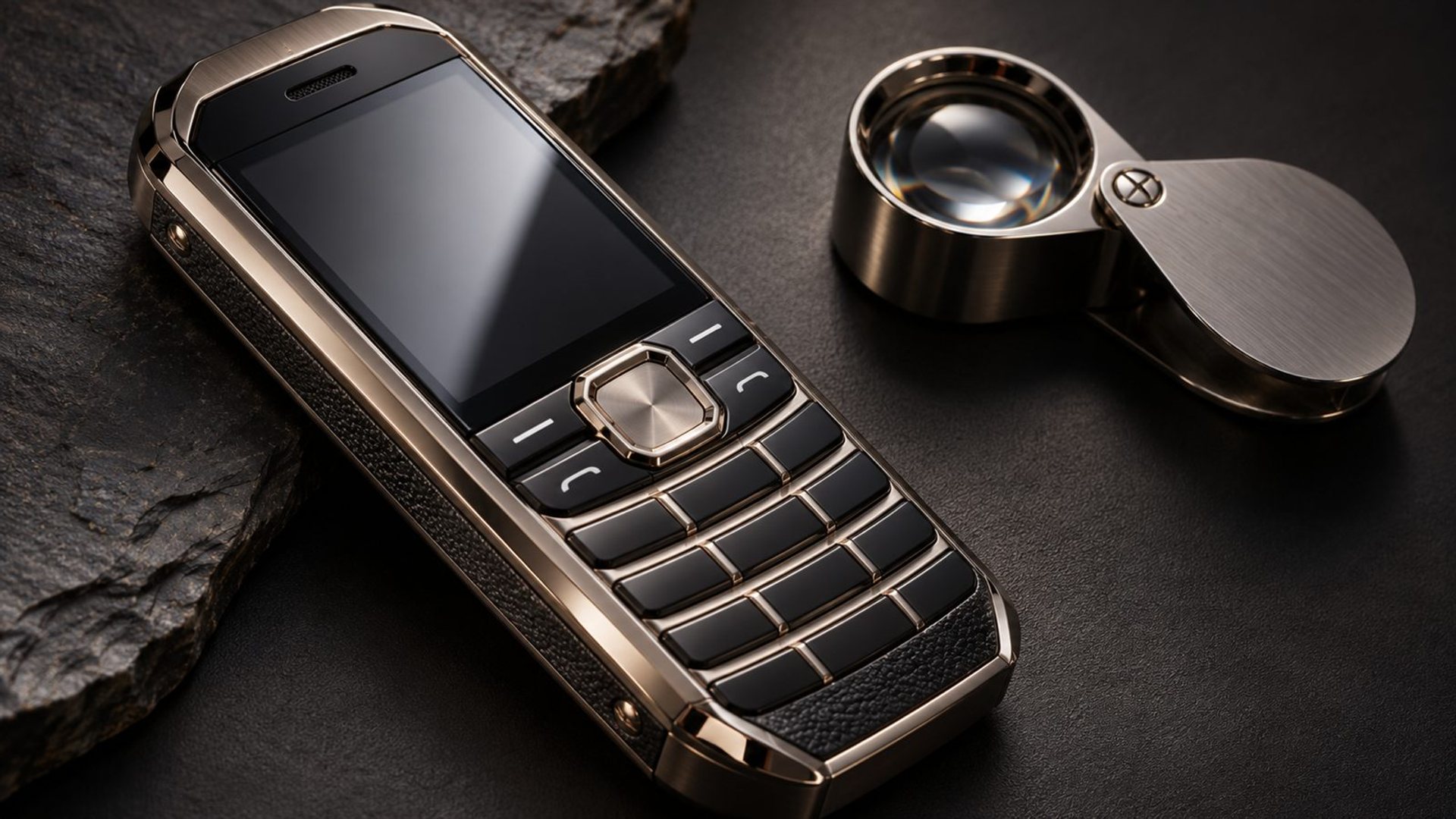
A sapphire screen test tells you something useful only when it identifies the exact surface, tool and method. Sapphire is a hard form of corundum and resists many everyday abrasives, but “sapphire” does not mean impossible to scratch, immune to impact or unaffected by a coating. For a valued keypad phone, understand the material and use non-destructive care rather than trying a knife or sandpaper at home.
VERTU lists sapphire crystal screens on its Signature V keypad-phone family. That is a material description, not a published promise that every finished handset will survive a particular scratch or drop demonstration. This guide separates the questions that online videos often blur together.
What does the Mohs hardness number mean?
The Mohs scale describes relative scratch resistance: a harder material can scratch a softer one under suitable conditions. The Gemological Institute of America places sapphire at 9 on the scale. That high rank explains why sapphire is chosen for surfaces exposed to everyday contact. It does not mean nine times harder than a material ranked one, because the scale is not linear.
Hardness is about the surface resisting abrasion. It is not the same as toughness, which concerns resistance to fracture under a blow. GIA distinguishes hardness, toughness and stability when assessing a gemstone's durability. The distinction applies when a crystal is used as a phone screen: a material may resist scratches well yet still be damaged by a fall or an impact at an edge.
Do not read a Mohs rank as a complete device rating. The way a screen is cut, supported and joined to the handset affects a finished product's behaviour. A raw material demonstration cannot certify the assembly. If a seller cites a test, ask whether it was performed on the material alone or on the exact phone model.
Can sapphire actually be scratched?
Yes. Sapphire is highly scratch-resistant, not scratch-proof. A harder abrasive can mark it, and sufficiently hard particles may be present in an unexpected place. Two pieces of corundum may also abrade each other under some conditions. The probability of a visible mark in ordinary use is lower than with many softer surfaces, but no prudent owner should use that as a reason to rub a screen against unknown grit.
A reported “scratch” may not even be a cut in the sapphire itself. Material transferred from a key, metal fitting or other object can leave a line that sits on the surface. A coating or treatment may show a mark while the crystal below remains intact. Conversely, a fine line that persists after appropriate cleaning may be genuine damage. A photograph alone rarely identifies which layer was affected.
Do not try to diagnose a mark with increasingly abrasive cleaners. Start with a clean, soft cloth and the product's care instructions. If a line remains, ask an authorised service provider to assess it. A household scratch experiment can turn an uncertain cosmetic question into definite damage.
What can an online scratch video establish?
A carefully documented video can show how one sample responded to one tool under one set of conditions. It cannot establish universal performance of every production unit. Look for the exact model, whether the screen is original, the tool material, the pressure and whether the presenter cleaned the surface before and after. A blade can deposit metal on a harder surface, creating a visible streak that is not necessarily a cut.
Some demonstrations use named “hardness picks.” The result depends on the calibration and condition of those picks and on the operator's technique. A video without those details is entertainment, not a reliable material certificate. Do not transfer a result from a watch crystal, a loose sample or another phone to a Signature V screen.
Also inspect what the video does not show. A screen may include a coating, printing, bezel or seal around the crystal. Scraping across an edge may test another component before it reaches the central transparent area. The test should identify exactly what was scratched and where.
Does scratch resistance mean drop resistance?
No. A drop applies impact forces that may crack a screen, damage a corner or disturb internal parts. Scratch hardness does not measure that event. A phone's mass, geometry, edge support, surface struck and angle of contact all influence a fall. Without a model-specific drop test, avoid claiming a keypad phone will survive a height or floor type merely because it uses sapphire crystal.
The same caution applies to pressure and bending. A small keypad display may have a different shape and support from a large touchscreen, but that observation alone does not prove a numerical strength advantage. Treat the entire handset as a crafted object. Carry it securely, avoid dropping it onto hard surfaces and check for damage after an impact even if the crystal looks clear.
GIA's material discussion is useful precisely because it separates types of durability. A high scratch-hardness rank supports an abrasion-resistance claim. It does not replace impact, water ingress or electronic reliability testing on the finished device.
Which VERTU keypad phone is relevant?
VERTU's Signature V collection presents keypad phones with sapphire crystal screens. A current Signature V product page also identifies a sapphire crystal screen for that edition. Verify the exact product page and configuration before assuming an older or differently named model uses the same screen construction.
The VERTU knowledge base confirms Signature V as a handcrafted phone family. It does not provide a numerical, model-specific scratch-test result. Therefore the defensible owner claim is that the listed edition uses sapphire crystal and that sapphire is a hard, scratch-resistant material. A claim such as “keys can never mark this screen” would require a more exact test and would still need careful wording about coatings and transferred material.
For a pre-owned phone, ask whether the screen has been replaced. A generic product specification applies to the original configuration; a replacement part may need separate verification. Service records help establish what is actually installed.
How should you clean a sapphire screen?
First remove loose dust with a clean, soft material. Grit trapped between the cloth and screen can be dragged across adjacent finishes. Then follow the handset maker's cleaning guidance for the complete phone, including its leather, metal, ceramic or decorative elements. A liquid safe for a loose sapphire gem may be inappropriate for a finished electronic device with seams and coatings.
Avoid abrasive powders, polishing compounds and sharp tools. They may attack a coating, bezel or surrounding finish even if the underlying sapphire resists the abrasive. Do not immerse the phone or use a jewellery ultrasonic cleaner on it. If a stubborn deposit remains, ask service for the proper method rather than increasing force.
Store the phone apart from loose grit and hard jewellery in a bag. Sapphire's hardness is a useful protection against ordinary wear, but careful storage protects the whole object: screen, keypad, frame and finish. A pouch can reduce incidental contact without making any material claim about the crystal itself.
What should a buyer ask about a screen claim?
Ask whether the precise edition has a sapphire crystal display cover and whether any coating is applied to its outer surface. Request current official specifications rather than relying on a general article about the brand. If scratch resistance is a key reason for purchase, ask for the scope of any test cited and what the warranty covers. A material claim and a warranty promise are separate matters.
Compare the screen with the rest of the phone. A crystal may remain clear while a metal edge, leather panel or keypad shows wear. The buyer should assess the overall object and its intended use. A strong material choice is valuable, but it does not remove the need for ordinary handling and service.
Frequently asked questions
Will keys scratch a sapphire phone screen?
Sapphire is harder than many common key metals, but a real-world mark may involve transferred material, grit or a surface coating. Do not use a key as a home test. If a mark appears, clean gently under the maker's instructions and seek service advice if it remains.
Is sapphire a 9 out of 10 for drop resistance?
No. The Mohs rank of 9 concerns scratch hardness, not a ten-point drop score. Drop performance depends on the finished handset and impact conditions. Do not infer a safe drop height from the material number.
Can I use sandpaper to verify the screen?
No. Sandpaper contains abrasive particles and can damage coatings or nearby components. It is also a poor way to authenticate a phone. Use official model documentation and authorised assessment instead of destructive testing.
Does every VERTU keypad phone use the same crystal?
Do not assume so. Check the current specification for the exact model and edition. The Signature V collection and cited product page describe sapphire screens, but an older or repaired device requires its own identification.