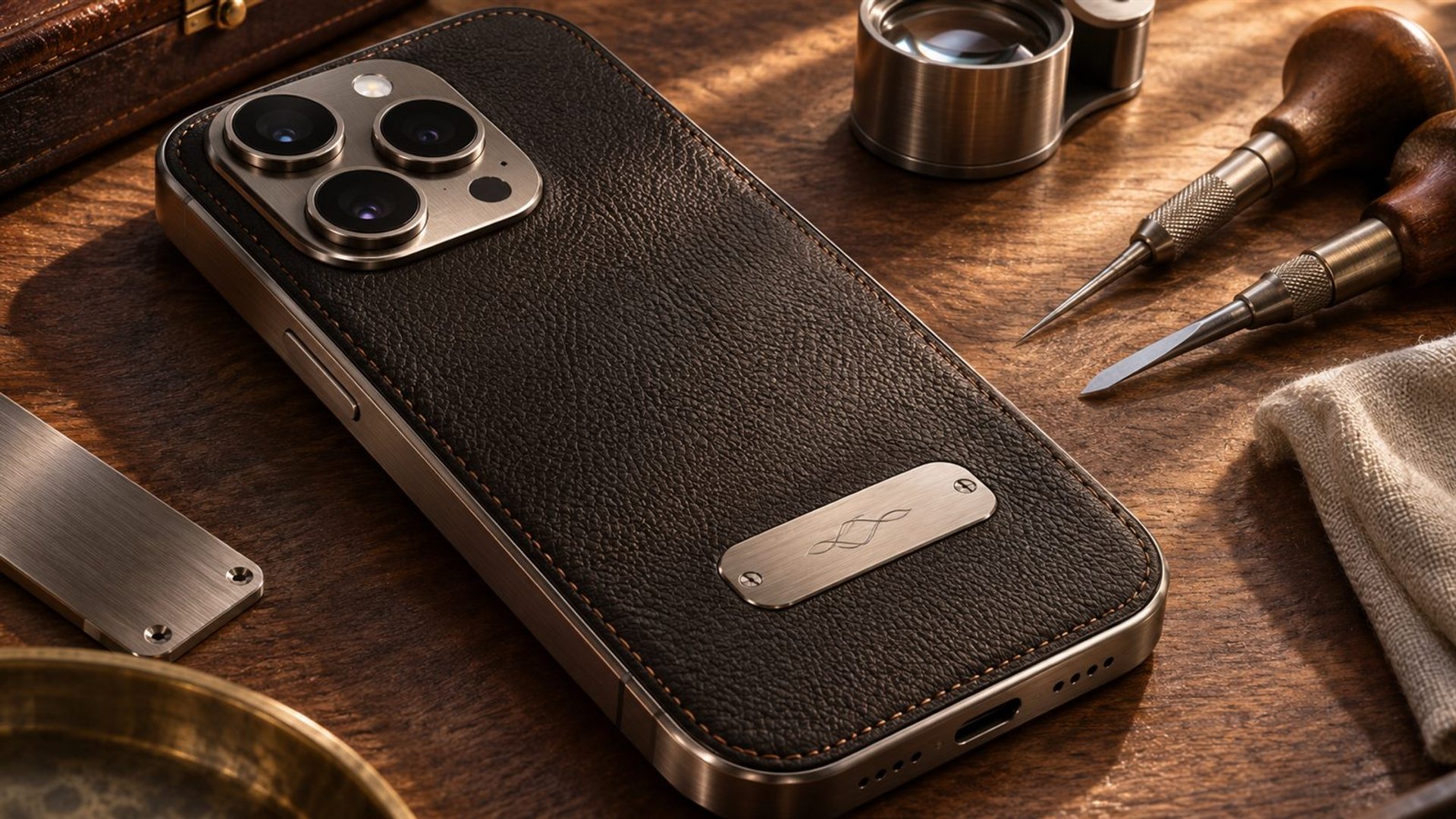
Phone engraving can be a satisfying personal detail, but it may change the pool of future buyers. Placement and depth matter because they affect legibility, the surrounding finish and the ease with which a mark can be assessed later. There is no universal resale discount: an authorised maker's engraving may be treated differently from a third-party modification, and every buyer or trade-in programme sets its own terms.
The practical decision is whether the engraving is meant primarily for your own use, for a gift, or for a device you expect to resell. Once a mark is cut into a finished surface, removing it may require refinishing or replacing a part. Begin with the intended ownership period rather than trying to estimate a future price to the nearest percentage point.
Where should engraving go on a phone?
Use a location approved for the exact model and material. A discreet area can keep the composition balanced, but the aesthetic answer is not enough: the position must avoid antennas, seals, controls, cameras, serial information and surfaces that flex or receive frequent abrasion. Ask the maker or its authorised personalisation team which zones are suitable. Do not assume a location shown on another model is safe for yours.
Think about how the phone is held and put down. A mark on a high-contact surface may become less crisp through ordinary wear. A mark hidden by a case may give you little daily pleasure, yet one in a very prominent place may narrow the number of potential second owners. Request a visual proof at actual scale before committing to text or a motif.
For a gift, consider whether the wording will still feel appropriate several years later. Initials or a date can carry meaning without exposing a full name or personal details to a future recipient. Privacy is an additional reason to avoid engraving a telephone number, address or other identifying data on a device likely to leave your possession.
How deep should the engraving be?
There is no safe universal depth in millimetres. It depends on the surface material, finish, construction and technique. The right question is what the authorised workshop can produce cleanly on the chosen component without compromising its intended finish or function. A deeper cut is not automatically more durable or more valuable; it can be more visible and harder to refinish.
Ask for a sample of the proposed method on the same material and finish, if one is available. Check the stroke weight, spacing and contrast under ordinary light rather than magnification alone. Fine lettering may look refined in a large digital mock-up and become difficult to read on a small phone panel. Test a short inscription at its true dimensions.
Do not ask an independent shop to “go deeper” merely because the first trial appears subtle. Any alteration of a finished phone deserves a product-specific review. Confirm how the work affects warranty, water or dust protection claims, and future refinishing options before a tool touches the device.
Does engraving lower resale value?
It can, but the effect is not uniform. The clearest evidence for that distinction comes from Apple's published trade-in answer: it says Apple-applied engraving on eligible Apple devices does not affect its trade-in value, while third-party engraving may. That is Apple's own programme, not a rule for VERTU or for private resale. It demonstrates why the identity of the engraver and the buyer's policy both matter.
A private buyer may like a design, dislike someone else's initials, or care chiefly about condition and authenticity. A dealer may apply a different inspection standard. A mark could narrow demand even if it adds personal meaning to you. Avoid promises that engraving always adds value, and avoid fixed markdown percentages without an actual written offer for the specific device.
Collect two or three quotes if resale is important. Show each evaluator the engraving and the same set of condition photos. Ask whether an authorised invoice or certificate changes their assessment. Differences between quotes reveal more than an online average for unengraved phones.
How is maker-authorised work different from third-party work?
An authorised programme can tell you which materials, positions and processes it will accept, and document the finished specification. A third-party studio may be excellent at engraving in general but lack that model's construction details. The difference is not a guarantee of resale value; it is a better chain of evidence about what was requested and who carried out the work.
VERTU Bespoke describes a process in which a dedicated advisor helps shape materials, colour, finish and engraving. For a METAVERTU Curve commission, ask the advisor what is currently offered for the precise configuration. Do not infer that every colour, leather, panel or engraving position shown in the broader bespoke programme is available on every Curve device.
Save the signed order detail, proof, invoice and any service correspondence with the phone's original documentation. If you eventually sell it, accurate provenance lets a buyer distinguish intentional personalisation from later damage or an unverified repair. The paperwork may also clarify whether a replacement panel remains an option.
What should you ask before approving the proof?
Confirm spelling, capitalisation, punctuation and line breaks character by character. Review the position against buttons, seams and camera housing, not only on a flat artwork file. Ask what the inscription will look like after normal handling and whether the workshop will photograph the finished result before dispatch.
Ask whether the design is laser marked, mechanically cut or otherwise applied, and which finish will remain visible in the recess. The answer should come from the provider handling your device. Different methods are not interchangeable simply because they produce a similar photo online.
Clarify the policy for an error in the submitted text and an error in execution. A personalised item may have different return conditions from a standard device. Read the actual order terms for your market before approving production.
Can engraving be removed later?
Do not assume so. Removal may need material to be taken away, a surface to be refinished or a component to be replaced. On a patterned, coated or finely finished part, a visible trace may remain. Ask the maker for a model-specific answer and the current cost of any permissible replacement. A promise from an unrelated repair video is not reliable evidence for your phone.
For the same reason, a temporary personalisation method may be wiser if you expect to pass the device on soon. A removable case or accessory can carry initials without altering the handset itself. It will not offer the same integrated craft, but it keeps the resale choice open.
How should you prepare for a later sale or trade-in?
Photograph the phone in even light, including the engraving and surrounding surface. Record the exact model, configuration, accessories, condition and any maker documentation. When requesting a quote, disclose the inscription before shipping. A buyer who discovers it only during inspection may revise the offer.
Apple's trade-in terms illustrate that inspection can revise an initial quote when the received condition differs from the description. Those are not VERTU terms, but the lesson is broadly practical: describe the actual device rather than a generic unmarked model. Check the destination programme's own acceptance rules, data-erasure process and deadline.
Before transferring any phone, back up the information you want to keep and follow the manufacturer's instructions for removing accounts and personal data. Engraving and software data are separate issues. A beautifully documented exterior does not excuse leaving private information on the device.
When is engraving worth choosing?
It is most compelling when the phone will be kept, gifted or commissioned as a personal object, and the authorised maker can execute the design in a suitable location. If short-term resale is central to the purchase, keep the inscription restrained or postpone permanent work until you are comfortable with a narrower potential market.
Use the decision you can verify today: the approved material, placement, method, order terms and an actual resale quote if one is available. Treat a future price as uncertain. The point of personalisation is the meaning it adds for its owner; a later buyer may value a different story.
Frequently asked questions
Will an engraved phone still be accepted for trade-in?
It depends on the programme and the engraving. Ask the provider for a written answer for the exact model and disclose who performed the work. Another brand's policy does not establish VERTU eligibility.
Is a shallow engraving safer for resale?
Not necessarily. A smaller, discreet inscription may appeal to more buyers, but method, material, condition and the buyer's policy still govern the offer. Do not use depth as a proxy for value.
Can I engrave a METAVERTU Curve?
VERTU offers bespoke engraving as a broader service. Confirm the approved options for your exact METAVERTU Curve configuration with a VERTU advisor before ordering.
Should I engrave my full name?
Usually choose a less identifying inscription if resale or privacy matters. A full name can make the phone harder to pass on and exposes personal information whenever the device is visible.
Can the mark be polished away?
Do not count on it. Refinishing or component replacement depends on the construction and may leave traces or be unavailable. Ask the maker before commissioning permanent work.