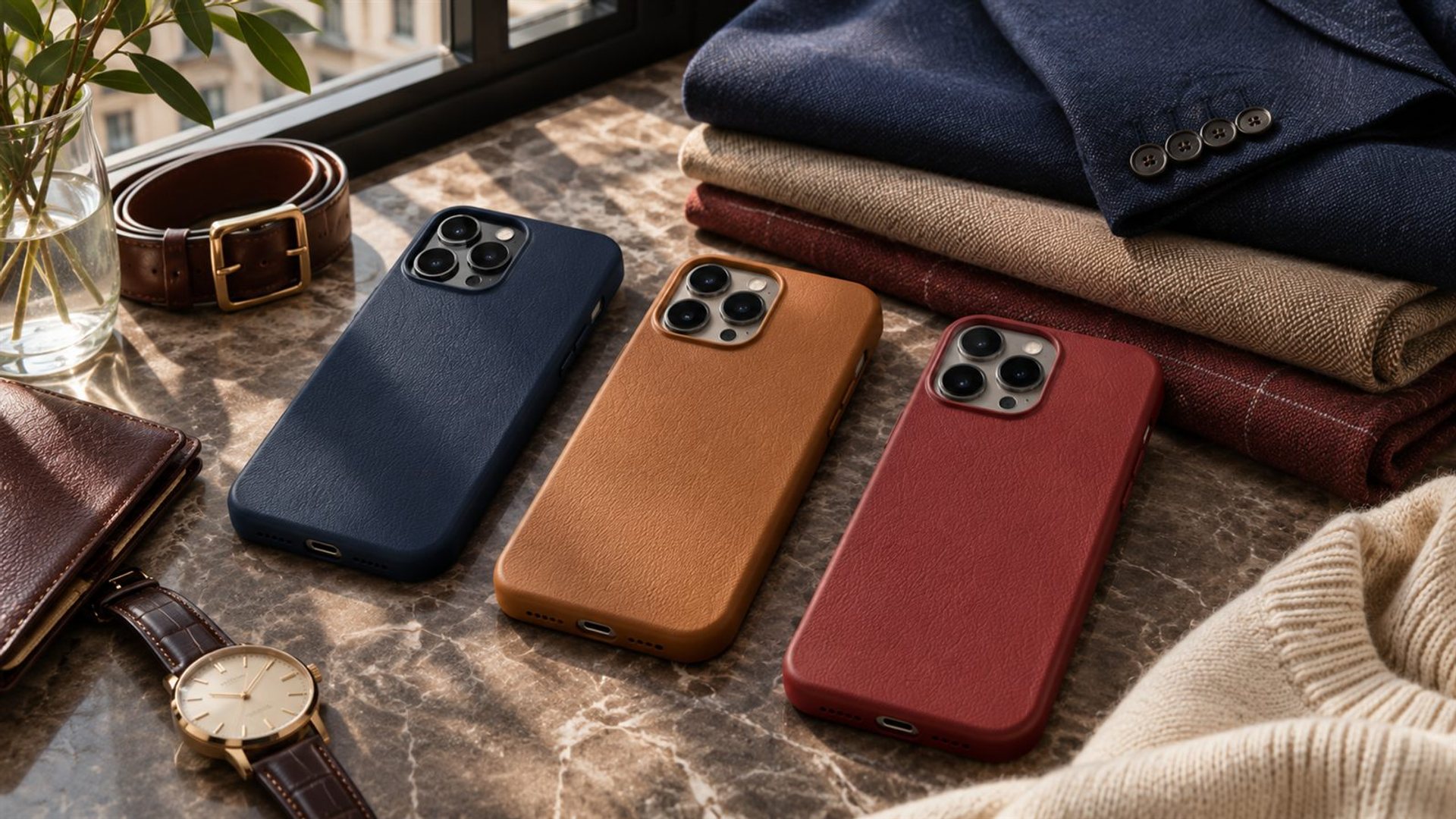
Phone case color is a practical style choice because the device appears beside many outfits, bags and work surfaces each day. The strongest choice is the shade and finish you are comfortable seeing across seasons, rather than the one that matches a single photograph. Compare a restrained neutral with one deliberate accent, then consider how the material will show handling, light and contact with dyed fabric.
A phone can be a quiet background object or a visible accessory. Neither role is inherently better. The aim is to choose deliberately, with the device's actual finish and your carrying habits in view. This guide gives a simple way to test colour without pretending there is a universal wardrobe rule.
Should a phone match your wardrobe exactly?
No. Exact matching can be satisfying for a particular outfit, but a phone is used with many combinations over a longer period. A black or deep brown device may disappear into formal clothing, while a red or blue finish can become a repeated accent. The decision depends on whether you want the phone to blend, contrast or echo a colour you already wear often.
Lay the phone or a representative colour sample beside three everyday outfits: one work look, one relaxed look and one occasion look. Check the combination in daylight and under the indoor lighting you encounter most. A shade that looks subtle on a product page may appear brighter in sunlight or cooler under office LEDs. The purpose is to see the actual colour relationship, not to apply a rigid rule.
Include bags, shoes and jewellery in the comparison if they are carried near the phone. A handset is often seen against a bag lining or a desk rather than a jacket. If it lives in a case most of the time, choose the case colour first and treat the underlying phone finish as a secondary consideration.
When is a neutral the safer long-term choice?
A neutral is useful when you change clothing colours frequently or prefer the phone to remain discreet. Black, charcoal, deep blue and warm brown can work across many wardrobes, but each has a different mood. Black can be sharp against a pale shirt; brown may feel warmer beside leather accessories; blue can read as a colour without being visually dominant. These are editorial judgements, not material-performance facts.
Neutral does not mean maintenance-free. A glossy black surface can reveal fingerprints and fine marks in certain light. A pale matte surface can show transferred dye or handling. Inspect the actual finish and use case rather than assuming a dark colour always hides wear. Texture and sheen may change the impression more than the nominal colour name.
If you want a neutral that remains comfortable for years, choose one that already appears in your accessories. A bag, watch strap or pen can provide a better reference than a seasonal clothing trend. The phone then feels intentional even when the wardrobe changes.
When does an accent colour work better?
An accent works when the phone is meant to be seen and the shade has a lasting connection to your style. Red, orange or a saturated blue can add energy to otherwise quiet clothing. You need not repeat the exact colour elsewhere; a single accent can stand alone. The question is whether you enjoy that visibility on an ordinary Tuesday as much as at an event.
Test the shade against your most common coat and bag, because those are the pieces that frame the phone when you take it out in public. A bright finish that feels elegant against dark tailoring may compete with an already patterned bag. Again, this is a visual choice. Make it by looking at real materials together, not by relying on a catalogue name such as “wine” or “jade.”
If you are uncertain, a changeable case can provide the accent while the phone itself remains neutral. Confirm that the case fits the exact model and does not interfere with buttons, camera or a foldable hinge. A decorative cover is useful only if it works as an accessory and as a functional fit.
How does material alter the colour?
Colour is not separate from surface. Grained leather, smooth leather, metal, ceramic and polymer reflect light differently. The same nominal blue may appear softer on grain and sharper on polished metal. Touch also matters: a textured surface may feel more secure, while a high-gloss finish can become the visual focus.
Natural materials can change in appearance with handling. Apple's leather-case care guidance says its leather may develop a patina or change colour with oils and sunlight, and that dyed materials such as denim can stain it. That is guidance for Apple's leather case, not a guarantee about a VERTU finish. It illustrates why owners should check care instructions for the exact material and consider how a pale surface will be carried.
Google's Pixel cleaning guidance likewise discusses colour transfer from makeup or new jeans on its phones. Its cleaning methods are model-specific; do not apply them automatically to leather, precious finishes or a bespoke handset. For a VERTU device, follow the supplied care directions and ask support before using a cleaner on an unfamiliar surface.
Should you choose a pale phone or case?
Choose it if the appearance is worth the extra attention it may require. Ivory, cream and light grey can look refined against dark clothing and make a phone easy to find in a bag. They may also show transferred colour more readily. A pale leather item carried against dark denim is a different use case from the same item kept in a clean pouch.
Do not treat possible staining as inevitable. The finish, dye, contact time and care all matter. Test your normal carrying arrangement: front pocket, handbag, briefcase or desk. Keep the phone away from wet or newly dyed materials when its care guidance recommends it. If you prefer a low-maintenance routine, a darker or less absorbent finish may be easier to live with.
Photograph the new device in consistent light when it arrives. That gives you a reference for normal change and helps you notice an unusual stain early. Address marks under the maker's instructions rather than scrubbing hard. Abrasion can harm a finish even when the original stain might have been manageable.
How do VERTU editions fit the decision?
VERTU's Agent Q overview provides the current family context. An official Agent Q grained calfskin announcement describes Raspberry Red, Dawning Orange, Jade Black and Deep Blue colourways for that named edition. Availability and exact finish should be checked on the current product page for your market; the announcement does not imply every Agent Q configuration is offered in all four shades now.
The Metavertu Max overview presents another VERTU phone family. Do not transfer a colour or material claim from Agent Q to Metavertu Max merely because both are VERTU devices. Compare the exact model photographs and material details. A colour choice matters most when it is tied to the device you will actually carry.
When possible, view the finish in person or request photographs under more than one lighting condition. Ask about care and repair for the chosen material, particularly for light leather or a bespoke surface. The right edition should fit your visual preference and the way you handle the device each day.
How can you decide without overthinking?
Choose two finalists and define their roles. One may be a quiet daily neutral; the other may be a deliberate accent. Place each against your three wardrobe references and note which one still feels right after a day. If both work, let material care and availability decide. If neither works, reconsider the finish rather than chasing another shade of the same surface.
Remember that a case can change appearance but also adds bulk and may hide the handset's original craftsmanship. Decide whether you want to see the phone itself or primarily use a replaceable cover. For foldables, check hinge clearance; for keypad phones, check access to keys and ports. Function should remain comfortable after the styling choice.
Frequently asked questions
What phone colour goes with everything?
No colour literally does, but a neutral already present in your accessories is often easy to repeat. Black, brown, grey or deep blue can play different roles. Compare the exact finish with your real clothing in more than one light before buying.
Will a light case stain from jeans?
It may, depending on the case material and the denim dye. Apple and Google both warn of colour transfer for some of their products. Follow the case maker's care advice and consider how often the phone rests against dyed fabric.
Does a dark finish hide all wear?
No. Glossy dark surfaces may show fingerprints, dust or fine marks. Texture and lighting affect visibility. Inspect the actual product rather than assuming its colour name predicts how it will age.
Can I change the look later with a case?
Often yes, if a compatible case exists for the exact model. Check fit around buttons, cameras and any hinge. A case can provide a seasonal accent, but it may also hide the handset's original material and change its feel.