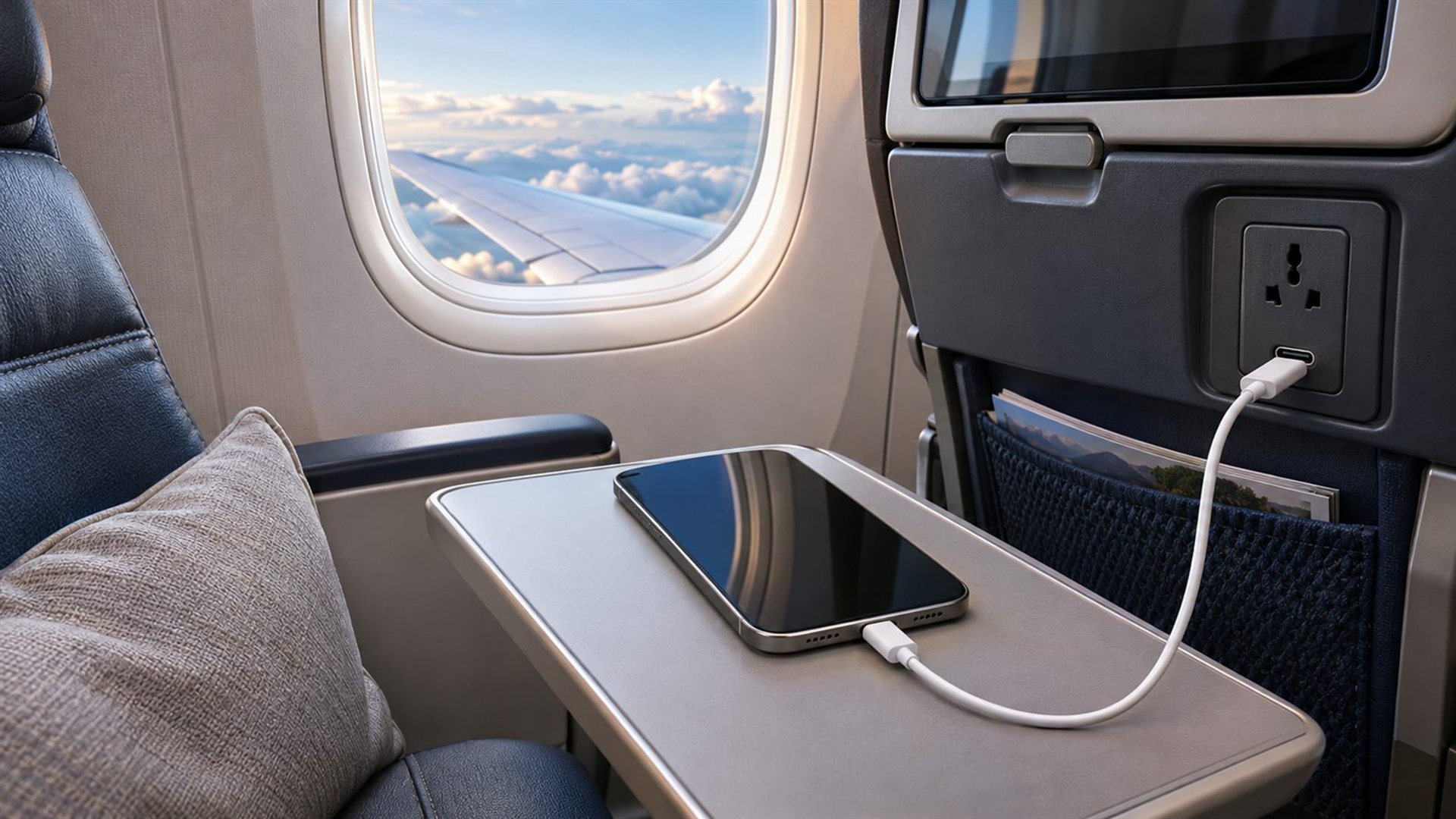
To charge a phone on a plane, match the cable to the seat's actual power connection and follow the crew's instructions. A phone's advertised fast-charge rating describes what it can accept with suitable equipment; it does not mean an aircraft USB port provides that wattage. For a METAVERTU MAX, plan for slower seat charging and carry a compliant backup if the outlet is unavailable.
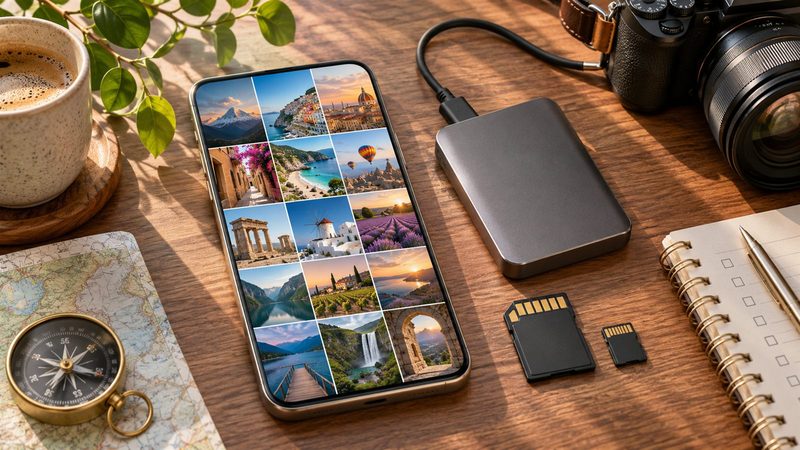
Before the flight, check the aircraft and seat amenity listing, charge the phone fully and pack a tested USB-C cable. Keep a permitted power bank in carry-on baggage, not checked baggage. The steps below separate electrical capability, airline availability and battery-carrying rules so a travel day does not depend on one socket.
What does the METAVERTU MAX charging rating mean?
A current METAVERTU MAX product page lists a 5100 mAh battery and 65 W fast charging for that configuration. The wattage is a maximum supported under the device's intended charging conditions, not a constant draw throughout the charging session. Actual power can vary with battery level, temperature, cable, adapter and charging protocol.
Do not infer that every seat port will reach 65 W. An aircraft USB-A connector, USB-C connector and AC outlet are different supply paths. The phone and source negotiate the power available through the connected equipment. If the source offers less, the phone can still charge, but more slowly; if it offers no usable power, you need another plan.
Check the exact METAVERTU MAX edition and supplied charger instructions. The official overview is a starting point, while the product page and owner's materials govern the configuration in your hand. Avoid using an unverified third-party charger solely because its label shows a high number.
Do aircraft seats have a standard wattage?
No universal seat wattage applies across airlines and aircraft. Even the connector type can vary within a fleet or between cabins. American Airlines says most of its planes have AC outlets and/or USB ports and directs passengers to aircraft-specific information. That is an availability statement, not a promise that every seat provides a particular charging speed.
Look up the planned aircraft type and seat amenities before departure, but allow for an equipment change. A seat power symbol may indicate AC, USB or both. If the socket is loose or does not work, tell crew when appropriate; do not force a connector or move cables into a walkway. Power may also be unavailable during particular phases of flight.
When a seat has AC power, use the phone's compatible mains charger and respect the airline's device rules. Do not add a high-draw multiport hub without checking the outlet's stated limit. If a port is USB-only, use the correct cable and accept that it may top up rather than rapidly refill the battery.
Which cables should you pack?
Pack a reliable USB-C cable suitable for the phone, plus the adapter or cable ends needed for the seat power you expect. USB-A to USB-C covers many older seat ports; USB-C to USB-C may suit newer ports or a compatible power bank. A compact wall charger is useful where an AC outlet exists. Test every item at home before packing it.
Inspect the cable for damage at the connectors and along its length. A frayed cable is a poor choice in a crowded cabin. Keep it short enough not to cross another passenger's space, or coil excess neatly. Put the cable where you can reach it without unpacking the overhead bag during restricted movement.
If you carry several devices, label or separate their cables so you do not connect the wrong adapter in low light. A cable's connector shape alone does not prove its fast-charge capability. For travel reliability, a known, compatible setup is more valuable than a charger with an impressive but unverified wattage printed on it.
Can you use a power bank on the aircraft?
Often yes, subject to current airline and aviation rules, but it must be carried correctly. The US Federal Aviation Administration's PackSafe guidance says spare lithium-ion batteries, including power banks, belong in carry-on baggage, not checked baggage. It lists a usual limit of 100 Wh per battery, with airline approval required for certain larger 101–160 Wh batteries. Check the exact label and the carrier's rules for your route.
Capacity in milliampere-hours is not the same as watt-hours without the battery's rated voltage. Use the manufacturer's printed Wh figure where available rather than guessing. Protect the power bank from damage and short circuit. If a carry-on bag is gate-checked, remove the power bank and keep it with you as required.
Airlines may have additional restrictions on using or charging a power bank in flight, and policies can change. Follow the crew's current instructions even when a general aviation guide permits carriage. Never use a swollen, damaged or recalled battery. If it becomes unusually hot, disconnect it and alert the crew.
How can you conserve power if the outlet fails?
Start the trip with a full charge. Download tickets, maps and essential documents for offline access before boarding. Use airplane mode as directed and enable Wi-Fi or Bluetooth only when permitted and needed. Lower screen brightness, close an unusually demanding app and avoid long video sessions if arrival-day battery matters.
Keep boarding information available through another approved route, such as a printed pass or a companion's copy, where practical. A backup is useful when the phone is needed for immigration, transport or hotel check-in after a long flight. Our international phone preparation guide covers broader connectivity and account checks.
Do not rely on a last-minute seat charge to rescue a nearly empty device. Flight duration, outlet condition and permitted use are variable. The most reliable plan combines pre-flight charging, sensible power use and a compliant backup.
Does a high-watt charger make the plane charge faster?
Only if the aircraft outlet, charger, cable and phone support a compatible higher-power path. An adapter cannot make a low-power USB port deliver more than it offers. With an AC socket, a compatible wall charger may allow faster charging, but the seat outlet may have its own power limits and the phone may reduce charge speed as the battery fills or warms.
A charger rated above the phone's maximum does not automatically force that full power into the device. Modern charging systems negotiate, but compatibility and quality still matter. Use equipment recommended or approved for the phone and avoid a questionable adapter. If charging repeatedly disconnects, stop troubleshooting with force and switch to a known-good backup.
What should you check before landing?
Disconnect and pack the cable before the seat area becomes busy. Confirm the phone has enough power for arrival documents, transport and messaging. Check that offline addresses and booking references are accessible. If you charged from a power bank, store it safely in your carry-on rather than leaving it in the seat pocket.
Once on the ground, use a reliable outlet and the appropriate charger to replenish the battery. If the phone became warm in flight, let it return to a comfortable temperature before trying to maximise charge speed. The aircraft connection is a convenience, not the only part of a sensible travel charging plan.
Frequently asked questions
Will METAVERTU MAX charge at 65 W from a seat USB port?
Do not assume so. The phone's listed 65 W support for a specified model does not state the aircraft port's output. Check the seat connection and use a compatible cable; charging may be slower.
Can I put a power bank in checked luggage?
No under FAA guidance for spare lithium batteries and power banks. Keep it in carry-on baggage, protect it from damage and check its Wh rating plus the airline's current rules.
What if the seat has no outlet?
Use the charge you brought, conserve power and use a permitted power bank if airline rules allow it. Download essential travel details before boarding so a weak connection or dead outlet does not block arrival plans.
Can I use any USB-C cable?
Use a reliable cable compatible with the phone and charger. The connector shape alone does not guarantee fast-charging capability. Test the cable before travel and replace damaged ones.