Key Takeaways
- A conventional writing pen is generally suitable for airport travel; security officers have the final decision at the checkpoint.
- Consider the pen, any ink cartridges and a separate ink bottle as different packing questions.
- For US carry-on baggage, bottled ink is a liquid and should be checked against TSA's current 3-1-1 guidance.
- Preventing an in-flight leak is a pen-care issue, separate from whether security permits the item.
Yes, a fountain pen can generally pass through airport security, but check the current rules for your departure airport and any ink you carry separately. For a US departure, the Transportation Security Administration's What Can I Bring? list is the practical starting point; a TSA officer makes the final decision at the checkpoint. A bottled ink supply is a liquid, so carry-on quantity and packing rules matter even when the pen itself is unremarkable.
Can you bring a fountain pen and its ink through security?
Travellers often ask one question when they really have three: can the writing instrument go in the cabin, what happens to spare ink, and will the pen leak in flight? Treating those as separate decisions avoids two common mistakes. A pen that passes screening can still stain a bag if it leaks. Conversely, a carefully packed ink bottle can still be too large for a carry-on liquid allowance.
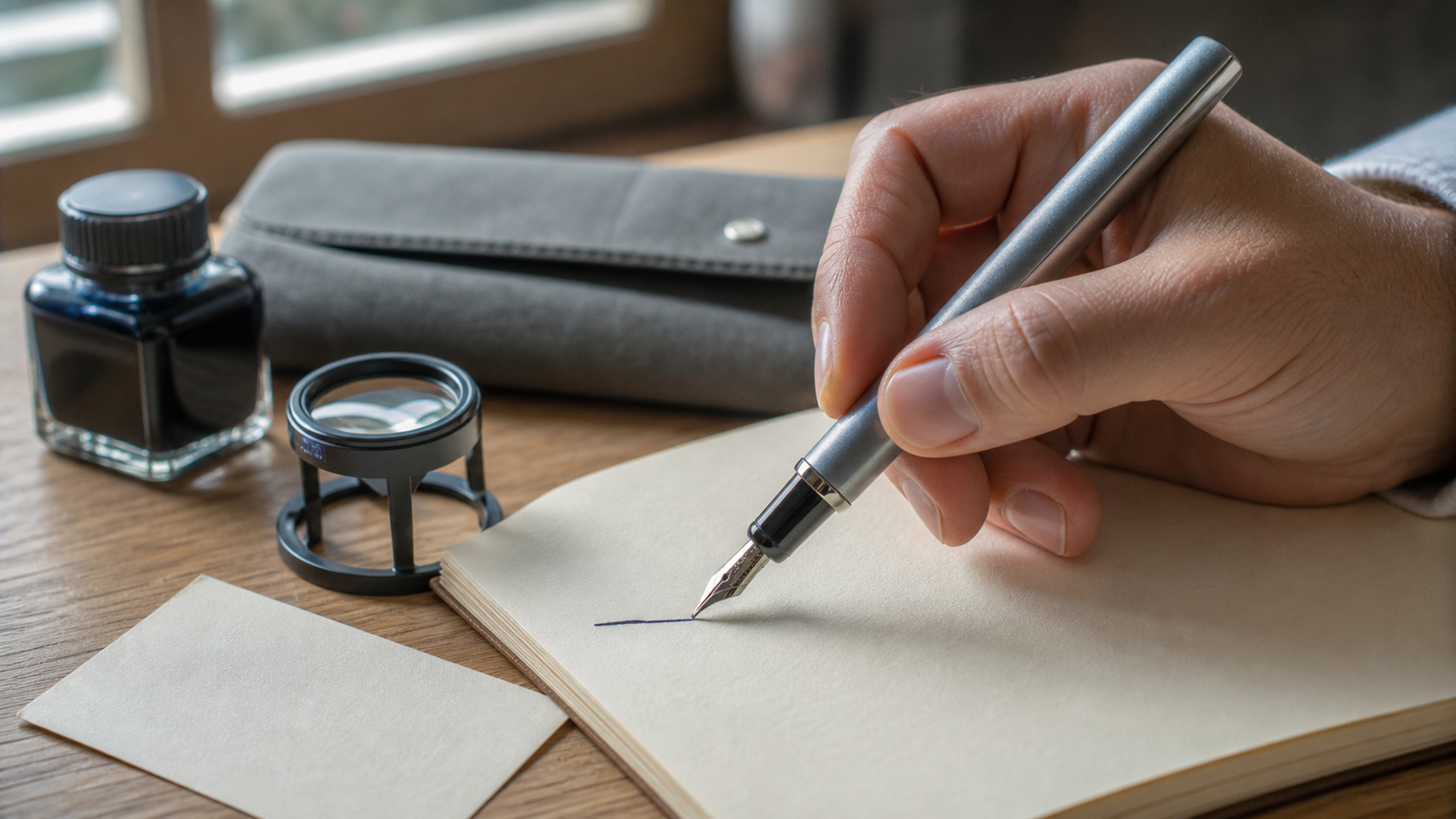
A conventional fountain pen is a writing instrument with a nib and a small internal ink supply. That does not make a glass bottle of spare ink part of the pen. If you are carrying a collection, a pen with an unusual tactical design, or a tool-like accessory, review the specific item rather than assuming every object called a pen is treated alike. The TSA list and the officer's screening decision remain more authoritative than a travel anecdote.
For a US itinerary, check the TSA's current travel checklist for the 3-1-1 rule covering liquids in carry-on baggage. It describes containers of 3.4 ounces or less within a single quart-sized bag. Do not rely on a bottle's remaining contents if the container itself exceeds the permitted size. Rules and checkpoint procedures can change, so review them shortly before departure.
What about cartridges, converters and bottled ink?
A cartridge is a small sealed ink supply; a converter is a refillable reservoir fitted inside the pen. Both need sensible protection against accidental opening. Keep spare cartridges in their original packaging or a small protective pouch so they do not roll loose next to keys or other hard objects. If a cartridge cracks, even a tiny amount of ink can travel surprisingly far inside a pale bag.
For bottled ink, use the manufacturer's secure cap, protect the bottle from impact and place it inside a leak-resistant secondary bag. A compact bottle may be more convenient than a large desk bottle, but its capacity must still satisfy the applicable carry-on liquid rule. Check the bottle size printed on the container, not a guess based on how full it feels. If the bottle is larger than the carry-on limit, consider checked baggage only after confirming airline and destination rules; pack it for rough handling and temperature changes.
Travellers with an international connection need to account for the rules at each security checkpoint, not merely the rules at their home airport. A transfer may require another screening. If the destination or transit country has a different cabin-liquid policy, prepare for the stricter practical requirement or avoid bringing spare bottled ink. A disposable travel cartridge may be easier to manage than a glass bottle, provided it fits the pen.
How to carry the fountain pen through screening
Protect the nib with the cap and put the pen in a case that will not allow it to be crushed. Keep the case in a place you can retrieve without emptying the whole bag. A metal-bodied pen may attract closer inspection on an X-ray image, but this does not by itself mean it is prohibited. If an officer asks what it is, describe it plainly as a fountain pen and follow the screening instructions.
Do not conceal a pen inside another object or wrap it in layers that make inspection difficult. If it has sentimental or monetary value, carry it where you can keep track of it and avoid leaving it loose in an outer bag pocket. At the same time, do not assume a valuable object receives special treatment at a checkpoint. Screening rules apply to the item itself.
Before setting off, photograph or note the pen's condition if it is especially valuable. This is a practical record, not a promise of compensation for loss or damage. If the pen is part of a larger writing kit, keep the sharp tools, bottled liquids and cleaning supplies distinct in your packing check. A pen-safe bag is not automatically a rule-compliant bag for every accessory.
Can air pressure make a fountain pen leak?
A fountain pen can leak during travel, particularly if ink and air inside the reservoir shift as cabin pressure changes or if a filling system is not secure. Security approval does not prevent this. There is no single packing trick that guarantees a leak-free flight for every pen and filling system, so use a conservative approach: close the cap firmly, keep the pen upright when possible and place it in a protective sleeve or pouch that can contain a small spill.
Owners choose different fill levels for different pens. A full reservoir may leave less air to expand, while an empty and cleaned pen removes the ink that could escape; the right choice depends on the filling system and how quickly you need to write on arrival. Avoid making a last-minute fill without checking for a loose converter, damaged cartridge or ink on the section. If your pen has leaked before, travel with it empty and refill at the destination if practical.
After landing, open the cap over a tissue rather than over a document or pale garment. Wipe any ink from the grip before writing. If the pen has been jostled, give the nib and cap a quick inspection. The same habits are useful when storing the pen between trips; our fountain-pen storage guide explains how cleaning, position and storage time affect care.
Make a short pre-flight packing check
- Confirm the specific security rules for your departure and transit points.
- Check that the pen is capped and the cartridge or converter is seated securely.
- Put spare cartridges and any ink bottle in secondary protection.
- Check the printed capacity of bottled ink against the cabin-liquid allowance.
- Pack the pen case where it can be retrieved for inspection.
- Carry a tissue and inspect the pen before signing or writing after landing.
This list addresses ordinary travel preparation. It cannot guarantee a particular officer's decision or prevent every leak. If the itinerary has unusual screening conditions, ask the relevant airport or airline directly before travel.
For a VERTU Marengo owner, the same distinction applies: confirm the rules for the instrument and any ink, then protect the nib and the contents of your bag. This article does not assume an unverified Marengo filling system, bottle size or leak resistance. Choosing suitable paper for writing after arrival is a separate decision; the fountain-pen paper guide covers absorption, drying and show-through.
Frequently Asked Questions
Can I put a fountain pen in my carry-on?
Generally, yes for a conventional writing pen, subject to the current security rules and the officer's final screening decision. Check any unusual pen design or accessory separately.
Does ink inside the pen count as a liquid?
Ink is liquid, but the practical screening question differs from carrying a separate bottle. Do not assume a desk bottle is exempt because it is used to fill a pen; check current cabin-liquid guidance for the bottle.
Can I take fountain-pen ink cartridges on a plane?
Small sealed cartridges are generally easier to pack than a bottle, but they still contain ink. Keep them protected and check the applicable security policy if you are carrying many or travelling through multiple countries.
Should I empty my fountain pen before flying?
It is a conservative option if you want to minimise leak risk and can refill later. A securely closed pen may travel filled, but no fill level guarantees it will not leak. Follow the maker's care guidance for your specific pen.
Is checked baggage safer for bottled ink?
It may avoid a cabin-liquid limit, but checked baggage can be handled roughly and a leak may affect other possessions. Confirm the relevant baggage rules and use a protective secondary container.
Conclusion
A fountain pen is usually a straightforward travel item when you distinguish the writing instrument from spare liquid ink. Check current security guidance for every checkpoint, protect the pen and bottle against damage, and plan for possible pressure-related leakage. The small amount of preparation matters more than any blanket claim that every pen, ink supply and route will be treated identically.