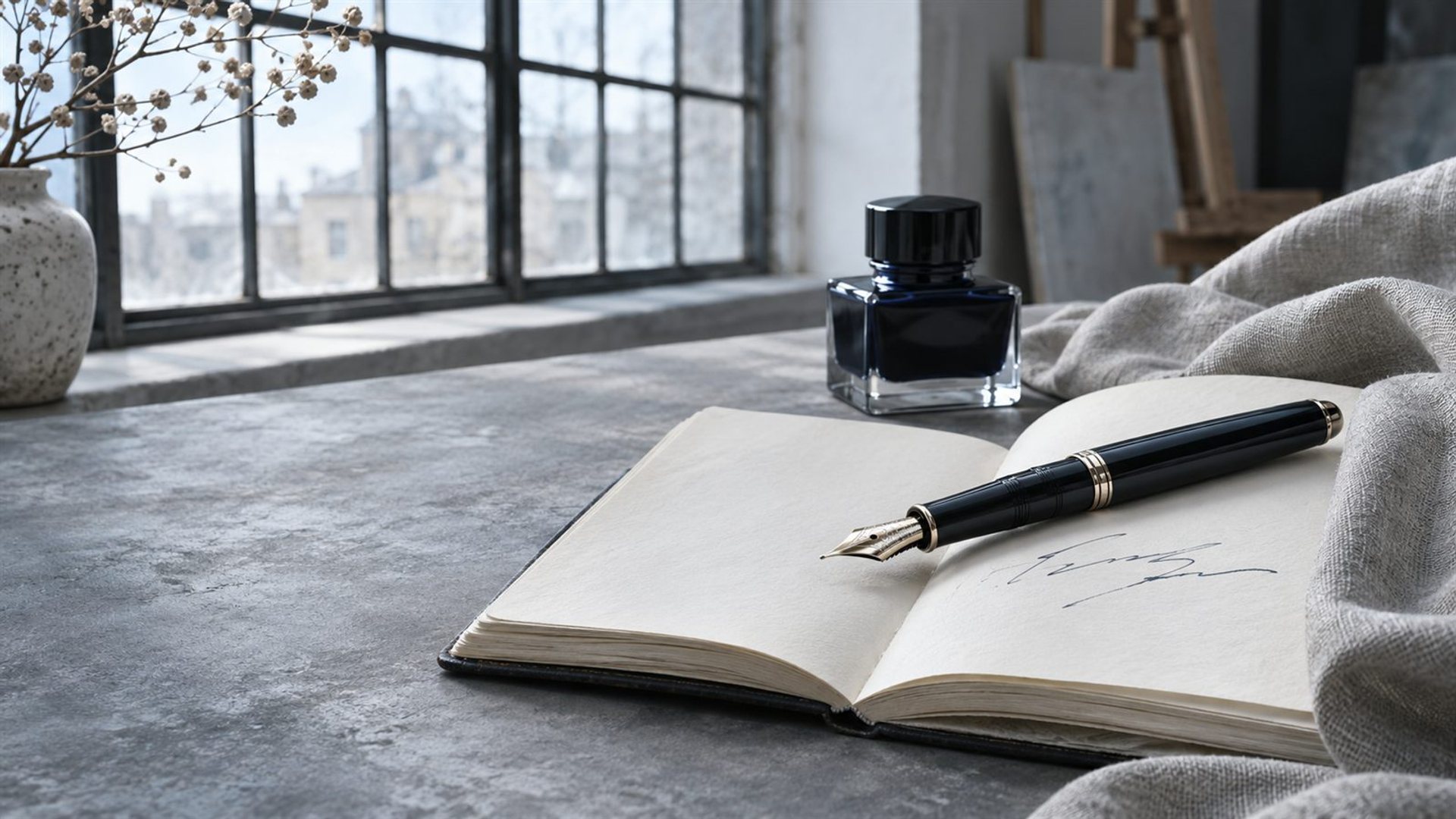
A luxury fountain pen is a sound purchase when its nib, balance and filling method suit the way you actually write. The finish may draw your eye, but the first decision should come from a short writing test on your usual paper. Check the seven points below before choosing a pen for yourself or as a gift.
1. How does the nib behave with your handwriting?
Start with your typical writing: small notes, long letters, signatures or occasional journal entries. A fine nib can help keep small lettering distinct, while a broader line may feel expressive on suitable paper. The letter stamped on one maker's nib is not a universal measurement across brands. Ink flow, paper absorbency and your writing angle also change the apparent line. LAMY's official nib guide is a useful reference for understanding the range before trying a specific pen.
Write the same sentence three times at your normal speed. Include loops, a long downward stroke and a few quick figures. Notice skipping, scratchiness and whether you have to press harder than you normally would. A fountain pen should write with light contact; excessive pressure is usually a sign to adjust the angle, paper or pen choice rather than force the nib. Ask the retailer which nib widths are actually available for the model you are considering.
2. Does the weight stay comfortable beyond a signature?
Hold the pen as you would during a full page of writing. Note where the weight rests between your fingers and whether the barrel pulls backward or downward. A striking metal body may be satisfying in a brief demonstration yet tiring for a long letter. Test with the cap both on and off the rear of the barrel if the maker permits posting. The change can alter balance considerably, even though the pen itself has not changed.
The VERTU Marengo Fountain Pen is listed in the VERTU product knowledge base at 80 g and 152.8 × 14.1 mm. These figures make it especially important to assess the feel in hand if you expect to write for extended periods. They do not predict comfort for every person: grip size, writing posture and whether the cap is posted all matter. If you are buying a gift, ask whether the recipient favours substantial pens or lighter instruments.
3. Is the grip comfortable at your natural angle?
Check the diameter, taper and finish of the section where your fingers rest. A narrow section may suit one hand and feel cramped in another. A polished surface may be attractive but less secure if your fingers become warm. Also check for a thread or step exactly where you place your thumb and forefinger. These small points can matter more than the overall barrel diameter in the specification.
Try writing a paragraph without consciously changing your usual grip. If you must constantly move your hand to keep the nib in contact with the page, consider another shape. Left-handed writers should test the direction and speed of their normal strokes rather than assume a label will solve every issue. For an online purchase, compare the grip-section photographs and ask about return conditions if the feel cannot be assessed in advance.
4. How will you fill it, and what ink is compatible?
Cartridges, converters and built-in filling systems create different routines. Cartridges can be convenient for travel, but their shape and compatibility vary. A converter can open a wider choice of bottled fountain-pen ink if the pen supports it. A built-in system may hold ink differently and need a different cleaning method. Do not assume a converter fits merely because one appears in a photograph or an accessory bundle.
VERTU's current knowledge-base entry identifies the Marengo as a cartridge-filling pen. Before buying, confirm the exact cartridge standard and what is supplied in the box for the current market. The product page should be the starting point, followed by a direct question to the seller when compatibility is unclear. Avoid using drawing ink or another fluid simply because it is labelled ink; the manufacturer should specify what the writing system accepts.
5. Have you tested the pen with realistic paper?
A nib that behaves beautifully on a showroom pad may feather or bleed on the inexpensive office paper you use daily. Bring a sheet or a notebook you already own if a writing test is available. Check both sides of the page for show-through and look at the edges of the strokes for feathering. A smoother or more absorbent sheet changes how a nib and ink combination feels, so the test should resemble your actual writing environment.
If you are purchasing a gift and cannot test the recipient's paper, choose a sensible everyday writing context rather than assuming the thickest or most ornate notebook is best. A well-matched pen, ink and page can make a modest note pleasant to write. An expensive instrument paired with unsuitable paper can produce a disappointing first impression without any defect in the pen.
6. What will cleaning and storage require?
Ask how the pen should be cleaned when the ink colour changes or the pen has sat unused. Most fountain pens benefit from periodic attention, but procedures differ with the filling system and materials. Use the maker's instructions for disassembly and flushing; forcing a section can damage a seal or finish. Montblanc's service guide provides an example of a manufacturer's detailed filling and care instructions, though its steps should not be applied automatically to a different brand.
Store the pen securely so it cannot roll from a desk or press against keys in a bag. Check the cap for a firm fit and look for a practical case if you travel. Before a flight, ask the maker how it recommends carrying that specific filled pen; changes in pressure and handling can make an improvised storage choice unwise. A luxury pen remains a working instrument and deserves an ordinary, repeatable care routine.
7. What support is available if writing changes?
Find out who handles nib adjustment, replacement parts and finish repairs in your market. Ask whether the retailer will inspect the pen on arrival and what happens if it skips on the first day. Read the applicable warranty and return terms rather than relying on a general statement about craftsmanship. This matters especially when the pen will be shipped internationally or given as a gift after the purchase window has passed.
Separate a writing fault from a preference. A pen that writes consistently but feels too heavy may be the wrong match rather than a defective item. A cap that will not secure, a persistent hard start or a visible alignment problem deserves a prompt conversation with the seller. Keep the packaging and purchase record until you have completed a normal writing session with the pen.
How should you compare the VERTU Marengo?
The Marengo has a decorative gold-coloured character. VERTU's knowledge base specifies brass with gold plating and zirconia, a German SCHMIDT precision writing system and a 0.5 mm nib. These are product details, not a guarantee of how the nib will feel on your paper. The official listing and current market terms should be checked for configuration, availability and the supplied ink items. If the weight and ornament appeal, give the grip and balance a particularly careful trial.
Compare it against other pens by writing the same passage with each, using comparable ink and paper where possible. Record how quickly the pen starts, whether the line stays consistent and whether your hand remains relaxed. VERTU's broader luxury pen comparison offers additional options; this checklist is intended to help you judge the individual instrument rather than choose by a seasonal ranking.
Frequently asked questions
Is a gold-coloured pen automatically fitted with a gold nib?
No. The finish of the body does not establish the nib material. Confirm the precise nib specification in the maker's current documentation before purchase. In the Marengo case, the VERTU knowledge base names the writing system and 0.5 mm width, but should not be stretched into an unsupported nib-metal claim.
Is a finer nib always better for everyday notes?
No. A finer line can help compact handwriting, but feel and appearance depend on ink and paper. Test your own sentence on a realistic sheet. Choose the width that keeps your writing clear without making the pen unpleasant to use.
Can I use any ink cartridge?
No. Cartridge shapes vary across makers and models. Confirm the precise compatible type for the pen and current configuration. A cartridge that looks similar can still fail to fit or seal properly.
What should I do if a new pen skips?
First check that the correct ink is installed and that you are using a normal writing angle and suitable paper. Follow the maker's initial-use instructions. If skipping continues, contact the retailer or authorised service rather than attempting to bend or grind the nib yourself.
Conclusion
A luxury fountain pen earns its place when the writing experience, weight and upkeep suit its owner as well as the finish does. Test a full paragraph, verify the filling and service details, and compare candidates on the same paper. Those small checks turn an impressive object into an instrument you will want to use.