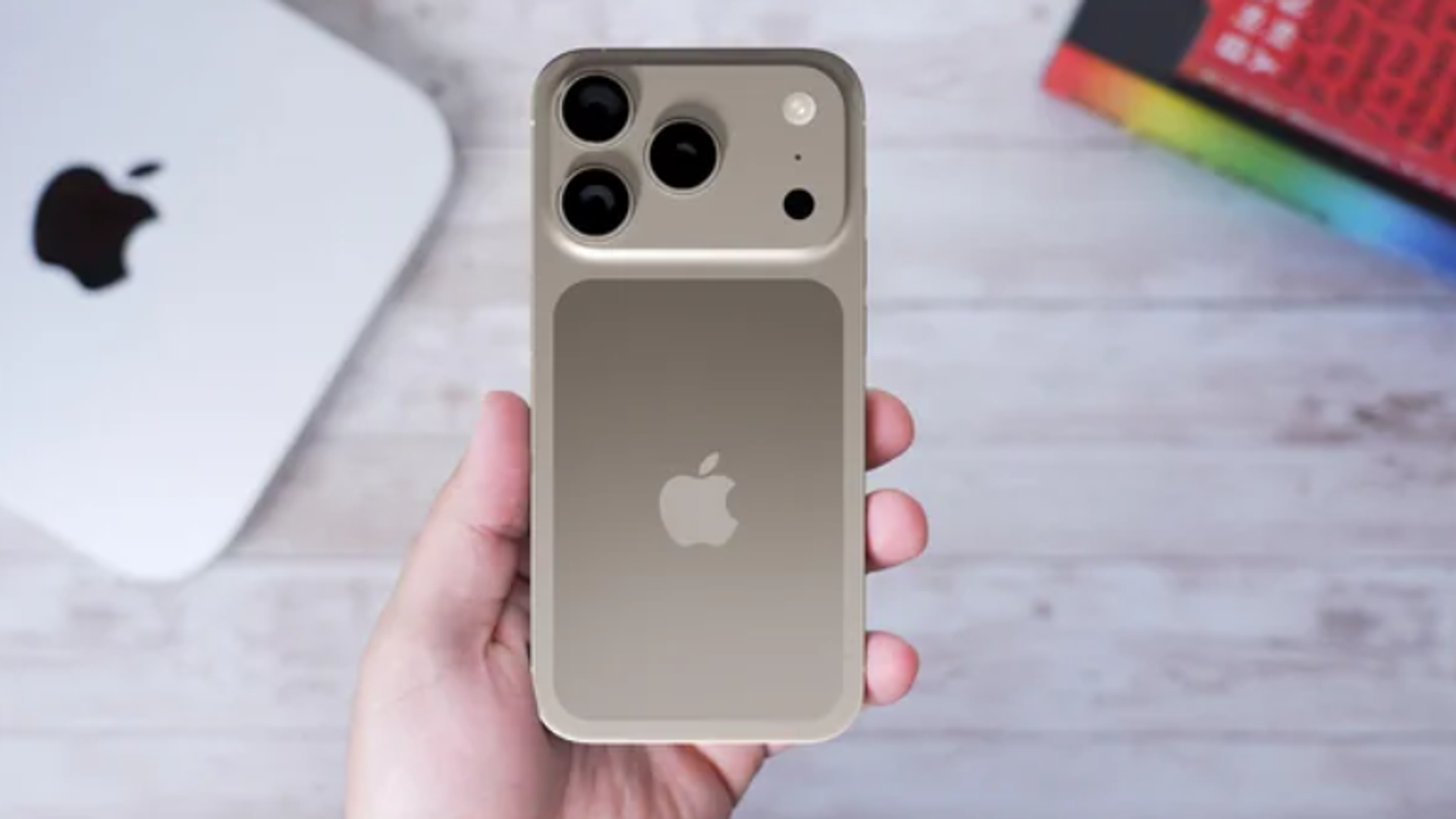
The iPhone 20 Pro stands as the centrepiece of Apple's long-range product roadmap, widely anticipated across global supply chain corridors to serve as the historic twentieth-anniversary tribute to the original 2007 iPhone. Much like the pivotal transition of 2017—where Apple bypassed numeric continuity to introduce the bezel-less iPhone X—current industry intelligence suggests the company plans to bypass the "iPhone 19" moniker entirely to commemorate two decades of mobile hardware with a radical architectural overhaul. Early engineering validation leaks indicate that this decadal flagship will abandon the flat-edged aesthetic of recent generations, introducing an all-glass quad-curved optical profile, solid-state haptic touch controls, and a rare, commemorative ceramic chassis edition engineered in severely constrained production volumes.
Key Takeaways
- The Anniversary Leap: Apple is widely expected to leap directly to the twentieth-anniversary naming convention, positioning the device as the most radical industrial redesign since the introduction of the edge-to-edge OLED display in 2017.
- Quad-Curved Optical Screen: Rather than returning to problematic high-curvature waterfall panels, leaks point to a "flat-interior, quad-curved exterior" glass cover that uses optical perimeter refraction to achieve an essentially borderless visual display with physical bezels reduced near 1.0 mm.
- Limited Ceramic Edition: Early engineering validation testing (EVT) components reveal Apple is prototyping an ultra-exclusive ceramic backplate, drawing from high-end horological casing traditions and the heritage of previous ceramic Apple Watch editions.
- Solid-State Infrastructure: The device is heavily rumoured to eliminate mechanical volume and power switches entirely, implementing hermetically sealed capacitive touch zones powered by localised Taptic Engine drivers.
The Anniversary Paradigm: Why Apple Is Skipping to iPhone 20
In consumer electronics manufacturing, anniversary milestones frequently dictate dramatic departures from incremental release cadences. When the original iPhone debuted in 2007, it fundamentally redefined interactive computing through multi-touch glass. A decade later, the 2017 iPhone X abandoned the mechanical home button, introduced 3D facial biometric scanning, and established the foundation for modern smartphone architecture. As the twentieth anniversary approaches, industry analysts and upstream component suppliers indicate that Apple intends to deploy an identical playbook.
Skipping the incremental numbering sequence permits Apple's industrial design studio to break free from the iterative chassis updates that have characterised the smartphone market. Rather than offering marginal photographic upgrades or minor alloy tweaks, the anniversary roadmap is framed around a comprehensive rethinking of material tactile feedback, structural hermetic sealing, and thermal performance. By consolidating several multi-year research initiatives into a single generational leap, the flagship is designed to set the stylistic and mechanical template for the subsequent decade of personal technology.
Display Architecture: Quad-Curved Glass and the 'Visual Bezel-Less' Evolution
Among the most widely discussed design leaks surrounding the device is the anticipated abandonment of the strict flat-panel geometry that has dominated flagship lines since the iPhone 12. Supply chain intelligence, corroborated by component handlers evaluating prototype glass covers, describes a sophisticated quad-curved front display designed to eliminate perceived borders entirely.
The 'Flat Interior, Curved Exterior' Engineering Solution
Early Android attempts at curved displays—commonly referred to as waterfall or edge screens—suffered from pronounced ergonomic flaws: excessive accidental palm touches, high optical colour distortion along the perimeter, and structural fragility under lateral impact. Apple's leaked approach addresses these historical pain points through a hybrid optical technique:
- Substrate Planarity: The underlying active OLED emission layer remains structurally flat. This preserves uniform sub-pixel illumination, prevents green-tint edge fringing, and guarantees high structural stability during high-volume manufacturing.
- Precision 3D Glass Contouring: The outer protective sapphire-infused glass cover is subjected to multi-axis CNC grinding and thermal polishing, imparting an ultra-subtle, three-dimensional micro-curvature across all four perimeters (top, bottom, left, and right).
- Refractive Border Erasure: By precisely calculating the refractive index of the exterior glass curvature, ambient light bends around the physical display periphery. In tandem with sub-1.0 mm physical bezels, the visual screen appears to float uninhibited across the face of the device, creating an uninterrupted edge-to-edge pool of pixels.
The Evolution of Biometric Cutouts
While long-term consumer sentiment continues to advocate for an entirely uninterrupted front panel via Under-Panel Face ID (UPFD) and under-display optical camera apertures, early tooling leaks suggest that the Dynamic Island will not be completely eliminated. Instead, engineers are working to shrink the interactive pill footprint by more than 40%. By relocating several ambient light and flood-illuminator sensors beneath the active pixel array, only the primary TrueDepth dot projector and front camera lens remain exposed, retaining vital spatial recognition fidelity while expanding usable status-bar real estate.
The Ultra-Luxury Ceramic Limited Edition: Origins, Yields, and Horology
Beyond structural display revisions, recent engineering leaks originating from domestic supply-chain monitors—including disclosures from tech analysts evaluating component prototypes—have confirmed the physical existence of ceramic chassis samples developed for early validation trials. This suggests that alongside standard titanium models, Apple is actively preparing a dedicated, highly exclusive Ceramic Limited Edition.
Drawing from Horological Heritage
Zirconia-based engineering ceramics are celebrated throughout haute horlogerie for their diamond-like scratch resistance, silky tactile warmth, and lustrous, non-conductive surfaces. Apple is intimately familiar with the material, having deployed medical-grade ceramic cases across previous premium wearable iterations, including the white and grey ceramic Apple Watch Edition models. Translating this material from a compact 45 mm smartwatch case to a large-format 6.4-inch or 6.9-inch mobile chassis introduces extraordinary production hurdles.
Manufacturing Realities and Low Allocation Volumes
The manufacturing process for high-density ceramic components requires extreme capital expenditure and stringent cycle times:
- High-Pressure Injection and Sintering: Zirconia powders combined with binding polymers are injection-moulded and baked in kilns exceeding 1,400 degrees Celsius over several days. The component shrinks by nearly 20% during densification, requiring micrometric shrinkage calibration.
- Diamond-Tool Machining: Once sintered, the material achieves a hardness approaching 8.5 on the Mohs scale—surpassing stainless steel and titanium. Trimming internal mounting rails, speaker perforations, and camera bezels requires dedicated diamond-coated CNC tooling, resulting in extensive tool wear and lengthy cycle times per unit.
- Severe Capacity Constraints: Supply chain reports explicitly note that component allocation for this ceramic housing is projected at extraordinarily low production capacities. Consequently, the Ceramic Edition will almost certainly debut as an ultra-luxury anniversary commemorative tier, commanding a substantial price premium and strictly constrained regional availability.
Chassis, Haptics, and Structural Redesign: The Death of Mechanical Buttons
In pursuit of a truly seamless, monolithic profile, the twentieth-anniversary hardware is slated to dismantle the final remnants of nineteenth-century mechanical switchgear. Current prototypes indicate the total eradication of physical, moving buttons for volume adjustment, system silencing, and power cycling.
In place of mechanical switches, the chassis integrates solid-state capacitive force-sensing zones backed by dedicated Taptic Engine linear resonant actuators. When a user applies pressure along the recessed titanium or ceramic perimeter rails, the internal sensors register the input vector, instantaneously driving a sharp, localised magnetic vibration that mimics the tactile "click" of a mechanical switch. This engineering transition yields three distinct practical advantages:
- Unprecedented Hermetic Ingress Protection: Eliminating mechanical button apertures removes primary entry points for water, dust, and particulate debris, unlocking potential depth-rating increases beyond standard IP68 consumer ratings.
- Structural Chassis Integrity: Continuous, uninterrupted perimeter bands avoid structural weak points, significantly improving lateral crush and torsion resistance under drop testing.
- Customisable Capacitive Interaction: Dynamic touch surfaces can recognize velocity and sliding gestures, enabling intuitive, software-defined controls for continuous optical focal-length zooming, macro-exposure adjustments, or modular app switching.
Silicon and Internal Architecture: 2nm A21 Pro and Silicon-Carbon Anodes
A flagship defined by exterior refinement requires an equally advanced computational engine. The hardware is projected to mark the commercial maturity of second-generation 2-nanometre (N2P) silicon fabrication, pairing unprecedented power efficiency with specialised on-device intelligence cores.
TSMC 2nm A21 Pro Silicon Architecture
The anticipated A21 Pro system-on-chip will utilise advanced Gate-All-Around (GAA) nanosheet transistor architectures. Compared to historical FinFET designs, GAA nanosheets allow current to flow through four enclosed channel surfaces, drastically curbing leakage current while boosting computational throughput by 10% to 15% at identical power draws. More crucially, the dedicated Neural Engine is expected to receive substantial silicon real estate, facilitating real-time execution of multi-billion-parameter multimodal intelligence models locally on the device without requiring cloud processing roundtrips.
High-Density Silicon-Carbon Battery Technology
Accommodating larger display architectures, high-refresh-rate optical panels, and high-frequency wireless communications within an ultra-dense curved profile demands a step-change in chemical energy storage. Traditional graphite anodes are reaching their physical theoretical capacity limits. To resolve this bottleneck, the anniversary flagship is expected to adopt silicon-carbon composite anodes, boosting volumetric energy density by 15% to 20%. This permits greater milliampere-hour capacities within a thinner physical footprint, mitigating thermal build-up and offsetting the energy demands of intensive on-device processing.
Comparative Analysis: Anticipated Anniversary Upgrades
To contextualise the scale of the rumoured generational leap, the following matrix compares the leaked twentieth-anniversary hardware parameters against modern production benchmarks:
| Hardware Dimension | Previous Pro Standards | Anticipated Anniversary Flagship | Primary User Benefit |
|---|---|---|---|
| Front Display Form | Pure flat glass with uniform perimeter borders | Quad-curved 3D refractive glass cover | Perceived borderless display; softer in-hand edges |
| Chassis Metallurgy | Anodised aluminium / brushed titanium | Contoured polished titanium & limited ceramic | Extreme scratch resistance and luxury tactile finish |
| Physical Switchgear | Mechanical volume & action buttons | Solid-state capacitive zones with haptic drivers | Enhanced water sealing; customisable gestures |
| Front Sensor Housing | Standard Dynamic Island pill cutout | Miniaturised island with partial under-panel Face ID | Over 40% reduction in screen obstruction area |
| Silicon Fabrication | 3nm (FinFET / N3E nodes) | 2nm (Gate-All-Around / N2P node) | Significant thermal reduction; accelerated local processing |
| Battery Chemistry | Standard lithium-ion (graphite anode) | Silicon-carbon composite anode | Higher energy density; extended daily battery endurance |
Supply Chain Reality: Separating EVT Prototypes from Mass Production
When analysing long-range smartphone rumours, prospective observers must understand the rigorous progression of modern consumer electronics manufacturing. Hardware advances through four distinct stages: Proof of Concept (PoC), Engineering Validation Testing (EVT), Design Validation Testing (DVT), and Production Validation Testing (PVT).
The components currently appearing in supply chain leaks—most notably the ceramic backplates and quad-curved front glass tooling—are undergoing early EVT assessments. During EVT, engineers construct several hundred to a few thousand prototype units to evaluate structural viability, drop survivability, radio-frequency transparency, and thermal dissipation. It is entirely standard for radical concepts to be refined, altered, or restricted in scope if manufacturing yield rates fall below commercially viable thresholds.
For example, while quad-curved front glass tooling has advanced to stable validation stages, the ceramic chassis continues to face severe yield-rate constraints due to diamond-machining cycle times. Should production yields fail to improve, Apple may restrict ceramic enclosures exclusively to a top-tier commemorative SKU, maintaining precision-milled titanium as the primary alloy for standard volume production.
Frequently Asked Questions
Is Apple officially confirmed to skip the iPhone 19 for the iPhone 20 Pro?
While Apple does not comment on unreleased roadmaps, strong supply chain and historical precedent support this move. The company famously bypassed the iPhone 9 in 2017 to celebrate the tenth anniversary with the iPhone X, and upstream component suppliers indicate an identical commemorative naming strategy is planned for the twentieth anniversary.
How does the quad-curved display differ from older Android curved screens?
Older curved phones bent both the underlying OLED panel and exterior glass at sharp angles, causing accidental palm touches and green color distortion along edges. The new design pairs a completely flat internal OLED panel with an exterior 3D glass cover polished to subtle micro-radii, utilizing optical refraction to create a bezel-less visual effect without ergonomic drawbacks.
Will the ceramic edition be available on all storage configurations?
Current supply chain reports indicate ceramic production yields are heavily constrained due to long kiln-sintering and diamond-machining cycles. Consequently, the ceramic chassis will likely be reserved for an ultra-exclusive commemorative tier or top-tier storage capacities rather than offered across the broader lineup.
How will solid-state buttons function if the phone's battery is completely depleted?
Low-power auxiliary coprocessors and dedicated micro-capacitors will reserve a minute amount of emergency power even after standard system shutdown. This architectural approach, refined over several generations of auxiliary chip designs, ensures capacitive haptic touch surfaces and power toggles remain responsive to client interaction.
What is the expected release window for the twentieth-anniversary hardware?
Historically, major iPhone flagship unveilings occur during Apple's annual September keynote address. Because the original iPhone launched commercially in 2007, the twentieth-anniversary generation is aligned with the autumn release window of the milestone calendar year.
Conclusion
The convergence of advanced metallurgical casing options, optical glass engineering, and next-generation silicon marks a transformative chapter in modern personal computing. By stepping beyond iterative flat-sided enclosures to explore quad-curved refractive glass, hermetic solid-state haptics, and limited-run horological ceramic editions, Apple is deliberately preparing a worthy successor to the ground-breaking legacy of the iPhone X. As engineering validation trials progress toward final production tooling, the iPhone 20 Pro is poised to stand as a defining industrial benchmark, proving that two decades into the smartphone era, physical hardware design can still deliver genuine, breathtaking surprise.