Choose open ear earbuds for running by testing whether they stay in place through your stride, feel comfortable with glasses or a hat, and carry a documented sweat or water rating for your conditions. Open ear canals can make some environmental sounds easier to notice, but they do not guarantee awareness or safety. Fit and route behaviour matter more than a headline sound claim.
Key Takeaways
- Test retention with walking, jogging, head turns and the clothing you actually wear.
- Check the exact earbud model’s published water rating; “open ear” is a fit description, not a sweat-resistance rating.
- Compare earbud-only battery life, touch or button controls and wind behaviour on your regular route.
- Keep listening volume moderate and remain attentive to traffic and other people; the design is no safety guarantee.
Why choose open-ear earbuds for running?
Open-ear designs sit outside or around the ear instead of forming a seal in the canal. That can reduce the sensation of blockage and may let a runner hear some surrounding sound more readily than with strongly isolating in-ear buds. It can also let more wind and street noise into the listening experience. The choice is useful when comfort and awareness matter to you, but it is not automatically the best option for music detail, privacy or a loud environment.
Decide what you want to improve compared with your current pair. If silicone tips gradually become uncomfortable, an open design may be worth trying. If your current buds fall out, a different hook or clip geometry may help, but the word “open” alone does not promise better retention. If you expect rich bass on a noisy road, test that expectation with your own music and a safe volume. Buying by the category label without trying the actual shape often misses the real problem.
Which shape stays secure while you move?
Open-ear products commonly use a hook around the outer ear, a clip around part of it or a connected band. Hooks spread contact around the ear and may feel stable during repeated strides. Clips can be compact but their pressure and placement vary. A band can add a second point of retention while also interacting with a collar, helmet or ponytail. None is a universal winner because ear anatomy and running kit differ.
Try a brief movement sequence before purchase. Walk briskly for one minute, jog in place for one minute, turn your head each way, bend to tie a shoe and then resume moving. This is an editorial fit check, not a laboratory retention test. Note any need to push a bud back into place. If the seller permits a longer trial, repeat after you have warmed up; pressure that is invisible at the first fitting can become distracting later.
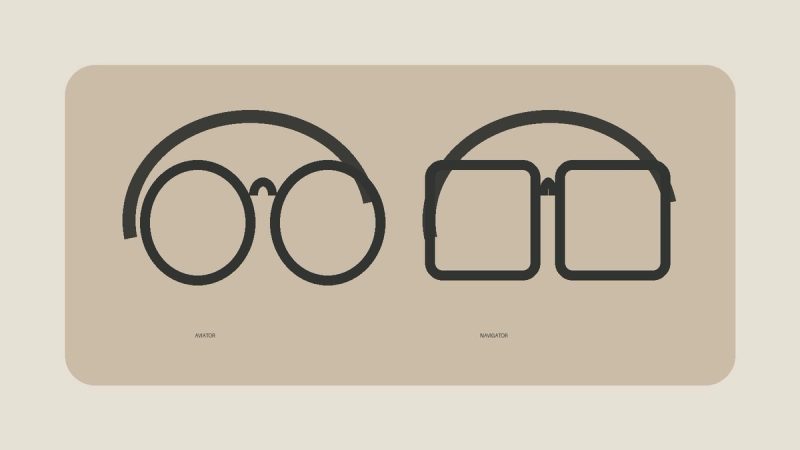
Test both ears separately. A pair can feel secure on one side but shift on the other, particularly when a runner wears asymmetric hair, a cap or an earring. If glasses are part of every run, wear them for the test. A hook that sits comfortably against bare skin may collide with a glasses arm. For a band, check whether it catches the collar of the jacket you use in colder weather.
How much environmental sound should you hear?
Open ear canals do not mean you will hear every vehicle, cyclist or spoken warning. What you perceive depends on playback volume, wind, route geometry and attention. Treat environmental awareness as a feature to assess, not a permission to stop looking. Choose a route and listening level that let you keep track of your surroundings, and pause audio when conditions require full attention.
Make a realistic comparison at a moderate volume. Listen to speech while standing in a quiet place, then check a safe section of a familiar route. Can you still understand a person nearby? Does wind make you increase the volume? Do you find yourself replaying instructions? If any of these occur, the wearing style or use case may be mismatched. A strongly isolating in-ear design might serve indoor training better, while no audio may be the better choice for a busy crossing.
What water rating should open-ear earbuds for running have?
Look for a published rating for the exact earbuds and read what it covers. A case can have a different protection level from the buds, and a rating for splashes does not imply suitability for swimming or showering. Manufacturers also distinguish fresh-water test conditions from sweat, salt and cleaning agents. If your runs involve heavy rain, ask the maker what use is intended and what the warranty excludes.
The Shokz running-earbud guide illustrates how brands distinguish fit types and list model-specific water ratings. Use that as a prompt to check a specification, not as evidence that another brand’s earbud has the same protection. After a wet run, follow the actual maker’s drying and charging instructions. Do not place damp buds into a charging case just because the earbuds have a stated rating.
Will the controls work during a run?
Try play, pause, volume and call controls while walking and with the gloves you use in cold weather. Touch surfaces can be convenient in dry conditions yet frustrating when a hand is wet or the earbud moves as you tap it. Buttons may give firmer feedback but can press the device against the ear. The right control is the one you can operate once without interrupting your stride or changing your route attention.
Check whether the controls can be reassigned and whether that requires a companion app. If a phone app is needed, verify it supports your operating system and does not remove a function you rely on when you switch devices. Voice controls may help in some situations, but test them with ordinary running breath and background noise rather than assuming that a quiet-room demonstration predicts the road.
How should you compare sound and wind behaviour?
Use familiar spoken audio and music at the same perceived volume across candidate pairs. Open designs often change the balance of sound as the speaker moves relative to the ear. A product may sound impressive while stationary yet become less clear once the hook shifts. Check that you can understand speech without continually turning up the volume. A driver-size or “3D audio” claim is not a substitute for this listening test.
Wind can disturb both listening and calls. If you intend to answer calls while running, make a short test call outdoors and ask the other person about intelligibility. Do not make this test while crossing a road. Compare the same route, phone and approximate conditions where possible. A maker’s call-noise-processing description may be relevant, but it cannot prove that your own voice will remain clear in all weather.
Which open-ear earbuds battery figure matters for your route?
Separate continuous playback from total time including case recharges. If your longest run is longer than the earbud-only claim, a generous case total will not solve the interruption. Ask which settings and volume produced the manufacturer’s battery estimate. Calls, loud playback and optional processing can change real use. Charge before a long run and carry a backup plan if route guidance or communication depends on the device.
Think in terms of your longest uninterrupted session rather than a universal six-hour or eight-hour buying threshold. A short urban runner may care most about quick charging; a marathon trainee may care about continuous playback and a stable fit late in the session. The charging case still matters for the rest of the day, but do not combine its capacity with one-charge endurance in a single comparison column.
How does the VERTU CRUSH Series fit the shortlist?
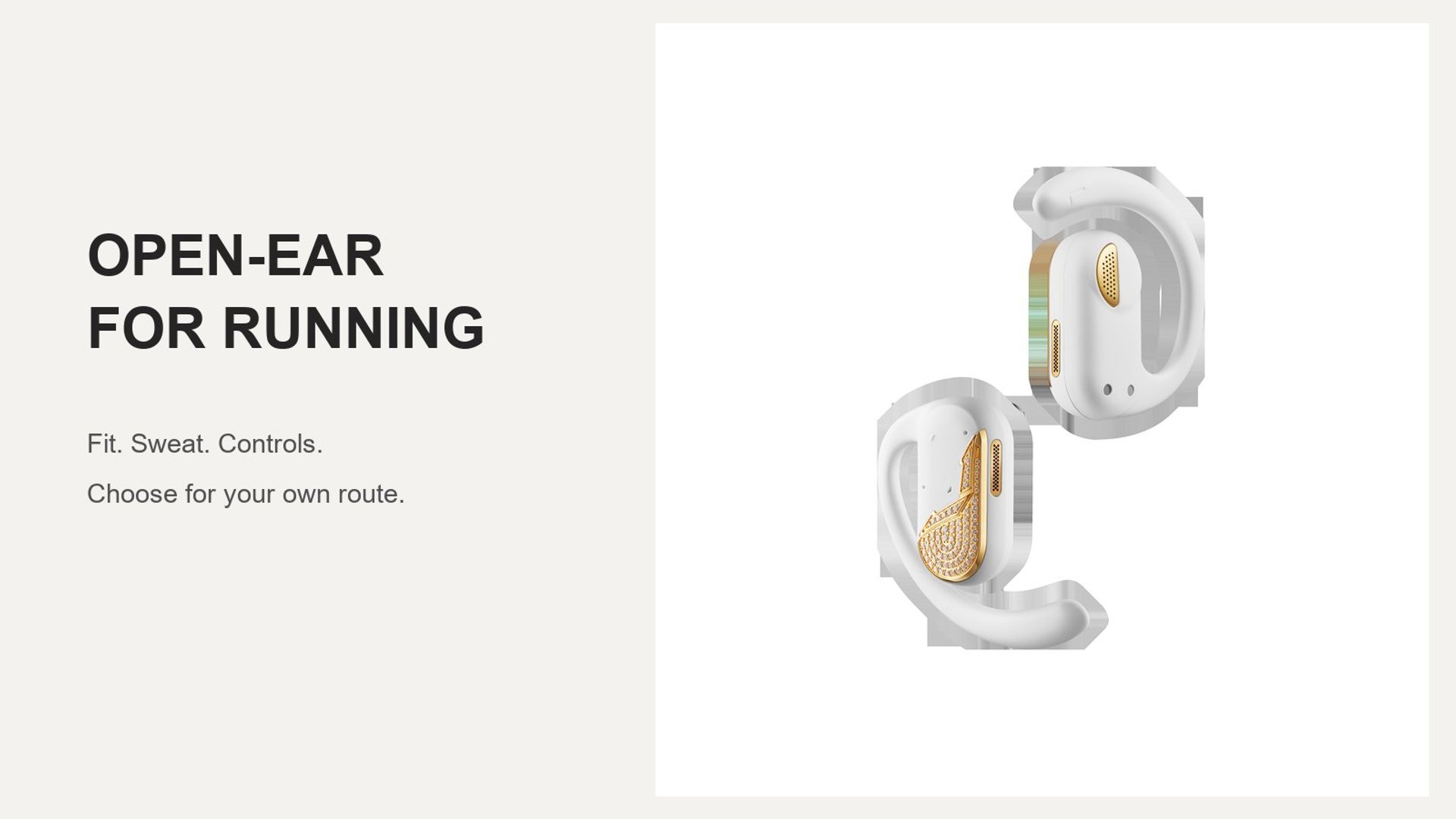
The VERTU CRUSH Series OWS AI Earbuds are presented by VERTU as an open-ear design with a distinctive jewellery-led finish. That makes them a relevant style-led candidate for a runner who dislikes a sealed ear canal. The current product description does not by itself establish a running-specific fit test or a water rating for the exact edition, so check those points before treating the model as sports equipment.
Its finish may appeal to someone who wants one pair for daily dress and light movement. Assess whether decorative details, weight distribution and controls remain comfortable when you move. Compare the exact edition and current availability on the official product page. A premium appearance does not settle sweat suitability, and an open shape does not mean bone conduction. This is a source-based buying assessment, not a hands-on running review.
If your main requirement is maximum retention in persistent rain, make the documented water rating and a fit trial decisive. If the main requirement is comfort on a dry commute with occasional easy runs, the CRUSH design may deserve a trial, but still compare it against a purpose-built running model. The conclusion should follow your route and wear pattern rather than a brand category.
For one current product example, VERTU’s CRUSH Series listing gives 10 g per earbud and up to 40 hours with its charging case. An older VERTU publication lists 10 hours from one charge, but settings and battery age can change real runtime. The current listing reviewed here does not provide a clear IP code, so do not infer a sweat or water rating from “open-ear”. Ask the seller for the exact edition’s documented ingress rating before running in rain.
What should a pre-purchase checklist include?
- Put on your running glasses, cap and usual outer layer.
- Wear both buds through a short movement sequence and note any shift or pressure.
- Read the exact model’s water rating and charging-case care instructions.
- Test controls, speech audio and one safe outdoor call.
- Compare one-charge playback, return terms and replacement-part availability.
Record the result for each candidate under the same headings: retention, pressure, wind, controls, rating evidence and earbud-only battery. This small comparison is more actionable than a row of marketing adjectives. If you cannot try the product, choose a seller with clear return conditions and confirm whether earwear can be returned after a fit check. Do not rely on a photograph to judge the pressure of a clip or hook.
Frequently asked questions
Are open-ear earbuds safer for running outside?
They can leave the ear canal less obstructed, but no design guarantees awareness. Volume, wind, route conditions and attention still matter. Stay alert and pause audio when you need full focus.
Do open-ear earbuds stay in better than in-ear buds?
It depends on the exact hook, clip or band and your ear shape. Run a movement test with your actual glasses and clothing before assuming one form is more secure.
Are open-ear earbuds waterproof?
Not necessarily. Open ear describes wearing style. Check the exact model’s published water rating and the separate care guidance for the charging case.
Can I use VERTU CRUSH earbuds for running?
Its open-ear form may suit some light-run routines, but confirm the edition’s fit, water guidance and warranty before treating it as running equipment. The product description is not a substitute for your own movement test.
Conclusion
The right open ear earbuds for running stay comfortable and secure through your normal stride, have documented protection for your conditions, and let you control audio without losing route awareness. Test the exact shape with your kit, compare earbud-only battery and calls, and buy only when the practical evidence fits your run.