Key Takeaways
- Anti-magnetic watches use different strategies: soft-iron shielding, silicon or Nivachron components, and tested movement designs.
- Omega and Tudor document 15,000-gauss Master Chronometer tests; other makers state different units or component-level benefits.
- Ten references from ten brands are compared without treating unlike ratings as equivalent.
- VERTU Grand Watch appears separately as a connected watch design option.
An anti-magnetic watch is designed to reduce magnetic interference with timekeeping. That promise needs a precise reference and a precise claim: a silicon balance spring is not automatically equivalent to a whole-watch test at 15,000 gauss. This guide compares ten documented approaches to modern living, from smartphones and magnetic bag clasps to work environments. For a broader style comparison, see luxury dress watches for men.
What counts as anti-magnetic protection?
A maker may protect a movement with an internal soft-iron cage, use components less susceptible to magnetism or test the complete watch at a stated field strength. These are related but different methods. The number may be expressed in gauss or A/m, and testing conditions matter. A published feature for one movement or family should never be assigned to a different reference without evidence. Magnetisation can change a mechanical watch’s rate; seek an authorised service check if it starts running unusually fast or slow.
Anti-magnetic watch comparison
| Rank | Brand and model | Documented approach |
|---|---|---|
| 1 | Omega Seamaster Aqua Terra 150M Master Chronometer | Master Chronometer, 15,000 gauss |
| 2 | Rolex Milgauss 116400GV | Shielded Milgauss, 1,000 gauss |
| 3 | IWC Ingenieur Automatic 40 IW328907 | Soft-iron inner case |
| 4 | Tudor Black Bay Ceramic M79210CNU-0001 | METAS, 15,000 gauss |
| 5 | Sinn 856 UTC | Magnetic-field protection, 80,000 A/m |
| 6 | Ball Engineer II M Skindiver Heritage | Soft-iron inner case |
| 7 | Rado Captain Cook High-Tech Ceramic Skeleton R32153209 | Nivachron hairspring |
| 8 | Longines Spirit Zulu Time L3.802.4.60.6 | Silicon balance spring |
| 9 | Hamilton Khaki Aviation Converter Auto H76645540 | Nivachron balance spring |
| 10 | Tissot Gentleman Powermatic 80 Silicium T1274071106101 | Silicon balance spring |
Ten anti-magnetic watches in detail
1. Omega Seamaster Aqua Terra 150M Master Chronometer
Omega states that the Master Chronometer Aqua Terra movement resists magnetic fields up to 15,000 gauss. This gives the watch a documented protection claim rather than a vague material promise. The polished dial and steel case make it a comparatively versatile choice for office and travel. Check the exact Aqua Terra reference, movement and METAS certification; the collection includes different sizes and designs. Anti-magnetism does not make the watch immune to damage or remove the need to follow care instructions.
2. Rolex Milgauss 116400GV
Rolex developed the Milgauss for scientific work and stated resistance to 1,000 gauss. The green-tinted crystal and lightning-bolt seconds hand give this discontinued reference a recognisable identity. Its historical benchmark remains useful, but a pre-owned purchase needs careful inspection of the crystal, dial and service record. Compare the full reference with Rolex documentation; current Rolex catalogues need not include this model. Do not assume its 1,000-gauss figure is directly interchangeable with the testing method of a different brand.
3. IWC Ingenieur Automatic 40 IW328907
IWC says a soft-iron inner case shields the Ingenieur Automatic 40 movement from magnetic fields. The integrated-bracelet design makes the watch read as a modern steel sports piece rather than a traditional laboratory instrument. Its first bracelet links deserve a real wrist test. Ask for the exact IW328907 specification and distinguish this inner-case approach from silicon-spring designs. The manufacturer describes protection, but a buyer should not invent an unstated gauss rating for this reference.
4. Tudor Black Bay Ceramic M79210CNU-0001
The METAS-certified Black Bay Ceramic is tested for smooth operation in a magnetic field of 15,000 gauss and precision following exposure. Its black ceramic case and dive bezel create a stronger sports profile than the IWC or Omega. The official Tudor reference matters because not every Black Bay is Master Chronometer certified. Check the strap, case condition and warranty details. A testing threshold is an engineering claim, not a reason to deliberately leave the watch against a powerful magnet.
The official Tudor Black Bay Ceramic specification provides a clear example of a reference-level magnetic test.
5. Sinn 856 UTC
Sinn documents magnetic-field protection up to 80,000 A/m for the 856 UTC. Its high-contrast pilot dial and second-time-zone display suit a wearer who needs quick legibility alongside travel utility. The case is functional in appearance, and the strap choice changes comfort and formality. Confirm the exact 856 UTC variant and current service history. A/m and gauss use different units, so compare manufacturers only after converting units and understanding the test conditions.
6. Ball Engineer II M Skindiver Heritage
Ball identifies the Engineer II family as using a soft-iron inner antimagnetic case. The M Skindiver Heritage combines that protection concept with an overt sports-watch dial and case. Check the exact product page and warranty documentation for the model-specific resistance statement; a broad family description does not justify a numerical rating. Its luminous display may be useful in low light, while the case and bracelet should be tested for everyday fit. Avoid placing even a protected watch directly on strong speakers.
7. Rado Captain Cook High-Tech Ceramic Skeleton R32153209
Rado states that the R32153209 uses an antimagnetic Nivachron hairspring. The open dial and ceramic case make the watch visually very different from a closed soft-iron-cage design. A protected balance spring is valuable, but it is not the same as a published whole-watch gauss threshold. Confirm the full reference and movement before purchase. Check readability in real light, because an attractive skeleton display can be harder to read than a solid dial.
8. Longines Spirit Zulu Time L3.802.4.60.6
Longines specifies a silicon balance spring resistant to magnetic fields in the Spirit Zulu Time L3.802.4.60.6. The GMT hand and rotating bezel bring travel function to the anti-magnetic shortlist. Its 39 mm steel case may suit a smaller wrist than the larger ceramic Tudor. The maker does not frame this reference with the same 15,000-gauss whole-watch certification as Omega or Tudor, so avoid treating the claims as identical. Check bracelet fit, the exact dial variant and the current technical sheet.
9. Hamilton Khaki Aviation Converter Auto H76645540
Hamilton describes a Nivachron balance spring for the Khaki Aviation Converter Auto H76645540, alongside a rotating slide-rule bezel. The watch is a pilot-style tool with a visually detailed dial, so allow time to learn the scale before relying on it. Its magnetic-resistance feature is tied to the balance spring; check the exact case and movement specifications for any broader claim. Try the 42 mm watch under a jacket sleeve and compare dial legibility with simpler alternatives.
10. Tissot Gentleman Powermatic 80 Silicium T1274071106101
Tissot states that the Gentleman Powermatic 80 Silicium T1274071106101 uses a silicon balance spring for improved resistance to magnetic fields. The 40 mm steel case and restrained dial make it a useful daily business option. The exhibition back helps distinguish its construction from a watch relying on a closed soft-iron cage. No numerical whole-watch limit should be inferred from the silicon component alone. Verify the full reference and bracelet sizing, then compare it with the documented testing thresholds elsewhere in the list.
How should you compare protection claims?
Start by separating a case-level shield from component-level resistance. An internal cage can protect the movement, while silicon or Nivachron focuses on a sensitive regulator component. Published whole-watch certification provides another kind of evidence. If a maker supplies no numerical threshold, do not manufacture one. Where figures exist, confirm units and test method before making a numerical ranking.
Use the watch for its full role: travel, office, sport or collecting. A high resistance rating cannot correct poor wrist fit or a dial that is hard to read. Check the reference, current specifications and seller documentation. For a different everyday criterion, compare 40 mm luxury watches for men.
VERTU Grand Watch tip
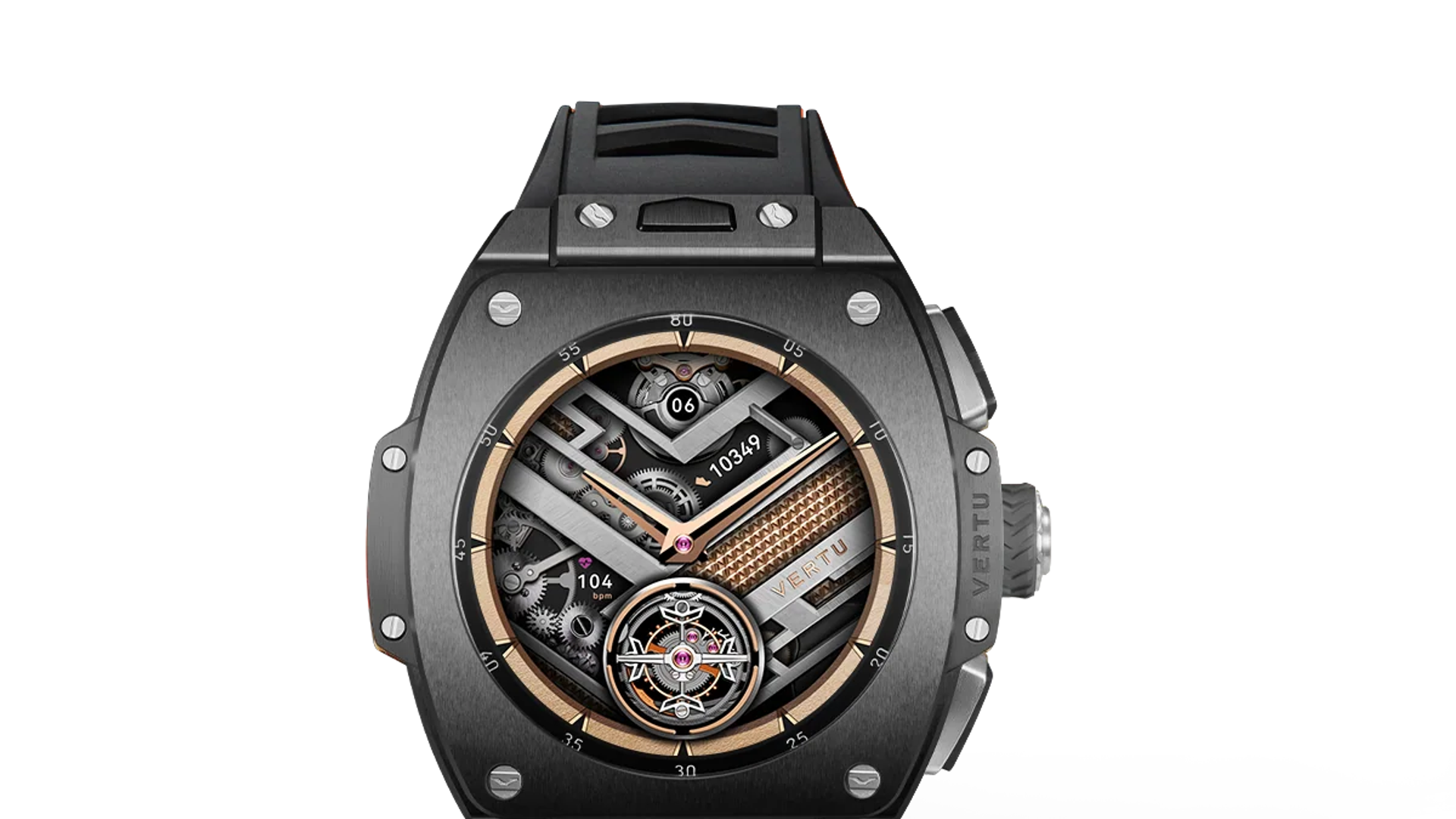
VERTU Grand Watch brings a faceted case, expressive digital dial choices and connected functions to a modern wrist. Choose a face that suits work or evening clothing and review the official VERTU product page for current dimensions, compatibility and care guidance. The strongest reason to consider it here is its contemporary design and connected interface, not an unverified magnetic-resistance rating.
Frequently asked questions
Can a phone magnetise a mechanical watch?
Magnets in phones, covers and accessories can affect some mechanical watches, depending on distance and exposure. Keep watches away from magnetic clasps and charging accessories, and follow the maker’s published guidance. A specific watch’s resistance determines its actual tolerance.
Is 15,000 gauss better than a silicon hairspring?
These are different kinds of claims. A 15,000-gauss Master Chronometer test describes performance under specified whole-watch conditions. A silicon hairspring reduces one component’s susceptibility. Compare the precise reference and full test documentation rather than treating either phrase as an interchangeable score.
What do I do if my watch suddenly runs fast?
Keep it away from suspected magnets and have an authorised watchmaker check its rate and magnetisation. Do not assume magnetism is the only cause; shock, service needs or another fault may also explain the change. A qualified inspection can identify the problem.
Do all Ingenieur or Black Bay watches have the same protection?
No. Collections include multiple references and generations. IWC describes a soft-iron inner case for specific Ingenieur models, while Tudor documents METAS testing for the named Black Bay Ceramic. Read the exact reference before transferring a claim from one product page to another.
Conclusion
Anti-magnetic watchmaking is not one feature. Rolex and Sinn publish stated thresholds; Omega and Tudor describe certified 15,000-gauss performance; IWC and Ball use shielding; and Longines, Rado, Hamilton and Tissot discuss resistant balance components. Each approach should be judged from the exact maker documentation, alongside case size, readability and ownership needs.
For modern daily wear, identify the magnetic exposures you actually encounter and select a watch whose documented claim covers the relevant use. Maintain distance from strong magnets even with a protected watch, check the timekeeping rate periodically and seek service when performance changes. A watch is worth choosing for its fit and function as well as its protective specification.
See our luxury watches with textured dials for another way to compare design.