-4tzylzok.webp)
Most phone “productivity” features don’t fail because they’re slow. They fail because you stop using them.
Not because you lack discipline. Because on a phone, the friction is constant: typing with two thumbs, hopping between apps, and losing your place the moment you get interrupted.
A good AI voice agent changes that. Not by talking more, but by acting with constraints.
Key takeaways
Voice-first control reduces three daily frictions: typing, app switching, and interruption recovery.
The practical value is boring on purpose: fast capture, reliable device actions, and clean approval loops.
Privacy is a product feature. If you can’t clearly control mic access, retention, and permissions, don’t trust it.
A modern AI voice agent is closer to a goal-driven operator than a classic voice assistant.
Voice-first phone control is about removing three kinds of friction
1) Typing friction
Typing is fine for a paragraph. It’s inefficient for the small, frequent actions that keep a day moving: a reminder, a quick note, a follow-up, a calendar tweak.
Nielsen Norman Group has long framed voice as an efficient input modality for quick commands and hands-free moments in their article on voice-first interaction.
2) Cross-app switching friction
The hidden tax on mobile work is not the task. It’s opening the right app, finding the right screen, and repeating the same context.
A voice agent earns its place when you can state intent once and have the device do the routing.
3) Interruption friction
Phones live in the real world: airport lounges, cars, corridors between meetings. You get interrupted. You resume. You forget what you were doing.
Voice-first control helps because it’s fast to capture intent when it appears, before it evaporates.
Key TakeawayThe value of voice on a phone isn’t novelty. It’s reducing micro-friction at the exact moments typing and app switching are most expensive.
AI voice agent use cases on smartphones (the ones that matter)
The best use cases are not theatrical. They’re the small, repeatable actions you do every day.
Capture and recall
Capture a thought as a timestamped voice note.
Turn that note into a reminder with a time and a destination.
Pull it back later without hunting through folders.
Fast device control
Set an alarm.
Turn on hotspot.
Take a screenshot.
Start a recording.
These actions are simple. That’s why they matter. If a voice agent can’t do the basics reliably, it has no right to do complex work.
“One intent, multiple actions” workflows
This is where agents separate from assistants.
Example: “After this call, remind me to send the deck to Michael, and draft a three-line note I can approve.”
The goal is not that the agent writes a beautiful message. The goal is that you don’t have to:
switch to email, 2) find the thread, 3) open calendar, 4) set the reminder, 5) return to the call.
AI voice agent vs voice assistant: the difference is autonomy and boundaries
Most voice assistants are reactive. You give a command, they execute a narrow action, and the context largely ends there.
An agent is different because it can pursue a goal across steps. Google Cloud’s overview of what AI agents are describes agents as systems that pursue goals, not just respond to prompts.
That extra capability is exactly why privacy and permissions matter more.
AI voice agent privacy and permissions: what to verify before you trust it
A voice agent that can act on your phone is powerful. And power without containment is risk.
Here’s a decision-grade checklist.
1) Microphone access should be explicit
You should be able to control when the mic is used and when it’s not.
The U.S. Federal Trade Commission’s guidance on how to secure your voice assistant calls out practical steps like understanding when a device is listening, limiting connected accounts, and deleting recordings.
2) Retention should be short and controllable
If transcripts and recordings are stored, you should be able to delete them and set retention rules. If you can’t, assume the data will live longer than you want.
3) Sensitive actions need confirmation points
Anything that changes connectivity, shares data, or touches accounts should have a clear confirmation moment. Voice is fast. It’s also easy to mis-trigger.
4) Least-privilege permissions should be the default
A voice agent does not need broad access to everything to be useful. The best systems treat permissions like a contract: granted for a purpose, scoped tightly, reviewed regularly.
The Canadian Centre for Cyber Security’s guidance on security considerations for voice-activated assistants is a useful reference point for evaluating access, retention, and exposure.
⚠️ WarningIf a voice agent’s settings don’t let you clearly see what it can access, what it stores, and how to shut it off, treat it as entertainment, not infrastructure.
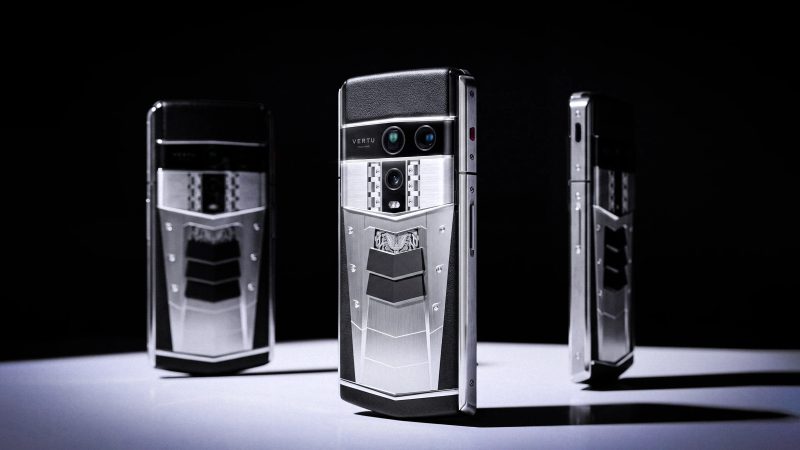
A concrete example: Hermes Agent on VERTU AlphaFold
If you’re evaluating voice-first control in a phone you actually use for work, you want two things at the same time:
voice that reduces friction (fast capture and execution)
constraints that preserve privacy (permission boundaries you can live with)
One example of that direction is Hermes Agent, positioned as an on-device interface for voice-first actions and cross-task workflows.
In practice, a decision-grade test is simple: can you use voice to set alarms, enable hotspot, capture screenshots, start recordings, create reminders, and prepare tasks without turning your phone into a liability?
For a deeper look at how this concept is framed on the device, see Hermes Agent on AlphaFold: Private AI Concierge & War Room.
Watch: Hermes Agent on VERTU AlphaFold (official)
<div data-type="node-video" data-provider="youtube" data-url="https://www.youtube.com/watch?v=4673nnLapS8" data-embed-url="https://www.youtube.com/embed/4673nnLapS8"></div>
For the privacy angle, the companion guide on on-device AI and local processing is the right place to start.
How to choose the right AI voice agent for your phone
If you’re buying this for real life, ignore the demo moments. Evaluate these five criteria.
Reliability under interruption
Does it recover cleanly when you stop mid-command, switch environments, or get a call?
Failure mode: you stop trusting it. Then you stop using it.
Cross-app execution
Can it complete an outcome that normally takes three apps?
Failure mode: voice becomes a gimmick and you’re back to tapping.
Clear permissions
Can you see exactly what it can access and why?
Failure mode: you avoid using it for sensitive work, which defeats the point.
Contained memory
Can you control what it remembers, what it forgets, and how long it retains voice history?
Failure mode: the agent becomes a long-lived archive of your life. That’s not a neutral design decision.
Human approval loops
Can it draft, queue, and prepare actions for your approval instead of taking irreversible steps by default?
Failure mode: it surprises you. In the wrong place, that can be expensive.
Next steps
If voice-first control is going to matter to you, it should feel like a private control layer for your phone, not a public-facing feature.
If you want to see how that looks when the agent is designed as part of the device workflow, start with the VERTU AlphaFold overview, then evaluate it against the checklist above.
Disclosure: This article references VERTU pages. Editorial judgment remains the priority.