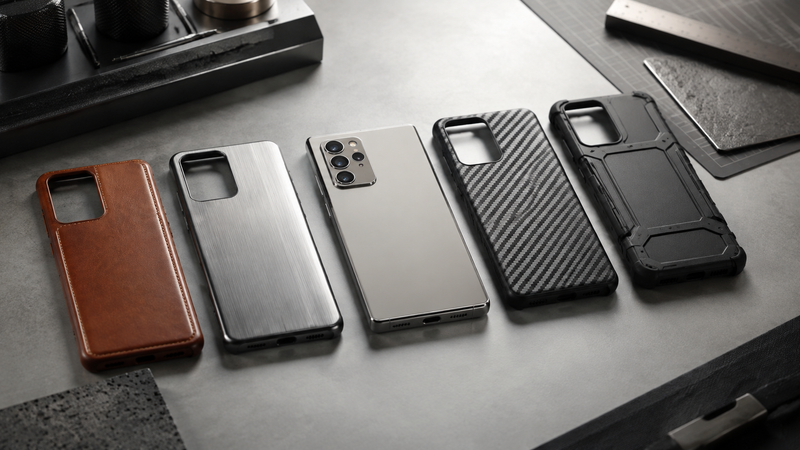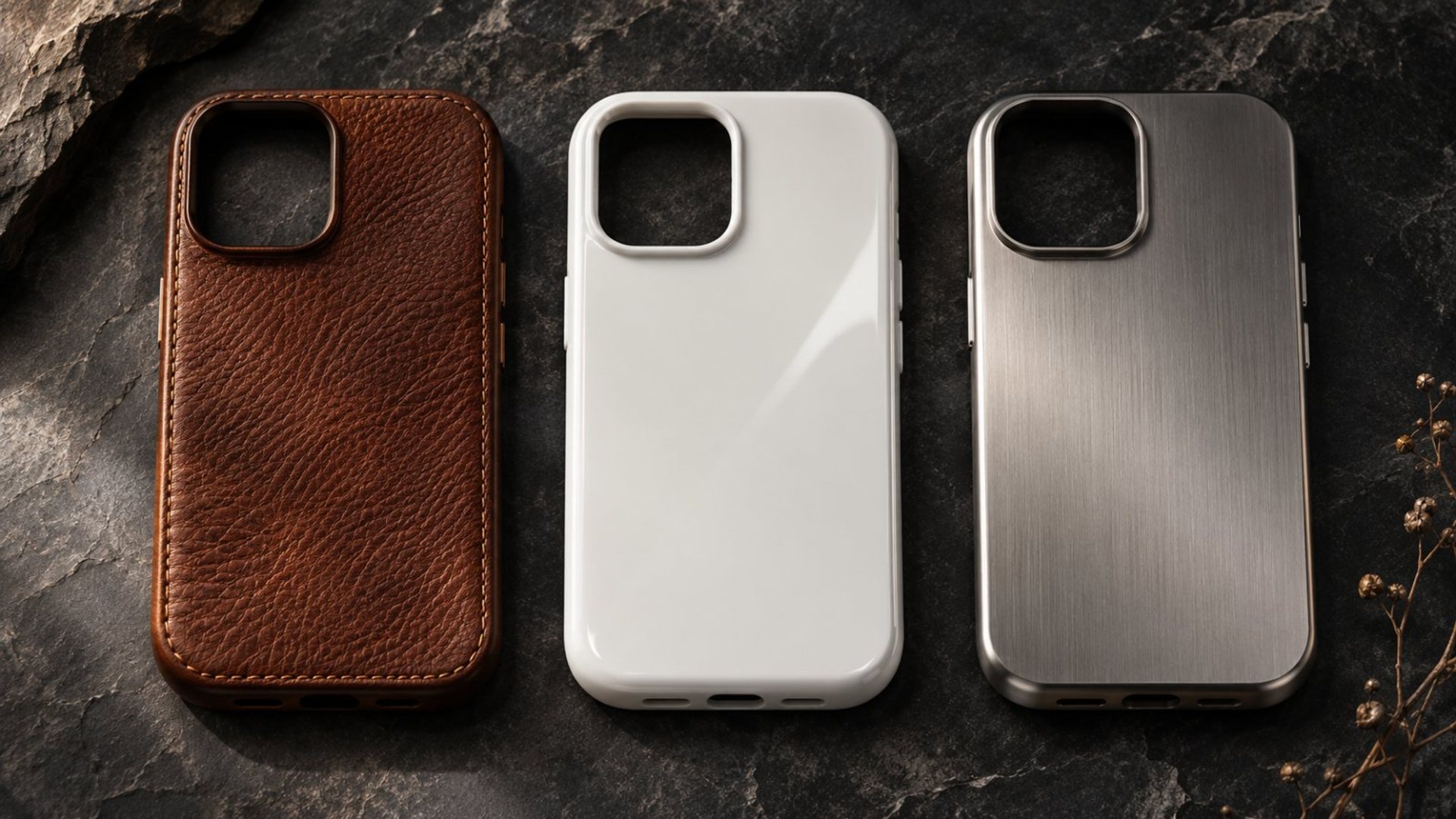
Phone case materials change grip, weight, appearance and care, but no material guarantees protection by itself. Leather feels warm and develops character; ceramic provides a hard, polished surface but can chip; metal can feel precise and substantial yet may add weight and affect wireless charging. First distinguish a phone's built-in body material from a removable protective case. Then check the exact phone model, case design, openings and charging method before purchase.
What is the difference between a phone body and a case?
A luxury phone may incorporate leather, ceramic or metal in its permanent exterior. A removable case is an accessory added around that design. Material descriptions for the phone body do not prove that a separate case uses the same material or offers the same protection. Conversely, a calf-leather sleeve may cover a phone with a ceramic or metal frame. Read the product listing for the specific item you are buying.
Protection is a system. Case geometry, edge coverage, interior lining, fit around buttons and how securely the phone stays in place all matter. A slim leather slip case may protect against scuffs in a bag but offer different drop protection from a fitted shell with raised edges. A hard metal exterior can transmit a sharp impact to a phone if there is no cushioning. Avoid generic “shockproof” claims without a stated test method for the exact model and case.
Ask whether the case covers the screen when carried, whether it allows camera clearance and whether it changes access to ports or speakers. If you use a folding phone, confirm hinge travel and display clearance. A case that fits a similarly named model may still interfere with a button or camera ring. A snug fit should never require forcing the phone into a rigid opening.
How does leather behave in daily carry?
Leather has a tactile warmth and can offer a comfortable grip. It also records use: oils, sunlight, moisture and dye transfer can change colour or develop a patina. Some buyers value this evolution, while others prefer a surface that stays uniform. Leather is not a fixed look over time. Inspect stitching, edge finishing, lining and how the phone is retained, not only the surface grain.
Apple's accessory-care guidance notes that its leather iPhone cases may change colour and that cleaning can affect their appearance. It recommends removing the case before cleaning and warns about prolonged heat, humidity and staining materials. Those directions apply to Apple's products; follow VERTU's own instructions for a VERTU leather case. The general planning point is to expect natural-material variation and avoid aggressive cleaners.
The official iVertu & Metavertu Calf Leather Phone Case listing describes embossed calf leather and a slim slip-in design for the named iVERTU and METAVERTU series. It does not establish a universal fit for every VERTU phone or a certified drop rating. Confirm the exact handset and case edition with VERTU before ordering, especially if you own a newer or differently shaped device.
What are ceramic's advantages and limits?
Ceramic can create a smooth, dense, polished look that differs from leather's softness. It may resist some everyday surface wear, depending on composition and finish, but a hard material can chip or crack after a concentrated impact. It can also feel slippery to some users. Do not translate a phone body's ceramic back into a claim that a ceramic accessory is impact-proof. The design and underlying construction matter.
For a ceramic phone body, a removable case may protect edges while obscuring the finish that made the phone appealing. Consider a sleeve for transport if you want to see and feel the original material during use, but remember that a sleeve is not in place while the phone is in your hand. Check whether the case itself has a soft interior to prevent grit from rubbing against the surface. Remove and clean trapped debris according to the maker's instructions.
If a ceramic part is chipped, do not try to polish away the damage or glue a fragment back near a button or seal. Ask the phone maker about service. A small fracture can have a different consequence from a shallow surface mark. A case can reduce exposure to daily knocks, but it cannot repair a damaged body.
What should I consider with metal?
Metal offers a crisp edge and structural feel, often at the cost of added mass. Its finish can show scratches, fingerprints or dents, and a bare edge can feel less forgiving in a long handhold. Metal is also a poor choice if it blocks a phone's wireless-charging path. The exact effect depends on case geometry and charger design, so test the specific combination rather than assuming every metal detail is a problem.
Apple's wireless-charging guidance says that if an iPhone charges slowly or fails to charge with a thick or metal case, users should try removing the case. It also warns against objects between the phone and charger. This is Apple-specific guidance, but it demonstrates a practical compatibility test. For another phone, verify its charging standard and the accessory maker's stated support before relying on a metal case or plate.
Consider antenna and signal behaviour as a model-specific question too. A phone maker can position radios to work with its intended body, but an aftermarket metal shell or plate may change performance. Do not extrapolate from a premium metal frame to universal compatibility with every metal accessory. Ask for a case designed for the exact handset and test calls, data and wireless functions within the return period.
How should I choose for work and travel?
List the real tasks: frequent one-handed use, pocket carry, bag travel, charging at a desk and occasional outdoor exposure. For a desk-to-meeting day, a slim leather case may give the desired feel and scuff protection. For heavy travel, edge coverage and secure retention may matter more than surface prestige. If wireless charging is essential, test the case on the actual charger. For a folding phone, hinge clearance becomes a non-negotiable fit check.
Try the case with your usual grip. Can you reach the side controls without shifting your hand? Does the phone slide when placed on a desk? Does a camera lip lift the lens from the surface? Can you remove the case without stressing a delicate finish? A few minutes of handling reveal practical issues that a material name cannot. Check the return policy before a long trip.
Our phone portrait guide covers camera use; a case should not block that lens or interfere with focus and flash. For broader accessory choices, see VERTU's case guide. Compare the actual accessory, not a generic material category.
What should a VERTU owner verify?
Read the exact model name from the device or purchase record and compare it with the accessory listing. The official calf-leather case names iVertu and Metavertu; it should not be assumed to fit Metavertu Max, Quantum Flip or Agent Q without a model-specific statement. Ask VERTU about fit, charging, finish care and service implications for the combination you intend to use.
A luxury material is most satisfying when it fits the daily routine. Choose leather for its feel with realistic care expectations, ceramic for its visual character with an understanding of impact risk, or metal where its weight and charging behaviour are acceptable. The exact construction and compatibility matter more than the label on the material swatch.
Frequently asked questions
Is a leather case always protective enough for drops?
No. Check the specific case's coverage and any documented testing. A slim sleeve and a fitted impact case serve different purposes.
Will a metal case stop wireless charging?
It can interfere, depending on placement and design. Verify the exact phone, case and charger combination.
Does the iVertu & Metavertu case fit Metavertu Max?
The cited listing does not confirm that fit. Ask VERTU using the exact handset and accessory edition.