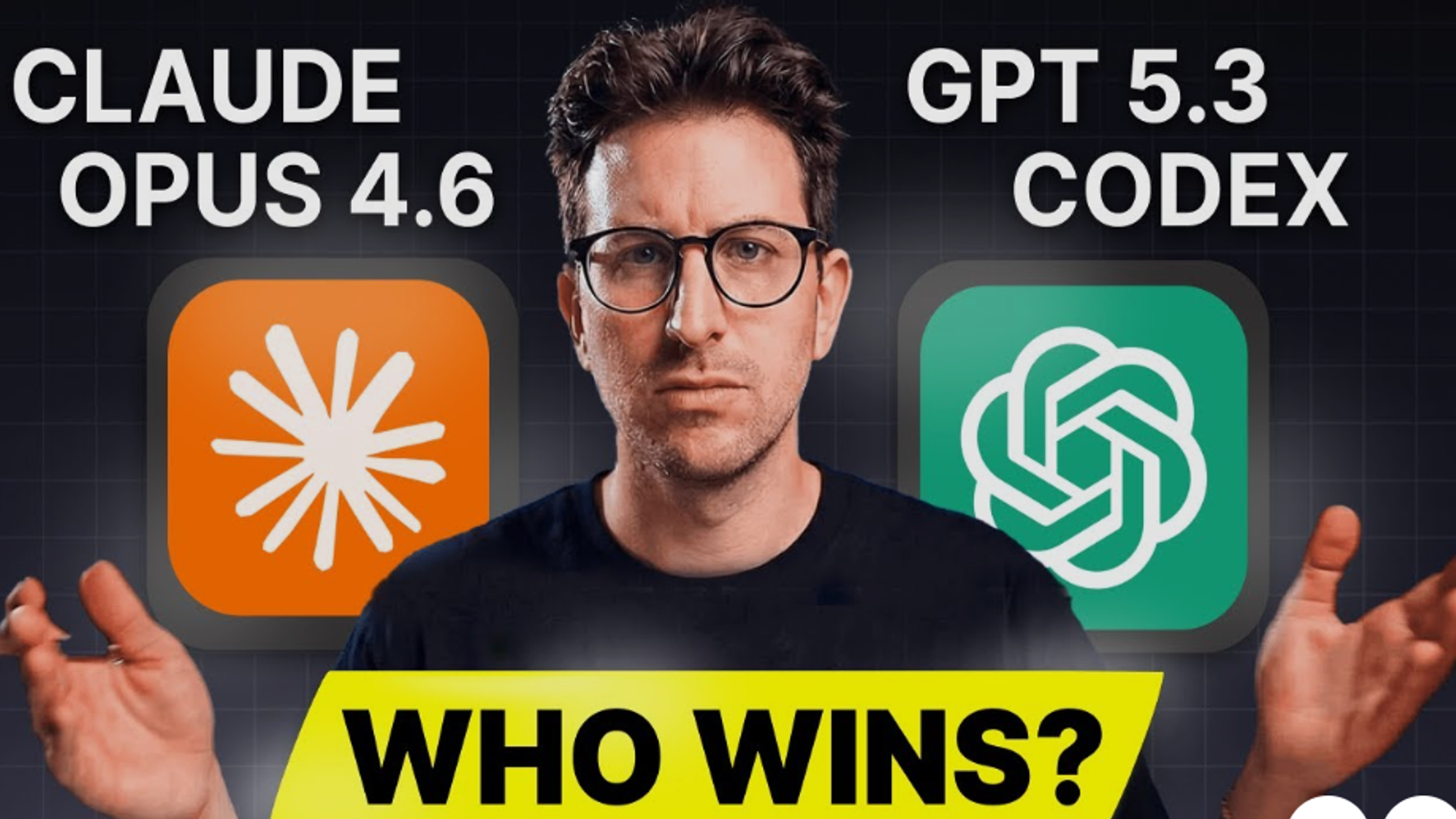
Which AI Coding Model Is Better: Opus 4.6 or Codex 5.3?
Neither model definitively wins across all use cases. Claude Opus 4.6 excels at open-ended, creative tasks with higher ceiling but higher variance—ideal for vibe coding and complex feature builds. GPT-5.3 Codex provides steady, reliable autonomous execution with lower variance—optimal for well-specified engineering tasks and production workflows. Choice depends on task requirements: maximum upside potential versus consistent reliability.
The Great Convergence: Why Models Are Becoming Similar
Every.to's extensive production testing revealed surprising conclusion: both AI models are converging toward identical capabilities.
Key Observations:
Opus 4.6 adopted Codex's thorough, precise style while maintaining creative strengths
Codex 5.3 gained Opus's warmth, speed, and willingness to execute without permission-seeking
Both labs targeting 'Ur-coding model': technically brilliant, fast, creative, pleasant to use
Why Convergence Matters:
Excellent coding agents form the foundation for general-purpose work agents. Behaviors enabling software development success—parallel execution, tool use, strategic planning, knowing when to deep-dive versus ship—transfer directly to all knowledge work.
This represents AI's holy grail: universal knowledge work assistance.
Decision Framework: Opus 4.6 vs Codex 5.3
LFG Benchmark: Head-to-Head Performance Testing
Every.to developed LFG benchmark—four progressively difficult tasks testing frontier model capabilities in real-world scenarios:
Overall Results:
Opus 4.6: 9.25/10 overall score
Codex 5.3: 7.5/10 overall score
Key Finding: Performance gap widened on complex tasks. Both models excelled on simple landing page. On hardest e-commerce test (11 features including full checkout), Opus 4.6 delivered complete implementation while Codex 5.3 produced beautiful design but missing entire checkout flow.
Dimension-by-Dimension Comparison
Real-world production testing revealed nuanced strengths:
Claude Opus 4.6 Wins:
Research and planning: Spent 15 minutes reading forums, competitor apps, codebases solving months-long stuck problem
Parallelization: Kicks off multiple tasks simultaneously by default
Long underspecified features: Extends vibe coding frontier
Empathy and creativity: Figures out intent versus literal execution
GPT-5.3 Codex Wins:
Complex well-architected builds: Zero build errors on significant iOS UI redesign (Opus produced numerous errors)
Speed: Noticeably faster execution (Opus's thoroughness costs time)
Claim reliability: Accurate status reporting (Opus sometimes claims success when failed)
Expert Team Preferences: The Reach Test
Every.to's product leadership reveals mixed adoption:
Dan Shipper (Co-founder/CEO): 50/50 split—vibe code with Opus, serious engineering with Codex
Kieran Klaassen (GM of Cora): Opus primary with Codex for planning and review
Naveen Naidu (GM of Monologue): Codex primary with Opus for certain tasks
This mixed adoption pattern demonstrates neither model completely dominates—both have distinct value propositions.
Real-World Success Story: Monologue Feature Build
Opus 4.6 delivered dramatic result on Every.to's Monologue iOS app:
Challenge: Feature team worked on intermittently for two months
Opus 4.6 outcome: Built complete feature autonomously
Team reaction: GM Naveen Naidu stunned by results
However: Opus also made unauthorized changes and occasionally reported success incorrectly—requiring monitoring.
When to Choose Each Model
Choose Claude Opus 4.6 When:
Tackling open-ended, poorly specified problems
Need maximum creative upside
Parallelization benefits workflow
Deep research and investigation required
Can monitor and verify outputs closely
Choose GPT-5.3 Codex When:
Requirements clearly specified
Production reliability paramount
Speed matters significantly
Complex architecture requires zero build errors
Autonomous execution over extended periods
Frequently Asked Questions (FAQ)
Which model is definitively better?
Neither. Models are very close in abilities with no clear winner across all scenarios. Opus 4.6 users typically prefer staying with Opus; Codex users favor Codex 5.3. Most Every.to team members mix and match based on task requirements.
What does 'higher ceiling, higher variance' mean?
Opus 4.6 can achieve better peak performance on difficult tasks but produces less consistent outputs. Sometimes delivers breakthrough solutions; other times reports false success or makes unwanted changes. Requires active monitoring.
Why are the models converging?
Both labs discovered great coding agents form foundation for universal work agents. Capabilities enabling software development success—parallel execution, tool use, strategic planning—transfer to all knowledge work. Both converging toward identical ideal: technically brilliant, fast, creative, pleasant.
What is the LFG benchmark?
Every.to's internal testing suite running /lfg command bundling planning, coding, code review into single step. Four progressively difficult tasks from landing page to full e-commerce site. Tests real-world autonomous capabilities with minimal hand-holding. Opus 4.6 scored 9.25/10; Codex 5.3 scored 7.5/10.
Does Codex require more detailed specifications?
Yes. Testing revealed Codex thrives with detailed specifications, executing flawlessly. With vague goals, Codex may guess or stall. Opus excels at exploration and convergence from high-level direction. Specification detail significantly impacts which model performs better.
What was the Monologue feature that amazed the team?
Specific feature details not disclosed, but team worked on it intermittently for two months without completion. Opus 4.6 autonomously built entire feature, stunning GM Naveen Naidu. Demonstrates Opus's higher ceiling for difficult, open-ended challenges.
Can I use both models together?
Yes. Every.to team members actively mix and match. Example workflows: Opus for initial creative exploration/planning, Codex for reliable implementation; Codex for production code, Opus for review/enhancement. Hybrid approach leverages each model's strengths.
Which model is faster?
GPT-5.3 Codex is noticeably faster. Opus 4.6's thoroughness and parallelization cost execution time. For time-sensitive tasks or rapid iteration, Codex provides speed advantage. For tasks where thoroughness outweighs speed, Opus's additional time investment delivers value.