Key Takeaways
- The Gulf is not one uniform retail market; channel choices should be tested country by country and city by city.
- Department stores, specialist boutiques, travel retail and e-commerce serve different discovery, service and fulfilment needs.
- Gift seasons can affect planning, but a calendar or cultural pattern does not prove demand for a specific phone.
- Use local evidence, authorised routes and a realistic service plan before proposing a distribution footprint.
A luxury phone distributor exploring the Gulf should map retail channels, customer journeys and service coverage separately for each target market. Large destination malls, department stores, specialist boutiques, travel retail and online channels can play different roles; no single route should be assumed to work across the region. Public market sources can describe retail infrastructure and seasonal shopping patterns, but they cannot establish demand for VERTU products or guarantee partner performance. VERTU describes authorised distributors as developing an agreed territory through market planning and channel development; the exact territory and commercial terms must be discussed directly. See the VERTU market-entry planning guide for general preparation questions.
Why should the Gulf be assessed market by market?
“The Gulf” is a useful regional shorthand, not a single customer segment or channel plan. A distributor may be evaluating different countries, cities, retail structures, import arrangements and service capabilities. Begin by naming the precise geography and the role proposed for the business. Do not extend a finding from one city or country to neighbouring markets without evidence.
For example, Dubai’s retail environment includes major destination malls and a substantial visitor economy. Dubai’s official investment portal describes a large retail sector, international visitor flows and both physical and digital retail activity. That context can help a planner ask whether a proposal depends on resident customers, visitors or both; it does not show how many people would buy a luxury phone. Use official investment and tourism publications for context, not as a sales forecast. For model-specific roles, compare the VERTU partnership formats and confirm the scope directly.
How do the main channels differ?
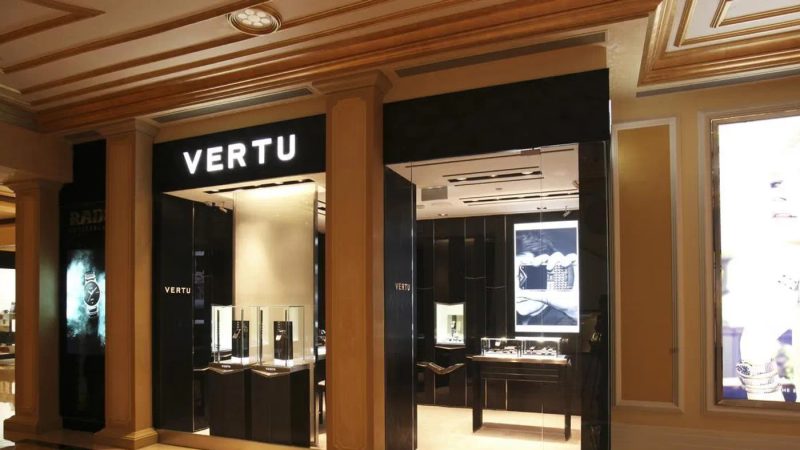
Channel selection should follow the customer task and the partner’s operating ability. A department store may offer curated discovery and established service routines. A specialist boutique can provide a focused presentation and longer consultation. Travel retail can reach people in transit but depends on location, travel patterns and fulfilment rules. E-commerce extends discovery and enquiry beyond store hours, while product education and after-sales hand-offs still need clear owners.
| Channel | Potential role | Questions to validate |
|---|---|---|
| Department store or premium mall | Curated discovery, appointments and adjacent luxury categories | Who controls the space, clienteling and service hand-offs? |
| Specialist boutique | Focused explanation and relationship-led consultation | Can the operator sustain product knowledge and approved presentation? |
| Travel retail | Reach travellers in a defined journey | What approvals, stock, fulfilment and traveller support are required? |
| Online or assisted digital | Product discovery, enquiries and appointment requests | Who owns accurate content, lead follow-up and service routing? |
These are planning distinctions rather than claims about every operator. Before approaching a channel, identify its actual customer, decision-maker, operating requirements and economics. Do not list a retailer, airport or mall as a prospective partner unless a relationship exists and permission to represent it has been granted.
What customer evidence is useful?
Use evidence that answers a specific commercial question. Record enquiries about premium phones, requests for demonstrations, relevant gifting conversations and unmet service needs. Separate observed behaviour from interpretation, and note the date, location, channel and context. A high-value customer profile alone is not evidence that the customer wants a particular category.
Where permitted, conduct structured interviews with customers or retail staff and review aggregated enquiry records. Avoid collecting unnecessary personal data. If a business uses event attendance or appointment requests as a demand signal, define what counts and compare like with like. A small sample can identify questions to investigate; it cannot establish regional market size or forecast sales.
How should seasonal gifting influence planning?
Seasonal periods may affect retail calendars, staffing and campaign timing, but the importance and timing of each occasion vary by market and audience. A Visa analysis of payment activity has described increased shopping for clothing, department stores and luxury goods in the final days of Ramadan as consumers prepare for Eid. This is evidence about broad spending patterns, not luxury-phone demand. Review primary payment research alongside local research and the proposed channel’s own data. For post-sale responsibilities, see the luxury partnership after-sales checklist.
Build a calendar that includes the relevant local retail and travel periods, approval lead times, staffing and fulfilment constraints. Do not treat a gifting season as a guaranteed sales window. Confirm product availability, campaign permissions and operational capacity before publishing an offer or committing to an event.
What must be ready beyond the sales channel?
A channel plan is incomplete without local service and coordination. Identify who explains products, responds to enquiries, handles an after-sales question and escalates an issue the retail team cannot resolve. Confirm the authorised source for product and service information, as well as how approved content is maintained.
VERTU’s public Partners page says approved partners may access product education, brand guidelines, retail standards, marketing assets and market-specific coordination according to partnership format and agreement. This does not establish a fixed support package for every candidate. List each expected activity, its owner and its confirmation status, then resolve open points directly before building the operating plan around them.
A practical Gulf channel-planning sequence
- Define one target country and the cities or catchment areas under consideration.
- Map existing retail, distribution and travel channels, marking confirmed relationships separately from prospects.
- Describe the customer journey and evidence for the relevant customer need.
- Compare channel requirements, costs, staffing, approvals and service responsibilities.
- Test unresolved assumptions through permitted research or an agreed small-scale activity.
- Document the proposed footprint, dependencies and questions for the brand; do not present it as approved.
Review the plan when evidence changes. If the opportunity depends on a third-party retailer, a seasonal campaign or an unconfirmed service provider, treat that as a dependency rather than an established capability.
Frequently asked questions
Is the Gulf one luxury-phone market?
No. It is a regional grouping of distinct markets. Analyse the target country, city, customer and channel separately.
Which channel is best for luxury phones in the Gulf?
There is no universal answer. Compare the channel’s customer journey, service expectations, operating requirements and verified demand.
Does Eid season guarantee stronger luxury-phone sales?
No. Seasonal retail patterns do not prove demand for a particular product. Use local, category-specific evidence before planning inventory or investment.
Can a distributor assume territory exclusivity?
No. Territory scope and any exclusivity must be explicitly discussed and agreed. Public descriptions do not establish a universal arrangement.
What should be validated before approaching a brand?
Clarify the target geography, current channel access, customer evidence, operating capacity and service plan, while labelling assumptions and unconfirmed relationships.
Conclusion
A credible Gulf proposal starts with a defined geography and a channel plan supported by local evidence. Distinguish market context from product demand, seasonal opportunity from forecast, and prospective contacts from confirmed relationships. Then document the service and operating responsibilities required for the proposed footprint. To explore VERTU retail and distribution directions, visit VERTU’s partner information page.

Previous article
Display, Lighting and Security for High-Value Phones
TOP-Rated Vertu Products
Alphafold
ALPHAFOLD is the world’s first Hermes Agent phone, combining AI assistance and mobile ERP for smarter task execution, workflow control, and business management.
Explore moreAgent Q
World’s first AI agent phone: A paradigm shift from Apps to Agents. It thinks, plans, and executes, all while securing your privacy.
Explore moreMetavertu Max
Metavertu Max: Luxury tech with Second Brain AI and a triple system for 4x WhatsApp. Opulence meets intelligence.
Explore more