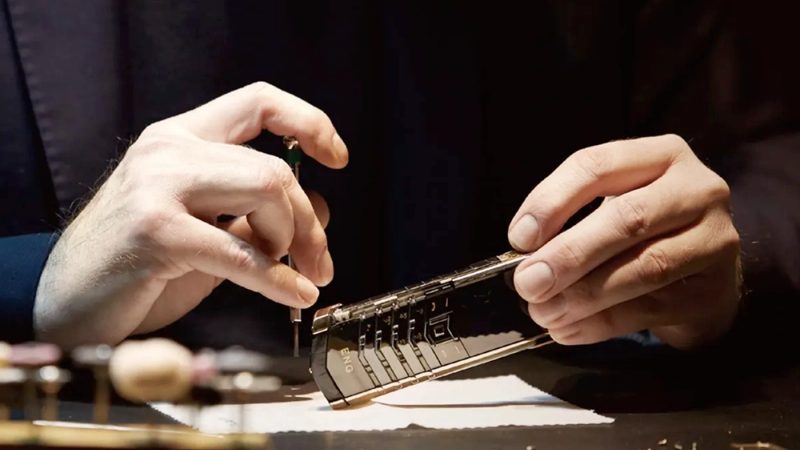
VERTU’s approach to luxury retail partnership centres on three connected needs: managing long-term relationships with ultra-high-net-worth individuals (UHNWIs), making fragmented client and inventory information more useful, and giving franchisees support to develop their retail presence. Its proposed AI business intelligence model moves beyond manually assembled reports towards dynamic inventory forecasting, VIP preference analysis and tailored follow-up recommendations.
For luxury retailers, the value of this approach lies in bringing commercial insight closer to everyday decisions. Inventory planning, client understanding and follow-up are not separate concerns: each influences how a retailer serves clients and manages its business. VERTU’s franchisee proposition combines AI tools with store-opening support and global inventory and after-sales coordination.
The Operating Challenges of Luxury Retail
Long-term relationships with UHNWIs
In luxury retail, a client relationship may develop over time rather than conclude in a single purchase. Understanding a client’s preferences and maintaining a considered relationship across interactions requires continuity. That becomes harder when useful client information is dispersed across private notes, reports or separate records.
The issue is not simply the amount of information a retailer holds. It is whether relevant insight can be brought into view when it matters. If client profiles are fragmented, teams may have an incomplete picture of preferences and prior engagement. For a business serving UHNWIs, that can make it more difficult to sustain the personal character of the relationship.
Fragmented private-client profiles
A client profile is most useful when it helps a retailer understand preferences in context. When information is fragmented, that context can be difficult to assemble. Individual details may exist, yet remain disconnected from one another or from the broader view of the client relationship.
This makes private-client insight a central operational concern. Retailers need a clearer way to understand VIP preferences, so that client relationships can be approached with greater relevance and continuity. The goal is not to replace the personal nature of luxury service, but to make the information behind that service more coherent and useful.
The precision required for inventory turnover
Inventory management also requires close attention. Retailers must manage stock carefully while keeping an eye on turnover. When inventory decisions rely primarily on manually prepared reports, it may be harder to develop a timely view of what needs attention.
In this context, forecasting matters because it connects inventory planning with the wider commercial picture. Better visibility into expected inventory needs can support more considered planning, helping retailers treat stock management as an ongoing discipline rather than an isolated reporting task.
These challenges—long client relationship cycles, fragmented profiles and demanding inventory requirements—form the business context for VERTU’s AI solution.
From Manual Reports to a Dedicated AI Business Intelligence Platform
VERTU’s proposed business intelligence platform is intended to move franchise partners beyond manual reporting and towards a more useful view of retail operations. Its focus is on three capabilities: dynamic inventory forecasting, deeper analysis of VIP preferences and tailored recommendations for private-client follow-up.
Dynamic inventory forecasting
Dynamic inventory forecasting is intended to help partners look ahead when managing stock. Rather than treating inventory as a static figure in a report, forecasting brings attention to how inventory needs may change over time.
For a luxury retailer, this makes inventory planning part of the wider business conversation. The question is not only what stock is present, but what inventory needs require consideration as the business develops. By making forecasting a central part of the AI platform, VERTU’s model focuses on helping partners manage turnover with greater precision.
Deeper insight into VIP preferences
The second focus is understanding VIP preferences in greater depth. In a service-led retail environment, preference insight can help make client relationships more considered and less dependent on scattered information.
The purpose of this analysis is to bring greater clarity to the client relationship. When VIP preferences are easier to understand, partners can take a more informed approach to serving clients over time. The emphasis remains on personal relationships: the AI platform supports understanding, while the retail relationship itself remains centred on the client.
Tailored private-client follow-up recommendations
The third capability is recommending tailored follow-up for private clients. This connects insight about VIP preferences with the ongoing work of maintaining a client relationship.
A tailored recommendation gives follow-up a more individual focus. Rather than treating every relationship in the same way, the approach centres on recommendations informed by client preferences. This supports the broader aim of making private-client engagement more deliberate and relevant.
Together, the three capabilities form the core of VERTU’s business intelligence proposition: inventory forecasting, VIP preference analysis and tailored follow-up recommendations. Their shared purpose is to move beyond manual reporting and make commercial insight more useful to franchise partners.
Franchisee Support: Opening, AI Tools and Ongoing Coordination
VERTU’s franchisee support proposition has three elements: lighter store-opening support, access to a head-office AI toolchain, and global inventory and after-sales coordination.
Lighter store-opening support
Opening a retail presence is a significant step for a franchise partner. Lighter store-opening support is intended to make that step more manageable, helping partners establish their presence with support from VERTU.
This forms the first part of the franchisee proposition: support at the point where a retail operation begins. It is paired with the other two elements—AI tools and ongoing coordination—so that the support described is not limited to the opening stage.
A head-office AI toolchain
The head-office AI toolchain connects the franchisee support model with VERTU’s business intelligence approach. It gives partners access to AI tools as part of the wider proposition, complementing the platform’s focus on inventory forecasting, VIP preference analysis and tailored follow-up recommendations.
This keeps the role of AI centred on the needs already identified in luxury retail: helping partners move beyond manual reports, understand inventory requirements and develop a more considered view of client relationships.
Global inventory and after-sales coordination
Global inventory and after-sales coordination completes the support proposition. It connects partners’ retail operations with inventory and after-sales support across the VERTU network.
For franchisees, this matters because inventory management and after-sales service are part of the ongoing retail relationship, not separate from it. Alongside store-opening support and the head-office AI toolchain, coordination across these areas forms the third pillar of the proposed franchisee support model.
How the Three Pillars Work Together
The three parts of VERTU’s proposition address different points in the same retail operation:
- Luxury retail challenges define the need: long-term relationships with UHNWIs, fragmented private-client profiles and precise inventory management.
- The AI business intelligence platform addresses those needs through dynamic inventory forecasting, VIP preference analysis and tailored follow-up recommendations.
- Franchisee support connects the proposition to retail operations through lighter store-opening support, a head-office AI toolchain and global inventory and after-sales coordination.
The relationship between them is straightforward: the operating challenges inform the capabilities, while the support proposition connects those capabilities to the franchisee model. This gives the article’s central idea a practical focus—using AI business intelligence to support the specific demands of luxury retail, alongside defined support for franchise partners.
Frequently Asked Questions
What challenges does VERTU’s AI business intelligence approach address?
It addresses three challenges: long-term client relationships with UHNWIs, fragmented private-client profiles and the need for precise inventory management. The proposed platform focuses on inventory forecasting, VIP preference analysis and tailored client follow-up recommendations.
What does VERTU’s AI business intelligence platform do?
The platform is centred on dynamic inventory forecasting, deeper analysis of VIP preferences and tailored recommendations for private-client follow-up. These capabilities are intended to help partners move beyond manual reporting and make commercial insight more useful.
What support is included in VERTU’s franchisee proposition?
The stated support includes lighter store-opening support, access to a head-office AI toolchain, and global inventory and after-sales coordination. These are the three franchisee support elements covered in this article.
How does AI relate to private-client service?
In this model, AI supports the understanding of VIP preferences and the preparation of tailored follow-up recommendations. Its role is to support a more informed approach to client relationships, keeping the focus on individual preferences and continuity.
Conclusion
Luxury retailers serving UHNWIs need to manage long-term client relationships, fragmented profiles and inventory with care. VERTU’s AI business intelligence approach addresses these needs through dynamic inventory forecasting, VIP preference analysis and tailored private-client follow-up recommendations.
The franchisee support proposition adds lighter store-opening support, a head-office AI toolchain, and global inventory and after-sales coordination. Together, these are the three pillars of VERTU’s luxury retail partnership approach. Explore VERTU partnership opportunities >

Previous article
VERTU COR RING Now Available on Amazon US | Official Announcement
TOP-Rated Vertu Products
Alphafold
ALPHAFOLD is the world’s first Hermes Agent phone, combining AI assistance and mobile ERP for smarter task execution, workflow control, and business management.
Explore moreAgent Q
World’s first AI agent phone: A paradigm shift from Apps to Agents. It thinks, plans, and executes, all while securing your privacy.
Explore moreMetavertu Max
Metavertu Max: Luxury tech with Second Brain AI and a triple system for 4x WhatsApp. Opulence meets intelligence.
Explore more