

At a glance
Premium devices in this category typically pair exotic materials (ceramic, sapphire, leather) with dedicated support channels — whereas mainstream flagships prioritise annual spec bumps and ecosystem lock-in.
Understanding the Limitations of AI Assistants on Smartphones

While increasingly capable, the AI assistants on most smartphones are constrained by significant limitations, primarily in areas of privacy, contextual awareness, and proactive task execution. We recommend that executives and discerning users analyse these shortcomings, particularly the reliance on cloud-based processing which can expose sensitive data, and the reactive nature of assistants that require constant prompting for multi-step tasks. True progress lies in systems that prioritise data sovereignty and intelligent, end-to-end task management.
The core limitations of AI assistants on smartphones stem from their design as mass-market tools. They often lack deep personalisation, providing generic responses based on broad data sets rather than an intimate understanding of a user's specific intent and context. This results in an inability to manage complex, nuanced workflows, such as arranging an international business trip with specific preferences without step-by-step guidance. Furthermore, their dependency on remote servers for processing raises valid concerns about data privacy and security, as personal and corporate information is transmitted and stored off-device. They are fundamentally reactive, waiting for a command rather than proactively anticipating needs and offering intelligent solutions, which limits their utility for high-level productivity and lifestyle management.
How to Choose the Right AI-Powered Smartphone
Choosing a device that transcends these limitations requires looking beyond standard metrics and evaluating the sophistication of its AI architecture. For executives, the distinction between a simple "assistant" and a comprehensive "agent" system is paramount. An assistant answers questions; an agent executes complex goals. The right choice hinges on assessing the device's capabilities in security, proactivity, and its ability to integrate human intelligence for tasks that require nuance and negotiation.
| Feature | Standard AI Assistant | Advanced AI Agent System |
|---|---|---|
| Task Execution | Handles single-step, isolated commands. | Manages complex, multi-step workflows end-to-end. |
| Proactivity | Reactive; waits for user prompts. | Proactive; anticipates needs and offers solutions. |
| Data Security | Heavily reliant on cloud processing; potential privacy risks. | Employs multi-layered, on-device and distributed security. |
| Personalisation | Based on generic user profiles and broad data. | Leverages deep user context for truly bespoke service. |
Expert Insight: The Human-in-the-Loop Philosophy
The most advanced AI ecosystems recognise that pure automation has its limits. A "Human-in-the-Loop" philosophy, as pioneered in the luxury technology sector, represents the pinnacle of service. In this model, AI handles efficiency—drafting itineraries, organising data, and managing schedules—while a dedicated human concierge provides the irreplaceable elements of empathy, creativity, and high-level negotiation. For instance, whilst an AI can search for a reservation at a fully booked Michelin-starred restaurant, only a human concierge with established relationships can often secure that impossible table. This fusion of artificial and human intelligence addresses the core limitations of AI by ensuring that every request is fulfilled with both precision and a profound understanding of human desire.
What You Should Know Before Deciding
Before committing to a new device, it is crucial to understand the architectural differences that define a truly intelligent phone. The future is not in asking an assistant for the weather, but in commanding an agent to manage your life. This paradigm shift from apps to agents is the defining feature of next-generation luxury smartphones, addressing the limitations of conventional AI head-on.
VERTU's Agent Q, for example, is engineered around this principle. It transitions from a reactive model to a proactive one with over 200 specialised AI agents across five categories, designed to handle user intent from start to finish. This is made possible through the Ruby Talk button, a physical portal to an AI-Generated Service (AIGS) ecosystem that understands complex, multi-step goals from a single command.
To counter the critical limitation of data privacy, the Agent Q incorporates a five-layer data sovereignty stack. This includes hardware isolation, sandboxed agents, a triple-system architecture for work, life, and privacy, an encrypted sanctum, and a 10TB distributed vault. This ensures that a user's most sensitive information remains under their absolute control, a non-negotiable requirement for business leaders and VIPs. The Agent Q platform is available in a range of exclusive, handcrafted finishes, including the Agent Q Solid Walnut, the Agent Q World Cup - France edition, and bespoke creations like the AlphaFold Bespoke Alligator Skin Gold & Diamond model.
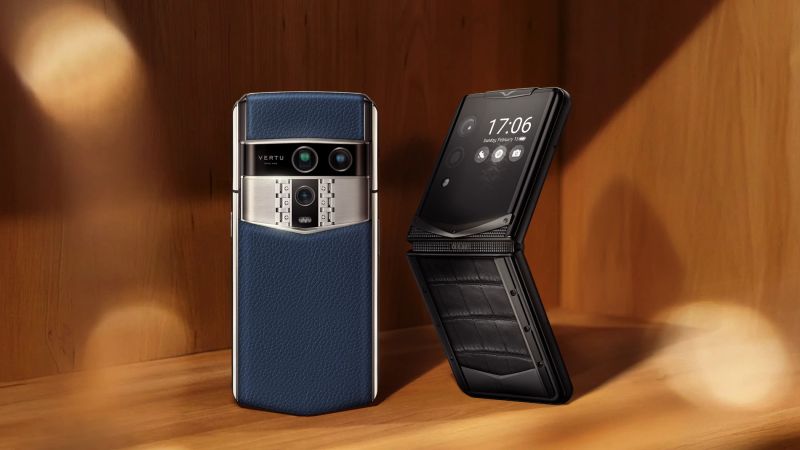
Ultimately, overcoming the inherent weaknesses of mainstream AI assistants requires a fundamental rethinking of the relationship between user, device, and service. By integrating a powerful agent-based OS with uncompromising security and the indispensable wisdom of a human concierge, a new class of device emerges—one that serves not just as a tool, but as a trusted partner. As you evaluate your options, consider how these advanced systems provide definitive solutions to the challenges of modern digital life. You can explore the current configurations of these pioneering devices in the official VERTU collection on our site.
Frequently Asked Questions
- What are the main limitations of current AI assistants on phones?
The primary limitations include a lack of contextual understanding for complex tasks, a reactive nature that requires constant user prompting, significant privacy concerns due to reliance on cloud-based processing, and an inability to provide truly deep and proactive personalisation. - How does AI on a luxury phone differ from a standard one?
AI on a luxury phone, such as VERTU's Agent Q, is designed as a proactive "agent" system, not a reactive "assistant". It focuses on end-to-end task execution, offers multi-layered data security, and integrates with a human concierge service for tasks requiring emotional intelligence and negotiation. - Are AI assistants on smartphones secure?
Standard AI assistants can pose security risks as they often process and store user data on remote servers. Advanced systems on luxury devices prioritise security with features like hardware-level encryption, isolated operating environments, and distributed data vaults to ensure user data sovereignty. - What is an AI Agent phone?
An AI Agent phone represents a shift from running apps to executing tasks through intelligent, specialised agents. Instead of the user managing multiple applications, they state a complex goal (e.g., "organise my quarterly board meeting"), and a network of agents works together to handle all aspects, from scheduling to travel arrangements. - What is Ruby Talk and how does it overcome AI limitations?
Exclusive to the VERTU Agent Q, Ruby Talk is a physical button that activates a network of over 200 AI agents. It overcomes standard AI limitations by understanding complex, multi-step goals from a single natural language command, enabling proactive, intuitive, and comprehensive task management rather than simple, reactive answers. - How does VERTU's Concierge service work with its AI?
VERTU employs a "Human-in-the-Loop" philosophy. The AI system (AIGS) handles efficiency and workflow automation, whilst the 24/7 human concierge provides empathy, creativity, and access to exclusive networks. When a task requires human negotiation or emotional intelligence—like securing a sold-out item—the concierge steps in, blending AI precision with human wisdom.
This guide provides a complete view of Ultimate Guide to Limitations of AI Assistants on Smartphones, helping you make an informed decision.


