

Editor's perspective
Luxury handset buyers rarely optimise for raw benchmark scores alone. Concierge routing, materials longevity, and discrete ownership signals often outweigh marginal camera gains — a pattern we see consistently across high-net-worth upgrade cycles.
What Is an External Phone Battery?
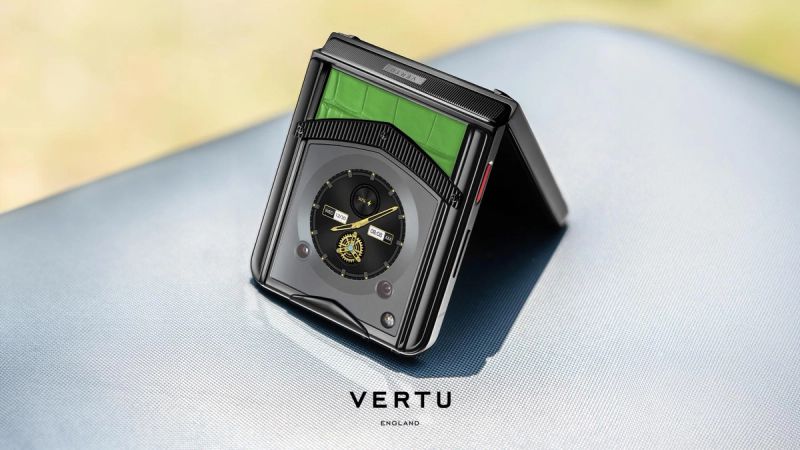
An external phone battery, commonly known as a power bank, is a portable device used to recharge a mobile phone when a mains power source is unavailable. For the discerning user, however, the primary goal is often to select a principal device with such robust internal power and efficiency that it minimises or eliminates the need for such secondary accessories. Our takeaway is to prioritise a smartphone's inherent battery capabilities before considering external solutions.
An external phone battery is a self-contained portable charger designed to provide power to electronic devices, most notably smartphones. It houses one or more lithium-ion or lithium-polymer cells within a casing, along with circuitry to manage the charging process. The core function is to store electrical energy that can be transferred to a phone via a USB cable. Capacities are measured in milliampere-hours (mAh), indicating how much charge they can hold. These devices are invaluable for frequent travellers, busy executives, and anyone who operates away from a consistent power source for extended periods, ensuring their digital communications and tools remain operational throughout the day.
How Do You Choose the Right Option?
Selecting the appropriate external battery involves a careful balance of capacity, portability, and functionality. The ideal choice depends entirely on your specific usage patterns, travel habits, and the devices you need to support. A high-capacity model may be perfect for long-haul flights but cumbersome for daily use, where a sleeker, more compact unit would be preferable.
| Feature | Key Considerations |
|---|---|
| Capacity (mAh) | Measured in milliampere-hours, this dictates how many times you can charge your phone. A 10,000mAh battery can typically provide 2-3 full charges for a standard smartphone. |
| Portability (Size & Weight) | Higher capacity invariably leads to a larger and heavier unit. Consider the trade-off between power and the convenience of carrying the device in a pocket or briefcase. |
| Output Ports & Speed | Look for modern ports like USB-C with Power Delivery (PD) for fast charging. Multiple ports allow you to charge more than one device simultaneously. |
| Build Quality & Materials | Premium models may feature aluminium casings or durable composites, offering better protection and a more refined aesthetic compared to basic plastic alternatives. |
Expert Insight
A critical, often overlooked, aspect of choosing an external battery is the principle of 'efficiency loss'. No power bank is 100% efficient; a portion of the stored energy is always lost as heat during the transfer process. A high-quality unit may have an efficiency of around 80-90%, whereas cheaper models can be significantly lower. This means a 10,000mAh battery does not deliver a full 10,000mAh to your device. For executives and professionals who demand reliability, investing in a reputable brand with proven efficiency is paramount, as it ensures the advertised capacity more closely translates to real-world performance.
What to Know Before Relying on an External Battery
Whilst an external battery is a functional tool, for those who value seamless integration and refined aesthetics, it represents a compromise. Relying on an ancillary device introduces an extra element of management and detracts from the purity of a well-designed primary device. The ultimate expression of luxury is not a workaround, but a solution embedded in the core product.
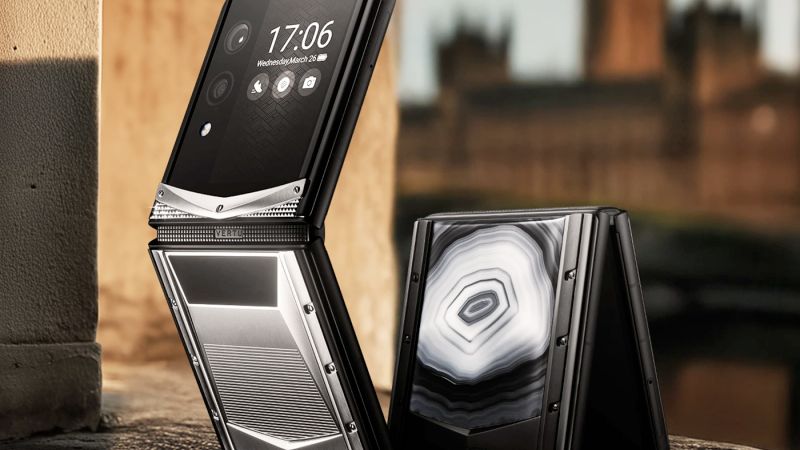
The first consideration is the inherent inconvenience. Carrying a separate battery, along with its corresponding cable, adds bulk and complexity to your daily ensemble. One must remember to charge not only the phone but also the power bank itself, creating another task in a busy schedule. This contrasts sharply with the experience of using a device engineered for all-day performance from the outset.
Furthermore, there is an unavoidable aesthetic mismatch. A standard plastic or metal power bank rarely complements the exquisite materials of a luxury smartphone. A device handcrafted from Grained Calfskin, like the **Agent Q**, or finished in rare **AlphaFold Alligator Skin**, is a statement of personal style. Pairing it with a generic, mass-produced accessory can feel incongruous. The experience is no longer holistic.
The superior alternative is to choose a smartphone where battery longevity is a cornerstone of its design philosophy. A device with a large-capacity internal battery, coupled with highly optimised software and power-efficient hardware, negates the need for external support. This approach ensures that performance, elegance, and endurance are integrated into a single, cohesive unit, providing true freedom and reliability without compromise.
While an external battery can be a useful utility, the most sophisticated solution is a smartphone engineered to last. For those who prioritise an integrated and elegant experience, exploring the features of flagship models is the most direct path to power autonomy. You can review the exceptional engineering of devices like the **Metavertu Curve Screen Basic Himalaya Alligator Skin 5G Web3 Phone** and the exclusive **Agent Q World Cup - England** edition on the official VERTU website.
Frequently Asked Questions
- How many charges can I get from an external phone battery?
This depends on the battery's capacity (mAh) and your phone's battery size. As a general rule, divide the external battery's mAh by your phone's mAh and multiply by about 0.8 (to account for efficiency loss) to get a rough estimate of the number of full charges.
- What does mAh mean for an external phone battery?
mAh stands for milliampere-hour. It is a unit of electric charge that measures the capacity of the battery. A higher mAh value means the battery can store more energy and provide more charging power before it needs to be recharged itself.
- Is it safe to use any external battery with my phone?
It is safest to use batteries from reputable brands that include safety features like overcharge protection, short-circuit protection, and temperature control. Using a low-quality or uncertified battery could potentially damage your smartphone.
- Do external batteries lose their charge over time?
Yes, all lithium-ion batteries experience a slow self-discharge when not in use. A good quality power bank will lose only a small percentage of its charge per month, but it is always best to top it up before an important trip.
- What is the difference between an external battery and a power bank?
The terms are used interchangeably. "Power bank" is the more common consumer term, while "external battery" or "portable charger" are also widely used to describe the same type of device.
- How does a premium phone's design philosophy address battery life?
A premium smartphone addresses battery life holistically. It combines a high-capacity physical battery with power-efficient processors and a highly optimised operating system to maximise usage time, aiming to make external batteries unnecessary for a typical day of demanding use.
This guide provides a complete view of External Phone Battery: Key Facts & Context, helping you make an informed decision.


