Lists of the world’s most expensive watches often combine objects that should not be ranked together. A unique pocket watch sold at auction, a celebrity-owned steel chronograph, a charity-only one-off and a gem-set watch carrying a manufacturer’s announced price do not represent the same market. One figure may include buyer’s premium; another may be a retail claim; a third may reflect charitable bidding rather than a repeatable transaction.
The useful story is not the shock of an eight-figure number. It is the evidence structure behind that number: transaction type, date, currency, fees, provenance, uniqueness, complication, condition and whether comparable sales exist. That framework helps readers understand what elite collectors actually pay for—and why a record should not be projected mechanically onto an ordinary reference.
Direct answer: worlds costliest watches
The top recorded watch prices are driven by different combinations of unique manufacture, historic provenance, celebrity ownership, rarity and charity context. Compare only verified transactions on the same basis, state whether premium is included, and separate auction records from manufacturer price announcements. A record is evidence about one object, not a valuation rule for an entire brand.
| Decision factor | Evidence to collect | Why it changes the answer | Control before purchase |
|---|---|---|---|
| Transaction type | auction, private sale and retail announcement use different evidence | mixing them creates a false ranking | label every figure by transaction type |
| Buyer’s premium | auction totals may include fees above hammer | two reported prices can use different bases | record hammer and all-in price when available |
| Provenance | documented ownership can be unique to one watch | celebrity association cannot transfer to the model | separate object history from reference scarcity |
| Uniqueness | one-off complications and dials lack direct comparables | rarity increases narrative but reduces statistical confidence | describe what is physically unique |
| Currency and date | records occur in CHF, USD, HKD and EUR across years | nominal figures distort time and market comparison | retain original currency and sale date |
| Repeatability | comparable completed sales reveal market depth | one bidder contest may not recur | look for multiple public transactions before generalising |
This matrix is the article-specific value object for worlds costliest watches. It prevents a famous name, a single specification or one price from silently becoming the recommendation.
Current evidence baseline
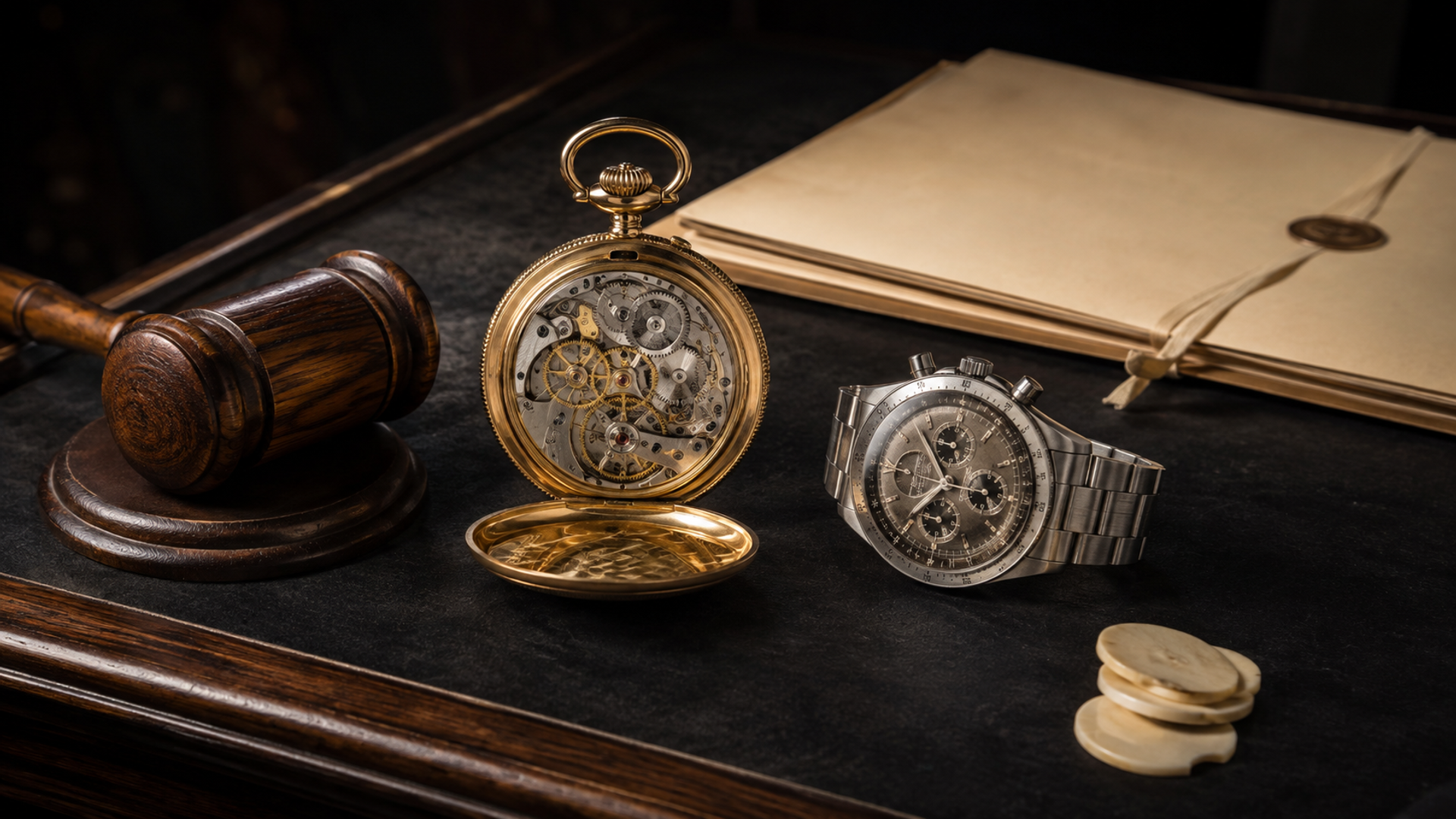
Evidence 1. Sotheby's documents the Patek Philippe Henry Graves Supercomplication as a unique commission with 24 complications and a landmark auction history. Source.
Evidence 2. Phillips documents the sale of Paul Newman's personal Rolex Daytona and the provenance that made that individual watch exceptional. Source.
Evidence 3. Phillips' 2026 auction report records exact sale totals, lots and record prices, showing why a headline result must be tied to a named watch and transaction date. Source.
Evidence 4. Phillips' watch department publishes auction catalogues and results, providing primary transaction context for high-value watches. Source.
For worlds costliest watches, these sources support only the stated claims. They do not prove permanent availability, universal authenticity, future appreciation or suitability for every owner.
How the decision factors change the result
Transaction type. The evidence to collect is that auction, private sale and retail announcement use different evidence. That changes the decision because mixing them creates a false ranking. The practical control is to label every figure by transaction type. For this transaction type test within worlds costliest watches, record the date, exact object, source and assumption that would reverse the conclusion. If evidence remains unavailable, label the factor unknown rather than converting it into a favourable score.
Buyer’s premium. The evidence to collect is that auction totals may include fees above hammer. That changes the decision because two reported prices can use different bases. The practical control is to record hammer and all-in price when available. For this buyer’s premium test within worlds costliest watches, record the date, exact object, source and assumption that would reverse the conclusion. If evidence remains unavailable, label the factor unknown rather than converting it into a favourable score.
Provenance. The evidence to collect is that documented ownership can be unique to one watch. That changes the decision because celebrity association cannot transfer to the model. The practical control is to separate object history from reference scarcity. For this provenance test within worlds costliest watches, record the date, exact object, source and assumption that would reverse the conclusion. If evidence remains unavailable, label the factor unknown rather than converting it into a favourable score.
Uniqueness. The evidence to collect is that one-off complications and dials lack direct comparables. That changes the decision because rarity increases narrative but reduces statistical confidence. The practical control is to describe what is physically unique. For this uniqueness test within worlds costliest watches, record the date, exact object, source and assumption that would reverse the conclusion. If evidence remains unavailable, label the factor unknown rather than converting it into a favourable score.
Currency and date. The evidence to collect is that records occur in CHF, USD, HKD and EUR across years. That changes the decision because nominal figures distort time and market comparison. The practical control is to retain original currency and sale date. For this currency and date test within worlds costliest watches, record the date, exact object, source and assumption that would reverse the conclusion. If evidence remains unavailable, label the factor unknown rather than converting it into a favourable score.
Repeatability. The evidence to collect is that comparable completed sales reveal market depth. That changes the decision because one bidder contest may not recur. The practical control is to look for multiple public transactions before generalising. For this repeatability test within worlds costliest watches, record the date, exact object, source and assumption that would reverse the conclusion. If evidence remains unavailable, label the factor unknown rather than converting it into a favourable score.
Worked decision scenario
Create a record ledger with columns for watch, reference, object type, sale date, original currency, hammer, buyer’s premium, all-in result, auction house, provenance and comparable count. Convert currencies only with a dated source and keep the original amount visible. Then score repeatability from one to five. A unique charity result can remain culturally important while receiving the lowest repeatability score; that honesty makes the table more useful than a sensational countdown.
Auction record versus asking price
An auction result records a completed transaction under published conditions. An asking price records only a seller’s intention. Manufacturer announcements can describe extraordinary gem setting or complication, but they are not always evidence of a third-party sale. A trustworthy list labels these categories. It should also state whether the figure includes buyer’s premium, because the difference at the top of the market can be substantial.
Why provenance can overpower materials
Paul Newman’s Daytona was valuable as a watch, but its personal history and documentation made the individual object unlike another reference 6239. Provenance must be traced through letters, photographs, ownership records and expert cataloguing. Readers should resist multiplying that result across similar-looking watches. A famous prior owner is not a material specification and cannot be recreated by polishing, replacement parts or marketing language.
Complication and uniqueness
The Graves Supercomplication represents years of design and manufacture for a specific client. Unique movements, astronomical displays, chiming systems and hand-finished cases can support exceptional value, yet also make maintenance complex. A record article should describe the mechanical and historical reason for rarity. Stating only the gem weight or number of complications turns watchmaking into a price stunt and hides the object’s real significance.
Condition and originality still matter
At auction level, replaced dials, polished cases, incomplete documentation and uncertain restoration can change value dramatically. The record watch may be unusually preserved or accompanied by evidence unavailable to most examples. Study the lot essay and condition report, not just the headline. Where the auction house provides no public condition detail, mark that limitation. Confidence should fall when crucial evidence is private.
What the records teach ordinary buyers
The lesson is not to chase the next eight-figure watch. It is to improve evidence discipline: exact reference, originality, service history, provenance and transaction basis. A modest vintage watch with transparent history can be a more rational purchase than a famous reference with ambiguous components. Record prices show what concentrated narratives can command at the very top; they do not remove downside, illiquidity or expert dependence.
Evidence checklist
[ ] Name transaction type
[ ] Separate hammer and premium
[ ] Keep original currency
[ ] Verify sale date
[ ] Document provenance
[ ] Describe unique mechanics
[ ] Check condition report
[ ] Score comparable depth
Unchecked fields for worlds costliest watches remain unknown. They should never become favourable assumptions merely to complete this decision.
Reader-visible sources and method
The external pages above were checked for this worlds costliest watches publication. Price, availability, service, tax, regulation and platform terms must be reconfirmed for the buyer's market and date. Ranking pages informed a separate SERP benchmark; their wording and paragraph order were not copied.
Continue with adjacent VERTU editorial research
For worlds costliest watches, these links provide adjacent premium-lifestyle and decision context. They do not replace specialist or official evidence for the decision.
Final judgement
The top recorded watch prices are driven by different combinations of unique manufacture, historic provenance, celebrity ownership, rarity and charity context. Compare only verified transactions on the same basis, state whether premium is included, and separate auction records from manufacturer price announcements. A record is evidence about one object, not a valuation rule for an entire brand.
The useful standard for worlds costliest watches is not certainty created by confident language. It is a decision whose evidence, downside and next review point are visible to the reader.