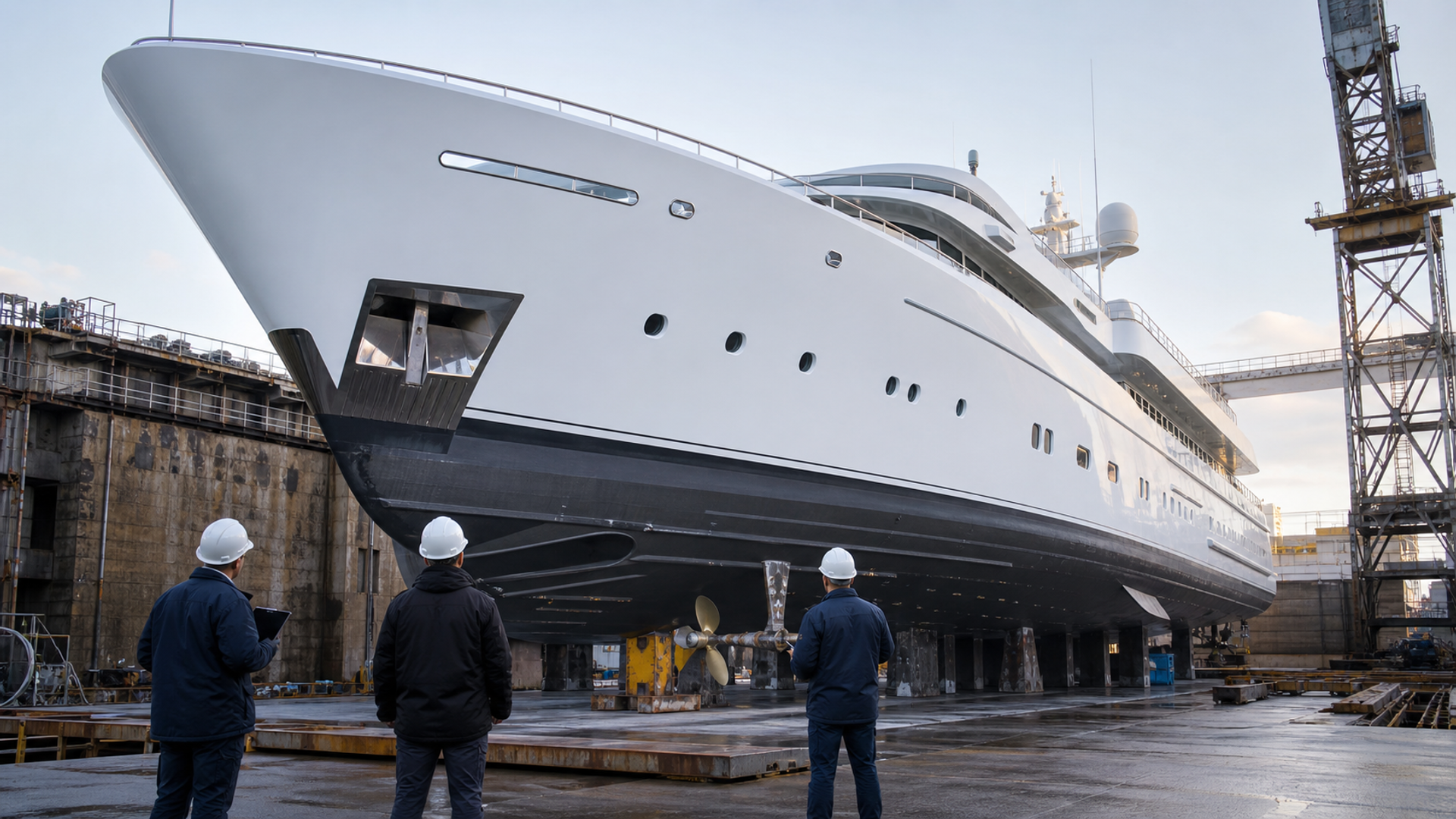
There is no useful single answer to 'how much does a superyacht cost' without specifying length, age, construction, technical ambition, use and condition. Public listings show asking prices, new-build contracts remain private, and annual operating costs change dramatically with itinerary and crew. The decision becomes clearer when capital, fixed operations, variable use and exit are separated.
This guide uses a five-year ownership model rather than a folklore percentage of purchase price. Regulatory and safety obligations also vary with size and operation. IMO material shows that navigation, stability and safety responsibilities remain substantive even for pleasure craft in relevant scopes, while the market evidence must still come from the exact yacht's survey and records.
Direct answer: superyacht cost
Price the exact yacht through a condition survey and a line-item five-year plan. Include acquisition or build, tax, crew, planned maintenance, insurance, berth, fuel, management, class and flag work, refit, downtime and resale. Use percentage rules only as an initial reasonableness check.
| Decision factor | Verified starting point | Why it changes the answer | Control before acting |
|---|---|---|---|
| Platform | length, gross tonnage, build material and propulsion shape cost | metres alone miss volume and technical complexity | compare gross tonnage and systems as well as length |
| Condition | survey and maintenance records reveal deferred work | a discounted yacht can carry a refit-sized liability | turn every survey finding into cost and downtime |
| Crew | safe service depends on qualified people and rotation | under-budgeting staff harms reliability and retention | build a role, salary, leave and training plan |
| Itinerary | fuel, berth, agency and support vary by region and season | usage pattern drives variable cost | model one named annual itinerary |
| Compliance | flag, class and intended use define inspections and documentation | private and commercial operation are not interchangeable | obtain written advice for the planned use |
| Resale | condition, pedigree and market timing shape liquidity | capital may remain tied up after use stops | include brokerage, holding time and price reduction |
For superyacht cost, this decision matrix is the article-specific value object. It separates price evidence from ownership exposure, so a dramatic headline cannot silently become a recommendation.
Verified evidence baseline
Evidence 1. IMO collision rules apply responsibilities for lookout, safe speed and collision avoidance across vessels in covered waters. Source.
Evidence 2. IMO ship-design material identifies stability, machinery and electrical installations as separate safety domains. Source.
Evidence 3. BOAT International maintains a live market of yachts for sale with filters such as length, age and asking price. Source.
Evidence 4. An asking price excludes the buyer's independent survey findings, chosen refit scope and future operating pattern. Source.
The primary-source boundary for superyacht cost is deliberately narrow. Dated records, manufacturer specifications and official guidance support only the claims they actually make; they do not prove private transaction prices, future appreciation or universal suitability.
How each decision factor changes the result
Platform. The starting evidence for superyacht cost is that length, gross tonnage, build material and propulsion shape cost. This changes the decision because metres alone miss volume and technical complexity. Before committing, compare gross tonnage and systems as well as length. The dated result belongs in the buyer's evidence file, together with the exact model, market and assumption that could reverse it.
Condition. The starting evidence for superyacht cost is that survey and maintenance records reveal deferred work. This changes the decision because a discounted yacht can carry a refit-sized liability. Before committing, turn every survey finding into cost and downtime. The dated result belongs in the buyer's evidence file, together with the exact model, market and assumption that could reverse it.
Crew. The starting evidence for superyacht cost is that safe service depends on qualified people and rotation. This changes the decision because under-budgeting staff harms reliability and retention. Before committing, build a role, salary, leave and training plan. The dated result belongs in the buyer's evidence file, together with the exact model, market and assumption that could reverse it.
Itinerary. The starting evidence for superyacht cost is that fuel, berth, agency and support vary by region and season. This changes the decision because usage pattern drives variable cost. Before committing, model one named annual itinerary. The dated result belongs in the buyer's evidence file, together with the exact model, market and assumption that could reverse it.
Compliance. The starting evidence for superyacht cost is that flag, class and intended use define inspections and documentation. This changes the decision because private and commercial operation are not interchangeable. Before committing, obtain written advice for the planned use. The dated result belongs in the buyer's evidence file, together with the exact model, market and assumption that could reverse it.
Resale. The starting evidence for superyacht cost is that condition, pedigree and market timing shape liquidity. This changes the decision because capital may remain tied up after use stops. Before committing, include brokerage, holding time and price reduction. The dated result belongs in the buyer's evidence file, together with the exact model, market and assumption that could reverse it.
Worked scenario calculation
Create four ledgers. Capital covers purchase, tax, legal work, survey and initial refit. Fixed operations cover crew, training, insurance, management, communications and a home berth. Variable operations cover fuel, temporary berths, agents, provisions, tenders and itinerary support. Exit covers brokerage, delivery, final works and a conservative sale period. Run base, high-use and yard-delay cases over five years. This avoids the common mistake of applying one annual percentage to yachts with very different volume, machinery and programmes.
New build versus pre-owned
A new build offers control over layout and systems but introduces specification risk, staged payments, supervision and delivery uncertainty. A pre-owned yacht gives the buyer a physical asset to survey and may shorten access time, yet inherited systems and deferred maintenance can be expensive. The economic comparison must use delivery-ready cost and date for both choices, not contract price versus asking price.
Crew is a capability, not a percentage
Crew numbers and skills follow size, use, service expectation and operating rules. Salary is only one component: recruitment, travel, leave rotation, training, uniforms, food and retention all matter. A stable team protects the asset through better maintenance knowledge and safer operations. The budget should show each role and the resilience plan when a critical person is absent.
Fuel is visible; downtime is often larger
Owners notice bunker invoices, but unavailable days can destroy the reason for ownership. Yard periods, parts lead times, warranty disputes and itinerary changes have an opportunity cost. Record planned and unplanned downtime, identify long-lead spares and require a defect-management process. A yacht that is cheaper to run but repeatedly unavailable is not necessarily economical.
Charter income should be treated conservatively
Commercial charter can offset some cost, but it also brings compliance, wear, scheduling and management consequences. Gross charter revenue is not net owner benefit. Deduct commissions, operating costs, tax effects, repositioning and the value of owner dates displaced. If the acquisition works only under an optimistic charter calendar, the owner is taking a business risk rather than buying flexible private access.
The exit plan starts before purchase
Builder reputation, design practicality, maintenance records and neutral interior choices can broaden the future buyer pool, though none guarantees value. Preserve technical documentation and invest in work that protects safety and reliability before purely personal modifications. Model a sale taking longer and clearing lower than expected. That stress case reveals whether the owner can enjoy the yacht without depending on a favourable exit. Keep a dated digital technical library containing surveys, class and flag records, machinery hours, invoices, drawings, warranties and defect closure. Buyers discount uncertainty when documentation is fragmented, especially if key crew have left. A clean record does not create a premium automatically, but it can shorten diligence, support the condition narrative and prevent completed maintenance from being valued as though it never happened.
Risk-control checklist for superyacht cost
[ ] Specify length and tonnage
[ ] Commission an independent survey
[ ] Build the crew roster
[ ] Model a named itinerary
[ ] Confirm flag and class
[ ] Schedule yard periods
[ ] Net down charter assumptions
[ ] Budget a slow exit
The superyacht cost checklist is meant to be completed with evidence. An unchecked item remains an unknown rather than being treated as a favourable assumption.
Reader-visible sources and methodology
The record and product pages for superyacht cost were observed for this publication run. Market-variable price, availability, tax, insurance, service and regulatory conditions must be reconfirmed in the buyer's jurisdiction. Competitor pages informed the SERP gap analysis but were not copied and do not control the claims above.
Continue with adjacent VERTU editorial research
For superyacht cost, these internal links provide adjacent premium-lifestyle and decision context. They do not replace the authoritative evidence or professional advice required for a specific transaction.
Final judgement
Price the exact yacht through a condition survey and a line-item five-year plan. Include acquisition or build, tax, crew, planned maintenance, insurance, berth, fuel, management, class and flag work, refit, downtime and resale. Use percentage rules only as an initial reasonableness check.
For superyacht cost, quality means preserving the boundary between a verified fact, a reported estimate and an ownership assumption. The decision should be reopened when a source, market, condition or intended use materially changes.