Key Takeaways
- Tesla unveiled a redesigned Roadster on October 15, 2026, featuring rocket-style thrusters and demonstrations that included airborne movement and mid-air turning.
- The Roadster is currently an engineering and technology showcase rather than an ordinary production vehicle, with Tesla targeting production in 2028.
- The broader significance is the integration of software, hardware and intelligent systems around an intended outcome rather than around individual functions.
- AI Agent Phones such as VERTU Agent Q apply a similar shift to mobile computing by combining AI agents, planning and execution with dedicated hardware and services.
Tesla’s new Roadster has put an old idea back into the spotlight: what happens when software, hardware and autonomous systems are designed as one experience? That question matters beyond electric cars. It also helps explain why smartphones are beginning to move from app-based tools toward AI Agent Phones that can understand intent, coordinate tasks and act on a user’s behalf.
For a closer look at how that shift is already taking shape on a smartphone, VERTU’s approach to the AI Agent Phone provides a useful example.
What happened with Tesla’s new Roadster?
Tesla unveiled a redesigned Roadster on October 15, 2026, showing a sports car capable of dramatic airborne maneuvers using rocket-style thrusters developed with SpaceX. The demonstration included the Roadster moving through the air, turning in mid-air and driving upside down with the help of a suction system.
Tesla is targeting production in 2028, but the vehicle shown at the event should not be treated as an ordinary road-ready production car. Reuters reported that Tesla presented the Roadster as a technology and brand showcase, while several of its most dramatic capabilities raise practical and regulatory questions.
The reported performance is equally striking. Tesla says the Roadster can accelerate from 0 to 60 mph in under one second and exceed 230 mph, while its currently reported range is around 300 miles. Those figures are impressive, but the more interesting story is how the vehicle brings multiple technological systems together around a single experience.
Reuters’ report on Tesla’s new Roadster provides additional context on the vehicle’s unveiling, specifications and planned production timeline.
Why is the Roadster more than another performance car?
The significance of the new Roadster is less about one specification and more about the integration of different technologies into a single user experience. Electric propulsion, software control, aerodynamic systems and SpaceX-derived thrust technology are being presented as parts of one vehicle rather than as isolated features.
That distinction is becoming increasingly important across consumer technology. The most interesting products are no longer defined only by how powerful an individual component is. They are increasingly defined by how effectively hardware and software work together to achieve what the user wants.
The Roadster therefore represents a useful example of outcome-oriented engineering. Instead of simply asking how fast an electric sports car can accelerate, Tesla is experimenting with what an electric performance vehicle could do when its mechanical and software systems are designed around a much broader objective.
Is this the same shift happening in smartphones?
Yes, but the application is different: AI Agent Phones shift the smartphone from an app-centred interface toward an intent-centred computing model. A conventional smartphone generally requires users to select an application, navigate its interface and complete individual steps. An AI Agent Phone is designed to understand the desired outcome and coordinate the steps required to reach it.
This is the distinction between adding AI features to an existing smartphone and designing the experience around AI agents. The former improves individual functions; the latter changes how users interact with the device itself.
VERTU describes this transition as a move from “Apps to Agents.” Its AI Agent Phone concept focuses on multiple intelligent agents working within a mobile ecosystem rather than forcing the user to manage every application individually.
How does an AI Agent Phone differ from a traditional smartphone?
An AI Agent Phone is designed to understand intent, break complex goals into actionable steps and coordinate supported actions, rather than simply provide individual AI-assisted functions.
| Feature | Traditional Smartphone | AI Agent Phone |
|---|---|---|
| Primary interaction | Apps and interfaces | User intent and natural commands |
| Task structure | User completes individual steps | AI can coordinate multiple steps |
| AI role | Feature or assistant | Agent-based task execution |
| Hardware relationship | Hardware primarily runs applications | Hardware and AI system are designed as a connected experience |
The important point is not that an AI Agent Phone removes every application. Rather, it changes what sits between the user and those applications. Instead of manually moving from one service to another, the user can increasingly express the desired result and let the system coordinate the underlying functions.
What is the VERTU Agent Q?
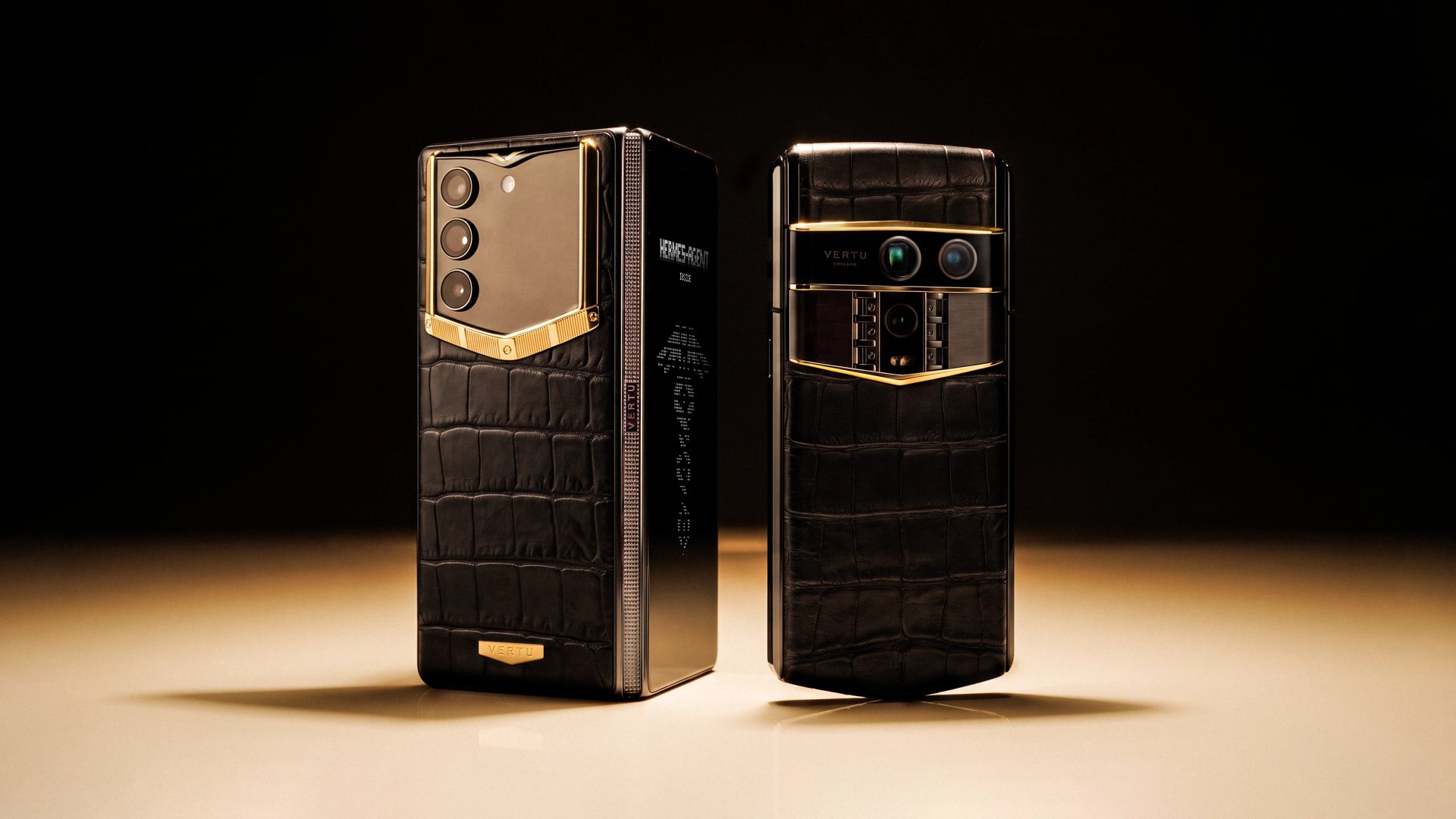
The VERTU Agent Q is an AI Agent Phone for entrepreneurs that combines VERTU’s VAOS agent system, dedicated hardware security, luxury craftsmanship and access to VERTU services. VERTU positions Agent Q as a move from application-centric mobile use toward an agent-driven ecosystem.
At the centre of Agent Q is VAOS, the VERTU Agent Operating System. VERTU describes its architecture through four stages: perception, memory, planning and execution. Its VPS includes more than 200 specialised AI agents across five categories, covering use cases such as meetings, finance, recruitment and travel.
This architecture creates a direct connection with the broader hardware trend represented by products such as the Roadster. The underlying idea is not simply to add more features. It is to make the product capable of coordinating those features around a user’s goal.
What does Tesla’s Roadster reveal about the future of intelligent hardware?
The Roadster suggests that the next generation of premium hardware may be defined by how intelligently its physical and digital systems work together. In Tesla’s case, that means combining electric propulsion, software, aerodynamic control and experimental thrust technology into one vehicle.
In smartphones, the equivalent shift is from hardware that primarily runs applications to hardware designed around intelligent interaction. AI processing, dedicated security components, cameras, connectivity and services can become parts of a larger system rather than independent specifications.
That is particularly relevant for users who depend on their phones for more than communication. For an entrepreneur or executive, the value of an intelligent device is increasingly measured by how much cognitive and administrative friction it can remove from everyday work.
Does this mean AI Agent Phones will replace traditional smartphones?
No. AI Agent Phones are an evolution of the smartphone rather than a complete replacement for every conventional mobile experience. Users will still open applications, browse websites, communicate directly and control individual functions when they want to.
The change is that these manual interactions no longer have to define the entire experience. When a task involves multiple services or steps, an agent-based system can provide another way to reach the desired result.
This makes the transition more comparable to the evolution of the automobile itself. A new vehicle does not stop being a car simply because its control systems become more sophisticated. Likewise, an AI Agent Phone remains a smartphone while changing how much of the work between intention and outcome can be handled by the device.
Why does this matter for premium smartphones?
For premium smartphones, the next competitive distinction may increasingly be the quality of the complete experience rather than specifications alone. Processing power, cameras and displays remain important, but they are becoming only part of the equation.
Agent Q illustrates this broader approach. Alongside its VAOS intelligence system, the device includes a dedicated A5 hardware encryption chip, 16GB of RAM, up to 1TB of storage, a 6.02-inch 120Hz flexible AMOLED display and a 5,565mAh battery with 65W fast charging.
It also connects digital intelligence with human service. VERTU’s Ruby Talk provides a one-touch gateway to its AI agents, while VERTU continues to position its 24/7 concierge service as a human layer for situations where experience and judgment remain important.
What comes next for AI-driven hardware?
The next phase of intelligent hardware is likely to focus less on adding isolated features and more on connecting intelligence, physical hardware and services around the user’s intended outcome.
Tesla’s Roadster is an extreme example because it turns that philosophy into a dramatic physical demonstration. The vehicle combines technologies that would normally belong to different engineering domains and presents them as one experience.
AI Agent Phones apply the same broader design principle in a more everyday context. The goal is not for a phone to look futuristic for its own sake. It is for the device to understand more of what the user is trying to accomplish and reduce the number of manual steps required to get there.
Conclusion: From extraordinary machines to intelligent personal devices
Tesla’s new Roadster is still an experimental product, and its most dramatic capabilities are not yet the norm for everyday transportation. But its significance lies in the direction it represents: hardware is increasingly being designed as an integrated system of software, physical components and intelligent control.
That same direction is already visible in mobile technology. The emergence of AI Agent Phones moves the smartphone beyond the traditional model of opening an app, performing a task and closing it again. Instead, the device can increasingly become a layer between the user’s intention and the services needed to fulfil it.
For users interested in what that model looks like in an actual luxury smartphone, VERTU Agent Q brings together agent-based intelligence, dedicated security hardware, handcrafted design and human concierge support in a single device.