High-end fashion jewellery occupies an awkward space between costume jewellery and traditional fine jewellery. A piece may carry a major design signature and meticulous finishing while using plated metal, crystal, resin or simulated stones. Another may use solid gold and natural gemstones but derive most of its price from design, scarcity and distribution. The label alone does not explain what the buyer owns.
The useful approach is to separate five forms of value: material, construction, design, service and secondary-market demand. United States jewellery guidance also makes the language important. Terms describing precious-metal content, plating and gemstones should be truthful and not create a misleading impression. The invoice, hallmarks and written product description are therefore not paperwork to discard; they are part of the object.
Direct answer: high end fashion jewelry
Buy high-end fashion jewellery for design and personal use unless the exact piece has independent evidence of durable secondary demand. Verify metal and gemstone representations, inspect how the piece is assembled, obtain written care and repair terms, and compare the net resale price—not asking prices—with the premium paid for the brand.
| Decision factor | Evidence to collect | Why it changes the answer | Control before purchase |
|---|---|---|---|
| Material disclosure | FTC jewellery guides govern representations about precious metals, plating and gemstones in the US | similar-looking pieces can contain very different intrinsic value | retain the exact written material description and marks |
| Construction | plating thickness, joins, stone setting and closures determine wear | surface glamour can conceal a short service life | inspect high-friction areas and ask what can be repaired |
| Gem evidence | GIA distinguishes gem identity and treatment through laboratory reporting | colour and size do not prove natural origin or treatment state | request an appropriate report for material stones |
| Design premium | auction and retail markets can reward a recognised maker and period | brand value is reference-specific rather than universal | compare completed sales for the exact line and material |
| Aftercare | some fashion pieces cannot be resized, replated or reset economically | a small failure can end practical use | obtain repair eligibility, lead time and expected charge |
| Exit liquidity | resale platforms discount condition, missing packaging and weak demand | retail price is not a reliable floor | calculate proceeds after commission, shipping and authentication |
For high end fashion jewelry, this matrix is the article-specific value object. It prevents a single price, feature or viral claim from silently becoming a recommendation.
Current evidence baseline
Evidence 1. The FTC's final revisions to the Jewelry Guides address potentially deceptive claims about precious-metal alloys, composition and related attributes. Source.
Evidence 2. GIA's gem encyclopedia explains gem species, properties and common buying information, supporting identification rather than visual assumption. Source.
Evidence 3. Sotheby's collecting guide treats high jewellery as a field shaped by craftsmanship, provenance, gems and design history rather than weight alone. Source.
Evidence 4. The Responsible Jewellery Council publishes standards intended to support responsible business practices across the jewellery supply chain. Source.
For high end fashion jewelry, these sources support only the claims stated above. They do not establish private transaction prices, permanent availability, universal authenticity or future appreciation.
How the decision factors change the result
Material disclosure. The relevant evidence is that fTC jewellery guides govern representations about precious metals, plating and gemstones in the US. That matters because similar-looking pieces can contain very different intrinsic value. For this decision, retain the exact written material description and marks. Record the dated result, exact model or route, and the assumption that would cause the conclusion to change.
Construction. The relevant evidence is that plating thickness, joins, stone setting and closures determine wear. That matters because surface glamour can conceal a short service life. For this decision, inspect high-friction areas and ask what can be repaired. Record the dated result, exact model or route, and the assumption that would cause the conclusion to change.
Gem evidence. The relevant evidence is that gIA distinguishes gem identity and treatment through laboratory reporting. That matters because colour and size do not prove natural origin or treatment state. For this decision, request an appropriate report for material stones. Record the dated result, exact model or route, and the assumption that would cause the conclusion to change.
Design premium. The relevant evidence is that auction and retail markets can reward a recognised maker and period. That matters because brand value is reference-specific rather than universal. For this decision, compare completed sales for the exact line and material. Record the dated result, exact model or route, and the assumption that would cause the conclusion to change.
Aftercare. The relevant evidence is that some fashion pieces cannot be resized, replated or reset economically. That matters because a small failure can end practical use. For this decision, obtain repair eligibility, lead time and expected charge. Record the dated result, exact model or route, and the assumption that would cause the conclusion to change.
Exit liquidity. The relevant evidence is that resale platforms discount condition, missing packaging and weak demand. That matters because retail price is not a reliable floor. For this decision, calculate proceeds after commission, shipping and authentication. Record the dated result, exact model or route, and the assumption that would cause the conclusion to change.
Worked ownership scenario
Record the purchase price, then allocate it conceptually across recoverable material, design premium and transaction friction. Do not pretend the split is an appraisal. Instead, collect a precious-metal description, any laboratory report, three completed resale comparisons and the platform's current commission. In a downside case, reduce the expected resale price for visible wear, absent packaging and a slow sale, then subtract fees and insured shipping. The resulting net-retention range reveals whether the decision is primarily adornment, collecting or speculation.
Fashion jewellery and fine jewellery are not moral categories
A plated brooch can be a culturally important design object, while a generic solid-gold item can be forgettable. The problem appears when the buyer mistakes one value system for another. Material descriptions identify what the piece is made from; design history explains why people may want it; construction predicts how it will wear. Keep those judgements separate. A high retail price can be justified by artistry and scarcity without becoming evidence of melt value or future appreciation.
Inspect the places that fail first
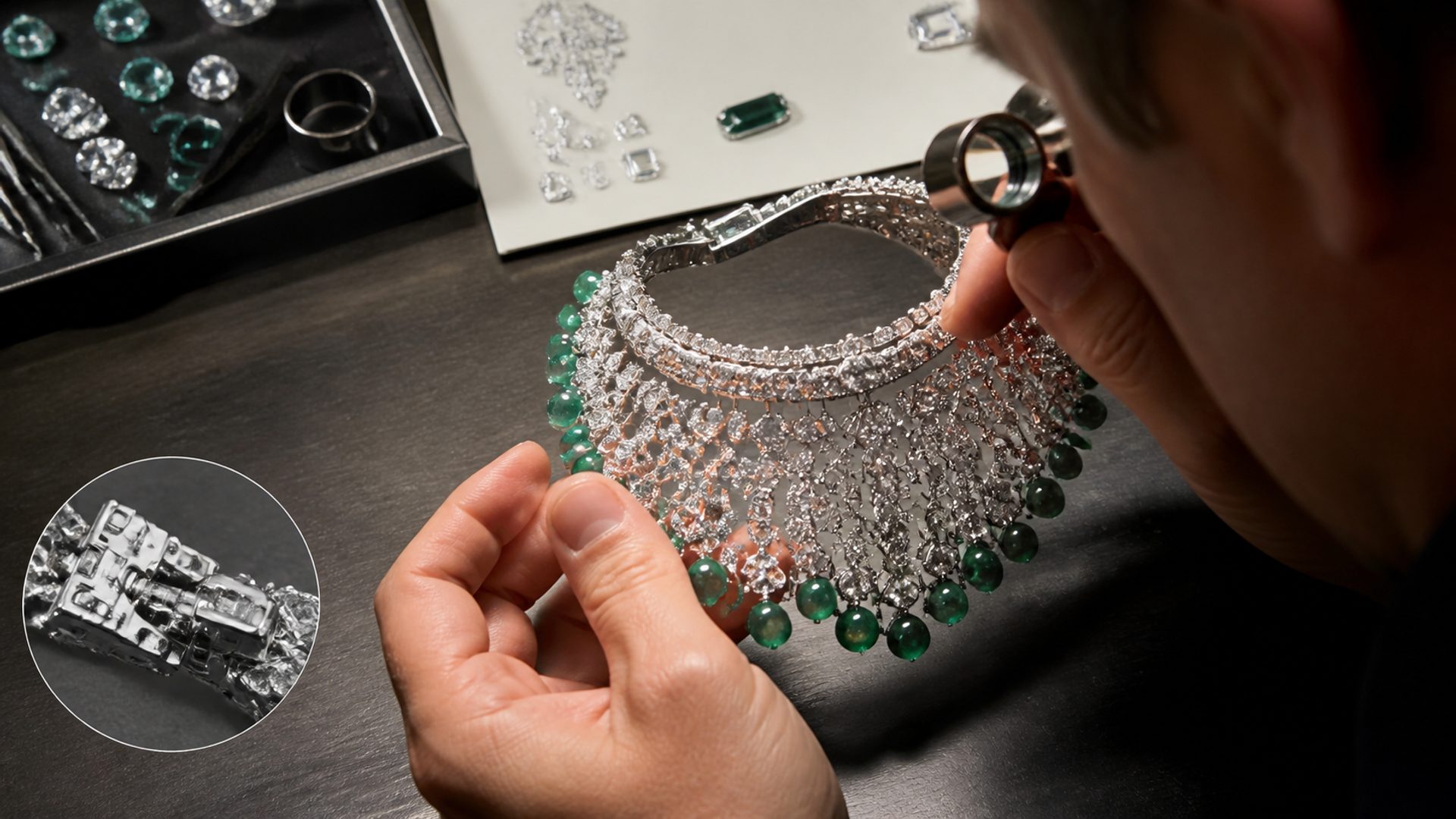
Examine clasp tension, hinge movement, pin stems, earring posts, stone seats and the underside where skin and fabric create friction. Look for exposed base metal, uneven plating, adhesive residue and sharp finishing. Ask whether replacement stones or hardware are stocked and whether third-party work would disqualify future service. For necklaces and large earrings, wear the piece long enough to judge weight distribution. Comfort is part of construction quality because an unwearable object delivers little personal utility.
Documentation protects the meaning of the purchase
The invoice should use specific terms rather than broad words such as gold-tone or diamond-like when more precise disclosure is available. Photograph hallmarks and maker's marks, save the product page and keep any gem report with the piece. For vintage jewellery, provenance should be a chain of evidence rather than a colourful seller story. Documentation will not make an ordinary piece rare, but its absence can make an important piece harder to identify, insure, repair and resell.
Treat sustainability claims as claims
Recycled metal, traceable stones and responsible sourcing can influence a purchase, but each term needs a scope and evidence. Ask which component is covered, who verified it and whether the claim applies to the exact piece or to a company programme. A certification or standard should be read for what it actually tests. Ethical preference can be central to value, yet it should not be used to bypass material, labour or durability questions.
Build a collection around use, not duplication
Before buying, describe the role the piece will play: daily signature, evening statement, archival design, gift or speculative holding. Compare it with jewellery already owned. If three pieces compete for the same occasions, the newest may add less utility than its excitement suggests. A disciplined collection can include both fashion and fine jewellery, but each object should have a reason to remain when storage, insurance, maintenance and opportunity cost are considered.
Evidence checklist for high end fashion jewelry
[ ] Save the exact material description
[ ] Inspect closures and high-friction areas
[ ] Confirm gem reports where material
[ ] Ask what aftercare is possible
[ ] Compare completed resale evidence
[ ] Subtract all exit fees
[ ] Document marks and provenance
[ ] Define the piece's collection role
In a high end fashion jewelry decision, an unchecked item remains unknown. It should not be converted into a favourable assumption merely to complete the purchase.
Reader-visible sources and method
The external pages above were checked for this high end fashion jewelry publication. Price, availability, service, tax, regulation and platform terms must be reconfirmed for the buyer's market and date. Ranking pages informed the separate SERP benchmark, but their prose was not copied and they do not control the claims in this article.
Continue with adjacent VERTU editorial research
These internal links provide adjacent premium-lifestyle and decision context for high end fashion jewelry; they do not replace the specialist or official evidence needed for a specific transaction.
Final judgement
Buy high-end fashion jewellery for design and personal use unless the exact piece has independent evidence of durable secondary demand. Verify metal and gemstone representations, inspect how the piece is assembled, obtain written care and repair terms, and compare the net resale price—not asking prices—with the premium paid for the brand.
The useful standard for high end fashion jewelry is not certainty created by confident language. It is a decision whose evidence, downside and next review point are visible to the reader.