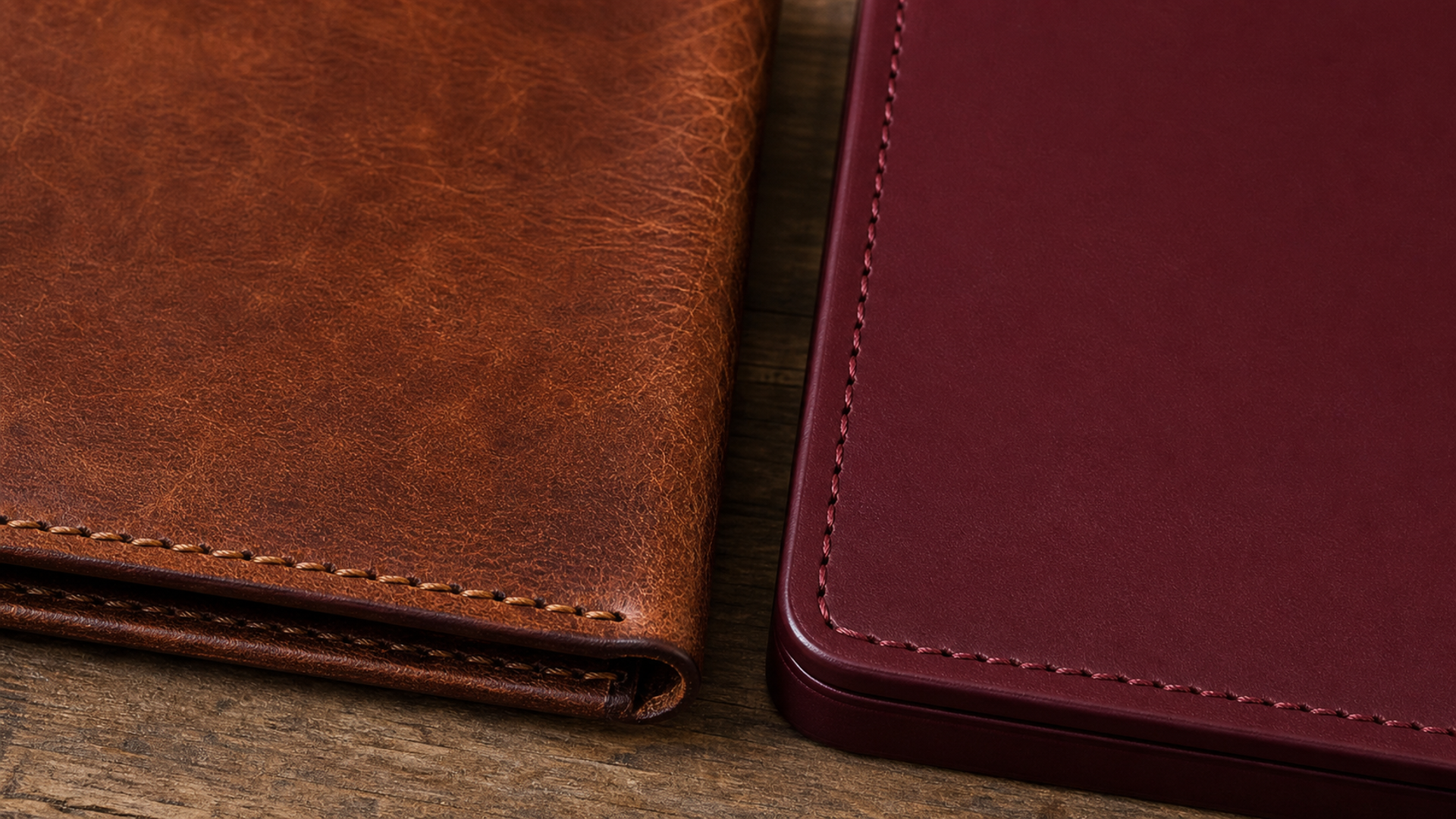
Full-grain leather usually develops the most expressive patina because the natural grain surface remains substantially intact. Top-grain leather can age beautifully too, but it has been altered at the surface—often by sanding, buffing, embossing or coating—to create greater uniformity. The better luxury material is not determined by the phrase alone. Hide selection, tannage, finish thickness, cutting, construction and aftercare decide whether a bag, phone case or small leather good improves with time.
The language is frequently misused. Leather Naturally defines full-grain as leather retaining the full grain surface without removal by buffing, snuffing or splitting. “Top grain” is broader: it refers to the outer or grain-side layer of a hide and can include full-grain and corrected-grain materials in some industry usage. A seller who positions “top grain” as a precise grade should explain exactly what was changed.
Leather ageing matrix
| Factor | Full-grain leather | Corrected or finished top-grain leather | What determines the result |
|---|---|---|---|
| Natural grain | Visible pores, scars and variation remain | Surface is made more uniform | Quality of hide selection and correction |
| Patina | Often darkens, burnishes and records use visibly | May change more slowly beneath protective finish | Tannage, colour, oils and coating thickness |
| Stain resistance | Absorbent finishes can mark quickly | Coatings may improve initial resistance | Finish chemistry and care instructions |
| Scratch behaviour | Marks can blend into an evolving surface | A scratch may expose a contrasting layer or damage coating | Depth of finish and colour penetration |
| Consistency | Variation is part of the character | Easier to produce consistent colour and texture | Product design and panel matching |
| Maintenance | Often needs restrained, material-specific care | May be easier to wipe but difficult to restore after coating damage | Maker’s repair route |
| Feel | Can show rich grain and natural break | Can feel smooth, firm or embossed | Tannage, thickness and finishing—not the label alone |
| Price | High-quality selection can increase waste and cost | Efficient yield can reduce material cost, but fine finishing can still be expensive | Hide quality, labour, brand and construction |
What “full grain” actually promises
Full-grain leather preserves the outer grain surface. That retains the hide’s natural fibre structure and visual evidence: pores, wrinkles, healed marks and small variations. It does not promise that the hide is flawless, vegetable tanned, uncoated, thick, ethical or from a particular animal. Full-grain leather can receive dyes and protective finishes; the important boundary is whether the grain surface has been removed or corrected.
Because the surface is less homogenised, makers must select and place panels carefully. A good craftsperson uses variation intentionally, matching colour and stretch while avoiding weak zones. Poor selection can produce a bag that twists or panels that age at different rates. “Natural marks” should not be used to excuse bad cutting.
Patina is the cumulative effect of light, handling, oils, friction and oxidation. It can be desirable darkening and burnishing, but it can also include water marks and uneven colour. Buyers should see aged examples of the exact tannage and colour, not a generic full-grain belt.
What “top grain” can mean
Top grain identifies leather from the outer portion of the hide rather than the flesh-side split, but commercial language varies. The surface may be lightly buffed to remove imperfections, then pigmented or embossed. Corrected-grain leather can provide uniform colour, reliable yield and resistance to early staining. Those are valid design objectives, not automatic evidence of low quality.
A thin plastic-like coating can eventually crack or peel, especially at flex points. A carefully engineered finish can remain attractive for years and suit a pale bag that would otherwise mark immediately. Ask how the grain was corrected, whether the texture is natural or embossed and whether the colour is aniline, semi-aniline or pigmented.
The Leather Working Group’s terminology guide is useful because it separates material descriptions from vague quality hierarchies. When a product page offers only “genuine top-grain leather”, request a fuller specification.
Patina is a system, not a grade
Vegetable-tanned full-grain leather often shows dramatic patina, particularly in natural or light brown colours. Chrome-tanned full-grain leather can remain softer and more colour-stable. Pigmented corrected leather may change slowly until the coating wears through. Oil and wax pull-up finishes show light-and-dark movement as the surface bends.
Use changes the map. Handles absorb skin oils. Corners abrade. A phone case receives heat and repeated hand contact. A handbag base meets floors and seats. Two owners can produce completely different patina on the same model.
If uniformity is the goal, expressive patina may be a disadvantage. A light-coloured corrected leather with a protective finish can better preserve its original appearance. The honest question is whether the owner wants a record of use or a controlled showroom look.
Scratches and repairability
On some full-grain, aniline or pull-up leathers, a light scratch can be softened by gentle handling or a maker-approved method because colour and oils run through the surface. On heavily finished leather, the same scratch may cut through a coating and reveal a contrasting layer. This does not mean every full-grain scratch “heals”; deep cuts sever fibres and require professional work.
Repairability depends on access to matching material, edge paint, thread, hardware and finish. A simple full-grain briefcase may be rebuilt panel by panel. A moulded, coated or laminated luxury object can be much harder to restore invisibly. Ask what the brand repairs and for how long.
Do not use random conditioner to erase marks. Oils can permanently darken absorbent leather and interfere with adhesives. Follow the exact maker’s care instructions and test any approved treatment in a concealed area.
Thickness, temper and construction
Leather thickness should match the object. A structured bag may use a firm outer leather laminated to reinforcement; a wallet needs thin folded edges; a phone case must wrap and bond cleanly. Very thick leather is not automatically more luxurious, and thinning leather for a precise construction is not evidence of poor quality.
Temper describes softness or firmness. Full-grain leather can be soft and drapey or rigid. Top-grain leather can behave the same way depending on tannage and finish. Handle the complete object: check whether folds feel natural, edges remain clean and stress points are reinforced.
Construction controls ageing. Stitch length, seam allowance, skiving, edge paint, lining, hardware attachment and adhesive compatibility determine whether beautiful leather stays attached to a functional product. A prestige tannery name cannot repair weak engineering.
Water, heat and travel
Absorbent leather can darken immediately with water. Protective finishes improve resistance but do not make a product waterproof. Blot fresh moisture, avoid heat and let the object dry naturally according to the maker’s instructions. Never accelerate drying on a radiator or with a hair dryer.
Heat inside a car or near a window can dry leather, soften adhesive and fade dyes. Long exposure to sun can change colour unevenly. In humid climates, enclosed storage encourages mould; excessively dry storage can stiffen leather. A breathable dust bag and stable environment are safer than sealed plastic.
Travel adds compression and colour-transfer risk. Dark denim can mark pale bags; metal hardware can press into adjacent panels. Pack with light support and keep liquids and hand sanitiser separate. These habits affect ageing more than the marketing grade.
Sustainability and traceability
Leather is generally a co-product of the meat industry, but that fact does not answer questions about deforestation, animal welfare, tannery chemistry, worker safety or water management. Certifications and audits have specific scopes. Leather Working Group ratings, for example, relate to audited leather manufacturing facilities and should not be stretched into a universal guarantee about every upstream issue.
Full-grain may use a smaller proportion of hides because visible surface quality matters, while correction can improve yield. Greater yield can reduce waste; heavier coating can add chemistry and complicate end-of-life. There is no one-word environmental winner.
Ask where the leather was tanned, what traceability exists, which claims are independently audited and how long the product is designed to remain in service. Durability plus repair can be a meaningful sustainability strategy if the owner actually keeps the object.
How VERTU uses the craft distinction
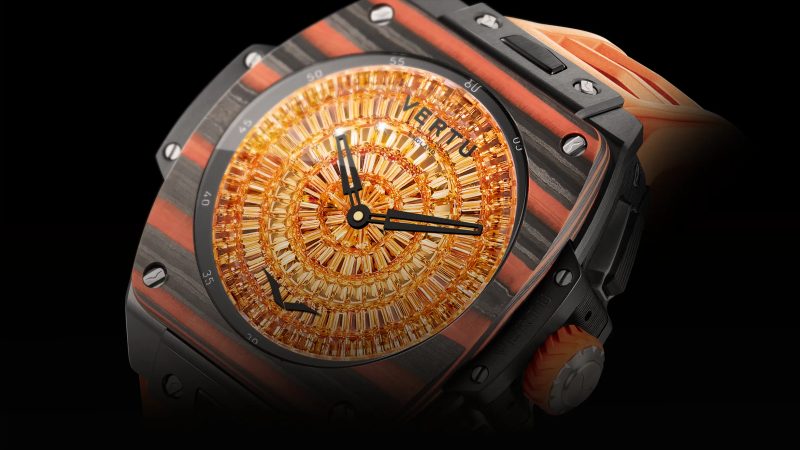
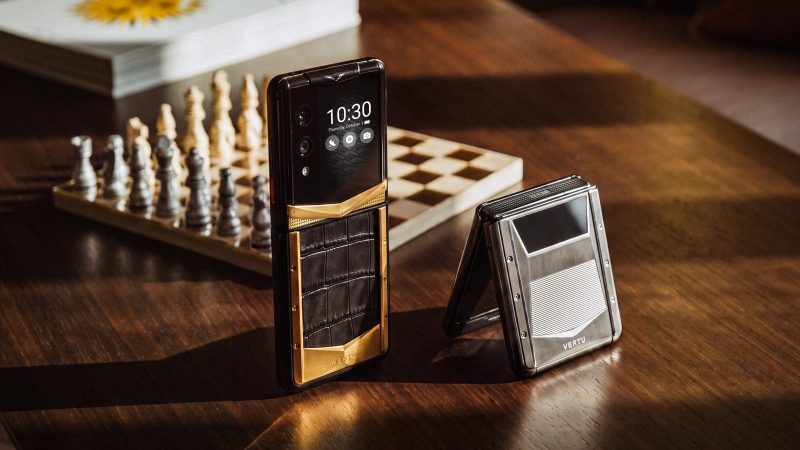
VERTU’s current product knowledge states that selected products use fine or rare leathers and that Signature V is assembled by one craftsperson. It does not authorise the assumption that every leather component is full grain, from a particular species or made to one tannage. Product-specific documentation should control each claim.
The useful VERTU connection is its craft-and-ownership lens. A luxury phone or accessory is handled, warmed, pocketed and travelled with more intensively than a display object. Material selection, panel matching, edge finishing and serviceability therefore matter at least as much as a leather grade. For eligible users, Concierge may coordinate supported after-sales requests where available, but it cannot guarantee restoration results, and external action requires authorisation.
Buyer’s inspection checklist
Is the term full grain, top grain or corrected grain defined by the seller?
What animal, tannage and finish are used?
Is the texture natural or embossed?
Are surface variations intentional and panels well matched?
How does an aged example of this exact colour look?
What happens when water or a light scratch reaches the finish?
Are stress points, edges and hardware attachments repairable?
Does the maker offer cleaning, recolouring or component replacement?
Which environmental and traceability claims are independently scoped?
Does the owner want patina or a uniform appearance?
Verdict
Full-grain leather is the stronger choice for an owner who values natural surface character, visible ageing and a patina that records use. Corrected top-grain leather can be the smarter choice when uniform colour, stain resistance and predictable appearance matter. Do not buy either term as a status symbol. Buy the specified hide, tannage, finish and construction that suit the object—and confirm that the maker knows how it will be cared for and repaired.
Related VERTU reading
For applied ownership advice, read how to care for leather luxury phones. The premium leather tote durability guide extends the construction-versus-style decision to bags.