Executive Summary
What is hardware currency? For ultra-high-net-worth (UHNW) travelers, hardware currency is the physical mobile endpoint that unifies sovereign identity, digital security, and understated status. The VERTU Metavertu Max represents this paradigm: moving beyond commoditised flagship silicon by integrating a dedicated bank-grade encryption chip, dual-operating-system isolation (Web2/Web3), and single-craftsman British provenance into an uncompromised trust instrument for cross-border mobility.
The phone in an ultra-high-net-worth traveler’s hand is no longer a consumer gadget. It has become hardware currency: a trust instrument that carries identity, access, and standing across borders, and a status signal that elite rooms read before they read you.
That shift is the quiet subject of every Davos corridor conversation and every TOKEN2049 closed-door briefing. Yet, it remains the exact dimension of modern mobility that conventional consumer advice ignores.
The stakes are concrete. A compromised handset is an exposed identity at a border checkpoint, an intercepted term sheet in a private boardroom, or a drained vault in a hotel suite. While enterprise executives spend millions hardening their cloud infrastructure, the physical trust layer—the verified chain of custody from the atelier that built the handset to the pocket that carries it—remains the least-controlled vulnerability in most travel kits.
The global mobility footprint reveals the scale of this exposure: with more than 700,000 ultra-high-net-worth individuals worldwide and over 3.5 million annual business jet departures, high-value identity is concentrated into narrow geographical corridors like never before.
What follows is an analytical framework—the passport, the shield, and the signal—for reading what elite circles actually reward, and how the VERTU Metavertu Max serves as the definitive response to this shift.
The Conventional View: Why Flagships Are No Longer Enough
The mainstream position on enterprise mobility begins with commoditisation. A standard flagship from Silicon Valley or Seoul does roughly what every other handset does: communications, payments, navigation, and enterprise collaboration. The processors are shared, the mobile operating systems are functionally identical, and price tiering buys incremental camera sensors rather than structural sovereignty. On that reading, silicon is a commodity, and paying a premium is mere vanity.
Security professionals often reinforce this view with a standard doctrine: risks reside in software layers, compromised credentials, unencrypted networks, and human error—not the chassis. If account hygiene is the real battlefield, they argue, sensible actors invest in identity software, not bespoke hardware.
Finally, there is the tactical objection: a visibly precious phone is a theft magnet. In high-density settings, a device that shouts its own retail value creates an unnecessary operational liability.
Each point carries weight in domestic environments. However, that logic collapses the moment an executive steps past immigration.
Why That View Breaks Down at the Border
A phone is just a phone only in environments where your identity is never challenged. Elite travel is the precise inverse: it concentrates high-value access into a few square kilometers, where your hardware is the primary bearer credential.
Consider the physical density:
The World Economic Forum at Davos routinely convenes over 3,000 global participants across 130 countries, packing dozens of heads of state, hundreds of central bankers, and over 800 global CEOs into a single alpine valley.
TOKEN2049 (Singapore and Dubai) draws more than 20,000 to 25,000 founders, capital allocators, and digital asset custodians into a single transit hub.
These environments create a high-stakes operational condition: thousands of sovereign operators whose access, private keys, and balance sheets sit on a single 6-inch physical object.
At this tier, mainstream commercial flagships fail across three critical fronts:
Supply Chain Vulnerability: Mass-market devices pass through dozens of third-party logistics nodes, introducing zero-day physical tampering and unauthorized firmware injection risks.
Unified Attack Surface: A standard consumer OS runs casual social apps on the same partition as private crypto-wallets and confidential communications.
Absence of Proof: A generic consumer handset announces that its owner has outsourced their personal security architecture to an ad-driven operating system vendor.
The Framework: Passport, Shield, and Signal
Navigating high-density elite environments requires shifting your perspective. Stop treating the handset as an appliance; evaluate it as a triad: a passport, a shield, and a signal.
1. The Passport (Sovereign Credential)
The handset is your access token across international boundaries, digital guest lists, and financial protocols. When travel credentials, biometric passes, cold storage management, and settlement accounts converge on one endpoint, that endpoint is no longer an accessory—it is load-bearing architecture.
2. The Shield (Hardware-Isolated Security)
The shield stands between your balance sheet and endpoint compromises: malicious cell towers, airport charging port exploits, account takeover, and side-channel attacks. True hardware resilience requires provenance—knowing exactly whose hands assembled the silicon and casing, and guaranteeing it was never modified en route.
3. The Signal (Quiet Strategic Restraint)
Signaling literature—including the validated Red Sneakers Effect—demonstrates that elite gatekeepers rate understated autonomy over conspicuous display. Inside top-tier networks, mass-market consumer tech signals a lack of discernment. Bespoke materials and quiet, deliberate design signal membership in the inner circle without a word spoken.
The Architectural Solution: VERTU Metavertu Max
This framework is not theoretical. It is the precise engineering thesis behind the VERTU Metavertu Max. Designed specifically for global operators navigating the Davos-Token2049 axis, the Metavertu Max resolves the tension between modern computing performance, hardware-level isolation, and artisanal heritage.
Dual-System Architecture: Hardware-Level Isolation
Mainstream security models assume that software sandboxing is sufficient. The Metavertu Max rejects that premise. It delivers complete hardware-level partitioning:
The Daily Workspace (Web2 System): Uncompromising performance powered by top-tier Snapdragon architecture, managing high-throughput executive tasks, secure communications, and mainstream enterprise collaboration suites.
The Sovereign Enclave (Web3 System): An isolated secondary operating ecosystem backed by a dedicated bank-grade secure encryption chip. Private keys, seed phrases, and confidential messaging channels never touch the standard operating environment, rendering memory scraping and background extraction attacks obsolete.
Provenance You Can Trace to a Single Desk
In luxury fashion, untracked supply chains cost the industry billions and compromise customer trust. In mobile hardware, opaque supply chains represent a national-security-grade threat.
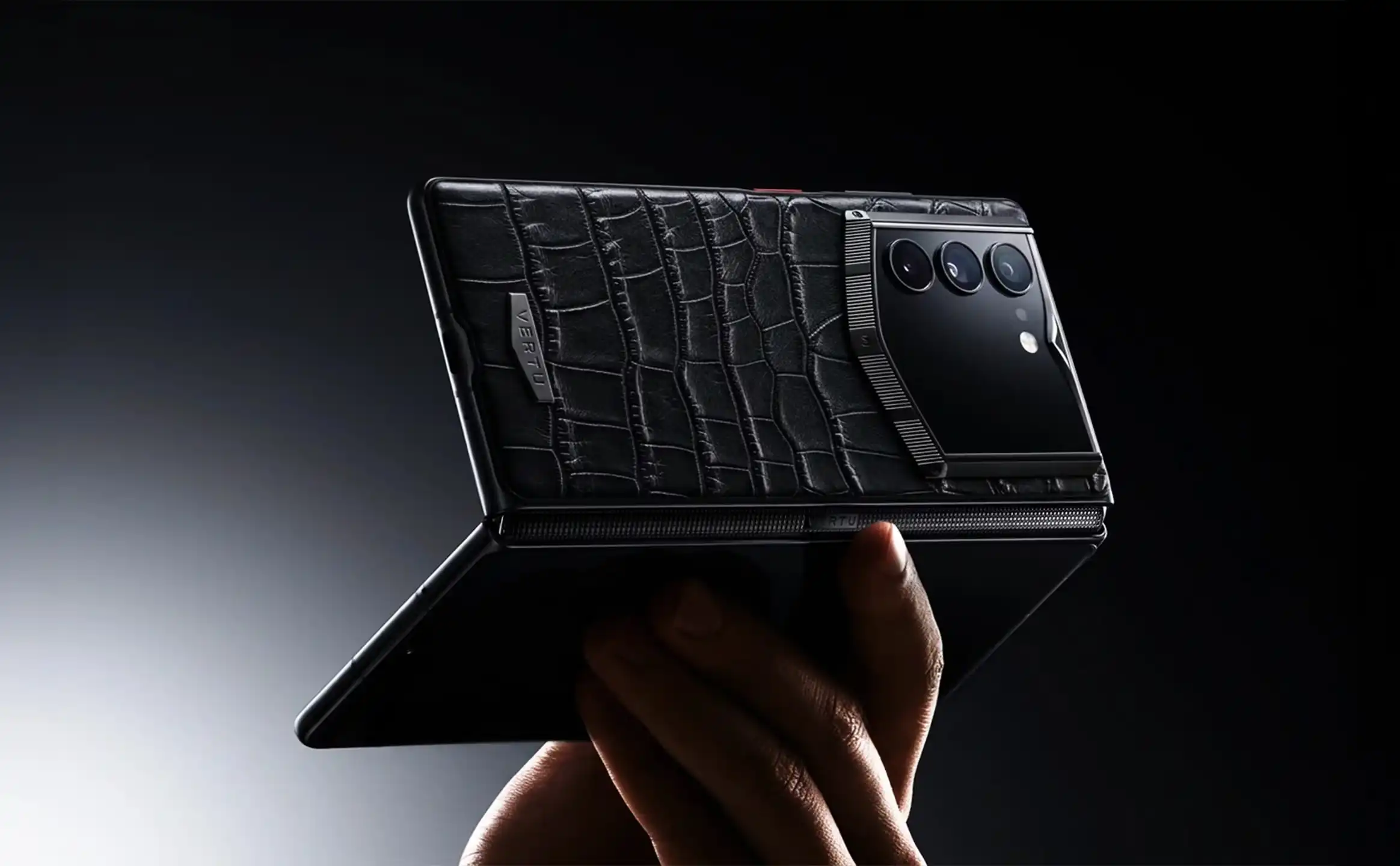
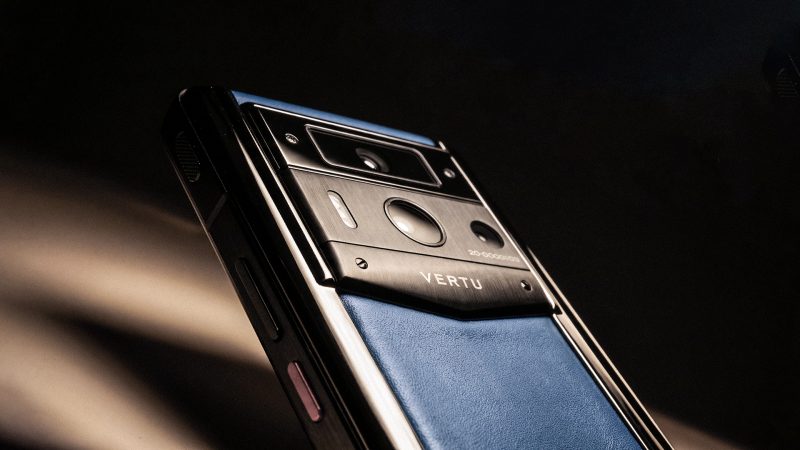
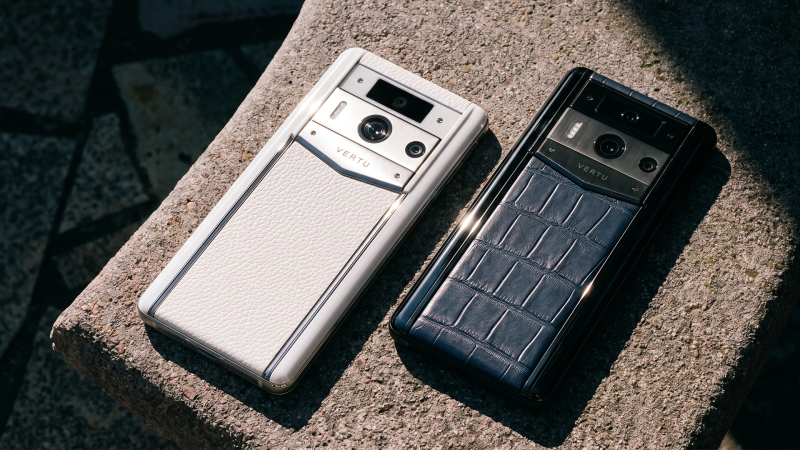
Every Metavertu Max is handcrafted in England by a single master artisan, whose hallmark is engraved directly into the interior chassis. From the selection of aerospace-grade titanium and hand-stitched Himalayan alligator leather to final OS calibration, the chain of custody remains strictly controlled from workbench to pocket.
The Concierge and the Ruby Key: Beyond Digital Defenses
True endpoint sovereignty accounts for human operational needs. The Metavertu Max features the signature physical Ruby Key, granting 24/7 one-touch access to VERTU’s private global concierge. Whether securing unlisted private aviation paths during regional travel disruptions or arranging secure communications in transit, personal human assistance provides an operational safety net that pure algorithms cannot deliver.
Comparison: Mass-Market Flagships vs. VERTU Metavertu Max
Critical Evaluation Point | Standard Mass-Market Flagship | VERTU Metavertu Max |
Primary Architecture | Monolithic Consumer OS (Shared Sandbox) | Dual-System Isolation (Independent Hardware Partition) |
Asset & Key Security | Cloud-dependent or standard TPM storage | Dedicated Bank-Grade Secure Enclave Chip |
Supply Chain Custody | Anonymous, multi-tiered mass assembly line | Single Master Artisan (Bench-made & Individually Signed) |
Visual Signal | Ubiquitous consumer tech (Identical to 50M users) | Bespoke luxury materials; quiet insider recognition |
Real-World Operational Layer | Automated AI chatbots / Generic carrier support | Dedicated 24/7 Ruby-Key British Butler Concierge |
Frequently Asked Questions
Isn't account-level security more important than physical phone hardware?
Account security and endpoint security are interdependent. While strong passwords and two-factor authentication protect cloud accounts, an endpoint exploit hands an attacker direct session cookies, active biometric states, and hardware SMS/Authenticator verifications. Hardening the physical endpoint with the Metavertu Max ensures the authentication environment itself cannot be cloned or manipulated.
What makes the VERTU Metavertu Max different from mainstream luxury-cased phones?
Mainstream luxury modifications simply apply gold plating or leather wraps to third-party consumer phones, leaving vulnerable mass-market architecture unchanged. The VERTU Metavertu Max is engineered from the silicon up: integrating dedicated security chips, dual-partitioned operating environments for Web3 assets, and verified factory-to-user provenance alongside artisanal English craftsmanship.
How does the Metavertu Max protect Web3 assets and private communications?
The Metavertu Max utilizes a physical hardware enclave that completely separates your private keys, digital identities, and encrypted messaging channels from the primary Android environment. Even if the standard operating system encounters a malicious link or unverified network, the secondary sovereign vault remains isolated at the circuit level.
Why is physical phone provenance considered an enterprise security priority?
Mass-market logistics leave consumer devices vulnerable to interdiction—the unauthorized interception and modification of hardware before it reaches the end user. VERTU’s single-craftsman assembly model establishes an auditable chain of custody, ensuring that your device’s security architecture remains intact from the workbench to your pocket.
Conclusion: The Room Reads the Device Before It Reads You
The phone in your hand is the hardware currency of global mobility because it carries your access, assets, and reputation simultaneously.
It is time to discard the habit of treating mobile technology as a disposable, commoditised spec sheet. Processor clock speeds and standard camera megapixels reveal nothing about whether a device can protect sovereign assets at an international border or communicate quiet authority across a negotiation table.
Hardware-level provenance, architectural isolation, and understated elegance are the real specifications that matter. In elite rooms that have stopped explaining themselves, restraint is the signal. The traveler carrying hardware built with intention, backed by verified custody and uncompromising privacy, is the one the room trusts.
Explore the architecture of sovereign mobility. Discover the VERTU Metavertu Max Collection and examine the engineering standards of quiet power.