| Dimension | Art Basel (Basel, Paris, Miami, HK) | The Venice Biennale |
|---|---|---|
| Primary Nature | Commercial art fair and dealer marketplace | Non-commercial international biennale |
| Core Objective | Direct acquisitions, artist placement, gallery networking | Curatorial research, institutional trend tracking |
| Access Architecture | Tiered VIP credentials (First Choice vs. Preview) | Professional preview passes, private pavilion invites |
| Transaction Timing | Immediate (hours to 48 hours for holds/invoices) | Long-term (informing private sales & gallery orders) |
| Collector Focus | Verifying condition, provenance, and invoice terms | Documenting recurring artist practices & national narratives |
| Key Venues | Messe Basel, Grand Palais, MBCC, HKCEC | Giardini pavilions, Arsenale, city-wide collateral sites |
For serious collectors, family offices, and private patrons, Art Basel and the Venice Biennale represent the twin capitals of the contemporary art world. Yet while Art Basel is a commercial engine built for rapid acquisition, the Venice Biennale is an institutional platform that shapes historical prestige. Navigating both requires far more than an invitation—it demands a disciplined acquisition strategy.
Securing a museum-grade work is rarely an accident of luck; it is the result of advance PDF vetting, institutional hold negotiations, and swift due diligence conducted under intense time pressure. This guide decodes the strategic divide between Basel and Venice, outlines the unwritten rules of VIP preview access, and presents an executive acquisition workflow—combining market intelligence with the mobile precision and privacy of the VERTU ALPHAFOLD—designed for the traveling collector.
You May Also Like:Contemporary Collections | Europe's Most Important Collection of Women's Art >
Quick Answer
Art Basel is a commercial marketplace designed for transactional execution, booth-level holds, and primary-market acquisitions. The Venice Biennale is a non-commercial, institutional exhibition spread across the Giardini and Arsenale, designed for curatorial intelligence, historical context, and discovering emerging practices.
- At Art Basel: Prioritize early pre-fair gallery PDFs, confirm First Choice VIP credentials, and execute acquisitions within the opening two hours.
- At Venice: Map curated national pavilions, attend collateral exhibitions, and track recurring artist themes to inform secondary-market sourcing later in the season.
Art Basel vs. The Venice Biennale: Strategic Differences
While seasoned collectors frequently pair both events on a single European itinerary, treating them interchangeably is a critical tactical error.
Art Basel functions on commercial velocity. Leading blue-chip galleries exhibit works with immediate commercial intent. Privileged access tiers (such as First Choice and Preview VIP cards) are structured to let vetted patrons review and reserve inventory before public doors open.
The Venice Biennale operates on intellectual and institutional prestige. Organized across historic pavilions and historic shipyard installations, works on display are rarely for direct sale off the wall. Instead, Venice sets the critical consensus that determines which artists enter museum collections and secondary-market auction records over the next decade.
Comparative Framework for Collectors
Deconstructing VIP Preview Days: Access Tiers and Unwritten Rules
A VIP preview pass does not grant uniform access. Fairs structure their opening hours into hierarchical tiers to prioritize institutional patrons and premier buyers.
1. Understanding Credential Hierarchy
At Art Basel editions, credentials typically separate into:
- First Choice VIP: Grants entry at the earliest opening window (typically 11:00 AM on Day 1). This is the critical period when primary acquisitions occur.
- Preview VIP: Grants access later on opening day (often 2:00 PM or 4:00 PM). By this time, primary targets may already be subject to reserve holds.
- Collectors Lounge Access: Access to private institutional lounges, bespoke financial sponsor suites, and quiet meeting rooms for confidential negotiations.
2. The Unwritten Reality: The "Pre-Selling" Phase
The true VIP preview begins weeks before opening day. Blue-chip galleries rarely wait for the physical doors to open to find buyers.
- PDF Previews: Galleries distribute digital dossiers, condition summaries, and pricing tiers to established clients 10 to 14 days in advance.
- Pre-Fair Reserves: Highly coveted primary works by market-darling artists are frequently pre-sold or placed on institutional reserve before VIP pass holders step onto the exhibition floor.
- The Opening-Hour Mandate: The first 90 minutes of the physical preview should not be spent wandering; they must be spent physically inspecting pre-selected targets and confirming purchase agreements.
3. Allocation Over Price: The Placement Advantage
Contemporary blue-chip galleries do not operate purely on a "highest bidder" basis. Gallerists act as gatekeepers to protect artists from speculative flipping.
- Placement Priority: A collector offering institutional donation commitments, museum loans, or private foundation placement will consistently win an allocation over a speculative buyer offering immediate cash over asking price.
- Collector Etiquette: When inquiring about a piece, articulate the context of your collection (e.g., historical dialogue, foundation stewardship) rather than treating the interaction as a purely commercial transaction.
Tactical Preparation: The 4-Tier Acquisition Shortlist
Do not enter a major fair without a structured acquisition thesis. Divide your targets into a disciplined decision matrix:
| Priority Tier | Definition | Operational Action Plan |
|---|---|---|
| Tier A: Core Acquisition | Direct fit for collection thesis; approved budget | Request pre-fair PDF; secure 2-hour physical hold on Day 1 |
| Tier B: Inspection Dependent | High potential; condition or scale uncertain | Inspect within first 60 minutes; verify under UV light |
| Tier C: Curatorial Watchlist | Promising practice; secondary market unverified | Meet gallery director; request catalog raisonné data |
| Tier D: Discovery & Emerging | New artist encounter on the fair floor | Photograph details; assign to post-fair research cycle |
Contemporary Art Auction vs. Private Sale: Strategic Selection
During an international art week, collectors frequently transition between fair booths, evening auction previews, and off-site private sales. Choosing the correct transactional route protects both capital and discretion.
Private Sale vs. Live Auction Matrix
| Transaction Criterion | Private Sale (Galleries & Auction House Private) | Live Evening Auction (Public Bidding) |
|---|---|---|
| Discretion & Privacy | Absolute; non-disclosure agreements protect identities | Public; hammer prices and registration are visible |
| Price Predictability | Fixed or privately negotiated price ceilings | Volatile; competitive bidding can inflate values |
| All-in Fee Structure | Flat commission or net agreed sales price | Hammer price + Buyer’s Premium (up to 26%) + overhead fees |
| Timing Flexibility | Executed year-round based on mutual agreement | Strictly tied to global spring and autumn sale cycles |
| Due Diligence Window | Extended; allows independent conservator reports | Compressed; limited to catalog publishing windows |
Collector Rule of Thumb: Use auctions when chasing market transparency and rare institutional trophies with validated public benchmarks. Use private sales when acquiring high-value masterpieces requiring confidentiality, tax planning, and discreet title transfer.
Rigorous Pre-Commitment Due Diligence
Never let the social adrenaline of a VIP preview compromise legal and curatorial diligence. Request and verify the following:
- Title and Chain of Provenance: Verify seamless ownership records. Scrutinize any historical ownership gaps between 1933–1945 (restitution risks) and confirm that the seller holds unencumbered title.
- Independent Condition Reports: Never rely solely on gallery condition statements. For high-value acquisitions, inspect surfaces under ultraviolet (UV) light to detect restoration, relining, infilling, or micro-fractures in impasto.
- Authentication Authorities: Ensure authenticity is validated by the artist’s estate, foundation, or current catalog raisonné committee. Request original Certificates of Authenticity (COA) signed by recognized bodies.
- Cross-Border Tax & Logistics: Clarify delivery duty terms (DDP vs. DAP). Confirm who covers export permits, cultural heritage licenses, custom crating, art-transit insurance, and local import VAT or safe-haven freeport logistics (e.g., Geneva or Delaware Freeports).
The Connoisseur’s Mobile Command Center: Integrating VERTU ALPHAFOLD into the Acquisition Workflow
In the high-stakes environment of an international art preview, time and discretion are your greatest assets. A collector standing in a crowded booth at Messe Basel or traversing a Venetian vaporetto cannot afford the friction of pulling out an ungainly laptop, nor can they risk assessing a multi-million-dollar acquisition on a cramped smartphone screen.
The modern acquisition process demands a dedicated, executive-grade mobile workspace. Engineered at the intersection of haute craftsmanship and cutting-edge productivity, the VERTU ALPHAFOLD functions as an indispensable digital command center, specifically tailored to the rigorous workflow of the traveling art patron.
1. Dual-Screen Visual Appraisal: Micro-Inspection Meets Document Verification
The 8.05-inch flexible inner display solves the friction of reviewing art on the go. Unfolded, it supports a seamless split-screen workflow—letting you zoom into gigapixel-level brushwork and pigment details alongside condition reports or invoice drafts. When moving between booths, the 6.53-inch cover screen provides effortless, one-handed navigation for maps and quick messages.
2. Sovereign Privacy Architecture: Protecting High-Stakes Negotiations
Unsecured Wi-Fi at fairs and hotels presents serious risks for confidential transactions. Powered by an independent A5 Security Chip, ALPHAFOLD isolates purchase contracts and wire instructions within hardware-protected enclaves. Combined with encrypted V-Talk calls and automatic data masking, your bidding limits and advisory discussions remain strictly confidential.
3. Hermes Agent & 24/7 Concierge: Executive Automation and Lifestyle Synergy
International art trips require flawless logistical coordination. Hermes Agent (Agentic AI) executes multi-step voice tasks—summarizing incoming condition PDFs, calculating import VAT, and syncing busy itineraries. For physical needs, VERTU’s 24/7 Concierge handles real-world requests at a single touch, from private Venice water-taxi transfers to hard-to-book Michelin tables.
4. Aesthetic Resonance: A Masterpiece in Hand
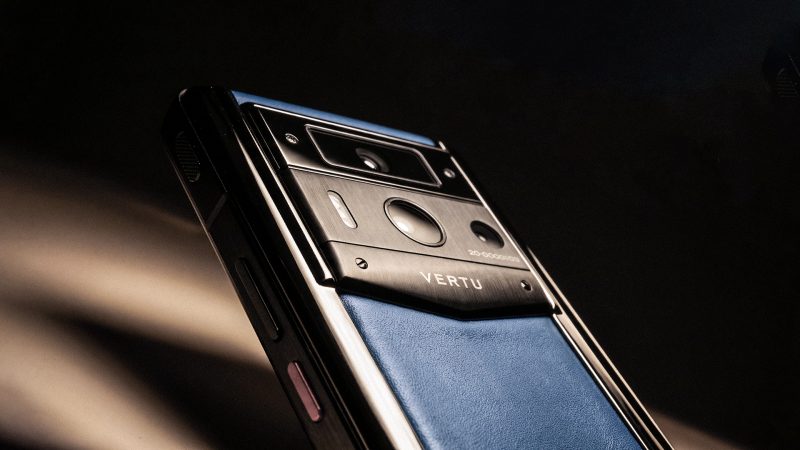
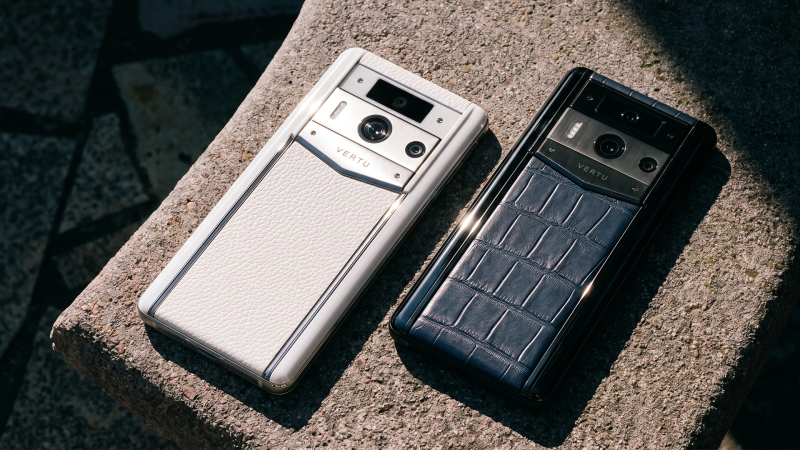
A collector’s digital tools should reflect the same discerning standards as their art. Hand-crafted with aerospace-grade alloys, precision mechanical hinges, and fine European calfskin or exotic leathers, the ALPHAFOLD rejects mass-market uniformity. It pairs effortlessly with bespoke tailoring and haute horlogerie, signaling refined taste before negotiations even begin.
The 72-Hour Collector Operational Checklist
72 Hours Out: Tactical Alignment
- Verify your VIP pass tier (confirm First Choice entry times and lounge credentials).
- Review distributed gallery PDFs; secure preliminary holds on Tier-A targets.
- Download offline fair maps and mark exact booth coordinates by exhibition hall.
- Establish an all-in financial ceiling (Artwork + Buyer's Premium + VAT + Logistics).
24 Hours Out: Strategic Confirmation
- Reconfirm pre-booked gallery appointments with directors.
- Verify that your communication channels to your advisor or family office are secure.
- Prepare a portable UV inspection light and magnifying loupe for personal viewing.
On Preview Day: Execution Protocol
- Enter at the earliest designated minute; proceed directly to Tier-A booth coordinates.
- Conduct physical inspections (edges, backing, signature, surface integrity).
- Inquire about placement intentions; state your collection stewardship credentials.
- Request written confirmation of hold windows (typically 2 to 4 hours maximum on Day 1).
Post-Fair: Institutional Follow-Through
- Submit binding acquisition commitments or polite declines in writing within 24 hours.
- Issue shipping, fine-art insurance, and customs documentation instructions to art handlers.
- File condition documentation and invoices into your secure collection management system.
Frequently Asked Questions (FAQ)
How do I get Art Basel VIP access?
VIP access is non-transferable and strictly invitation-only. It is issued through Art Basel’s VIP relations team, participating blue-chip galleries, or wealth-management sponsors. The highest tier—First Choice—is reserved for major patrons, museum trustees, and prolific collectors, granting first access ahead of standard Preview cardholders.
Can I buy artwork directly off the floor during a VIP Preview?
Yes. Preview days are the primary commercial transaction window of the fair. Works are actively sold or placed on strict multi-hour holds. Invoices are generated directly by the exhibiting gallery, typically requiring a deposit and signed purchase agreement within 24 to 48 hours.
What is the difference between Art Basel and the Venice Biennale for collectors?
Art Basel is a commercial fair designed for acquiring works from exhibiting galleries. The Venice Biennale is an international cultural exhibition organized by national curators; works are generally not for direct sale. Collectors use Venice to spot intellectual trends and inform future private acquisitions.
What is a Buyer’s Premium in fine art auctions?
The Buyer's Premium is an additional administrative fee paid by the winning bidder to the auction house on top of the hammer price. It typically operates on a sliding scale from 15% to 26% depending on the value bracket, and is subject to local sales tax or VAT.
How should collectors communicate during live, high-value negotiations?
Collectors should use dedicated, hardware-encrypted communication channels. Avoid open cellular SMS or public fair Wi-Fi when discussing bid ceilings, wire instructions, or private sale agreements. Hardware-isolated enclaves (such as dedicated security chips) ensure negotiation privacy.
Final Verdict
Navigating Art Basel and the Venice Biennale at the highest level is an exercise in rigorous preparation, not impulsive access. The collector who relies solely on wandering the fair floor with a VIP badge will consistently arrive after the finest works have been placed on reserve.
Treat Art Basel as an arena for precise commercial execution, armed with early PDF analysis, clear hold parameters, and strict due-diligence protocols. Treat the Venice Biennale as an intellectual laboratory to calibrate your eye, map institutional consensus, and discover the practices that will define the next generation.
By combining deep market literacy, clear collection boundaries, and the executive capabilities engineered by VERTU in the ALPHAFOLD—from split-screen visual analysis to hardware-level negotiation privacy—you transform intense international art weeks into enduring, museum-grade collection value.