Key Takeaways
- An AI chatbot is a conversational interface; its business value depends on connected information, evidence and authorised actions.
- Test access, output quality and workflow status with one real task before expanding use.
- VERTU Professional System provides an executive view above authorised business systems; it does not replace them or human judgement.
An artificial intelligence chatbot is a conversational system that interprets a question and returns a response. In business, its value depends on what happens beyond the conversation: whether it can use relevant information, show the basis for an answer and support an authorised next step. A fluent reply is useful, but it is not evidence that a decision is correct or a workflow is complete.
What is an artificial intelligence chatbot?
An AI chatbot lets people interact with software in natural language. A basic bot may answer from predefined rules. More advanced systems can interpret varied requests, generate responses and retrieve material from connected sources. Some can also call business tools to prepare or carry out supported actions. These capabilities differ by product and configuration, so “chatbot” alone does not tell a buyer what a system can safely do.
IBM's overview of chatbots distinguishes conversational responses from broader task automation. For a business buyer, the practical test is simple: ask what data the bot can reach, what action it can take and how a person can verify the result.

Four business uses, with different levels of responsibility
Answering a known question
A support bot can explain a policy or direct a user to a relevant page. Success means the answer is current, clear and linked to the right source. It should say when the available material does not settle the question.
Finding and summarising information
An employee might ask for a project update across documents and records. The summary should preserve dates, scope and source links. Access to a shared folder does not automatically grant access to every underlying record.
Preparing a workflow
Where connected tools permit it, a chatbot may draft a request, create a task or assemble materials for an approval. Preparation, submission and final approval are separate states. Confirm the official record before reporting that an action is complete.
Supporting a leadership decision
A leader may need to see which approvals are delayed, which financial indicators have changed and which exceptions need attention. Here, the chatbot should distinguish recorded facts from possible explanations and present the decision context without claiming to replace human judgement.
How to evaluate an AI chatbot for business
- Choose one specific job. Define the question, required systems, expected output and person responsible for review.
- Test ordinary permissions. Use a normal account as well as an administrator account. Check what happens when access is missing.
- Demand traceable evidence. Inspect record links, dates and figures behind important statements.
- Separate conversation from action. Verify whether the system only suggests a step, prepares it or executes it through an authorised workflow.
- Measure correction effort. Record errors, time spent fixing them and whether the task succeeds when repeated.
These checks matter more than a polished demonstration. IBM describes enterprise chatbots as systems that may connect conversations with organisational data and workflows; the actual connection and access boundary still have to be assessed in the buyer's environment.

Where VERTU Professional System fits
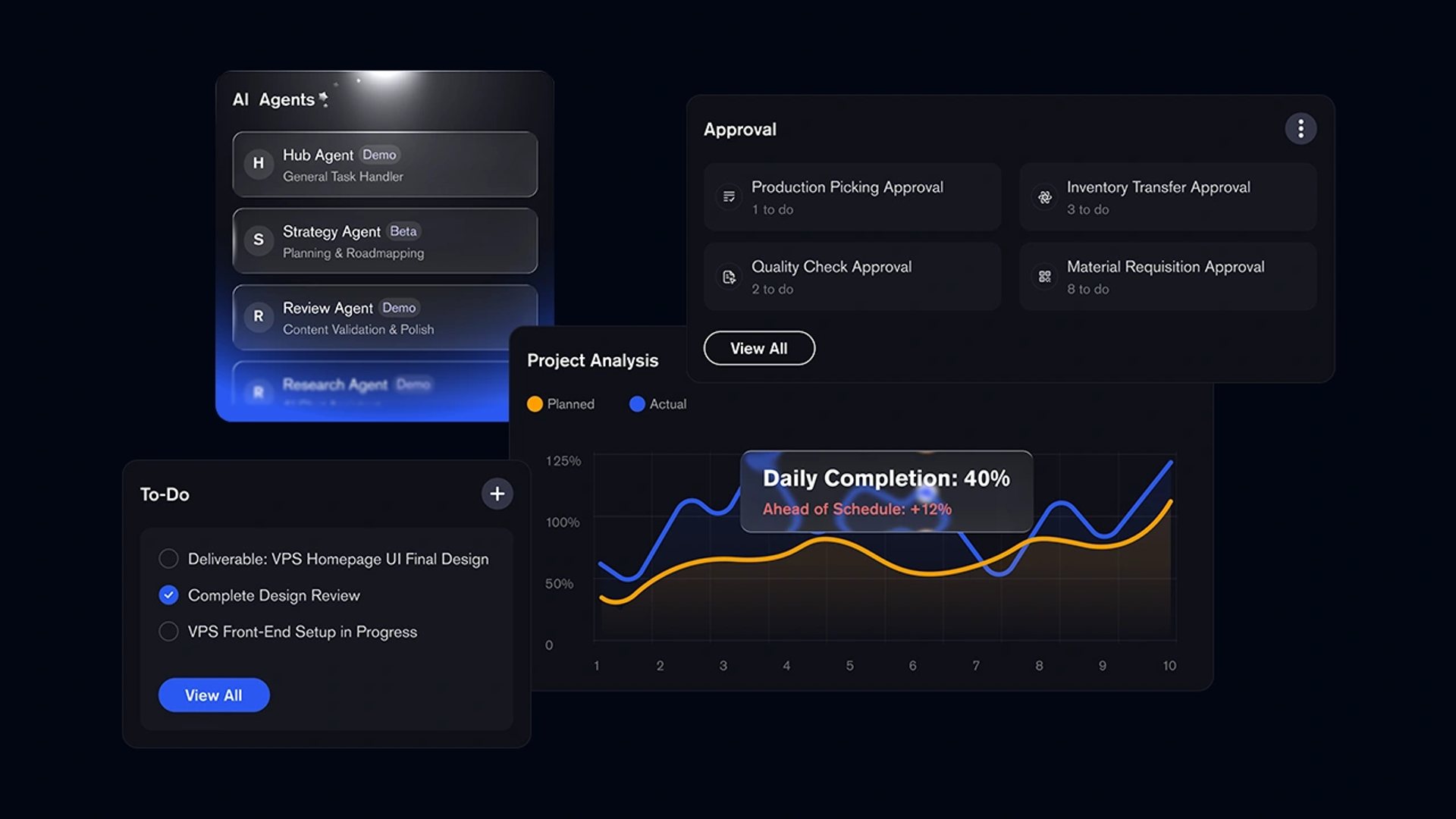
VERTU Professional System (VPS) is presented on its official page as an AI-native enterprise interface for business owners, founders, executives and growing companies. Its role is to bring signals and exceptions from authorised business systems into a clearer decision view across areas such as approvals, finance, sales and operations. It is designed as an overlay above existing systems, not as their replacement.
That positioning goes beyond a general question-answering chatbot. The relevant question for a VPS evaluation is whether a leader can see what needs attention, understand the source and context, and route a supported next step within defined controls. The official page describes authorised connections, permission boundaries, action confirmation, risk-level controls and audit traceability for supported workflows. Available capabilities depend on deployment scope, compatible systems and authorisation.
The supplied Xiao V training material describes natural-language interaction with available business capabilities. It also notes that cloud, local and workstation contexts differ in file access and availability. Those details should be checked in the proposed deployment; they do not mean every VPS customer receives every connection or workflow.
Common mistakes to avoid
- Equating eloquence with accuracy. Check important answers against records.
- Assuming every integration is active. Confirm the systems, permissions and client environment actually configured.
- Confusing a recommendation with a decision. Keep the responsible person and formal approval path visible.
- Calling a task complete too early. Verify the final record, file or workflow status.
Frequently asked questions
Is an AI chatbot the same as an AI assistant?
The terms overlap. “Chatbot” describes the conversational interface; “assistant” often suggests a wider range of help. Judge the actual connected data, tools and controls rather than the label.
Can an AI chatbot make business decisions?
It can help organise evidence and suggest what to review. A consequential decision should remain with an authorised person and the organisation's formal process.
Can a chatbot access all company systems?
No. Access depends on the systems connected, the deployment design and the user's permissions.
What should a company test first?
Choose a repeatable, low-risk task with an inspectable result, such as a status summary linked to its source records.
Conclusion
An artificial intelligence chatbot can be a useful route into business information and supported workflows. Evaluate it by the quality of its evidence, the limits on its access and the clarity of the next step. For leaders who need a governed view across authorised systems, explore VERTU Professional System and test the proposed deployment against a real decision scenario.