Key Takeaways
The $20,260 price tag of the 18K Gold VERTU Grand Watch is predominantly driven by fine-jewelry material value and non-scalable artisan labor rather than computing hardware. The raw gold case establishes an intrinsic material floor, while hand-setting natural brilliant-cut diamonds demands hundreds of specialized bench hours. Factor in a bespoke production window of 8 to 26 weeks and permanent 24/7 human concierge access, and the value proposition functions as a wearable bespoke asset rather than a depreciating digital wearable.
The VERTU Grand Watch in 18K Gold with Natural Diamonds is priced at $20,260, a figure driven by precious metal content, hand-set diamond labor, and sapphire craftsmanship rather than technology alone.
Bespoke 18K gold diamond watches need 8–16 weeks of production at minimum; fully customized commissions typically run 12–26 weeks from design approval to delivery.
That price also covers 24/7 concierge service, a 44mm AMOLED tonneau display, and continuous AI health monitoring, so the cost case runs well beyond metal and stones.
In the realm of high-net-worth acquisitions, retail pricing often hides behind the mystique of brand prestige rather than physical balance sheets. When a connected timepiece commands a retail price of $20,260—as the 18K Gold and Natural Diamonds edition of the VERTU Grand Watch does—discerning buyers pose an immediate, rational question: is that figure an inflated margin on consumer electronics, or is it grounded in the unyielding economics of fine jewelry and artisan labor?
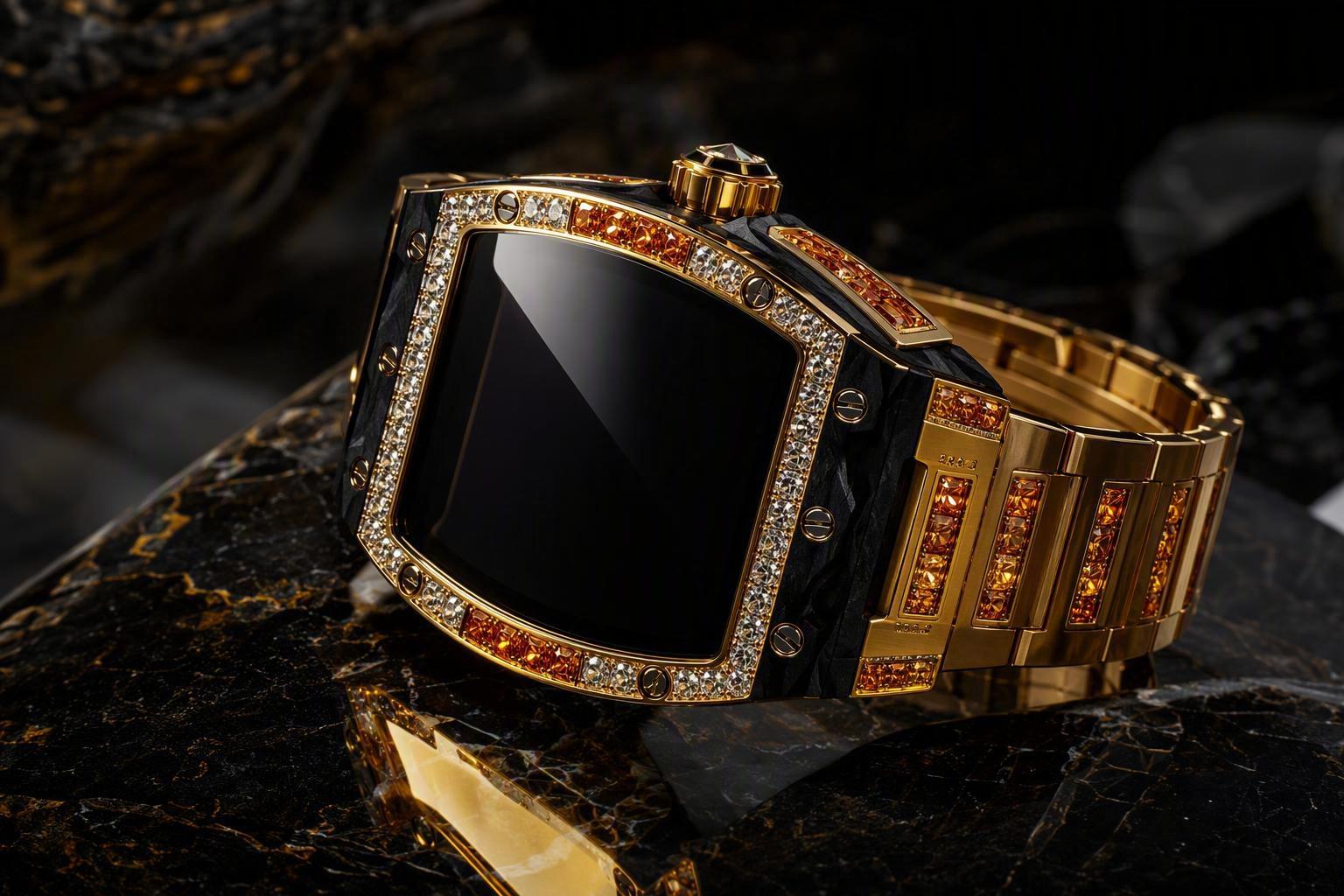
The answer lies in how the watch is conceived and manufactured. Unlike mass-market consumer devices engineered from stamped aluminum, mass-produced plastics, and planned obsolescence, this flagship reference treats the 44mm tonneau chassis as a high-jewelry commission. It incorporates substantial 18-karat solid gold casework, individually hand-selected natural diamonds, and Grade 9 Mohs sapphire crystal. Beneath this jewelry-grade exterior sits an advanced 60 fps AMOLED display, multi-day power management, and permanent human concierge integration.
Evaluating the true investment behind this timepiece requires peeling back the marketing veneer to analyze tangible costs: the baseline spot price of gold bullion, the hundreds of bench hours required for gem-setting, bespoke lead times spanning up to 26 weeks, and the post-purchase carrying expenses that accompany precious assets. Here is the transparent, component-by-component financial breakdown of what $20,260 actually buys.
The VERTU Grand Watch Catalog: Material and Price Architecture
To understand why the 18K Gold edition commands a steep premium, one must examine the baseline price ladder of the Grand Watch collection:
Model Variant | Primary Case Construction | Approximate Retail (USD) | Primary Cost Driver |
Black Ceramic | Microcrystalline black ceramic | $2,699 | High-temperature sintering & emery finishing |
Carbon Fiber Variants | Filament-colored composite | $3,199 – $3,810 | Structural multi-axial carbon fiber weave |
Bespoke Gold & Carbon | Hybrid carbon with bespoke gold accents | $3,599 | Composite machining & precious metal accents |
Grand Watch Grizzly | Specialized technical carbon | $4,899 | Limited batch runs & customized finishing |
18K Gold with Natural Diamonds | Solid 18K gold & natural brilliant-cut diamonds | $20,260 | Precious bullion weight, gem setting & atelier labor |
The jump from the high-performance carbon models (4,899) to the flagship 18K gold edition ($20,260) reflects an ideological pivot: moving from industrial performance engineering into the unyielding economics of haute joaillerie.
Deconstructing the $20,260: The Three Pillars of Value
1. The 18K Solid Gold Casing: An Intrinsic Material Floor
The watch features an imposing 44mm tonneau-shaped silhouette. Unlike consumer smartwatches that utilize thin electroplated gold (PVD/DLC) measuring mere microns, this piece is cast in solid 18-karat gold (750/1000 purity).
The Raw Metal Floor: In luxury watchmaking, casting a 44mm gold case requires a substantial ingot of pure gold to account for machining tolerances, CNC carving, and hand-polishing scrap. Industry cost analyses of comparable Swiss gold sports watch cases (such as Patek Philippe or Audemars Piguet) calculate that raw gold content and casting scrap alone represent between $9,000 and $11,000 in raw material capital before a single watchmaker touches the piece.
Structural Permanence: Protecting the dial is a sapphire crystal rated Grade 9 on the Mohs scale (second only to diamond in hardness). Combined with dust-tight IP6X and 5 ATM water resistance, the precious case is built for real-world environmental exposure rather than safe-deposit retirement.
Hybrid Details: Brilliant-cut orange accent stones and carbon-composite balance plates frame the gold exterior, ensuring the watch delivers physical presence without becoming uncomfortably heavy for daily wear.
2. Natural Diamonds: Labor Outweighs Carat Weight
The diamonds adorning the bezel and case transitions are genuine, natural brilliant-cut stones. In modern high jewelry, the procurement cost of small diamonds is consistently dwarfed by the labor cost of master stone-setting.
The Setter’s Bench: Hand-setting stones into a curved 18K gold tonneau bezel is extraordinarily demanding. Each seat must be individually burred, each prong raised with micro-chisels, and each table aligned under high-magnification optics to ensure smooth light refraction.
Industry Benchmarks: High-complication ateliers, such as Vacheron Constantin’s Les Cabinotiers, document upwards of 200 hours of bench time solely for gemological setting on complex cases. The $20,260 price directly reflects these non-mechanized artisan labor hours, which cannot be accelerated by automated assembly lines.
3. The Digital Hardware and Concierge Service Layer
Beneath the gold exterior sits a contemporary computing and biometric architecture:
The Biometric Stack: A high-precision PPG optical sensor provides continuous heart rate, SpO2 tracking, and metabolic wellness monitoring.
(Compliance Notice: Real-time blood glucose trend observations provided by the PPG sensor are calibrated strictly for personal lifestyle observation and do not constitute an FDA-approved clinical medical diagnosis).Sports & Productivity: Dedicated swing-tracking algorithms for Golf and Tennis, complemented by an on-device AI voice-to-text dictation engine.
The Concierge Economic Offset: Every Grand Watch grants access to VERTU’s 24/7 personal human concierge. For an executive or international traveler who relies on third-party lifestyle management for flight re-routing, VIP dining reservations, and private logistics, an equivalent dedicated private assistant service routinely bills at $5,000 to $10,000 annually. Embedded in the watch, this service offsets a meaningful portion of the initial purchase price over time.
The Production Timeline: Why Bespoke Takes 8 to 26 Weeks
For clients commissioning a customized or made-to-order 18K gold variant, patience is an unavoidable part of the luxury contract. Precious metal and diamond timepieces cannot be stockpiled in infinite quantities.
The Five Phases of Bespoke Production
Production Phase | Typical Timeline | What Occurs at the Atelier |
1. Specification & CAD Sign-Off | 1 – 3 Weeks | Bespoke dial configurations, bespoke stone colorways, customer review rounds. |
2. Gold Casting & Milling | 3 – 5 Weeks | 18K gold pouring, multi-axis micro-milling, hand-smoothing, and tolerance checks. |
3. Gem Selection & Setting | 3 – 6 Weeks | Hand-matching stones for uniform color/clarity; manual pavé/prong setting. |
4. Tech Integration & 5 ATM Testing | 1 – 2 Weeks | AMOLED installation, gasket sealing, 5 ATM pressure testing, 72-hour burn-in. |
5. Armored Transit & Customs Clearance | 1 – 2 Weeks | Specialized bonded transport and precious metal import/export declarations. |
Expected Lead Times:
Standard Atelier Production (Standard Specs): 8 to 16 weeks.
Full Bespoke Customization (Special stones, personalized case engraving): 12 to 26 weeks.
Buyer’s Advisory: Due to limited artisan bench capacity, the 18K Gold edition frequently displays as "Out of Stock" on the official VERTU portal. Securing a piece generally requires initiating a bespoke order through VERTU Concierge, where production windows are locked in based on workshop capacity.
The Hidden Balance Sheet: Landed Costs and Carrying Expenses
Acquiring a $20,260 timepiece involves ongoing operational expenses that buyers must anticipate:
Import Duties and Tariffs (5%–30%): Because this watch contains substantial solid gold and natural diamonds, international customs authorities classify it under fine jewelry-watch harmonized tariff codes (HTS). Depending on your country of residence (e.g., United States, European Union, UAE), import duties and local luxury taxes can add between $1,000 and $6,000 to your final landed cost.
Specialized Jewelry Insurance: Standard homeowner policies rarely cover high-value jewelry beyond modest limits (2,500). Securing a worldwide "all-risk" personal inland marine floater through private-client insurers (such as Chubb or Hodinkee/Chubb) typically costs 1% to 2% of the insured value annually (approximately 400/year).
Dual-Spectrum Maintenance: The watch requires two distinct maintenance schedules: routine firmware/software management for the digital platform, and periodic professional ultrasonic cleaning and prong inspections at a fine jewelry atelier to ensure the diamond settings remain secure.
Frequently Asked Questions (FAQ)
Why does the 18K Gold VERTU Grand Watch cost over $20,000?
The $20,260 retail price reflects its solid 18K gold casing, hand-set natural diamonds, Grade 9 Mohs sapphire crystal, and hundreds of hours of non-mechanized artisan benchwork. Additionally, the price includes ongoing access to VERTU’s 24/7 global human concierge service.
Can the electronic components be serviced when technology evolves?
VERTU’s official warranty and service centers provide battery replacements and hardware servicing. While software will receive periodic OTA firmware updates, the exterior gold and diamond housing retains permanent precious-metal intrinsic value independent of the internal computing platform.
How do I commission an 18K Gold edition if it is listed as out of stock?
Because solid gold and diamond editions are produced in strictly limited atelier runs, interested clients should contact VERTU’s Concierge service directly through the official store. The concierge manages the bespoke commission queue and provides custom timelines for production.
What is the expected landed cost including taxes and shipping?
Depending on destination customs classifications, import duties on fine jewelry watches range from 5% to 30%. Buyers should anticipate a total landed cost between $21,500 and $26,000 once import taxes and specialized bonded shipping are applied.
The Final Verdict: Evaluating the Investment
At $20,260, the VERTU Grand Watch in 18K Gold with Natural Diamonds occupies a singular category in modern horology.
It is neither a disposable consumer gadget nor a passive mechanical museum piece. Traditional high-horology manufactures offer solid gold diamond watches starting well above $50,000—yet they provide zero digital utility, health telemetry, or concierge capabilities. Mass-market smartwatch manufacturers provide computing power, but house it in materials designed to be discarded.
The $20,260 price tag holds together because it pays for tangible, non-depreciating assets: an intrinsic floor of pure gold, master gemological labor, an unhurried 8-to-26-week bespoke production journey, and an on-wrist human concierge network. For the collector who values material permanence as much as modern convenience, the cost reflects the reality of its craftsmanship.