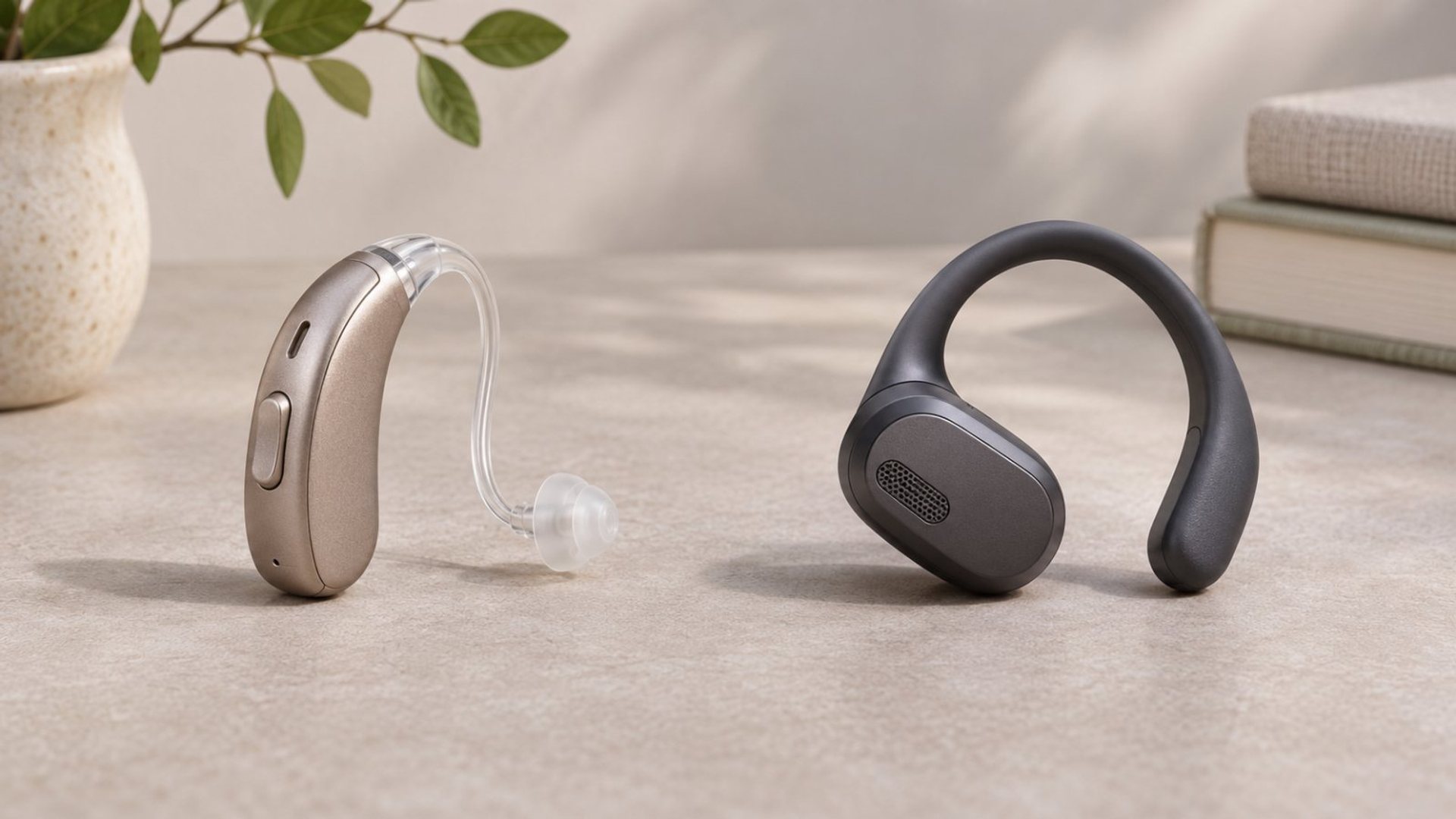
Hearing aids vs open-ear earbuds is a question of intended use: they serve different purposes. A hearing aid is intended to help a person with hearing loss; an open-ear earbud is a consumer audio device for music, calls and other playback while leaving the ear canal relatively open. Their shapes may overlap, and both may connect to a phone, but appearance does not determine medical purpose or US regulatory status. If hearing has changed, choose the hearing-care route before comparing entertainment features.
What is the main difference between hearing aids and open-ear earbuds?
A hearing aid compensates for impaired hearing. In the US, the Food and Drug Administration regulates hearing aids as medical devices. The FDA's over-the-counter hearing aid guidance describes an OTC category for adults aged 18 or older with perceived mild to moderate hearing loss. Those products are intended to make sounds more accessible to the wearer and provide ways to adjust the device to hearing needs.
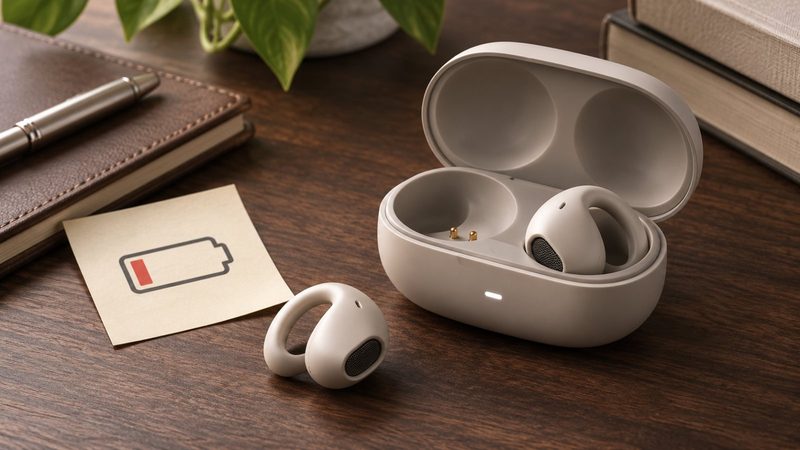
An open-ear earbud is made primarily to deliver audio from a connected source. Its design can leave ambient sound audible, which some listeners prefer while walking, working or taking calls. That does not mean it measures hearing loss, compensates for a particular hearing profile or has been cleared as a hearing aid. A product name that includes “AI”, “noise reduction” or “sound enhancement” is not evidence of hearing-aid status.
The FDA also distinguishes hearing aids from personal sound amplification products, or PSAPs. As the agency explains, PSAPs amplify sound for people with normal hearing in particular situations and are not alternatives to hearing aids. Ordinary music earbuds are another consumer category. The safe question is not whether a device can make sound louder, but what it is intended, labelled and regulated to do.
Fit and sound processing follow the purpose
Hearing aids are selected and adjusted around a user's hearing needs. A prescription hearing aid is supplied through a licensed hearing-care professional, who can assess hearing and program the device. OTC models let eligible adult consumers control settings themselves through the product's own tools. The right route depends on the individual's hearing situation, symptoms and the device's indicated use. The National Institute on Deafness and Other Communication Disorders describes hearing-aid styles and the role of fitting and follow-up.
Open-ear earbuds are fitted for comfort, stability and playback. The sound may change with placement, surrounding noise and volume, but that is not the same as fitting a device to a hearing assessment. Because the ear canal stays open, the listener may hear some environmental sounds along with the audio. This can be pleasant in quiet surroundings and less effective for listening to a soft podcast beside heavy traffic. Results vary by design and environment.
Do not assume an earbud's call noise reduction improves the wearer's hearing of a conversation in the room. On many consumer products, call processing is designed to help the person at the other end hear the speaker. A marketing phrase does not specify which direction is affected. Read the actual feature description and test the listening task that matters to you.
Understand the US buying paths
Adults aged 18 or older who believe they have mild to moderate hearing loss may consider an FDA-compliant OTC hearing aid. The category is not intended for severe or profound loss, and younger users require a prescription route. The FDA's guidance explains the indications, packaging information and situations in which professional care is important. A consumer should read that guidance and the product's own labelling rather than selecting a device solely from an online comparison chart.
A prescription hearing aid may be appropriate across a wider range of needs and is provided through a licensed professional. An audiologist can evaluate hearing, explain the result and help select and fit technology. If you struggle to follow speech even in quiet rooms, experience a sudden change, have ear pain, drainage or dizziness, seek professional advice rather than trying to turn up an earbud. The FDA notes that hearing difficulties can have causes that deserve medical evaluation.
For someone with normal hearing who wants music, calls or spoken navigation without sealing the ear canal, an open-ear earbud may suit the listening preference. That is a consumer-audio purchase, not a hearing treatment decision. If the buyer also uses a hearing aid, ask the hearing-care professional how an earbud might physically fit alongside it and whether it interferes with the planned use. The answer can differ between an in-ear aid, a behind-the-ear aid and an ear-hook earbud.
What “open ear” does and does not promise
The open-ear label refers broadly to a style that aims to avoid sealing the ear canal. It does not guarantee that every outside sound will remain audible or that a person can use the earbuds safely in every setting. Volume, wind, vehicle noise and attention all affect awareness. Follow local rules and keep your attention on the environment when crossing roads or operating equipment. If you need to hear a warning signal, pause playback rather than trusting the shape of the earbud alone.
Open designs also have trade-offs for private listening. A person in a quiet room may hear more detail at a lower volume than on a busy train. Raising volume to overcome noise is not a fitting solution. If the intended use is spoken calls in a café, try the exact device in a similar environment and ask both sides of the call about clarity. Choose a hearing aid through its hearing-care criteria and an earbud through its consumer-audio criteria.
Where VERTU CRUSH belongs in this comparison
VERTU's current CRUSH Series OWS AI Earbuds product page presents an open-ear design for consumer audio and calls. It describes a 15.4 mm driver, translation functionality and call noise reduction. Those are product-page claims about listening and communication features. The page does not identify CRUSH as an FDA-regulated hearing aid, and this article does not recommend it to treat hearing loss.
For a buyer choosing between CRUSH and another open-ear earbud, compare fit, playback, call quality, battery and compatibility with the phone actually used. For a buyer seeking help with hearing loss, compare labelled OTC or prescription hearing aids and consider a hearing evaluation. These are separate purchasing questions. It would be misleading to place a consumer earbud in a table of medical devices as if all entries served the same clinical purpose.
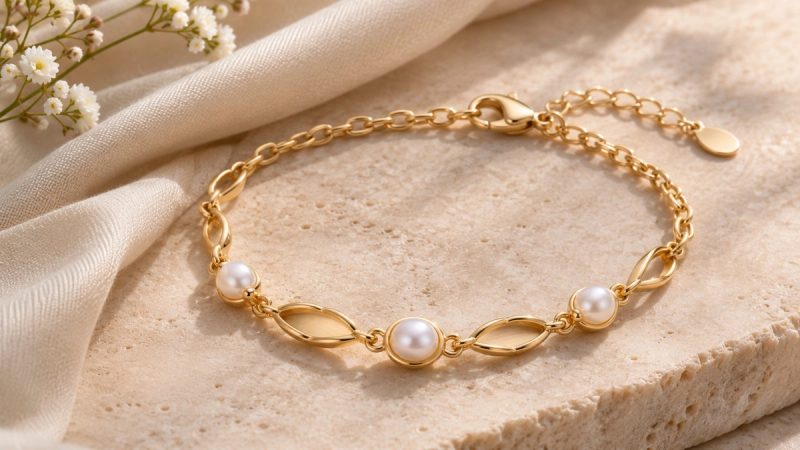
Availability can change; check the current product page for stock and market terms before planning a purchase. If open-ear listening is the goal, review VERTU's current earbud collection. If a health concern is the goal, begin with the FDA and a hearing-care professional. A product's jewellery-like presentation should not distract from that distinction.
A practical decision sequence
First describe the problem in one sentence. “I want to hear music while retaining some awareness of the room” points to consumer audio. “I often cannot understand speech” points to hearing assessment. Second, check age and symptoms against the FDA's OTC guidance. Third, read the candidate product's intended-use and regulatory labelling. Fourth, arrange a trial or fitting under the seller's actual terms, and evaluate the device in the situations that prompted the search.
Do not use price or visual discretion as the only comparison. A discreet earbud may be inexpensive or beautiful, but it does not become a hearing aid through styling. A hearing aid may also include Bluetooth playback, yet its hearing-related purpose remains distinct. A useful choice respects both the person and the task, and leaves room for professional advice where symptoms warrant it.
Frequently asked questions
Can open-ear earbuds replace hearing aids?
No. Consumer open-ear earbuds are not a substitute for a hearing aid when the aim is to address hearing loss. Check FDA-regulated options and seek a hearing evaluation when needed.
Are all Bluetooth earbuds hearing aids?
No. Bluetooth describes a connection method, not intended medical use. Read the device's labelling and, for a hearing aid, its FDA category and indications.
Who can buy an OTC hearing aid in the US?
Adults aged 18 and older with perceived mild to moderate hearing loss can buy an OTC hearing aid without a prescription. The FDA advises a different route for younger users and more severe concerns.
Will open-ear earbuds let me hear every warning around me?
No. Their shape may leave the ear canal open, but playback volume and surrounding noise still affect awareness. Pause audio when attention to the environment is important.
Conclusion
Compare purpose before appearance. Hearing aids are hearing-care devices with defined US regulatory paths; open-ear earbuds are for consumer listening and calls. Choose the route that addresses the real need, use product labelling rather than marketing shorthand, and seek professional assessment when hearing symptoms make the decision uncertain.