Key takeaways
Distal vs. Core Temperature: Smart rings measure finger skin temperature, not core body temperature. The two move in opposite directions overnight, and relative multi-night trends matter far more than single-night absolute numbers.
The 3 Predictive Markers: Three thermal inflection points carry circadian data: the onset rise, the early peak, and the pre-dawn nadir. A leftward shift in your nadir indicates an advanced circadian phase.
Light Drives Phase Shifts: Morning light advances your biological clock; evening light delays it. Ambient temperature supports heat dumping but does not lead phase resetting.
The Sustainable Protocol: Fix your wake time, get 30 minutes of bright morning light, dim evening environments, and advance bedtime by only 15 to 30 minutes daily.
Trend Over Noise: Consumer rings track temperature patterns, not labeled diagnostic phases. Always assess 3- to 5-night directional trends rather than single-night spikes.
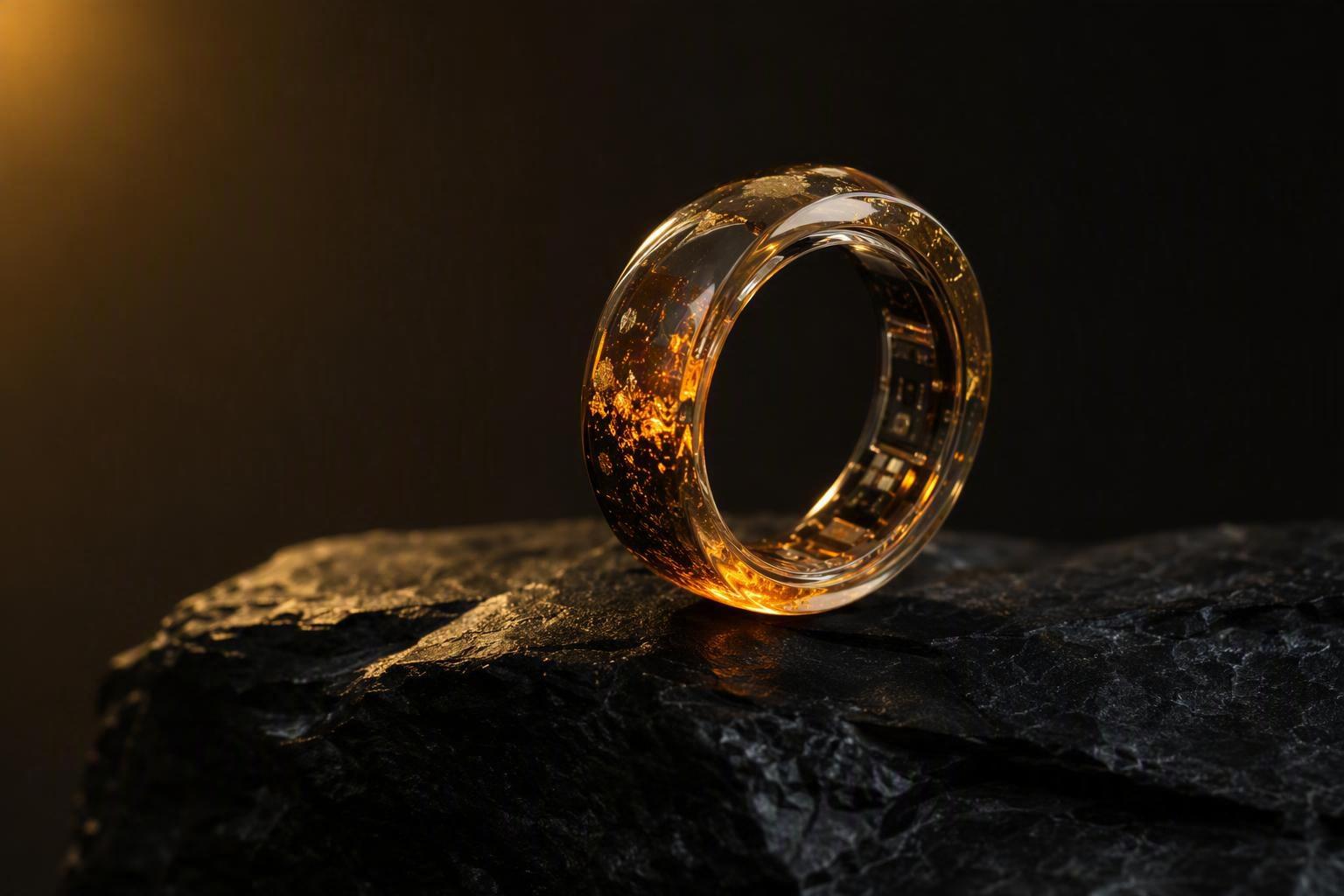
The VERTU AI Aura Ring records your finger skin temperature continuously through the night. Buried within that continuous stream is the precise operational timing of your internal master clock. Once you understand how to decode this curve, you can adjust your sleep-wake schedule deliberately and measure the biological outcome.
All it takes is two weeks of baseline tracking, a single targeted 7-day protocol, and an understanding of the physiological curve that confirms whether your internal clock has shifted.
How Does Smart Ring Skin Temperature Reveal Your Circadian Clock?
The most common mistake when looking at wearable health data is treating a smart ring like a clinical thermometer. Your ring tracks distal skin temperature at the finger, not core body temperature. Finger skin typically sits 2 to 4 °C below your core and is highly responsive to ambient room temperature, bedding, peripheral blood flow, and evening alcohol intake. Under varying thermal states, healthy finger skin temperatures range widely between 20 °C and 37 °C.
This sensitivity is not an engineering flaw; it is the entire physiological premise.
Overnight, your core body temperature falls while distal skin temperature across the extremities (hands and feet) rises. This occurs because the autonomic nervous system initiates peripheral vasodilation, dumping heat through the extremities to cool your vital organs. Research published in Frontiers in Neuroscience highlights that this distal heat dissipation directly triggers sleepiness, with sleep onset typically coinciding with the steepest rate of core temperature decline.
Core Body Temperature vs. Distal Skin Temperature
Metric / Phase | Core Body Temperature | Distal (Finger) Skin Temperature | Physiological State |
Pre-Sleep (~90 min prior) | Begins declining | Sharp upward inflection (Onset Rise) | Peripheral vasodilation; heat dumping begins |
Early Sleep Phase | Rapid decline | Reaches nocturnal maximum (Early Peak) | Transition into slow-wave deep sleep |
Pre-Dawn Window | Reaches 24-hour minimum | Reaches nocturnal baseline (Pre-Dawn Nadir) | Circadian anchor; natural morning alertness approaches |
The Three Markers of the Nocturnal Temperature Curve
When reviewing your ring's temperature charts, focus on three distinct markers:
The Onset Rise: Distal skin temperature climbs sharply as sleep approaches. Clinical research on the distal-proximal temperature gradient shows this rise begins approximately 90 minutes before lights out, directly predicting sleep latency. A steep rise occurring at the same clock time each night indicates your physiological sleep gate.
The Early Peak: The highest temperature reached during the first third of the sleep cycle. The timing of this peak reflects initial sleep depth and vascular heat shedding.
The Pre-Dawn Nadir: The lowest nocturnal temperature point, typically occurring in the second half of the night or shortly before dawn. This is your primary circadian marker. An earlier nadir signifies an advanced (earlier) circadian phase; a later nadir signals a delayed (night-owl) phase.
This endogenous rhythm operates independently of sleep itself. In a study published in the Journal of Biological Rhythms, Cuesta and colleagues confirmed that distal skin temperature rhythms contain an endogenous circadian component that persists even when posture, sleep, and meals are controlled. Further research in Chronobiology International validated that distal skin temperature reliably estimates circadian phase shifts under real-world conditions within three to five days of continuous data.
Before You Start: Establishing a Reliable 14-Day Baseline
Before attempting to shift your schedule, you need a stable reference point. Wearable baseline protocols vary across platforms—some systems calculate a trend across approximately 5 nights, while others develop baselines over several weeks. A 14-night baseline is the practical scientific floor; 21 nights yields an even more robust anchor.
Baseline Data Hygiene Rules
Wear Consistency (>80%): If you wear the ring four nights out of seven, your data reflects noise rather than a baseline.
Mechanical Stability and Fit: The sensor must maintain consistent contact without cutting off circulation. A ring that fits too loosely loses skin contact as peripheral blood pressure drops overnight; a ring that fits too tightly causes sleep disruptions. The VERTU AI Aura Ring (available in sizes 7 through 13, weighing from 5.7 g) is constructed from lightweight crystal composite designed to maintain stable thermal contact across nightly swelling and contraction.
Battery Longevity Matters: Wearables requiring daily charging often get left on the nightstand, breaking data continuity. The Aura Ring’s up to 10-day battery life ensures your 14-day baseline collection remains unbroken.
Anchor Your Wake Time: Keep your wake-up alarm identical across the entire baseline phase, including weekends.
Pro Tip: Your baseline is not a single average temperature value; it is a temporal curve. Note the exact clock time when your evening skin temperature begins its steep upward climb. That time is your biological baseline marker.
The 7-Day Protocol: Shifting Your Circadian Phase with Light and Ring Data
Light is your primary zeitgeber (circadian cue). While ambient temperature manipulation supports heat dissipation, it cannot override incorrect light exposure.
Protocol Summary
Step 1: Wake Anchor — Hold an identical wake time all 7 days (weekends included).
Step 2: Morning Lux — 30 minutes of bright light (outdoor daylight or 10,000 lux) upon waking.
Step 3: Evening Dim — Block blue light and dim overhead fixtures 2 hours before bed.
Step 4: Micro-Shift — Advance bedtime earlier by 15 to 30 minutes per day.
Step 5: Room Thermal — Cool the bedroom environment to 16–19 °C (60–67 °F).
1. Fix a Non-Negotiable Wake Time
Hold a single wake time for all seven days. Bedtime will move progressively earlier, but the morning anchor must remain locked to set the circadian phase response curve.
2. Get 30 Minutes of High-Lux Morning Light
A phase-advance protocol published in 2014 established that a single 30-minute bright light exposure shortly after waking produces roughly 75% of the phase-shift achieved by a two-hour continuous exposure. Aim for natural outdoor daylight immediately upon waking, or sit in front of a 10,000-lux therapy light box within 30 to 60 minutes of your alarm.
3. Eliminate Blue and Overhead Light 2 Hours Before Bed
Light exposure late in the biological day delays your clock. Lower overhead lighting, switch to low-placed, warm-amber lamps, and eliminate screen exposure two hours prior to your target sleep window. Morning light advances your clock; evening darkness protects that advance.
4. Step Bedtime Forward by 15 to 30 Minutes Per Day
Avoid dramatic two-hour shifts. Independent behavioral shifts are most sustainable at 15 to 30 minutes earlier per day. Move bedtime gradually; leave your wake time anchored.
5. Cool the Bedroom Environment to 16–19 °C (60–67 °F)
Thermal physiology studies show that ambient temperatures between 19 and 21 °C create skin microclimates of 31 to 35 °C. Lowering your room temperature to 16–19 °C accelerates the peripheral vasodilation needed to shed core heat, facilitating the distal temperature rise recorded by your ring.
Pro Tip: Do not introduce sleep supplements, late-night high-intensity workouts, or dietary overhauls during this 7-day protocol. Introducing multiple metabolic variables obscures whether your light protocol actually moved the curve.
How to Read Your Progress on the Temperature Curve
By day four or five of the protocol, you should observe the entire nocturnal curve sliding to the left:
Earlier Onset Rise: Finger skin temperature begins its pre-sleep climb 30 to 60 minutes earlier on the clock than it did during baseline.
Advanced Nadir: The pre-dawn thermal low arrives earlier in the second half of the night.
Corroborating Metrics: Your resting heart rate (RHR) should reach its nocturnal low point earlier in the sleep cycle, accompanied by stable Heart Rate Variability (HRV), confirming your autonomic nervous system is adapting without excessive strain.
Assess multi-night moving averages. Three consecutive nights of an advanced nadir represents true circadian phase entrainment; an isolated night is merely physiological noise.
Managing Jet Lag: Running the Protocol in Reverse
Travel across time zones requires targeted manipulation of this same biological mechanism:
Flying East (Phase Advance): You must shift your internal clock earlier. Seek immediate bright morning light at your destination, and aggressively shield your eyes from bright light during local late afternoons and evenings. Expect roughly one day of adaptation per time zone crossed.
Flying West (Phase Delay): You must shift your internal clock later. Seek bright sunlight in the local late afternoon and early evening, while avoiding early morning light. Adaptation is generally faster—roughly two-thirds of a day per time zone.
Pre-Flight Adaptation: Travel health guidelines recommend adjusting your sleep timing in 1-hour increments over the two to four days prior to departure in the direction of your destination.
Your ring confirms full re-entrainment when your pre-dawn nadir and evening onset rise settle into stable, repeatable local clock times for three consecutive nights.
Cross-Checking Your Chronotype: MCTQ and MEQ Validation
To validate your ring's physical curve against established behavioral metrics, use two clinically recognized questionnaires:
Morningness-Eveningness Questionnaire (MEQ): Developed by Horne and Östberg (1976), this measures subjective behavioral preferences.
Munich ChronoType Questionnaire (MCTQ): Developed by Roenneberg et al. (2003), the MCTQ calculates MSFsc (mid-sleep on free days corrected for sleep debt). A later clock-time MSFsc correlates with a delayed biological chronotype.
A validation study published in Frontiers in Physiology confirmed that MCTQ midsleep times correlate strongly with objective actigraphy measurements. If your calculated free-day sleep midpoint disagrees with your smart ring’s thermal nadir, evaluate potential confounding factors: alarm reliance on weekends, late-evening meals, or temporary fatigue.
While the VERTU smart rings collection provides continuous physical metrics, the hardware does not append a speculative chronotype label to your dashboard. You are assessing objective physiological data curves directly.
What Overnight Skin Temperature Cannot Tell You
It Is a Trend Tracker, Not a Medical Thermometer: Overnight skin temperature can often signal that your body is working harder 24 to 48 hours before you feel run down. However, finger temperature cannot provide an absolute clinical temperature measurement. When you require a definitive health check, use a dedicated medical thermometer.
Normal Variances vs. Sustained Deviations: Typical healthy overnight skin variation sits between 0.1 °C and 0.5 °C. Established wearable monitoring criteria designate changes within plus or minus 1.0 °C as normal physiological variation. A sustained baseline elevation above 1.0 °C over three consecutive nights—especially when combined with elevated resting heart rate—warrants rest and recovery prioritization.
Consumer Wearables Are For Wellness, Not Clinical Diagnosis: Smart rings track systemic lifestyle trends; they do not diagnose clinical sleep disorders or chronic respiratory conditions. While the VERTU companion platform monitors comprehensive wellness indicators, all tracked readings reflect everyday lifestyle patterns rather than medical-grade diagnostics.
The No-Subscription Data Continuity Advantage: Most high-end smart wearables lock advanced multi-month trend analysis behind recurring monthly paywalls. When users cancel subscriptions, they lose the longitudinal baseline data needed to track seasonal circadian drift. The VERTU AI Aura Ring operates with no subscription fees, ensuring continuous year-round baselines remain accessible.
Account for Confounders: Overnight finger temperature naturally rises by roughly 0.30 °C during the female luteal phase following ovulation. Other common variables that artificially shift distal temperature include evening alcohol consumption (causes acute peripheral vasodilation), ambient bedding changes, and late hot showers.
Frequently Asked Questions (FAQ)
Does a smart ring measure core body temperature?
No. Smart rings measure distal skin temperature at the finger. While core body temperature decreases overnight to conserve energy, distal temperature rises as blood vessels dilate to release heat from the core. Monitoring this heat-dumping trend is what allows you to track sleep onset and circadian phases.
Why does my finger temperature rise right before I fall asleep?
Your body initiates sleep by cooling its core. To do this, your autonomic nervous system widens peripheral blood vessels in your hands and feet (vasodilation), transferring heat outward. This process warms your fingers while cooling your core, creating the pre-sleep onset rise visible in smart ring data.
Can my smart ring detect abnormal temperature spikes?
A smart ring cannot provide a clinical diagnosis because external factors like bedroom temperature and hand position influence skin temperature. However, smart rings excel at detecting relative baseline deviations: an overnight elevation of 1.0 °C or more above your established 14-day baseline often indicates that your body is under physical stress or fighting fatigue.
How quickly can I safely reset my circadian rhythm?
A realistic, sustainable behavioral shift is 15 to 30 minutes per day. While supervised clinical interventions can achieve faster adjustments, attempting shifts larger than 30 minutes daily without guidance typically results in fragmented sleep and rebound schedule misalignment.
Next Steps: Putting Your Data to Work
Weeks 1–2 (Baseline): Wear the VERTU AI Aura Ring nightly without altering your routine. Establish consistent sensor contact, verify your ring size (sizes 7–13), and maintain a consistent wake-up alarm to form a stable thermal curve.
Week 3 (Protocol Execution): Lock your wake time, secure 30 minutes of high-lux morning light immediately upon waking, dim evening lights two hours before bed, and bring your sleep window forward by 15 minutes each day.
Week 4 (Evaluation): Compare your week-three pre-dawn nadir and onset rise against your baseline fortnight. Look for a clean leftward shift across your multi-night charts.
Conclusion: Taking Control of Your Internal Clock
Your circadian rhythm is written every night in the thermal curve of your finger. By understanding how distal skin temperature reflects your body's core cooling process, shifting your internal clock stops being guesswork and becomes a deliberate, measurable habit driven by morning light and evening discipline.
With up to 10 days of battery life, zero subscription paywalls, and dedicated concierge support, the VERTU AI Aura Ring delivers the continuous data fidelity needed to confirm that shift. Lock your wake time tomorrow, step into the morning daylight, and let the curve show your progress.