A luxury tech travel kit works best as a compact system: a phone for communication and daily coordination, personal audio for listening on the move, portable power for time away from a socket, and protection designed for phone you carry. The right combination depends on the journey—not on how many devices can fit in a bag.
The four essentials are simple:
- A primary phone for documents, communication, navigation and payments.
- Personal audio suited to the environments you expect to encounter.
- Portable power that matches your devices and charging routine.
- A case or carrying solution designed for the exact phone model.
A short business trip with meetings calls for a different setup from a long-haul holiday or a multi-stop itinerary. Start with the journey, then choose equipment that works together, stays accessible and earns its place in your carry-on.
How to build a luxury tech travel kit around your itinerary
Before choosing devices, think through the trip in three stages: transit, time at your destination and the return journey. Consider when you will need to check tickets, handle messages, make calls, navigate unfamiliar streets or work between appointments.
For a short business trip, a phone, compact audio option, portable power and fitted phone case may cover the basics. A laptop, tablet or second pair of headphones should be added only if it serves a clear purpose. For a longer trip, the same four essentials may still work, but you may need to plan more carefully for charging access, cable length and storage.
A useful test is to ask of every item: what part of this journey does it support? If two devices do the same job, choose the one that better suits your routine. If an accessory requires a cable or adapter you would not otherwise carry, account for that before you pack.
1. Choose a phone for the journey
Your phone is likely to be the device you reach for most often. It may hold your travel documents, messages, maps, payment tools and work communications, so it should be easy to retrieve and ready for the tasks you expect to handle.
Before leaving, download anything you may need when connectivity is limited, such as directions, boarding passes or travel documents. Check that important accounts are accessible and that your charging method is compatible with the phone. These preparations can matter more than bringing a second device.
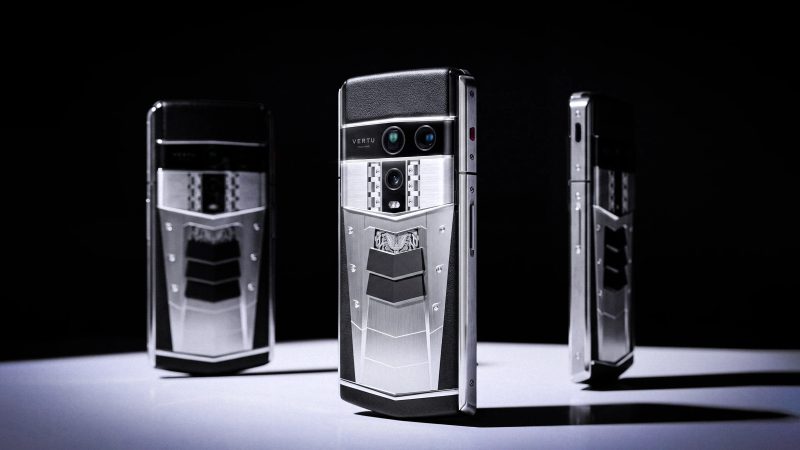
For a VERTU example, the VERTU Agent Q is listed with a 5,565 mAh battery and 65W fast charging. The travel question is not simply how much battery capacity a phone has, but whether its charging routine fits the length and pace of the trip.
Battery capacity does not remove the need for planning. A busy day of navigation, photography, messaging and calls may place different demands on a phone from a quiet day spent at a hotel or meeting venue. Review your likely usage before deciding whether you need portable power as well.
2. Select audio for different travel environments
Audio needs change across a journey. An open-ear design may suit someone who prefers not to seal the ear during everyday listening, while a more isolating format may be preferable in a noisy cabin. No single style is ideal for every environment, so consider where you expect to listen rather than choosing by appearance alone.
Fit, controls and connection also matter. Pair your audio device with your phone before departure, test the controls and check how it is stored when not in use. If you plan to use translation or transcription features, confirm that the relevant functions are ready before relying on them during a meeting or in transit.
The VERTU Phantom Series OWS AI Earbuds use an open-ear listening format and are listed at 8.8 g per earbud. The official product page also describes Bluetooth connectivity and AI translation and transcription features.
Because open-ear audio does not provide the same isolation as sealed earbuds or active noise-cancelling headphones, travellers should choose according to the environment. Open-ear listening may suit walking, casual conversation or everyday use, but a loud cabin may call for a different audio format.
3. Match portable power to your devices
A portable power accessory should match the devices you intend to charge. Compare its output and charging methods with your phone and audio equipment; capacity alone does not tell you whether the connection or charging speed will suit your needs.
Think about the complete charging chain:
- The portable power accessory.
- Its charging cable.
- Your phone’s charging port.
- The audio device or charging case.
- Any plug adapter needed at the destination.
Pack only the cables and adapters your devices actually use. Avoid assuming that magnetic wireless charging will work with a phone that is not listed as compatible.
The VERTU V Reserve Energy Card is listed at 5,000 mAh and 19.6 Wh, with a slim 9.8 mm profile and an approximate weight of 130 g. Its official page states that USB-C wired charging supports VERTU phones and a broad range of Android devices. Low-current mode is intended for earbuds, watches and other low-power accessories.
Magnetic wireless charging is specified for iPhone 12–17 and compatible magnetic devices. Actual charging performance varies according to the device, alignment, temperature and charging conditions, so travellers should confirm compatibility before departure.
4. Add protection that fits the exact phone
A phone case should be designed for the exact model or series you carry. A close fit and a carry style you can use comfortably are more helpful than a case that looks right but makes the phone difficult to retrieve or does not match the device.
Think about where the phone will be stored: in a jacket pocket, a handbag or a dedicated compartment. Keeping it separate from keys, loose chargers and other hard objects is a simple way to make the kit easier to manage during a busy travel day.
The Agent Q Slip Calf Leather Phone Case is tailored for the VERTU Agent Q series. Its slim, slip-in design is intended to fit easily into pockets or bags.
Check the exact model or series named on the product page before purchase. A case designed for one phone series should not be assumed to fit a different generation or configuration.
A VERTU luxury tech travel kit in practice
A practical VERTU setup can be built around four distinct roles rather than treated as a pre-packed bundle:
- Primary phone: VERTU Agent Q for communication, navigation, documents and daily coordination.
- Personal audio: Phantom Series OWS AI Earbuds for open-ear listening and supported translation or transcription functions.
- Portable power: VERTU V Reserve Energy Card for wired or compatible magnetic charging.
- Protection: Agent Q Slip Calf Leather Phone Case for a model-specific carrying solution.
Together, these products illustrate how to build a travel setup by function: one primary phone, one audio format, one portable power option and one case made for that phone.
The point is not to carry every available accessory, but to make each item work within the same journey. The value of a considered travel kit lies in the relationship between its parts: each object has a role, and each role supports the rhythm of the trip.
How to organise charging and carrying
A kit can contain good devices and still feel cumbersome if its charging plan is unclear. Before you travel, check which cable charges each item, whether the power accessory supports the intended connection and whether you will need a destination-specific plug adapter.
Try the setup at home once before departure. Charge the phone and audio equipment, connect the portable power accessory and confirm that the cables fit without needing an improvised adapter. This is also a good moment to remove duplicate cables and anything you added “just in case” but cannot connect to a specific device.
Keep frequently used items easy to reach. During transit, the phone and audio equipment may need to be accessible; the cable and portable power accessory should be stored where they can be retrieved without unpacking the entire bag.
At your hotel or destination, group the charging pieces together. This makes it easier to reset the kit for the next day and reduces the chance of leaving a cable or charger behind.
What to know about power banks on flights
Portable-power rules can change and may differ by airline or route. VERTU lists the V Reserve Energy Card at 19.6 Wh and describes it as designed for carry-on travel, while noting that airline and regional requirements vary.
The IATA 2026 passenger guidance states that passengers are limited to a maximum of two lithium-ion power banks not exceeding 100 Wh. It also advises that power banks should not be recharged from an aircraft power supply or stored in overhead lockers.
Keep portable power in your cabin baggage and pack it so that it can be accessed easily. If your cabin bag is taken at the gate for the hold, remove power banks, spare batteries and other lithium-battery devices before the bag is loaded.
IATA guidance is not a substitute for the latest policy of your operating airline. Airlines and local authorities may impose stricter conditions, so confirm the requirements before departure.
Final pre-departure checklist
Before leaving, confirm that:
- Your phone, audio equipment and portable power accessory are charged.
- Each cable matches the device you intend to charge.
- You have the correct plug adapter for your destination.
- Travel documents and essential information are available offline.
- The case fits the exact phone model.
- Portable power is packed in your cabin baggage.
- Your operating airline’s latest battery rules have been checked.
This quick check turns a group of individual devices into a more dependable travel system. It also helps keep the kit compact: everything has a role, and everything has a place.
Frequently Asked Questions
What should be in a luxury tech travel kit?
A luxury tech travel kit should usually include a primary phone, personal audio, portable power and protection designed for that phone. Add a laptop, tablet or extra accessories only when they support a specific need on the itinerary.
Can I bring a power bank on a flight?
Power banks should generally be carried in cabin baggage rather than checked baggage, but airline rules can vary. The IATA 2026 guidance limits passengers to a maximum of two lithium-ion power banks not exceeding 100 Wh, while airlines may impose stricter conditions.
How do I choose a travel phone case?
Choose a case made for the exact phone model or series you carry, then consider how you prefer to store and retrieve the phone. A model-specific design is a better starting point than assuming a universal case will fit.
Is open-ear audio suitable for air travel?
Open-ear audio may be comfortable for everyday listening, but it does not provide the same isolation as sealed earbuds or active noise-cancelling headphones. Consider the cabin environment and your need to hear announcements before choosing an audio format.
How should I prepare my devices before departure?
Charge every device, test the cables, pair the audio equipment with your phone, download essential documents for offline use and confirm that the portable power accessory is compatible. For flights, review the latest requirements from your operating airline.
Conclusion
A well-built luxury tech travel kit is shaped by the journey, not by the number of accessories it contains. Choose a phone, audio, portable power and protection that serve distinct roles; confirm compatibility; and organise the charging routine before departure.
For a coordinated travel setup, explore the VERTU Agent Q and its complementary travel accessories. The result is a more considered system that is practical to carry, easy to manage and ready for the trip ahead.