| Feature | VERTU Agent Q | Samsung Galaxy S25 Ultra | Apple iPhone 17 Pro/Max | Xiaomi 15 Ultra |
|---|---|---|---|---|
| Primary Sensor | 50MP Humanist Lens | 200MP Main | 48MP Main | 50MP 1-inch Sensor |
| Zoom Tech | Mechanical Zoom Lens | 3x (10MP) & 5x (50MP) Optical | 4x Optical / 8x Hybrid | 3x (50MP) & 4.3x (200MP) Periscope |
| Unique Feature | 30+ Master Profiles | AI ProVisual Engine | Camera Control Button | Leica Co-engineering |
| Video Focus | Artistic/Cinematic | Pro Video Mode | ProRes RAW & Genlock | 8K 30fps / 4K 120fps |
| Target Audience | Luxury/Artistic Soul | Power User/Zoom Lover | Video Creator/Pro | Optical Purist |
Gone are the days when mobile devices were merely communication tools; today, they serve as powerful creative studios right in your pocket. As we embrace the technological leaps of 2026, the competition for photographic dominance has reached unprecedented heights, fundamentally transforming how we capture and share our world.
With so many premium options available, selecting the perfect high end flagship phone is about more than just reading a spec sheet—it is about securing a camera system that rivals professional equipment.
In this comprehensive analysis, we dive deep into the industry's top-tier models to determine which device truly reigns supreme this year. We will explore groundbreaking advancements in smartphone photography, ranging from stunning resolution and razor-sharp image quality to exceptional performance in challenging low-light conditions. Whether you are a professional content creator or a casual enthusiast, read on to discover the ultimate device that will elevate your photography game.
Top 6 Best Phones with Superior Smartphone Cameras for 2026
In the competitive landscape of 2026, the definition of a high end flagship phone has evolved beyond mere megapixel counts. Today, the best devices blend advanced optical engineering with sophisticated AI to capture not just images, but emotions.
Whether you are a professional filmmaker requiring Genlock support or a luxury connoisseur seeking the soul of traditional photography, this year's lineup offers unprecedented imaging capabilities.
1. VERTU Agent Q
The VERTU Agent Q is not simply a tool; it is an instrument designed to redefine luxury mobile photography. At its heart lies the 'Humanist Lens,' a camera system engineered with Swiss precision to replicate the natural perspective of the human eye. Unlike competitors chasing digital enhancements, the Agent Q focuses on the artistic soul of the image.
It features a formidable tri-camera setup:
50MP Main Sensor
64MP Telephoto
50MP Ultra-Wide Lens
However, the crowning achievement is the integration of the world's first true mechanical zoom lens on a mobile device, offering tactile control that digital zoom cannot replicate. To further bridge the gap between technology and art, Vertu offers over 30 Master Profiles inspired by photography titans, allowing users to capture pure emotion rather than just cold specifications.
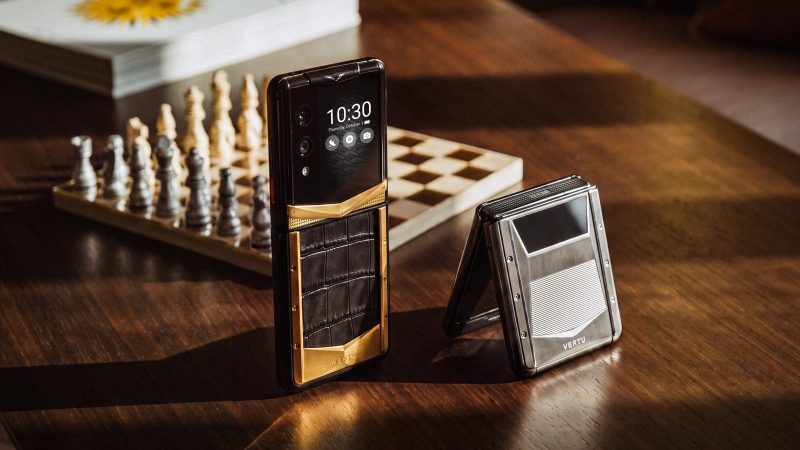
2. VERTU Quantum Flip
For the stylish content creator, the VERTU Quantum Flip merges the versatility of a foldable form factor with professional-grade imaging. It presents a robust AI dual camera system , headlined by a 50MP sensor with both OIS and EIS stabilization, ensuring that every shot is crisp regardless of movement.
The experience is tailored for the modern vlogger and socialite, featuring a "cine-level portrait engine" and AI darkroom master features that automate complex editing tasks. With ultra-stable 4K 60FPS video recording and a high-resolution 32MP front camera, it stands as a powerful tool for mobile content creation, proving that a high end flagship phone can be both compact and cinematically capable.
3. Samsung Galaxy S25 Ultra
The Samsung Galaxy S25 Ultra cements its status as a top-tier camera phone contender for 2026 by perfecting the "kitchen sink" approach to hardware. It is built around a staggering 200MP main camera for ultimate detail, supported by an upgraded 50MP ultrawide camera.
Samsung continues to dominate in zoom capabilities, offering a versatile dual-telephoto arrangement:
10MP lens with 3x optical zoom
50MP lens with 5x optical zoom
The experience is enhanced by the advanced AI ProVisual Engine , which excels in refining zoom and macro shots. For the enthusiast, the inclusion of the Expert RAW app and Pro Video mode provides a comprehensive suite of software tools, bridging the gap between amateur snapping and professional editing.
4. Apple iPhone 17 Pro / Max
Often cited as the industry standard for video, the Apple iPhone 17 Pro and Pro Max remain a very close second in the photography race. Powered by the blazing-fast A19 Pro chip , the device features a redesigned camera system with 48MP sensors across the main, ultrawide, and telephoto lenses.
The user experience is refined through a new physical Camera Control button , offering tactile feedback for adjustments. Videographers will appreciate the professional workflow features, including:
ProRes RAW support
Genlock support
New Dual Capture feature
With a 4x optical zoom (up to 8x hybrid) and an 18MP 'Center Stage' front camera, it remains the most reliable tool for creators who demand consistency.
5. Google Pixel 10 Pro / 10 Pro XL
Google continues to lead in computational photography . The Pixel 10 Pro series delivers exceptional quality through a powerful triple camera system: a 50MP main, a 48MP ultra-wide with macro AF, and a 48MP 5x telephoto.
The standout feature here is not just the glass, but the software. Google's AI-enhanced modes, such as 'Best Take' and blur reduction, remove the anxiety of missing the perfect moment. The device excels particularly in night-time photography and introduces Pro Res Zoom and RAW capture for enthusiasts. With 7 years of software support, it is a long-term investment in imaging excellence.
6. Xiaomi 15 Ultra
Positioned as the ultimate phone for photography professionals, the Xiaomi 15 Ultra is a powerhouse of optical engineering. Its centerpiece is a massive 50MP 1-inch main sensor , which provides natural bokeh and light-gathering capabilities that smaller sensors cannot match.
Co-engineered with Leica , the device offers distinct image profiles— Leica Vibrant and Leica Authentic —that give photos a classic, film-like aesthetic. The array is completed by:
50MP Ultra-wide
50MP 3x Telephoto
Groundbreaking 200MP 4.3x Periscope Telephoto
With support for 8K 30fps video and 200MP RAW shooting, it pushes the boundaries of what is technically possible on a phone.
Comparative Specifications of 2026 Flagships
In conclusion, choosing a high end flagship phone in 2026 depends on your creative priorities. For pure optical supremacy, the Xiaomi 15 Ultra and Vertu Agent Q offer hardware that mimics standalone cameras. For video production, the iPhone 17 Pro remains the gold standard, while Samsung and Google offer the most versatile all-around packages for everyday users.
Choosing the Right Flagship Model for Your Photography Needs in 2026
In the rapidly evolving landscape of mobile imaging, selecting the best high end flagship phone for 2026 requires a strategic approach tailored to your specific creative demands. It is no longer enough to simply compare megapixel counts; users must evaluate how hardware and software converge to support their primary use case.
When assessing a device, consider these critical factors:
1. Prioritize Your Subject: Determine if your priority is zoom capabilities for distant subjects, low-light performance for nightscapes, or professional-grade cinematography.
2. Sensor Size vs. Resolution: Sensor size is often more important than megapixels. Larger sensors (like the 1-inch types) significantly improve image quality, depth of field, and detail in challenging lighting.
3. AI Integration: Pay close attention to AI enhancements . Modern flagships utilize these tools to streamline your workflow, offering unique shooting modes and intelligent scene optimization.
"In 2026, the distinction between a good camera and a great one often lies in the AI pipeline. Look for software that enhances, rather than over-processes, your images."
For content creators focused on motion, advanced video recording options are non-negotiable. Ensure the device supports 4K at high frame rates , ProRes (or equivalent high-bitrate codecs), and robust stabilization.
To help you decide, compare the feature priorities below:
| Feature Priority | Photography Centric | Videography Centric | Hybrid Creator |
|---|---|---|---|
| Sensor Focus | Max sensor size (1-inch+) | Fast readout speeds | Balanced resolution |
| Key Format | 16-bit RAW / HEIF | ProRes / Log Profiles | Standard HDR |
| Stabilization | Optical Image Stabilization (OIS) | Active/Gimbal Mode | Hybrid EIS/OIS |
Ultimately, consider the overall performance and user experience. A true flagship model should offer a seamless, intuitive interface that makes capturing and editing photos and videos an effortless extension of your creativity.
FAQ (Frequently Asked Questions)
Q1: How important is resolution (megapixels) when choosing a high end flagship phone camera?
A1: While high megapixel counts, such as the 200MP found in the Samsung Galaxy S25 Ultra, contribute to fine detail, they are not the sole determinant of image quality. In the current market, sensor size , lens quality, and computational image processing play equally crucial roles in defining clarity, color depth, and dynamic range. A larger sensor often yields better results than a higher megapixel count on a small sensor.
Q2: Which 2026 flagship phones perform best in low-light conditions?
A2: Models like the Google Pixel 10 Pro , Samsung Galaxy S25 Ultra , and iPhone 17 Pro are renowned for their advanced low-light capabilities. These devices leverage larger sensors and AI-powered night modes (such as Google's Night Sight) to resolve noise and enhance texture in dim environments without requiring professional lighting setups.
Q3: How do video capabilities differ between the top flagship models?
A3: Video evaluation focuses heavily on frame rates, dynamic range, stabilization, and audio quality. The iPhone 17 Pro frequently leads in professional video features, offering superior color accuracy, ProRes support, and sensor-shift stabilization. However, the Xiaomi 15 Ultra offers 8K recording, and the Vertu Agent Q focuses on cinematic artistic profiles.
Q4: Is AI integration essential for a good smartphone camera in 2026?
A4: Yes, AI has become indispensable. Features like the AI ProVisual Engine in Samsung devices or Google's Best Take automate complex editing tasks, optimize scenes in real-time, and correct imperfections. This allows users to capture professional-grade images without needing manual expertise, making the AI pipeline as important as the physical lens.
Conclusion
As we navigate the technological landscape of 2026, the battle for supremacy among mobile imaging devices is more intense and exciting than ever before. Whether you are drawn to the exclusive luxury boundaries pushed by the VERTU Agent Q and Quantum Flip , or the raw photographic prowess of the Samsung Galaxy S25 Ultra , iPhone 17 Pro , Google Pixel 10 Pro , and Xiaomi 15 Ultra , one thing is certain: the era of the high end flagship phone has reached unprecedented heights.
These devices have successfully transcended their roles as mere communication tools to become professional-grade imaging studios capable of fitting in your pocket. Choosing the absolute "best" camera is no longer just about hardware specs; it is about finding the perfect alignment with your creative lifestyle. You must carefully evaluate your specific photography needs—whether that is cinematic video, low-light portraiture, or extreme zoom—alongside your budget and preferred ecosystem.
Ready to elevate your photography? Don't just settle for a standard upgrade; invest in a creative partner that truly matches your artistic vision. We encourage you to explore the latest in-depth reviews and hands-on comparisons for these 2026 titans. Click through to view current pricing and availability, and secure the high end flagship phone that will capture your world in breathtaking detail today.
![Top 10 Smartwatches for On-Wrist Voice Notes for Men [New]](https://cdn.sanity.io/images/e0gp1l2g/production/e7630bbd3f3a13378c868abfa960bb193c73b8f1-3840x1860.webp?w=180&h=180&q=78&auto=format&fit=crop)
![Top 10 Smartwatches for On-Wrist Voice Notes for Men [New]](https://cdn.sanity.io/images/e0gp1l2g/production/e7630bbd3f3a13378c868abfa960bb193c73b8f1-3840x1860.webp?w=800&h=450&q=82&auto=format&fit=crop)