| Evaluation Dimension | Fitted Phone Case | Protective Phone Pouch / Slipcase |
|---|---|---|
| Operational Access | Zero-latency; screen and camera are immediately accessible | Two-step access; requires pulling, sliding, or unbuttoning |
| In-Hand Tactile Feel | Modifies the device’s engineered contours and grip balance | Allows the owner to hold the pristine handset during use |
| Surface Defense | Shields sides, corners, and back continuously against desk abrasion | Encloses the entire device, shielding the display and ports inside bags |
| Storage & Mobility | Conforms to standard jacket, trouser, or clutch pockets | Functions as an independent mini-bag or dedicated compartment |
| Interior Lining | Rigid polycarbonate, leather, or micro-molded framing | Ultra-soft microfiber, suede, or Alcantara to prevent scratching |
| Combined Utility | Acts solely as hardware protection | Often integrates card slots, currency dividers, and carry straps |
A bespoke smartphone represents a harmonious marriage of architectural engineering, rare materials, and tactile luxury. Protecting such an instrument involves a fundamental design decision: should the protective layer remain permanently attached to the chassis, or should the device rest inside a dedicated external holder until called into action?
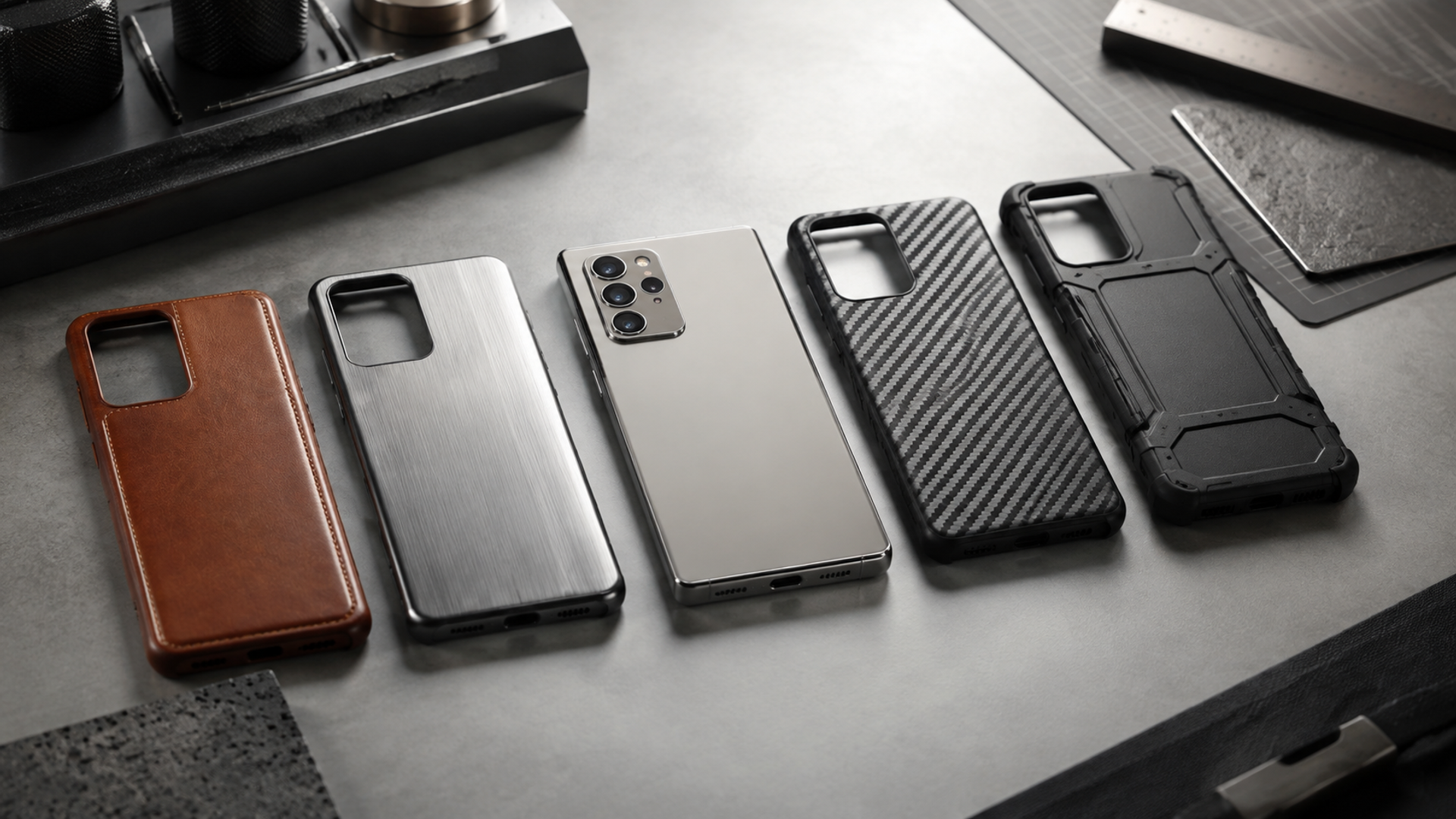
A fitted phone case adheres directly to the handset, providing immediate tactile engagement and edge preservation during every call, keystroke, and interaction. Conversely, a phone pouch or slipcase encases the device entirely, isolating it from ambient environmental hazards, keys, and foreign objects while providing alternative carrying methods such as crossbody lanyards or hand-held sleeves.
For owners of bespoke handsets featuring titanium frames, sapphire crystal displays, or exotic leather backs, this choice goes beyond aesthetics. It dictates handling ergonomics, pocket wear, and long-term material preservation. Selecting the proper format requires aligning your daily operational tempo with precise dimensional clearances.
In Brief
- Choose a fitted case if you require immediate, one-handed access, frequently handle calls throughout the day, and desire continuous edge and corner protection.
- Choose a pouch or slipcase if you carry your device inside an executive briefcase, prefer holding the unadorned handset during use, or value integrated card slots and crossbody mobility.
- Never assume universal drop protection: Leather and fine textiles shield against micro-abrasions and minor impacts, but structural drop safety requires verified shock-absorption engineering.
- Verify combined clearances: If combining a case with an external pouch, always account for cumulative millimeter increases in width, height, and depth.
Detailed Architectural Comparison: Case vs Pouch
To understand how each format integrates into daily life, consider their technical, physical, and functional characteristics:
Mapping the Choice to Your Executive Routine
The ideal carry style depends on the environments your phone moves through each day. Mapping your daily transitions clarifies which format minimizes friction:
1. The High-Velocity Working Day
If your schedule demands constant voice calls, rapid email responses, two-factor authentication, and impromptu mobile photography, a fitted case is indispensable.
Extracting a phone from a tight pouch dozens of times each hour introduces operational friction and increases the risk of dropping the device during extraction. A fitted case provides continuous corner and rim protection, preventing scratches when the device is repeatedly placed on glass conference tables, marble counters, or vehicular charging docks.
2. The Commute and Global Transit
During commercial flights or daily transit, a smartphone faces different risks: foreign debris at the bottom of travel bags, accidental compression, and rapid environmental shifts.
In this environment, an enclosed pouch excels. A dedicated slipcase shields the charging ports and speaker grilles from interior lint, dust, and abrasive metal items like keychains or pens. Pouch designs featuring crossbody straps or secure clasps keep the handset securely attached to your person, liberating pocket space and reducing the chance of misplacement in airport lounges.
3. The Minimalist Evening and Black-Tie Environment
When attending formal galas, private dinners, or theater events, garment silhouettes must remain sharp and unencumbered.
A bulky pouch can disrupt the clean drape of a bespoke tailored suit or evening dress. In these settings, a minimalist fitted case—or a bare handset removed from a day pouch—preserves the elegant line of your garments while keeping the device comfortably within a tailored breast pocket.
Specialized Considerations for Bespoke and Luxury Handsets
Luxury smartphones differ substantially from mass-market plastic and glass slabs. When outfitting a bespoke device, consider these subtle material dynamics:
Structural Relief for Hardware Features
Bespoke handsets often incorporate physical mechanical components, such as dual-wing SIM compartments, ruby-bearing keys, or sculptural camera housings. A poorly calibrated case can put excessive pressure on mechanical seams. Ensure the case includes precision cutouts that do not impede mechanical doors or tactile side switches.
Interior Micro-Abrasion Management
Dust particles trapped between a rigid case and a handset can act as an abrasive compound, causing micro-scratches on polished titanium, ceramic, or gold plating. For bespoke devices, select cases and pouches lined with non-abrasive Alcantara, premium suede, or soft microfiber that cushions polished metals.
Leather-on-Leather Friction
Many luxury smartphones feature calfskin, alligator, or lizard leather backs. Inserting a leather-backed phone into a tight leather pouch introduces substantial natural friction. Over time, this friction can burnish or discolor the edges of the handset’s hide. If your phone is leather-bound, ensure the pouch provides adequate clearance or a satin-smooth lining to permit effortless sliding.
VERTU Case and Pouch Architecture: A Case Study in Craft
VERTU’s accessory catalog illustrates how these two formats are realized through British craftsmanship, hand-selected hides, and exacting tolerances.
VERTU Bespoke Calfskin Leather Case: The Fitted Precision Approach
The VERTU Bespoke Calfskin Leather Case is engineered to integrate seamlessly with specific handset generations.
- Tailored Form Factor: Molded around the handset's distinct geometry, it shields vulnerable corners and the rear plate while preserving tactile access to physical buttons and the concierge key.
- Material Harmony: Hand-stitched from fine-grain European calfskin, the case mirrors the horological aesthetic of the phone chassis, ensuring the device retains its executive gravitas on the desk.
- Surface Protection: Provides reliable protection against daily micro-abrasions, surface scuffs, and minor table impacts without obscuring the phone's visual identity.
iVERTU Procella Crossbody Phone Pouch: The Modular Carrying System
Designed for the iVERTU series, the Procella Crossbody Phone Pouch reinterprets the traditional holster into a piece of luxury leather goods.
- Spatial Independence: Rather than staying attached to the handset, the Procella functions as an external carrying module with an adjustable leather shoulder strap and integrated belt loops.
- Storage Synergy: In addition to housing the phone, the pouch integrates dedicated card slots, transforming it into a self-contained accessory for light travel or executive weekend movements.
- Lining Protection: The interior is engineered to cushion the phone against surrounding pressure, keeping the large screen and polished surfaces pristine.
Note on Compatibility: While both products originate from the same atelier, they fulfill distinct roles. The iVERTU Procella Pouch is dimensioned specifically for the bare handset profile; attempting to insert an iVERTU phone that already has an external fitted case may strain the seams. Always verify internal clearances before pairing accessories.
Pre-Purchase Checklist: Verifying Compatibility and Protection
Before investing in bespoke smartphone leather accessories, evaluate these technical details:
- Exact Model Variant: Confirm the exact device series (e.g., Aster P, Metavertu, iVERTU). Handsets with identical display diagonals often have different depths and camera contours.
- Impact Testing vs. Scratch Resistance: Distinguish between aesthetic wear resistance and drop protection. If drop absorption is a priority, verify whether the manufacturer integrates shock-dispersing internal polymers alongside exterior leather.
- Closure Mechanics: Examine pouch fasteners. Magnetic closures should be shielded to avoid interfering with mobile sensors or card magnetic strips, while zip closures must feature protective inner baffles to prevent teeth from scratching the handset.
- Strap Tensile Strength: For crossbody pouches, verify the hardware clasps, swivel snaps, and leather strap stitching to ensure secure retention during active travel.
Frequently Asked Questions
What is the primary functional difference between a phone case and a phone pouch?
A phone case remains attached to the phone during active use, providing immediate access and continuous surface protection. A phone pouch is a separate holder that encloses the device during transit, requiring you to remove the phone each time you use it.
Can a luxury leather case prevent screen shattering during a major drop?
No leather case can guarantee complete drop protection. While premium leather and underlying polycarbonate layers absorb minor shocks and prevent direct surface gouges, drop protection depends on fall height, impact angle, and internal shock-dispersion engineering.
Can I insert a phone with a case into a phone pouch?
Only if the pouch's internal dimensions provide sufficient tolerance. Most bespoke pouches are tailored specifically to the dimensions of an unadorned handset; adding a case may stretch the leather seams or make extraction difficult.
How do I maintain a luxury leather phone pouch or case?
Keep the leather away from prolonged direct sunlight, intense humidity, and chemical solvents. Clean periodically with a soft, dry microfiber cloth, and treat the hide occasionally with specialized neutral leather balm to maintain its suppleness.
Which format is superior for international business travel?
A crossbody phone pouch is often superior during transit because it keeps your phone, travel cards, and boarding credentials secured to your body while freeing up your hands and pockets. Once settled at your destination, a slim fitted case is more practical for day-to-day meetings.
Conclusion
Deciding between a fitted phone case and an independent phone pouch is not a question of which format is superior, but of which system aligns with your daily rhythm. A fitted case is the tool of uninterrupted engagement, safeguarding corners and frame components while keeping the screen immediately accessible. A luxury pouch is the companion of deliberate travel, isolating the entire device from external clutter while offering flexible carrying options.
By examining the specific dimensions of bespoke hardware—and utilizing artisanal benchmarks like the VERTU Bespoke Calfskin Case and Procella Crossbody Pouch—you can choose a protective companion that honors both the beauty of your handset and the practical demands of your lifestyle.