Which AI Video Generator is Best in 2026?
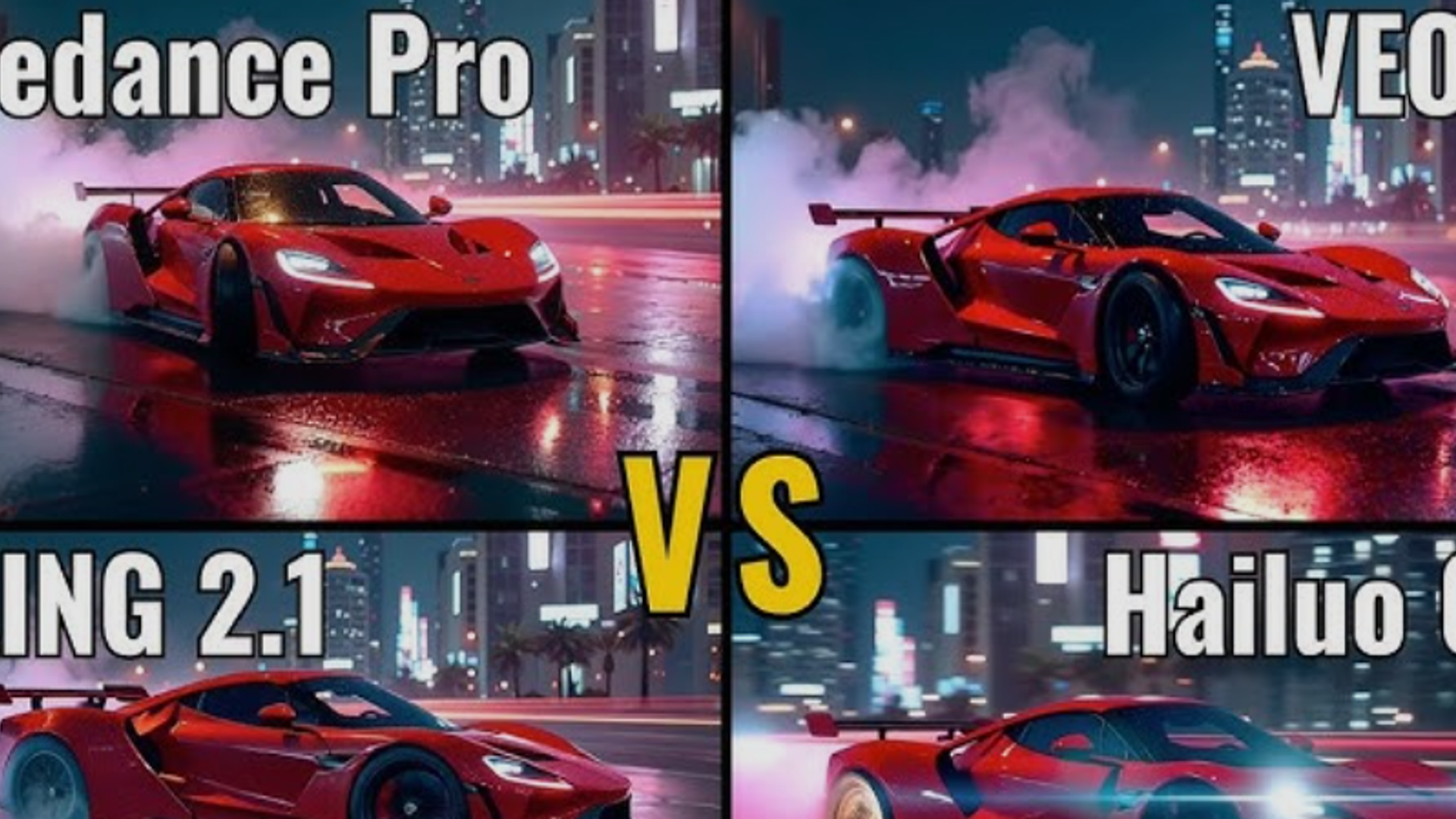
The "best" model depends on your specific production needs: Seedance 2.0 is the champion of multimodal control and editing flexibility , allowing users to reference up to 12 files for a single generation. Sora 2 remains the leader in physics accuracy and temporal consistency , making it ideal for realistic simulations. Kling 3.0 offers the best balance of motion quality and cost-efficiency , while Veo 3.1 is the top choice for cinematic, broadcast-ready aesthetics at a professional 24fps standard.
The Evolution of AI Video: An Overview
For professional creators, the transition from simple text-to-video prompts to complex, multimodal workflows is complete. As of 2026, the industry has specialized. We no longer look for a "one-size-fits-all" solution but rather choose tools based on their architectural strengths—whether that be ByteDance’s versatility, OpenAI’s world-modeling, Kuaishou’s fluid motion, or Google’s cinematic color science.
Head-to-Head Comparison: Technical Specifications
To help you decide which model fits your current project, refer to the comprehensive technical breakdown below:
1. Seedance 2.0: The Multimodal Director
ByteDance's Seedance 2.0 has revolutionized the workflow for professional editors by introducing a sophisticated @ reference system . Unlike traditional models that struggle to interpret complex creative briefs, Seedance 2.0 acts as a digital director.
Multimodal Input Power: It is the only model that allows the simultaneous upload of up to 9 images, 3 videos, and 3 audio files as references. This allows you to say: "Use @Image1 for the character, @Video1 for the camera movement, and sync the movement to the beat of @Audio1."
Video-to-Video Editing: Seedance 2.0 excels at re-styling or extending existing footage without losing character identity.
Template Replication: Creators can upload a high-performing ad or film clip as a template, and Seedance 2.0 will replicate the pacing, lighting, and camera work with new assets.
Long-Form Capability: With a 15-second maximum duration, it offers the longest continuous generation among the top-tier models.
2. Kling 3.0: The Motion Master
Kling 3.0 continues Kuaishou's legacy of providing the smoothest, most natural human and animal movement in the industry. It is the go-to tool for high-engagement social media content.
Motion Brush Technology: Users can paint specific paths on a starting image to dictate exactly how a subject should move, providing a level of "manual" control that text prompts cannot match.
Superior Human Dynamics: Kling 3.0 is optimized for complex character interactions, such as two people dancing or a chef preparing a meal, maintaining distinct limb movements without "melting."
Efficiency and Value: At approximately $0.50 per 10-second clip, it provides the highest "quality-per-dollar" ratio for creators on a budget.
Professional Mode: A specialized high-compute mode allows for even higher fidelity when the standard generation isn't enough for a hero shot.
3. Sora 2: The Physics Engine
OpenAI’s Sora 2 remains the gold standard for "World Simulation." Its architecture focuses on understanding the physical laws of the universe, ensuring that objects interact with weight, gravity, and momentum.
Unmatched Physics Simulation: If a glass breaks in Sora 2, the shards fly realistically based on the point of impact. Fluid dynamics (water, smoke, fire) are significantly more advanced than in competing models.
Temporal Consistency: Sora 2 is famous for its "object permanence." If a character walks behind a tree and re-emerges, every detail of their appearance remains identical.
3D Understanding: The model can infer depth and parallax accurately, making it perfect for complex drone shots or cinematic pans through intricate 3D environments.
Comprehensive Audio Integration: It generates synchronized lip-syncing, foley (sound effects), and ambient noise in a single pass.
4. Veo 3.1: The Cinematographer
Google's Veo 3.1 targets the high-end film and broadcast industry. It prioritizes the "look and feel" of professional cinema over raw duration or input flexibility.
Cinema Standard 24fps: While other models may vary their frame rates, Veo 3.1 sticks to the 24fps standard, providing that "movie" motion blur that professionals crave.
Broadcast-Ready Color Science: The native color grading and lighting transitions in Veo 3.1 are noticeably more sophisticated, requiring less post-production work.
Two-Frame Steering: This unique feature allows users to provide both a "start" and an "end" frame, and the AI perfectly interpolates the transition between them.
Google Ecosystem Integration: For enterprise users, Veo 3.1 integrates seamlessly with Vertex AI and other Google Cloud creative tools.
Decision Guide: Which Model Should You Use?
Choosing the right AI video generator requires aligning your project's goals with the model's architectural strengths.
Choose Seedance 2.0 If:
You have existing brand assets (images/videos) you need to incorporate.
You are creating music videos that require precise audio-to-visual syncing.
You need to "remix" or edit existing video footage.
You want the maximum possible duration (up to 15 seconds) for a single shot.
Choose Kling 3.0 If:
You are a social media influencer or content creator prioritizing natural movement.
You want a simple, fast workflow without managing dozens of reference files.
You need to animate static images with precise "Motion Brush" paths.
You are looking for the most cost-effective solution for high-volume production.
Choose Sora 2 If:
The scene involves complex physical interactions (breaking objects, fluids, collisions).
Character consistency and "object permanence" are the top priority.
You need a complete package with integrated dialogue and sound effects.
You are producing high-end commercial concepts where realism is non-negotiable.
Choose Veo 3.1 If:
You are working on a professional film or broadcast project.
You require native 24fps output and cinema-quality color grading.
You have a specific "start" and "end" frame you need to bridge.
Your workflow is already integrated within the Google Cloud or Vertex AI environment.
Creative Workflow Efficiency Comparison
The Verdict: A Specialized Future
The era of asking "Which AI is best?" is over. In 2026, the question is "Which AI is right for this shot?"
For Seedance 2.0 , the win is in creative control . Its ability to ingest multiple media types makes it the ultimate production assistant. However, for those seeking the unfiltered realism of the physical world, Sora 2 remains the benchmark. Meanwhile, Kling 3.0 dominates the mass-market and value segments, and Veo 3.1 holds the crown for artistic and cinematic excellence .
Frequently Asked Questions (FAQ)
Q1: Can Seedance 2.0 generate videos longer than 15 seconds?
A: Currently, the native maximum for a single generation in Seedance 2.0 is 15 seconds. However, its video-to-video capabilities allow you to use a generated clip as a reference to extend the narrative further in subsequent passes.
Q2: Which model is the most affordable for small creators?
A: Kling 3.0 generally offers the best value, with costs hovering around $0.50 per 1080p generation. Seedance 2.0 is also competitively priced at approximately $0.60.
Q3: Does Sora 2 allow for video-to-video editing?
A: While Sora 2 has a "Remix" mode that allows for style changes, it does not currently support the complex multimodal reference system (multiple video/audio inputs) found in Seedance 2.0.
Q4: Is Veo 3.1 better for 24fps content?
A: Yes. Veo 3.1 is specifically tuned for the 24fps cinema standard, making it the preferred choice for filmmakers who want a "film look" without adjusting frame rates in post-production.
Q5: Which model handles lip-syncing the best?
A: Sora 2 and Seedance 2.0 both offer excellent native lip-syncing. Seedance 2.0 has a slight edge for creators who want to upload their own specific audio tracks for characters to follow.
Q6: Where can I access these models?
A: All four models are available for enterprise and professional use through the WaveSpeedAI API and studio dashboard, which provides a unified interface for comparing outputs across different architectures.