| Use Case | Best Choice |
|---|---|
| Writing, storytelling, creativity | Claude Sonnet 4.6 |
| Business strategy & planning | Claude Sonnet 4.6 |
| Emotional intelligence & social tasks | Claude Sonnet 4.6 |
| Technical explanations & STEM topics | Gemini 3.1 Pro |
| Analytical reasoning & structured thinking | Gemini 3.1 Pro |
| Everyday conversational AI | Both are excellent |
Introduction
With AI models advancing at a breakneck pace, simply asking "which one is smarter?" no longer cuts it. The real question is: which AI model actually helps you get things done?
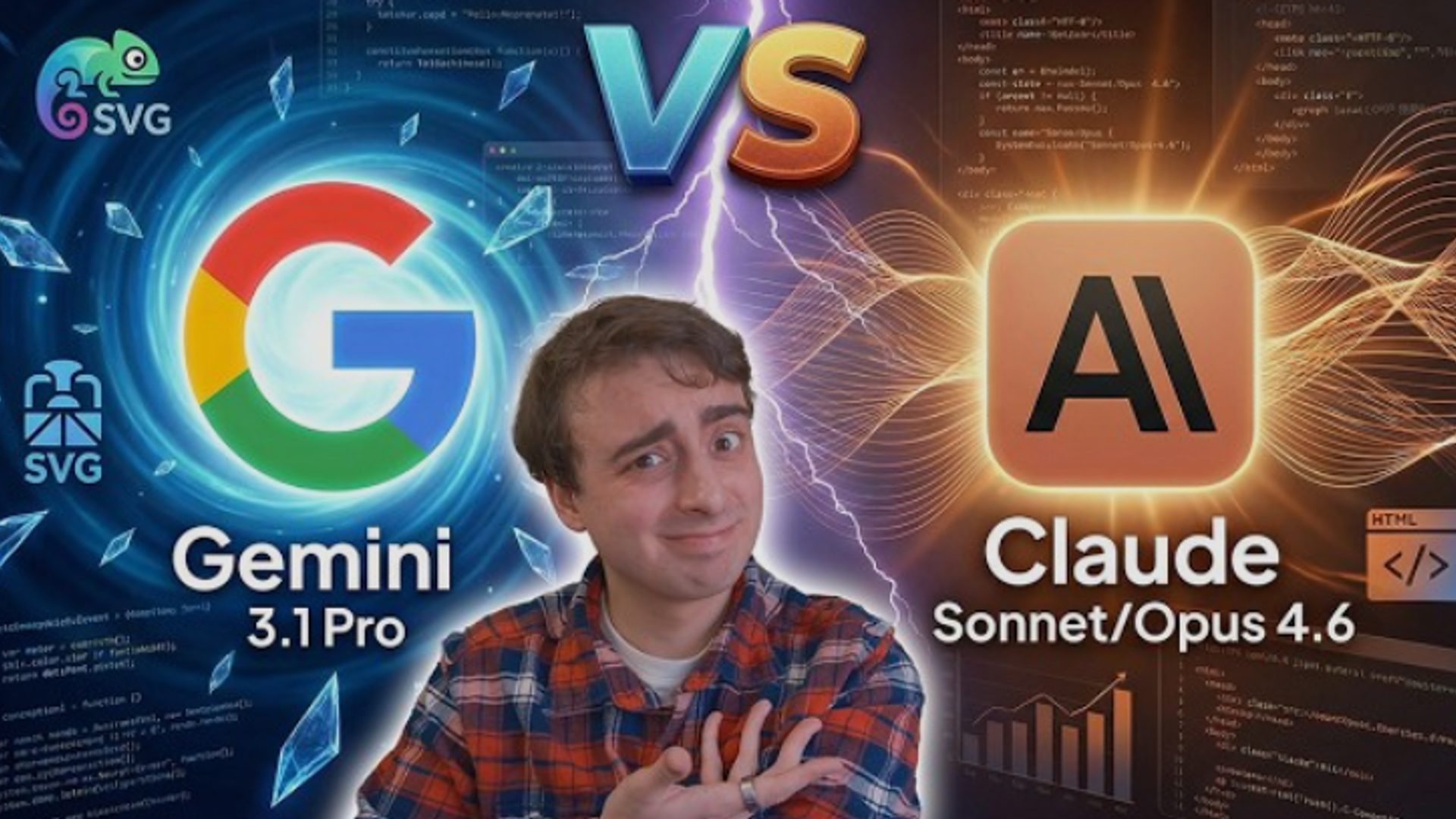
In a detailed hands-on test published by Tom's Guide, Gemini 3.1 Pro (Google's latest release) and Claude Sonnet 4.6 (Anthropic's newest model) were put through seven demanding real-world challenges — from urban policy analysis and side-income planning to creative writing and parenting advice. The results paint a nuanced picture of two powerful AI systems with distinct strengths.
The Two Contenders: Different Philosophies, Different Strengths
Before diving into the results, it helps to understand what each model is designed to do well.
Google's Gemini 3.1 Pro is built around multimodal reasoning, technical depth, and deep integration with real-world knowledge. It excels when precision, systems thinking, and structured explanation are needed.
Anthropic's Claude Sonnet 4.6 doubles down on reliability, nuanced judgment, and human-aligned reasoning. Its design prioritizes safe, socially aware responses that feel grounded in real-world context and emotional intelligence.
The 7 Challenges: A Detailed Breakdown
1. Complex Reasoning & Synthesis
Both models were asked to propose a realistic 3-part urban recovery strategy for a struggling mid-sized city. Gemini focused on zoning reform and polycentric neighborhood design rooted in modern urban planning. Claude zeroed in on housing policy, remote-work economics, and community wealth-building — explicitly acknowledging political tradeoffs and equity risks.
Winner: Claude Sonnet 4.6 — for deeper political realism and a more credible real-world implementation plan.
2. Real-World Decision-Making
The prompt: turn $2,000 into a side income within 60 days using AI tools. Gemini proposed a premium digital product strategy — high-potential, but with a longer runway to traction. Claude focused on a fast-to-market AI-assisted service model with low startup costs and realistic client-acquisition expectations.
Winner: Claude Sonnet 4.6 — for prioritizing speed to cash flow, practical risk assessment, and near-term income generation.
3. Creative Writing Under Constraints
Both models were tasked with writing a compelling, non-clichéd 200-word novel opening set in a 2035 world where AI companions are mandatory. Gemini delivered strong world-building with visual detail and atmospheric tension. Claude crafted a quieter, more emotionally intimate scene — using a single unsettling pause to hint at hidden secrets without veering into sci-fi tropes.
Winner: Claude Sonnet 4.6 — for emotionally grounded storytelling that felt more human and original.
4. Emotional Intelligence & Tone Adaptation
The task: write a warm, polite decline to a social event invitation. Gemini provided multiple adaptable templates with clear etiquette guidance. Claude offered a heartfelt, relationship-preserving response that felt personal and sincere.
Winner: Gemini 3.1 Pro — for delivering ready-to-use phrasing options that feel natural, clear, and immediately actionable.
5. Explaining a Complex Concept
Both models were asked to explain how large language models "reason" — for a curious, educated adult — without oversimplifying, and including where the metaphor breaks down. Gemini delivered a technically rich explanation covering probabilistic prediction, chain-of-thought reasoning, and failure modes like hallucinations. Claude focused on why step-by-step generation constitutes "thinking" and honestly tackled unresolved questions about AI understanding.
Winner: Gemini 3.1 Pro — for the most intellectually honest, conceptually complete explanation that respected the reader's intelligence.
6. Structured Problem Solving
The prompt involved creating a practical plan to reset a 9-year-old's screen habits without punishment or conflict. Gemini used habit-design science, automated limits, and "when/then" routines. Claude took a relationship-first approach, offering a calm daily structure that reduces friction and builds trust.
Winner: Claude Sonnet 4.6 — for a sustainable, family-friendly plan grounded in empathy and daily routine.
7. Strategic Business Idea Generation
Both models were challenged to pitch three AI-era business ideas that would remain defensible over five years. Gemini highlighted AI workflow orchestration, human-in-the-loop auditing, and proprietary data curation. Claude focused on human-judgment advisory services, behavior-change coaching, and hyperlocal data businesses built on relationships and accountability.
Winner: Claude Sonnet 4.6 — for framing defensibility around trust, human accountability, and compounding real-world data — factors that are harder for AI to replicate.
Overall Winner: Claude Sonnet 4.6
After seven rounds, Claude Sonnet 4.6 won five out of seven challenges , making it the overall winner of this head-to-head comparison. It consistently excelled in tasks requiring political nuance, emotional intelligence, relationship dynamics, creative originality, and practical implementation thinking. Its responses felt socially aware and grounded in real human contexts.
Gemini 3.1 Pro , however, is far from a runner-up. It demonstrated clear advantages in technical clarity, structured explanation, and analytical rigor — making it the better choice for users who need precise, concept-heavy responses or multi-step systems thinking.
Which AI Model Should You Choose?
The bottom line: Claude Sonnet 4.6 is the stronger all-around assistant for tasks involving human judgment, nuanced communication, and real-world strategy. Gemini 3.1 Pro remains a top-tier option for users who need deep technical precision and intellectually rigorous explanations.
The smartest approach? Know which tool fits which job — and keep both in your toolkit.
Frequently Asked Questions
Is Claude Sonnet 4.6 better than Gemini 3.1 Pro? In this seven-challenge test, Claude Sonnet 4.6 won five rounds, making it the overall winner — particularly for creativity, emotional reasoning, and strategic planning. Gemini 3.1 Pro excelled in technical explanation and structured analysis.
What is Gemini 3.1 Pro good at? Gemini 3.1 Pro performs best in technically demanding tasks: explaining complex concepts, structured systems thinking, and providing multiple adaptable options for communication.
Which AI model is best for business use? Claude Sonnet 4.6 showed a stronger understanding of real-world business constraints, human trust dynamics, and actionable strategy — making it a strong choice for most business applications.
Are Claude and Gemini free to use? Both models offer free tiers with limited access. Claude is available via Anthropic's claude.ai, and Gemini is accessible through Google's Gemini platform.