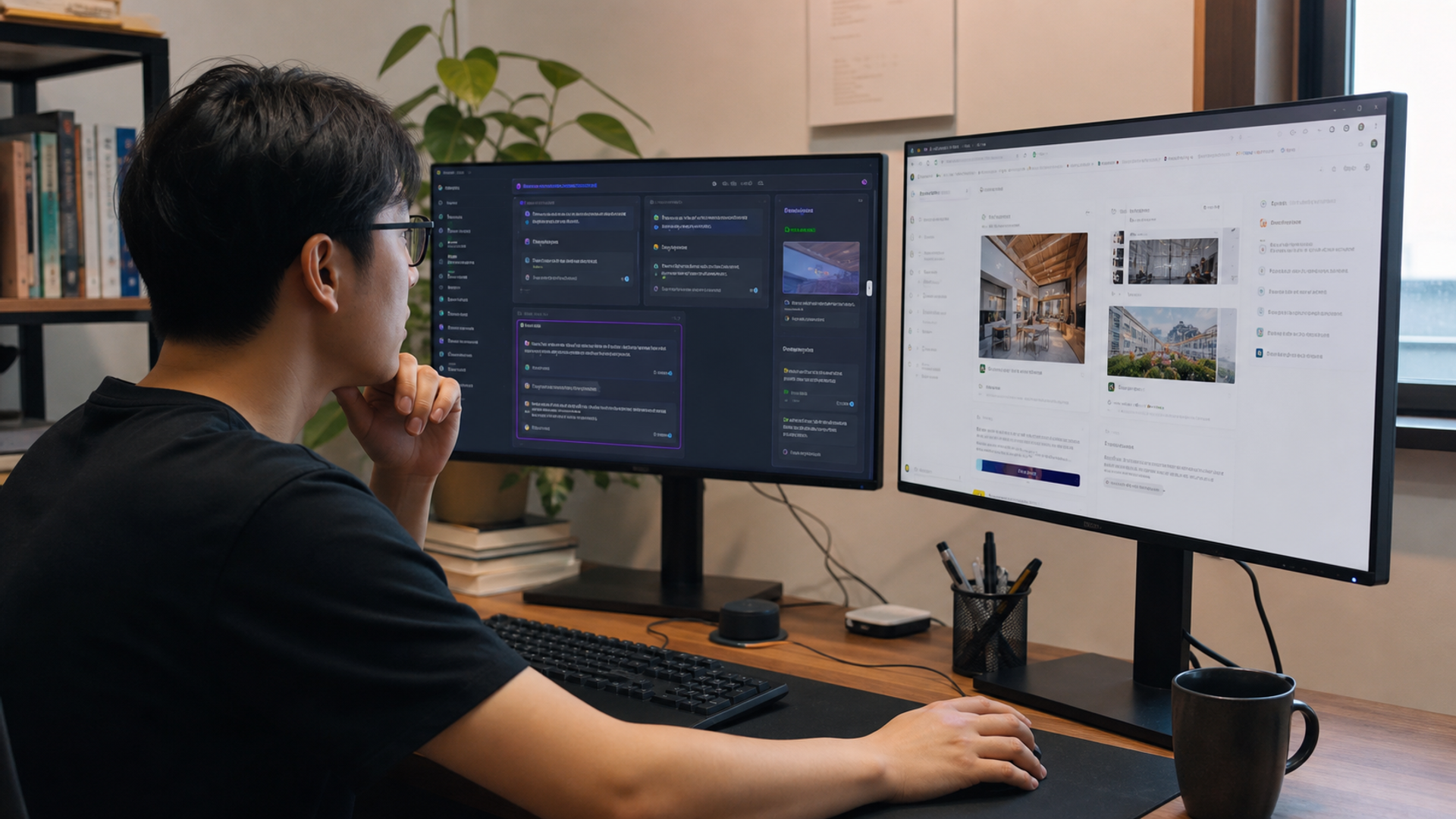
Kitesurf is Cloudflare's attempt to build a browser around AI-agent workloads rather than human tabs. Running a purpose-built engine inside Workers can reduce startup and resource overhead, but a smaller browser surface also means compatibility trade-offs. The decision is therefore not whether Kitesurf is faster in the abstract. It is whether the target pages, scripts, authentication and visual fidelity fit its current engine.
Kitesurf workload map
Use Kitesurf for controlled extraction, screenshots and agent tasks that pass a representative compatibility test and benefit from fast isolated execution. Keep Chromium for complex web applications, difficult authentication, pixel-sensitive rendering or workflows dependent on mature extensions and browser APIs. A hybrid router is often safer than a platform-wide replacement.
| Decision factor | Kitesurf route | Chromium route | Hybrid browser router |
|---|---|---|---|
| Startup and density | Designed for lightweight isolate execution | Heavier process and memory profile | Routes simple pages to the lighter engine |
| Web compatibility | Must be tested against current engine coverage | Broad mature compatibility | Fallback protects unsupported pages |
| Visual fidelity | Adequate only after screenshot comparison | Stronger baseline for pixel-sensitive work | Use visual diff as routing evidence |
| Authentication | Simple flows may work | Complex SSO and device flows are more established | Pin sensitive logins to approved engine |
| Security boundary | Short-lived isolate can reduce persistence | Mature sandbox but larger feature surface | Separate credentials and policies by route |
| Operations | Cloud platform integration | Established tooling and debugging | More components but controlled failure modes |
This Cloudflare Kitesurf AI browser matrix is the article's working value object. Read the rows together: the decisive failure mode depends on this topic's evidence, operating context and reader objective.
Architecture and compatibility evidence
Evidence 1. Cloudflare's official Kitesurf article describes an agent-first browser designed to run in V8 isolates on Workers.
Evidence 2. The underlying Blitz renderer describes itself as pre-alpha and documents missing browser capabilities, making workload testing essential.
Evidence 3. Cloudflare already maintains browser-rendering and agent tooling, but Kitesurf should be evaluated as a distinct engine rather than assumed to be Chromium-compatible.
Reader-visible sources checked for this article:
blog.cloudflare.com — current reader-visible source
github.com — current reader-visible source
developers.cloudflare.com — current reader-visible source
For Cloudflare Kitesurf AI browser, these sources establish only the claims inside their documented scope. Recheck every changeable specification, schedule, price, access condition or policy in the relevant market before acting.
Operate the browser boundary safely
The decision changes at startup and density. Choose the first path only if designed for lightweight isolate execution; move to the second when heavier process and memory profile; use the third when routes simple pages to the lighter engine. Save the downside that would make this row fail.
For web compatibility, the first route works when must be tested against current engine coverage; the second requires broad mature compatibility. The control for the third is fallback protects unsupported pages. Verify this row against the exact market, model, venue or itinerary before it can reverse the decision.
The visual fidelity row exposes a practical boundary. Route one assumes adequate only after screenshot comparison, while route two is defensible only when stronger baseline for pixel-sensitive work. Route three depends on use visual diff as routing evidence. If that evidence is absent, keep the more reversible option.
Read authentication as a stop/go test: simple flows may work supports the first option; complex SSO and device flows are more established supports the second; and pin sensitive logins to approved engine supports the third. Record which source proves the condition and when it was checked.
A buyer can resolve security boundary without a brand preference. Ask whether short-lived isolate can reduce persistence; compare that with whether mature sandbox but larger feature surface; then use separate credentials and policies by route as the third route's safeguard. An unknown condition stays unknown.
On operations, popularity is irrelevant. The evidence for option one is that cloud platform integration. Option two means established tooling and debugging. Option three is rational where more components but controlled failure modes. Recheck any changeable term immediately before commitment.
Facts that would reverse the current choice
Reversal control 1 — Startup and density. Before choosing Kitesurf route, write down how the decision changes if 'Designed for lightweight isolate execution' proves false. Do the same for Chromium route and 'Heavier process and memory profile'. The Hybrid browser router path should remain available until 'Routes simple pages to the lighter engine' is verified. This control belongs to Cloudflare Kitesurf AI browser; it should be updated from the cited source or the exact supplier, device, venue or operator rather than copied from a generic checklist.
Reversal control 2 — Web compatibility. Before choosing Kitesurf route, write down how the decision changes if 'Must be tested against current engine coverage' proves false. Do the same for Chromium route and 'Broad mature compatibility'. The Hybrid browser router path should remain available until 'Fallback protects unsupported pages' is verified. This control belongs to Cloudflare Kitesurf AI browser; it should be updated from the cited source or the exact supplier, device, venue or operator rather than copied from a generic checklist.
Reversal control 3 — Visual fidelity. Before choosing Kitesurf route, write down how the decision changes if 'Adequate only after screenshot comparison' proves false. Do the same for Chromium route and 'Stronger baseline for pixel-sensitive work'. The Hybrid browser router path should remain available until 'Use visual diff as routing evidence' is verified. This control belongs to Cloudflare Kitesurf AI browser; it should be updated from the cited source or the exact supplier, device, venue or operator rather than copied from a generic checklist.
Reversal control 4 — Authentication. Before choosing Kitesurf route, write down how the decision changes if 'Simple flows may work' proves false. Do the same for Chromium route and 'Complex SSO and device flows are more established'. The Hybrid browser router path should remain available until 'Pin sensitive logins to approved engine' is verified. This control belongs to Cloudflare Kitesurf AI browser; it should be updated from the cited source or the exact supplier, device, venue or operator rather than copied from a generic checklist.
Reversal control 5 — Security boundary. Before choosing Kitesurf route, write down how the decision changes if 'Short-lived isolate can reduce persistence' proves false. Do the same for Chromium route and 'Mature sandbox but larger feature surface'. The Hybrid browser router path should remain available until 'Separate credentials and policies by route' is verified. This control belongs to Cloudflare Kitesurf AI browser; it should be updated from the cited source or the exact supplier, device, venue or operator rather than copied from a generic checklist.
Reversal control 6 — Operations. Before choosing Kitesurf route, write down how the decision changes if 'Cloud platform integration' proves false. Do the same for Chromium route and 'Established tooling and debugging'. The Hybrid browser router path should remain available until 'More components but controlled failure modes' is verified. This control belongs to Cloudflare Kitesurf AI browser; it should be updated from the cited source or the exact supplier, device, venue or operator rather than copied from a generic checklist.
Benchmark accepted tasks, not page loads
Create a corpus of real target pages and actions: navigation, extraction, screenshots, forms, downloads and authentication. Score task completion, DOM accuracy, screenshot difference, latency and cost. A fast failure is not a performance win. Weight pages by actual traffic so a rare difficult application does not distort the common path, while still preserving a safe fallback.
Treat compatibility as a moving contract
Modern sites depend on browser APIs, layout edge cases, anti-abuse controls and JavaScript behaviour. Record Kitesurf and dependency versions with every test. A successful result today may change after either the engine or target site updates. Run a small daily canary corpus and promote only versioned combinations that meet the acceptance threshold.
Keep credentials out of experimental paths
A browser engine executing agent instructions can encounter prompt injection, malicious pages and sensitive sessions. Use minimum-privilege accounts, short-lived credentials, isolated storage and strict destination policy. Do not reuse a personal browser profile. Capture network and tool traces without storing secrets, and require human approval before financial, administrative or irreversible actions.
Design the fallback before adoption
The router should identify unsupported pages, repeated failures and high-risk tasks before a user experiences a broken workflow. Define retry limits and never loop ambiguously after a side-effecting action. A Chromium fallback should receive a fresh, bounded task state rather than an uncontrolled replay of every prior action. Measure fallback rate as a first-class operational metric.
Three deployment patterns
Large-scale public-page extraction
Kitesurf is promising when pages are reproducible, credentials are absent and output can be validated against a sample. Define the fact that would reverse the choice before committing.
Enterprise SaaS automation
Start in shadow mode; complex SSO, canvas interfaces and anti-bot controls may justify Chromium or an official API. Define the fact that would reverse the choice before committing.
Consumer purchase agent
Use read-only browsing first and require explicit approval before cart, payment or account changes regardless of engine. Define the fact that would reverse the choice before committing.
Action checklist
Build a representative page corpus.
Define task-level acceptance.
Compare screenshots and DOM.
Record engine versions.
Use isolated credentials.
Set bounded retries.
Implement Chromium fallback.
Monitor failures after site changes.
Related VERTU reading
The linked VERTU reading expands adjacent parts of the Cloudflare Kitesurf AI browser decision. It does not substitute for the external evidence above, and brand relevance is kept out when it adds no reader value.
Where Kitesurf belongs
Use Kitesurf for controlled extraction, screenshots and agent tasks that pass a representative compatibility test and benefit from fast isolated execution. Keep Chromium for complex web applications, difficult authentication, pixel-sensitive rendering or workflows dependent on mature extensions and browser APIs. A hybrid router is often safer than a platform-wide replacement.
Keep the Cloudflare Kitesurf AI browser decision reversible until its material cost, safety, access and compatibility facts are verified. Unknown evidence stays unknown; it is never silently scored as favourable.