Key Takeaways
- Assess whether a luxury technology category serves a recognisable customer need and has a clear role beside your current brands.
- VERTU publicly describes a global portfolio spanning handcrafted phones, connected wearables, personalisation and concierge services; this overview does not confirm local assortment or supply.
- Use customer evidence, retail presentation and operating readiness to test fit before making commercial assumptions.
- Confirm market-specific products, terms, support and responsibilities directly with VERTU before building a forecast or signing an agreement.
Before adding VERTU to a luxury product portfolio, assess whether the brand serves an identifiable customer, fills a distinct category role and fits the way your business presents and supports premium technology. VERTU’s public global overview spans handcrafted phones, connected wearables, personalisation and concierge services. That is a starting point for a business discussion, not a promise that every category or product is available in every market. Retailers can review the VERTU phone collection as one part of the picture, then confirm the local scope that would apply to a proposed partnership.
What does product portfolio fit mean for a luxury retailer?
Product portfolio fit is the match between a proposed category and a retailer’s customers, positioning, space and service model. It asks whether the addition strengthens the offer in a way customers can understand, rather than simply adding more labels or products.
Assortment planning often separates breadth, the variety of categories, from depth, the choice within one category. The Tory Burch Foundation’s small-business guide to assortment planning recommends grounding those choices in customer needs, the market and store realities. For a luxury technology brand, ask whether you are adding a new category, adding depth, or both. The right choice depends on evidence and strategy.
1. Start with customer evidence, not a brand assumption
Begin with the people your business already serves. Identify the customer groups for whom premium technology, considered materials, personalisation or a high-touch service relationship may be relevant. Then look for evidence in your own business: product enquiries, appointment requests, repeat purchases, client feedback and the questions sales staff hear.
Separate observed demand from a hypothesis. Documented client enquiries are evidence; assuming that affluent customers will buy a new phone range is not. Customer wealth, brand awareness or interest in luxury goods alone does not establish demand for a particular category.
Ask whether existing customers would see the addition as useful and coherent. Would it address a need your current portfolio does not, or create a reason to return for a demonstration or personalised conversation? If the answers are vague, gather evidence before assigning space, budget or staff time.
2. Give the category a clear job in your assortment
Describe the role the brand would play in one sentence. It might extend a technology offer into a more service-led luxury context, complement a fine-accessories collection, or create a new point of conversation with established clients. The role should be clear enough that staff can explain why the category belongs beside the products already represented.
Then check for overlap. Compare the proposed category with current brands across customer, purpose, price position, design language, purchase occasion and service expectations. Some overlap can help a retailer offer meaningful choice. Too much overlap may make the addition hard to distinguish; too little connection can make it feel unrelated to the rest of the store.
Burberry’s FY 2025/26 annual report describes building from established product authority into complementary categories and aligning distribution with product and customer strategy. This is one company’s example, not a template to copy. The useful question is: what credible connection links the proposed category, your strengths and your customers?
3. Make the value and price architecture legible
Customers need to understand why a premium offer sits at its particular point in your assortment. Review the role of each price tier in your current business and ask how the proposed category would be introduced, compared and explained. Consider the difference between an entry point, a core offer and a highly personalised or exceptional commission, where those distinctions are supported by the confirmed range.
Do not build a business case from public prices found in a different country, a general online listing or an assumed partner margin. Retail and direct prices can vary by market, configuration and time. Before forecasting, ask VERTU to confirm the products, pricing basis, commercial terms and permitted channels relevant to the specific opportunity. The published global portfolio overview is not a commercial quotation.
4. Plan the presentation and customer conversation
A luxury technology product may require a different conversation from a familiar accessory. Decide how a customer would discover it, compare options and experience the offer. The plan could include an in-person demonstration, a private appointment, a digital product story or a curated display, depending on your business and the format agreed with the brand.
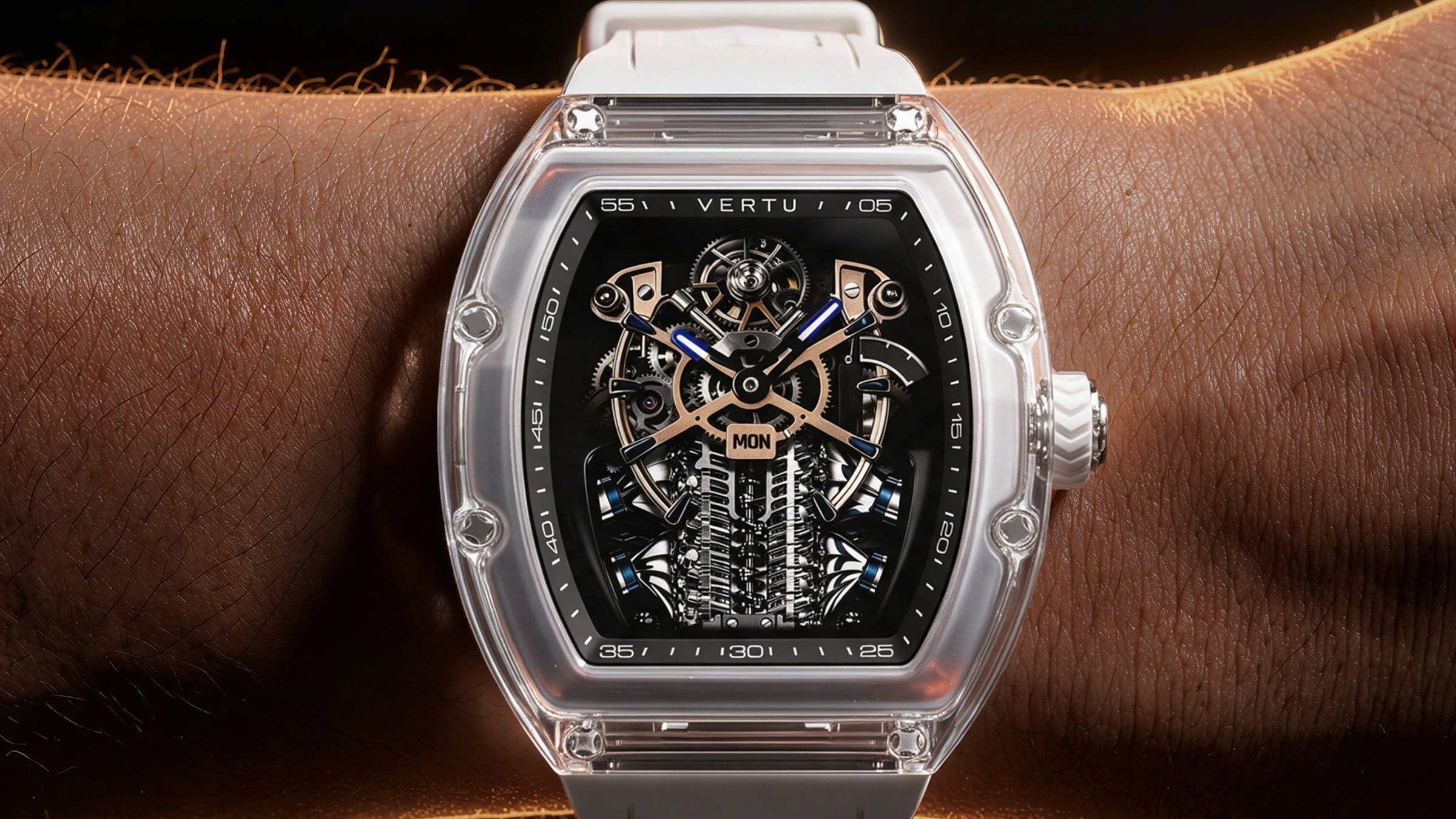
Consider what staff need in order to present the category accurately. They should be able to explain the confirmed product range, relevant differences, personalisation options and the next step for a customer without promising availability or service benefits that have not been verified. VERTU’s public wearables overview and bespoke personalisation page illustrate how a business might explore distinct product and personalisation stories; they do not establish which items or services would be included in a local partnership.
5. Check the operating and service fit
Portfolio fit includes the work after a customer shows interest. Map who handles product education, sales follow-up, delivery questions, personalisation enquiries, warranty matters and service escalation. The exact division of responsibilities should be agreed with VERTU for the relevant market and partnership format; do not assume that the retailer or brand automatically provides a particular service.
Review the capacity your team can support: trained staff, appointment time, product presentation, clienteling records and a hand-off for questions beyond the retailer’s remit. This is internal planning, not a statement of VERTU’s fixed criteria. Record any capability gaps and the confirmation or support needed.
6. Test the business case with evidence
Before making a commitment, write down the case for inclusion and the assumptions that still need evidence. Useful early signals can include qualified enquiries, requests for demonstrations, appointment attendance, customer feedback and follow-up interest. These indicators help a retailer learn whether the category is understood and relevant; they are not sales guarantees or VERTU benchmarks.
If the final agreement allows a limited launch or test, agree its scope, timing, responsibilities and review points first. A pilot should answer a specific question, such as whether clients respond to the category or staff can explain it clearly. Do not base targets on unconfirmed supply, price or margin assumptions.
A practical internal decision can be expressed in three ways:
- Potential fit: customer evidence, category role and operating capacity are clear enough to proceed to a detailed discussion.
- Fit to validate: the strategic connection is plausible, but demand, range, support or responsibilities need confirmation.
- Not ready: the proposed addition has no distinct role, lacks customer evidence or depends on assumptions the business cannot yet verify.
This is an editorial self-assessment framework for a retailer. It is not an official VERTU scoring system, qualification threshold or promise of acceptance.
Questions to confirm before preparing a portfolio plan
| Decision area | Question to confirm | Evidence to prepare |
|---|---|---|
| Customer fit | Which customer need or buying occasion would the category serve? | Enquiry records, customer feedback and relevant client segments. |
| Assortment role | Would the addition extend, deepen or differentiate the current offer? | A side-by-side category map and a clear role statement. |
| Local range | Which products, configurations and services are in scope for this market? | Written confirmation for the proposed territory and format. |
| Retail execution | What presentation, training and customer education are expected? | Store or digital concept, staff plan and items requiring brand approval. |
| Operations | Who is responsible for follow-up, delivery questions and after-sales hand-offs? | A responsibility map and the agreed service process. |
| Commercial case | Which terms, pricing and supply assumptions may be used in a forecast? | Current market-specific terms confirmed by the relevant parties. |
Frequently asked questions
What should a luxury retailer assess before adding a new brand?
Assess customer relevance, the category’s role beside existing brands, the value story, the presentation required and the service work the team can support. Confirm local products and commercial terms before forecasting.
How can a retailer tell whether a luxury technology category complements its assortment?
Look for customer evidence and a clear reason the category belongs in the portfolio. Compare its audience, purpose, price position and service expectations with existing offers, then test unresolved assumptions.
Does VERTU’s public portfolio overview confirm local product availability?
No. The global overview describes broad product and service categories. A retailer should confirm the products, configurations, availability and commercial scope that apply to the specific market and partnership discussion.
What should a retailer verify before preparing a commercial forecast?
Verify the relevant product range, pricing basis, supply arrangements, commercial terms, channel boundaries, responsibilities and any support that may be included. Do not treat unconfirmed assumptions as forecast facts.
Conclusion
Adding a luxury technology brand is a portfolio decision: the category should have a clear customer, a distinct role and an operating plan that the retailer can support. Use customer evidence to test the opportunity, separate assumptions from confirmed facts, and leave market-specific range and commercial details open until the relevant parties verify them. To review VERTU’s public partnership information and explore the appropriate next step, visit VERTU’s partnership page.

Previous article
What Capabilities Does VERTU Look for in Local Partners [Full Guide]
TOP-Rated Vertu Products
Alphafold
ALPHAFOLD is the world’s first Hermes Agent phone, combining AI assistance and mobile ERP for smarter task execution, workflow control, and business management.
Explore moreAgent Q
World’s first AI agent phone: A paradigm shift from Apps to Agents. It thinks, plans, and executes, all while securing your privacy.
Explore moreMetavertu Max
Metavertu Max: Luxury tech with Second Brain AI and a triple system for 4x WhatsApp. Opulence meets intelligence.
Explore more