

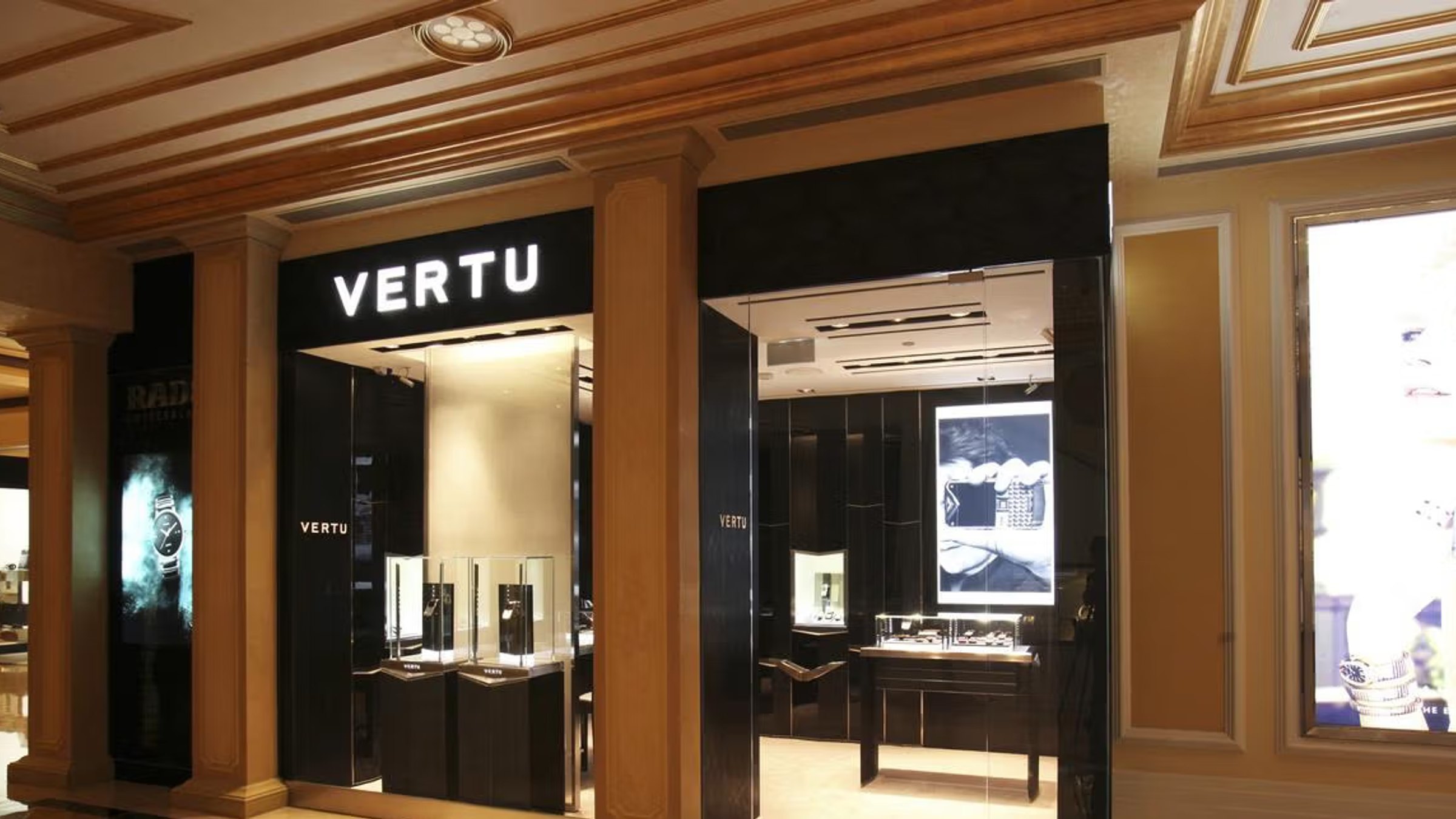
VERTU’s B2B & Corporate Partner model is intended for organisations exploring how to bring VERTU devices, gifting and services to corporate clients, luxury hospitality, private-client programmes and selected institutions. It is presented separately from VERTU’s retail and distribution formats: the public description centres on corporate and client programmes, rather than territory-wide channel development. Prospective partners can begin by clarifying who they serve, what business context they have in mind and what role their organisation could play. These are planning questions, not additional official eligibility requirements.
What Is the VERTU B2B & Corporate Partner Model?
VERTU describes the B2B & Corporate Partner model as a way to bring its devices, gifting and services to four broad audience contexts: corporate clients, luxury hospitality, private-client programmes and selected institutions. The public description identifies the intended scope at a high level; it does not provide a fixed product list, a standard gifting package or a universal service arrangement for every partner.
That distinction matters when an organisation starts exploring the opportunity. A business may already serve corporate buyers, hotel clients or a private-client community, but its existing customer base alone does not define the proposed partnership. The enquiry should explain the organisation’s role, the audience it serves and the context in which it is considering VERTU.
| Audience named by VERTU | Question to consider before enquiring |
|---|---|
| Corporate clients | What kind of corporate relationship or client programme would make VERTU relevant to the organisation’s work? |
| Luxury hospitality | Which hospitality context is being considered, and how would the organisation’s role be defined? |
| Private-client programmes | What client community does the organisation serve, and what is its experience in managing that relationship? |
| Selected institutions | What is the institution’s purpose for exploring a partnership, and who would coordinate the enquiry? |
The first column reflects the audiences in VERTU’s published description. The questions are editorial planning prompts only; they are not official qualification criteria or a promise that a particular proposal will be accepted.
How It Differs from Retail Distribution
VERTU’s Partners page describes retail and distribution models separately from B2B & Corporate Partner. For example, the Authorised Distributor description focuses on developing VERTU in an agreed territory through market planning, channel development and coordination with authorised retail partners. The B2B & Corporate Partner description instead focuses on bringing devices, gifting and services to corporate clients, luxury hospitality, private-client programmes and selected institutions.
This is a difference in the focus stated on the public page, not a complete legal or operational definition of every partnership. The page does not publish the detailed boundaries between every model, nor does it say that an organisation can or cannot explore more than one format. If a business has both distribution operations and corporate-client programmes, it should explain those activities separately and ask VERTU which partnership type is appropriate.
For a broader overview of the retail and distribution options, see this guide to VERTU partnership models. This article focuses on the B2B and corporate-client context rather than comparing every model in detail.
Four Questions for Prospective B2B Partners
1. Which clients or institutions do you serve?
Begin with the audience your organisation already serves. This could be corporate clients, a luxury hospitality business, a private-client programme or an institution, as named in VERTU’s description. Be specific about the relationship: who the organisation serves, what role it plays and how it currently works with that audience.
This is not a request to disclose confidential client information or to claim access that the organisation cannot substantiate. A high-level description of the client segment and the organisation’s relevant experience is more useful than unsupported claims about reach or purchasing capacity.
2. What is the proposed gifting or service context?
If the enquiry concerns corporate gifting, clarify the business context in which gifting is being considered. For example, an organisation might reflect internally on whether it is exploring a client appreciation, recognition or other gifting context. These are possible planning lenses—not VERTU-published programmes, confirmed occasions or defined product bundles.
If the enquiry concerns hospitality or a private-client programme, describe the intended context without assuming a particular device, concierge service, guest amenity or service entitlement. The public page names devices, gifting and services at a broad level; the actual products and services, if any, would need to be discussed with VERTU.
3. What service and coordination capabilities does your organisation bring?
A prospective partner can consider how it currently coordinates client relationships, corporate enquiries or hospitality-related activity. Who would lead the conversation? How does the organisation manage communications with its clients or institutional stakeholders? What relevant experience can it describe accurately?
These questions help explain the organisation’s role; they are not official staffing, logistics or service standards. Do not present an operational process as approved by VERTU unless it has been agreed through the partnership discussion.
4. How does the proposal fit the local market?
VERTU’s public Partner Profile includes local market knowledge, established professional and client networks, relevant clienteling, retail, distribution or service experience, a client-first mindset, entrepreneurial drive and commitment to VERTU’s brand values. Prospective B2B partners can use these published themes to review what experience and market context they can bring.
This self-review should not be mistaken for a formal scoring system or a guarantee of acceptance. The public page does not provide a fixed threshold for network size, annual gifting volume, number of hotel rooms, corporate account count or geographic reach.
What the Public Information Does Not Specify
The Partners page identifies the B2B & Corporate Partner audience and describes the broad offer as devices, gifting and services. It does not specify which products are available for a particular corporate programme, whether customisation is included, what minimum order might apply, how delivery or after-sales arrangements work, or what commercial terms would apply to a particular organisation.
Those details should be treated as questions for the partnership discussion, not filled in with assumptions. The same applies to service scope: the page’s general mention of “services” should not be read as a promise that every VERTU service is available to every corporate or hospitality partner.
VERTU’s broader partner information states that investment requirements vary by market, territory and partnership model, and that qualified candidates discuss commercial terms, brand standards and a market development plan with VERTU. It does not establish a universal investment amount or guaranteed commercial outcome for B2B & Corporate Partners.
Preparing a Clear Partnership Enquiry
A concise enquiry can explain the organisation’s business, the client or institutional context it serves, the intended use case it wants to discuss and the market relevant to the proposal. It can also describe the organisation’s relevant network and service experience without presenting these points as official eligibility criteria.
Separate confirmed facts from ideas still under consideration. For example, identify whether the organisation already operates a relevant client programme or is exploring one, and make clear which details still need discussion. Do not promise a particular product, service, customisation, delivery arrangement or commercial result on VERTU’s behalf.
For the general form fields and the distinction between form information and preparation advice, see what business owners should prepare before applying. That guide covers the application enquiry; the present article focuses on whether the organisation’s B2B context aligns with the public description of the partnership model.
Frequently Asked Questions
Does VERTU offer a corporate gifting partnership?
Yes. VERTU lists a B2B & Corporate Partner model that brings devices, gifting and services to corporate clients, luxury hospitality, private-client programmes and selected institutions. The public page does not specify fixed gift packages or commercial terms.
Can a luxury hotel enquire about this partnership?
Luxury hospitality is one of the audiences named in VERTU’s B2B & Corporate Partner description. A hotel can explain its proposed context and role in an enquiry, but the public page does not guarantee acceptance or define a standard hotel programme.
Is B2B & Corporate Partner the same as becoming an authorised distributor?
No, the public descriptions present different focuses. B2B & Corporate Partner centres on corporate clients, hospitality, private-client programmes and selected institutions; Authorised Distributor focuses on market development and retail-channel coordination in an agreed territory. Exact arrangements require direct discussion.
Does VERTU publish a minimum order, fixed product list or standard service package?
The public B2B description does not specify these details. Product selection, service scope, commercial terms and any operational arrangements should be confirmed with VERTU for the proposed market and programme.
Conclusion
VERTU’s B2B & Corporate Partner model is the published route to explore when an organisation wants to discuss bringing devices, gifting and services to corporate clients, luxury hospitality, private-client programmes or selected institutions. It is described separately from territory and retail-channel development, although the public page does not define every contractual boundary between partnership types.
Before enquiring, clarify whom your organisation serves, the gifting or service context it has in mind, its coordination capabilities and its local-market experience. Treat those points as preparation—not extra eligibility rules—and confirm the products, services, terms and partnership scope directly with VERTU. Visit VERTU Partners to learn more about the B2B & Corporate Partner opportunity and submit an enquiry.

Previous article
What Should Business Owners Prepare Before Applying to Become a VERTU Partner?
TOP-Rated Vertu Products
Alphafold
ALPHAFOLD is the world’s first Hermes Agent phone, combining AI assistance and mobile ERP for smarter task execution, workflow control, and business management.
Explore moreAgent Q
World’s first AI agent phone: A paradigm shift from Apps to Agents. It thinks, plans, and executes, all while securing your privacy.
Explore moreMetavertu Max
Metavertu Max: Luxury tech with Second Brain AI and a triple system for 4x WhatsApp. Opulence meets intelligence.
Explore moreNews

What Should Business Owners Prepare Before Applying to Become a VERTU Partner?
Published on Oct 15, 2026

Dedicated VERTU Boutique or Pop-Up? Exploring Two Retail Partnership Formats
Published on Oct 14, 2026
From Premium Retail to VERTU Shop-in-Shop: Expanding into Luxury Technology
Published on Oct 13, 2026