

What this changes
Verified from the knowledge base: Safety features: overcharge, over-discharge and 45°C over-temperature protection, dual-IC short-circuit protection and foreign-object detection. For "VERTU V Reserve Energy Card safety features", treat that as a decision criterion — a practical ownership or service consequence, not atmosphere.
A Guide to VERTU V Reserve Energy Card Safety Features
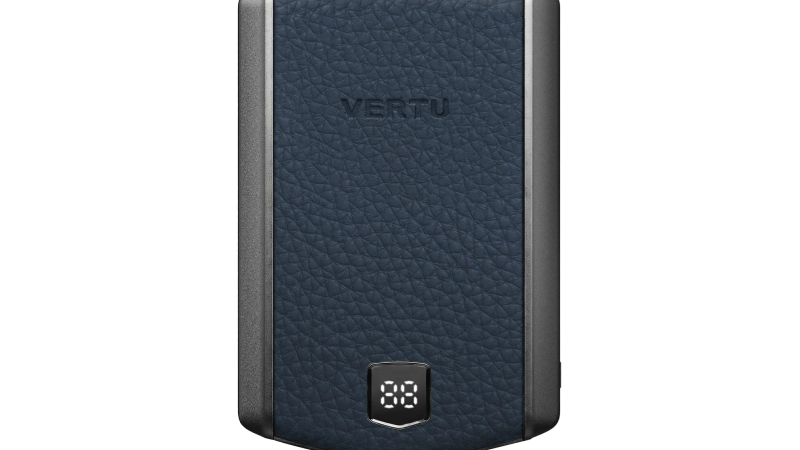
The VERTU V Reserve Energy Card is engineered with a multi-layered safety system designed to protect the device, the connected smartphone, and the user. Our takeaway is to evaluate this accessory not just on its power capacity but on its integrated protections. These include crucial safeguards against overcharging, over-discharging, and excessive heat, with a specific 45°C over-temperature cut-off. Also, the design incorporates advanced dual-IC short-circuit protection and foreign-object detection, providing a comprehensive defence against common electrical and thermal hazards associated with portable power sources.
How to Evaluate the Core Safety Mechanisms
When assessing a premium accessory like the Reserve Energy Card, the technical specifications of its safety systems provide a clear indication of its engineering quality. Unlike generic power banks where safety features can be opaque or unverified, VERTU specifies a precise set of protections. These are not merely features but fundamental components of the device’s architecture, designed to provide consistent, reliable performance and, most importantly, peace of mind for the owner. The foundation of this system is the 5,000 mAh ATL semi-solid-state cell, a choice of battery technology known for its stability and safety profile compared to conventional alternatives.
Each protective layer addresses a specific potential risk, translating technical details into tangible ownership benefits. Understanding these distinctions is key to appreciating the device's value beyond its elegant exterior. For instance, the dual-IC short-circuit protection offers a level of redundancy not commonly found in standard accessories, ensuring that if one circuit fails, a second is in place to prevent a catastrophic electrical event. This level of detail is a hallmark of luxury engineering, where potential failure points are anticipated and mitigated.

To provide a clearer framework for evaluation, the primary safety features and their direct consequences for the user are outlined below.
| Safety Feature | Technical Function & Ownership Benefit |
|---|---|
| Overcharge Protection | Prevents the internal 5,000 mAh cell from being charged beyond its maximum safe voltage. This is critical for preserving the battery's lifespan and preventing cell degradation or swelling over time. |
| Over-Discharge Protection | Stops the battery from being drained below its minimum safe voltage. This safeguards the cell's chemical integrity, ensuring it can hold a charge effectively throughout its operational life. |
| 45°C Over-Temperature Protection | A thermal sensor monitors the device's temperature and automatically cuts power if it exceeds 45°C. This prevents overheating, a primary safety concern for any battery-powered device, especially in warm climates or enclosed spaces like a car or handbag. |
| Dual-IC Short-Circuit Protection | Utilises two separate integrated circuits to monitor for short circuits. If one is detected, the power output is instantly cut off. The redundancy provides an exceptionally high degree of protection against electrical faults that could damage the card or the connected phone. |
| Foreign-Object Detection (FOD) | Specifically for wireless charging functionality, this system detects if a metallic object like keys or coins is placed on the charging surface. It then stops power transmission to prevent dangerous induction heating of the object. |
Understanding the Trade-Offs and Practical Limitations
While the V Reserve Energy Card is engineered for safety and convenience, prospective owners should be aware of practical considerations and trade-offs inherent in its design. The most significant of these relates to travel. The device has a total energy rating of 19.6 Wh, which is comfortably below the 100 Wh limit imposed by most international aviation authorities for lithium-ion batteries in carry-on luggage. However, the knowledge base rightly states that airline and regional carry-on rules can vary significantly. The responsibility for compliance ultimately rests with the traveller.
This presents a crucial decision point: an owner must be diligent in checking the specific requirements of their operating carrier before every flight. This is a trade-off of personal responsibility for the convenience of portable power. Whilst the 19.6 Wh rating makes compliance likely, it is not guaranteed, and owners should never assume universal acceptance. This diligence is a small but necessary part of owning a high-performance travel accessory.

Another practical consideration is the 45°C over-temperature protection. This is an uncompromising safety feature, but it can also act as a performance limitation in extreme environments. If the Energy Card is left in direct sunlight on a hot day, inside a vehicle, or used in a poorly ventilated bag, it may reach this thermal limit and temporarily cease charging to protect its internal components. An owner must therefore be mindful of the device's operating environment to ensure consistent performance. This is a deliberate trade-off, prioritising the longevity and safety of the device over continuous operation in potentially damaging conditions.
A Decision Framework for Prospective Owners
Deciding if the VERTU V Reserve Energy Card is the right choice involves looking beyond its function as a power source and considering its place within a lifestyle that values design, integration, and verified safety. Your research should start by defining your primary criteria for a portable charging solution.
Who is the Reserve Energy Card for?
This accessory is ideally suited for the existing VERTU owner who seeks a charging solution that matches the aesthetic and engineering principles of their handset. It is for the individual who values the assurance that comes from a product designed within a closed ecosystem, where compatibility and safety are tested and guaranteed. Also, it appeals to those who prioritise peace of mind; the detailed, multi-layered safety system offers a level of confidence that may be absent in third-party alternatives with non-specific or unverified claims.
Who should reconsider?
Buyers whose sole purchasing criterion is the highest possible milliampere-hour (mAh) capacity for the lowest price may find that the Reserve Energy Card is not aligned with their priorities. Its value is weighted heavily towards its safety architecture, semi-solid-state cell technology, and design integration, rather than raw power-to-price ratio. Additionally, individuals who consistently operate in environments where ambient temperatures exceed 45°C may experience frequent interruptions from the thermal protection system, potentially making a more ruggedised, industrial-grade power bank a more practical, albeit less elegant, choice.
What to Compare Before Choosing
Before making a final decision, compare the specified safety features of the V Reserve Energy Card against those of other premium power accessories. Do not just compare capacity. Look for explicit mentions of overcharge, over-discharge, and specific temperature cut-offs. Investigate the type of short-circuit protection offered—is it a single or dual-IC system? Does it feature foreign-object detection? The transparency of these specifications is a key differentiator. The VERTU V Reserve Energy Card provides a clear list of its protective measures, grounded in advanced semi-solid-state cell technology, offering a benchmark against which other options can be measured for both performance and, critically, for safety.
Ultimately, the decision rests on whether one values a holistic system of verified protections and design synergy over standalone metrics. The comprehensive safety architecture is the defining characteristic of this device, designed to offer not just power, but confidence. For those who appreciate this level of integrated engineering, the complete specifications and aesthetic details of the V Reserve Energy Card can be explored within the official VERTU collections.